What Documents Do You Need to File a Motorcycle Claim?
Finding yourself in the aftermath of a motorcycle incident, whether it's a minor fender-bender or something more serious, is incredibly stressful. The last thing you want to worry about when you're shaken up, or dealing with damages, is scrambling to figure out what paperwork your insurance company needs. This guide is designed to cut through that confusion, walking you through the essential documents you'll need to confidently file your motorcycle insurance claim and get back on two wheels.
Why Comprehensive Documentation is Absolutely Critical
When you've just been through an accident or discovered your bike has been stolen, your mind is probably racing a million miles a minute. It's easy to think that just calling your insurance company is enough, but believe me, having your ducks in a row with solid documentation is the single most important step you can take. It’s not just about proving something happened; it's about making sure you get a fair settlement and avoid unnecessary headaches down the line.
The Power of Proof in Your Favor
Imagine this: you've had an accident, and the other driver is being difficult, or maybe there's a dispute over the extent of the damage. Without proper documentation, it quickly becomes a "he said, she said" situation, which rarely works out well for the policyholder. Every piece of paper, every photograph, every official report acts as an undeniable witness to your claim. It takes the guesswork out of the equation for your claims adjuster and streamlines the entire process. This is particularly vital if you're ever forced to How to Negotiate a Motorcycle Total Loss Settlement because the adjuster's initial offer doesn't feel right.
The more detailed your evidence, the less room there is for an insurance company, even a large one like Progressive, to question the facts of your claim. This includes everything from the moment of impact to the final repair bill. It paints a clear picture and backs up your story, which can significantly speed up the approval process and ensure you receive the compensation you're entitled to for repairs, medical bills, or even a total loss payout. It’s your advocate when you can’t advocate for yourself clearly due to stress or injury.
Speeding Up the Claims Process
Let's be real, no one wants a claims process to drag on forever. You want your bike fixed, or replaced, and you want to move on. Having all your documents ready from the get-go is like hitting the fast-forward button. When you call your insurer, they'll ask for specific information and documents. If you have them readily available, you avoid the back-and-forth, the delays, and the frustration of waiting for information to be gathered.
An organized approach saves both you and your insurance provider time and effort. It allows them to assess your claim quickly and accurately, often leading to faster approval and disbursement of funds. Think about it: if the adjuster has to chase you for every piece of information, or wait for you to track it down, that’s time ticking away that could be spent getting your bike back on the road. This also directly impacts how long the claim takes; a well-documented claim usually processes much quicker. If you're wondering, How long does a motorcycle insurance claim take? is often directly related to how prepared you are.
Immediate Documents and Information Needed at the Scene
The moments right after an incident are chaotic, but gathering certain critical pieces of information immediately can make or break your claim. Even if you're shaken, try to focus on these essentials. They are your first line of defense and provide a crucial foundation for any future claim.
Contact and Insurance Details of All Parties Involved
First things first, if another vehicle was involved, you must exchange information with the other driver(s). This is non-negotiable. Get their full name, contact number, driver's license number, and vehicle license plate number. More importantly, get their insurance company name and policy number. Don't just take their word for it; snap a photo of their insurance card and driver's license if they're willing. This prevents potential issues later if they give you incorrect details.
Similarly, be prepared to share your own information. Have your insurance card and driver's license readily accessible. This exchange is a fundamental step in initiating a claim, and without it, pursuing the other party's insurance becomes incredibly difficult. Even if you feel the accident was minor, always exchange information. You might not feel injured or see damage right away, but things can escalate quickly.
Photographic Evidence of the Scene and Damages
In today's world, your smartphone is your best friend after an incident. Take photos and videos of everything. Start with a broad overview of the accident scene, showing the positions of all vehicles involved, road conditions, traffic signs, and any relevant landmarks. Then, zoom in on the specific damages to your motorcycle and the other vehicle(s). Get multiple angles, close-ups, and wide shots. Don't forget any debris on the road.
Capture injuries, if any, to yourself or others. Take pictures of any road hazards that might have contributed to the incident, like potholes or construction zones. The more visual evidence you have, the harder it is for anyone to dispute what happened. These photos are invaluable to your adjuster and can clearly illustrate the impact and extent of the damage, significantly strengthening your position, especially if you need to understand What Happens When Your Motorcycle Is Totaled?.
Police Report and Incident Number
If there are injuries, significant property damage, or any doubt about fault, always call the police. A police report is an objective, official record of the incident, often including details about contributing factors, witness statements, and initial findings of fault. This report carries significant weight with insurance companies.
Make sure to get the incident number or report number from the responding officer. This number is your key to obtaining a copy of the official police report later. Sometimes, officers will give you a card with this information. Without a police report, your claim might face more scrutiny, especially if fault is disputed. Even if the police don't come to the scene, or only create a "driver exchange" report, having any official record is better than none.
Official Documents for Filing Your Claim
Once you've handled the immediate aftermath, there's a second layer of official documents that your insurance company, whether it's Progressive or another carrier, will almost certainly require. These reports and records provide the detailed, verified information needed to process your claim thoroughly.
Comprehensive Police Accident Report
While you might get an incident number at the scene, the full, detailed police report takes a bit longer to process. This report will contain a wealth of information, often including a diagram of the accident, statements from all parties and witnesses, citations issued (if any), and the officer's assessment of fault. It's an indispensable document for most claims.
You'll usually need to request this report from the local law enforcement agency that responded to the scene, often for a small fee. Having a copy of this official document is crucial, especially when you're making a claim where liability might be contested or when your Motorcycle Insurance Requirements by State (2026 Guide) mandates strict reporting. The insurance company will use this report to determine the circumstances of the accident and assign fault, which directly impacts your payout and premium.
Medical Records and Bills
If you or your passenger sustained any injuries, regardless of how minor they seem at the moment, seeking medical attention and meticulously documenting everything is paramount. This means keeping records of all doctor's visits, diagnoses, treatments, prescriptions, and any physical therapy. Crucially, collect all corresponding medical bills, even if your health insurance covers some of them initially.
Your motorcycle insurance, especially if you have MedPay or Personal Injury Protection (PIP) coverage (where available), will rely heavily on these documents to process your injury claims. Even if you're using the other driver's liability coverage, their insurance will demand detailed medical documentation. These records are vital for demonstrating the extent of your injuries, the necessity of treatment, and the financial impact of your recovery. Without them, it's incredibly difficult to claim compensation for bodily injury. If you're curious about different coverage options, understanding What Is Medical Payments (MedPay) for Riders? can be really helpful.
Witness Statements and Contact Information
Independent witnesses can provide invaluable unbiased accounts of an accident. Their statements can corroborate your version of events and refute false claims by other parties. If there were any witnesses at the scene, try to get their full name, phone number, and email address. Even a quick written statement from them at the scene can be incredibly helpful.
Your insurance adjuster will likely want to speak with these witnesses to gather additional details. Providing their contact information immediately can save your adjuster time and help them piece together a clearer picture of what transpired. Sometimes, the police report will include witness information, but it's always better to gather it yourself if possible.
Vehicle-Specific Documents for Your Claim
Beyond the scene and official reports, your insurance company will need specific details about your motorcycle itself. These documents verify ownership, value, and the condition of your bike prior to the incident, ensuring you get a fair assessment for repairs or replacement.
Your Motorcycle Insurance Policy Information
This might seem obvious, but always have your policy number and the contact information for your insurance provider readily available. It’s the very first thing they’ll ask for when you call to report a claim. This information can be found on your insurance card, policy declarations page, or through your insurer's app.
Knowing your policy details, including your coverage limits and deductibles, is crucial. It helps you understand exactly what your policy covers, whether it's just liability, or if you have comprehensive and collision coverage. For instance, if you have What Is Full Coverage Motorcycle Insurance Mean?, you'll have different expectations than if you only carry the bare minimum. Make sure you understand these elements before you call.
Title, Registration, and Driver's License
Your insurance company will need to verify that you are the legal owner of the motorcycle and that it was legally registered and that you are a licensed rider at the time of the incident. Have your motorcycle's title or proof of ownership, current registration card, and your valid motorcycle endorsement or driver's license ready.
These documents confirm your legal standing and ensure that your claim is legitimate. If your bike isn't registered or you don't have the proper endorsement, it could complicate your claim, potentially leading to denial or reduced payouts, and even legal repercussions depending on your state's laws. For example, knowing the details about your Motorcycle License, Endorsement & Insurance can be crucial here. Many states require you to present Proof of Insurance & Registration for Motorcycles if you're pulled over.
Repair Estimates and Maintenance Records
If your motorcycle is damaged but not totaled, you'll need to provide repair estimates. It's often a good idea to get at least two estimates from reputable motorcycle repair shops. These estimates should detail all necessary repairs, parts, and labor costs. Some insurance companies, like Progressive, might have preferred repair shops, but you typically have the right to choose your own.
Furthermore, any recent maintenance records can be helpful, especially if there's a dispute about the pre-existing condition of your bike. For example, if a suspension component failed, recent service records showing it was regularly maintained could support your claim. These documents help the insurance company understand the cost to restore your bike to its pre-accident condition and ensure you're compensated fairly for the damage.
Documenting Personal Belongings and Customizations
Riders often invest significant money in their gear and customizing their bikes. It's a real gut punch when your custom exhaust is bent or your favorite riding jacket is shredded. Don't let these losses go uncompensated; proper documentation is key.
Receipts and Photos of Riding Gear
Your riding gear – helmet, jacket, gloves, boots, and specialized riding pants – can be incredibly expensive. In an accident, this gear often takes the brunt of the impact, protecting you but potentially getting destroyed in the process. Many policies include some coverage for riding apparel, but you need to prove its value.
Keep receipts for all your gear. Take photos of your gear when it's new, and certainly after the accident to show the damage. For instance, a high-end Arai helmet or a Dainese leather suit could easily cost hundreds, if not thousands, of dollars to replace. Without proof of purchase or clear photographic evidence of damage, the insurance company might only offer a nominal amount for replacement. Don't undervalue your safety gear; it's a critical part of your riding investment.
Invoices, Appraisals, and Photos of Custom Parts
Customizations are a massive part of motorcycle culture, but they can be a tricky area for insurance claims. Many standard policies only cover factory-installed parts. If you've added an aftermarket exhaust, custom paint job, upgraded suspension, or any other modifications, you need separate documentation. This is where Accessories & Custom Parts Coverage Explained becomes vitally important.
Collect all invoices and receipts for any custom parts or modifications you’ve installed. If you've had professional work done, get detailed statements from the shop. For highly customized bikes or vintage models, an independent appraisal before any incident can be a lifesaver, establishing an "agreed value" for your bike. Additionally, take clear photos of all your customizations. This evidence proves both the existence and value of your custom work, allowing your insurer to properly reimburse you if these items are damaged or lost, provided you have the right coverage in place.
Dealing with Missing Documents and Staying Organized
It happens to the best of us: you need a document, and it's nowhere to be found. Or perhaps you're just overwhelmed by the sheer volume of paperwork. Don't despair; there are strategies for dealing with missing items and, more importantly, for setting yourself up for success in the future.
What to Do if You're Missing Key Paperwork
Panicking won't help. If you're missing a critical document like your registration or title, start by contacting the issuing authority. For registration or title, that would be your state's Department of Motor Vehicles (DMV) or equivalent agency. They can usually provide duplicates, though it might take some time and a fee. For medical records, contact your healthcare providers directly.
If you don't have receipts for custom parts or gear, try to find bank statements or credit card records that show the purchase. Even photos of the items, combined with online listings for similar new items, can help establish value. Be proactive and communicate any difficulties to your insurance adjuster. They might be able to guide you on alternative forms of proof or extensions if you're working with a company like The Zebra for policy comparison or assistance. While it might add a bit of delay, it's always better to address these gaps than to file an incomplete claim.
Creating a Motorcycle Document Kit for the Future
The best defense is a good offense, right? Avoid future stress by creating a dedicated "motorcycle document kit" now. This isn't just a random pile of papers; it's a thoughtfully organized collection that can save you immense trouble.
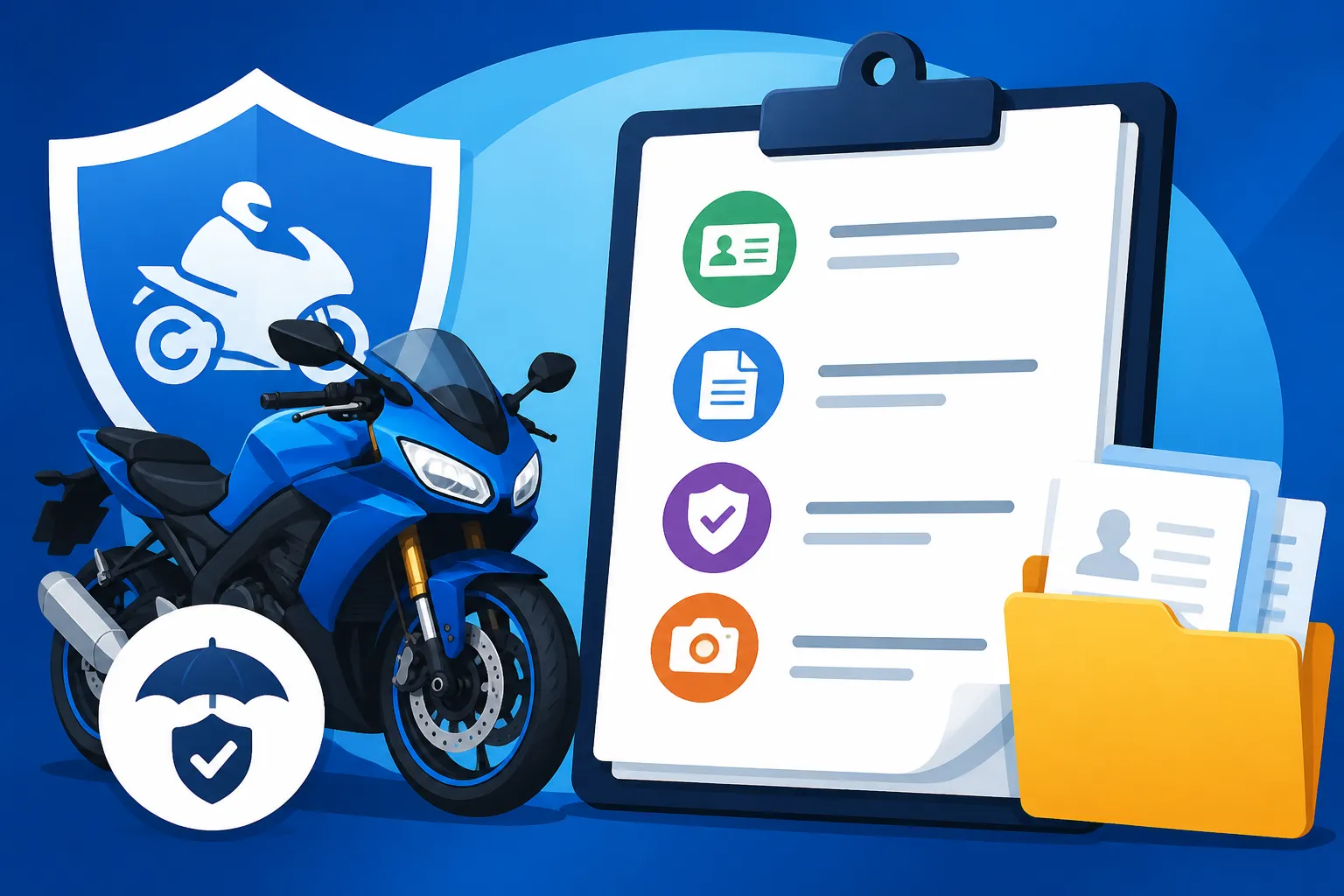
Consider keeping both digital and physical copies. For physical copies, a small, waterproof folder in your motorcycle's saddlebag or under the seat can hold your current insurance card, registration, and a copy of your driver's license. For everything else, create a digital folder on your computer or cloud storage (like Google Drive or Dropbox). Scan all important documents: title, past insurance declarations, service records, receipts for gear and custom parts, and even photos of your bike and gear. Make sure this digital folder is backed up regularly. This way, whether you're at the scene of an accident or dealing with a Motorcycle Theft Claim: How It Works, you have immediate access to everything you need, no matter what.
Here's a simple table summarizing common documents and where to find them:
| Document Type | Where to Find It / How to Obtain It | Importance in Claim |
|---|---|---|
| At Scene (Immediate) | ||
| Other Driver's Info | Driver's License, Insurance Card | Essential for liability claims |
| Photos/Videos | Smartphone | Visual proof of damages, scene, conditions |
| Police Report Number | Responding Officer, Police Department | Official record, helps determine fault |
| Official Records | ||
| Full Police Accident Report | Local Police Department (often online portal) | Comprehensive account, crucial for fault disputes |
| Medical Records & Bills | Doctors, Hospitals, Pharmacies | Proof of injuries, treatment, and costs |
| Witness Contact Info | Gathered at scene | Corroborates your story, objective accounts |
| Vehicle & Personal | ||
| Your Insurance Policy | Insurance Card, Policy Declaration Page, Insurer's App | Confirms coverage, deductibles, limits |
| Motorcycle Title/Registration | State DMV or equivalent agency | Proof of ownership and legal operation |
| Driver's License/Endorsement | State DMV or equivalent agency | Proof of legal rider status |
| Repair Estimates | Reputable Motorcycle Repair Shops | Justifies repair costs for damaged bike |
| Gear Receipts/Photos | Personal files, bank statements, smartphone | Proof of value for damaged riding apparel |
| Custom Parts Invoices/Photos | Personal files, bank statements, smartphone, appraisals | Proof of value for aftermarket modifications |
Steps to Take When Filing Your Motorcycle Claim
Armed with all your documentation, you're now in a much stronger position to file your claim efficiently and effectively. This structured approach will ensure you provide all the necessary information and follow the correct procedures.
Notifying Your Insurance Company Promptly
As soon as reasonably possible after an incident, you need to notify your insurance company. Many policies require you to report an incident within a certain timeframe, typically within 24-72 hours, although specifics can vary. Delaying this step can potentially complicate your claim or, in some cases, even lead to a denial.
When you call, have your policy number, the date and time of the incident, and a brief description of what happened ready. This initial call is usually just to open the claim. You don't need to have every single document at this exact moment, but be prepared to provide as much detail as you can. The claims representative will guide you on the next steps and what specific documents they will require from you. Remember, even if you’re just gathering information about different policies on a platform like The Zebra, it’s good to know their process.
Providing All Requested Documentation
Once your claim is open, your insurance adjuster will be assigned. They will be your primary point of contact and will tell you exactly what documents they need to process your claim. This is where your organized document kit comes in handy. Be prepared to send them the police report, photos, medical bills, repair estimates, and any other relevant paperwork promptly.
Sending documents electronically, securely, is often the quickest method. Follow up to ensure they received everything. Proactive communication and prompt submission of documents will significantly streamline the process. The more complete and timely your submission, the faster your adjuster can review your case and move towards a resolution. This diligence also helps prevent issues like your What Happens if You Let Coverage Lapse Then Restart? if there's any confusion around policy status.
Cooperating Fully with the Adjuster
Your insurance adjuster is there to investigate your claim and determine the appropriate payout. While it's important to advocate for yourself, it's equally important to cooperate fully with their requests. Answer their questions honestly and provide any additional information they might need.
They might want to inspect your damaged motorcycle, interview witnesses, or review additional records. Being responsive and helpful can build a good working relationship and ensure a smoother claims process. Remember, they are trying to gather all the facts to make an informed decision. An attitude of cooperation, while still being firm on the facts of your claim, will always serve you best. For example, if you need to prove the value of your custom parts, you'll need to work with them to provide detailed invoices or appraisals.
Disclaimer
This article is for general informational purposes only and does not constitute professional advice. Laws, prices and regulations vary by location and change over time. Consult a qualified professional for guidance on your specific situation.