Helmet Law & Insurance: Does Not Wearing One Affect Claims?
We've all seen riders out on the open road, wind in their hair, looking carefree. But when you're on a motorcycle, especially without a helmet, that sense of freedom can quickly turn into a nightmare if an accident occurs. The question that often looms in the back of a rider's mind, or certainly should, is: "What happens to my motorcycle insurance claim if I wasn't wearing a helmet?" It's a valid and incredibly important concern, and this guide will peel back the layers to reveal how helmet laws, or the lack thereof, can significantly impact your insurance coverage and the outcome of a claim.
Understanding Motorcycle Helmet Laws by State
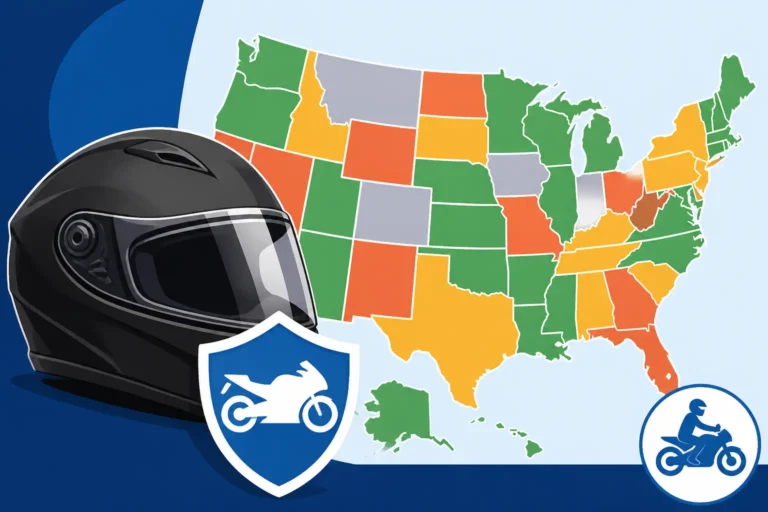
The first thing to grasp is that motorcycle helmet laws aren't uniform across the United States. It's not a "one size fits all" situation, and this patchwork of regulations often leads to confusion among riders. Knowing the law in your state – and any state you plan to ride through – is absolutely critical.
Universal Helmet Laws vs. Partial Helmet Laws
When we talk about helmet laws, there are generally two main categories: universal and partial.
Universal Helmet Laws
In states with universal helmet laws, every single rider and passenger on a motorcycle is required by law to wear a helmet, regardless of their age or experience level. There are no exceptions, no "if you're over 21" clauses. These laws are typically in place with the primary goal of public safety, aiming to reduce fatalities and severe head injuries in motorcycle accidents. States like California, Georgia, and New York are examples of those with universal helmet laws. If you're riding in one of these states, you simply have to wear a helmet, full stop. Trying to argue around it won't fly with law enforcement or, more importantly, with your insurance company if something goes wrong.
Think of it this way: imagine pulling out of a gas station in Los Angeles, helmet strapped on, and seeing a fellow rider cruise by without one. That rider is breaking the law, plain and simple, and if they were to get into an accident moments later, they'd be facing a whole host of legal and insurance headaches that could have been easily avoided. These laws are designed to protect everyone, even if some riders feel they infringe on personal liberty.
Partial Helmet Laws
Then we have states with partial helmet laws, often referred to as "age-specific" or "under-age" laws. In these states, helmet use is only mandatory for certain riders, usually those under a specific age, such as 18 or 21. For riders above that age threshold, helmet use is optional. For instance, in a state like Florida, if you're over 21, you don't have to wear a helmet as long as you have an insurance policy with at least $10,000 in medical benefits. Texas and Arizona also fall into the partial helmet law category, often requiring helmets only for riders under 21, or those who haven't completed a safety course or lack sufficient insurance.
This is where things can get particularly tricky for riders. Just because it's legal to ride without a helmet if you meet certain criteria doesn't mean it's wise, especially when considering potential insurance claims. Many riders misinterpret "optional" as "no consequences," which is a dangerous assumption. It's crucial to understand not just whether you must wear a helmet, but whether your decision not to wear one could have financial repercussions later. For more detailed information, you can check out our guide on Motorcycle Helmet Laws by State.
How Helmet Laws Are Enforced
The enforcement of helmet laws varies, but generally, if you're caught violating a mandatory helmet law, you can expect consequences.
Direct Penalties
In states with universal helmet laws, or for riders who fall under the age restrictions in partial law states, getting caught without a helmet typically results in a traffic citation, a fine, and potentially points on your driving record. Law enforcement officers are usually quite clear on these rules, and they're easy to spot. A quick stop by an officer for a visible violation can lead to a fine that, while perhaps not exorbitant, is an unnecessary hit to your wallet.
Consider this scenario: You're riding through Georgia, a universal helmet law state, and you decide to take a short cruise without your lid. A state trooper spots you, pulls you over, and issues a ticket. You'll have to pay the fine, and that ticket could even lead to an increase in your insurance premiums down the line. It's a direct consequence that serves as a reminder that these laws are, in fact, enforced. If you're curious about the specific rules where you live, you might find our article on Is Motorcycle Insurance Required? State-by-State helpful, as insurance often ties into these regulations.
Indirect Consequences
Beyond the direct fine, there are more subtle, yet equally impactful, ways these laws are enforced. If you're involved in an accident, and it's discovered you weren't compliant with the helmet law, that fact will undoubtedly come up during the claims process. Even if you weren't issued a ticket at the scene, the insurance adjusters and legal teams involved will certainly investigate whether you were following all applicable traffic laws. This is where the lines between legal requirement and insurance impact start to blur significantly.
For example, if a rider in Florida, who is under 21, crashes without a helmet, they would not only face the legal penalties for violating the state's partial helmet law, but their insurance company would scrutinize that detail intensely during the injury claim process. The insurer might argue that their injuries were exacerbated by the lack of a helmet, potentially reducing their payout. It's a stark reminder that even when direct enforcement seems minimal, the underlying legal framework can have a powerful, indirect influence.
The Direct Link: Helmet Use and Your Insurance Policy
Now, let's get down to the nitty-gritty: how your decision to wear (or not wear) a helmet can directly affect your motorcycle insurance policy and any claims you might file. This isn't just about legality; it's about the financial safety net you've paid for.
How Insurers View Non-Compliance
Insurance companies are in the business of assessing risk. When you submit a claim, especially one involving personal injury, they will look for any factors that might have contributed to the severity of your injuries or the extent of the damage. Not wearing a helmet, particularly in states where it's legally mandated for you, is a huge red flag for them.
Increased Risk and Exacerbated Injuries
From an insurer's perspective, riding without a helmet inherently increases the risk of severe head and brain injuries in an accident. This isn't conjecture; it's backed by mountains of data and actuarial science. If you sustain head trauma in an accident while not wearing a helmet, the insurance company will almost certainly argue that your injuries would have been less severe, or even avoided, had you been wearing proper head protection. This isn't them trying to be difficult; it's a fundamental aspect of how they evaluate claims.
Let's say you're riding your Suzuki GSX-R in a state with a universal helmet law. You decide, just this once, to ride to the corner store without your helmet. On the way, a car pulls out in front of you, and you go down, suffering a serious head injury. When you file a claim for your medical expenses and bike damage, your insurance provider, perhaps Progressive or Geico, will quickly note your non-compliance with the helmet law. They're not going to deny your claim outright for the bike damage (assuming you have collision coverage), but for your personal injury claim, expect a significant battle. The amount they are willing to pay for your medical bills and pain and suffering could be drastically reduced because of your decision. This could lead to a massive financial burden that you simply weren't prepared for. For insights on what affects your rates, read our What Affects Your Motorcycle Insurance Rate? article.
Impact on Payouts for Medical and Injury Claims
Even in states with partial helmet laws where you can legally ride without one, insurers will still take your helmet use into account. If you're injured without a helmet, your medical expenses are likely to be much higher than if you had been wearing one. While your policy may cover some of these costs through medical payments (MedPay) or personal injury protection (PIP) coverage, the insurer will still use your lack of helmet as leverage to reduce their payout, especially if the other party's insurance is involved.
For example, if you're an adult rider in Texas, where helmets are optional if you meet certain criteria, and you get into an accident without a helmet, suffering a concussion, the at-fault driver's insurance company will argue that your injuries were preventable or less severe if you had worn a helmet. This argument could significantly lower the settlement amount you receive for your injuries. They might even try to apply what's known as "comparative negligence" (which we'll dive into more shortly) to reduce their responsibility for your damages. This means more out-of-pocket expenses for you, possibly even for long-term care or lost wages.
Policy Language and Exclusions
It's tempting to think that once you have an insurance policy, it will cover you no matter what. But insurance policies are contracts filled with specific language, terms, and sometimes, exclusions, that can come back to bite you if you're not careful.
Reading the Fine Print
While it's rare for a standard motorcycle insurance policy to have an explicit "no helmet, no coverage" clause, the language regarding compliance with local laws and the duty to mitigate damages can certainly be used against you. Most policies require you to operate your vehicle in a safe and legal manner. Failing to wear a helmet when legally required could be interpreted as a breach of this general clause.
Beyond that, even if there isn't a direct exclusion for helmet use, insurance companies can use the concept of "failure to mitigate damages." This legal principle suggests that an injured party has a responsibility to take reasonable steps to prevent or minimize their injuries after an incident. Not wearing a helmet, especially when readily available, can be argued as a failure to mitigate potential head injuries.
How Exclusions Can Play Out
Imagine a situation where your policy includes specific language about adhering to all state traffic laws. If you're in a state with a universal helmet law and crash without one, your insurer might argue that by breaking the law, you've potentially voided or limited certain aspects of your coverage, particularly for injury-related claims. While they likely can't deny a claim for your bike damage entirely if you have comprehensive or collision coverage, your personal injury claims are where the real fight will be.
Even if you have an extensive policy with companies known for their rider coverage, like Dairyland or Markel, these fundamental principles apply. They're not just looking for reasons not to pay; they're operating within the legal and contractual frameworks of their policies. Riders often assume that because they bought insurance, they're fully protected. However, the conditions under which that protection applies are critical. Always understand your Types of Motorcycle Insurance Coverage Explained so you know what you're getting.
Navigating an Accident Claim Without a Helmet
So, you've been in an accident, and you weren't wearing a helmet. This is where things get complicated and where the prior decisions you made can come with significant consequences. Your insurance claim will be under intense scrutiny, and you'll likely face an uphill battle.
Impact on Liability and Damages
When you're involved in an accident and weren't wearing a helmet, the issue of liability and the amount of damages you can recover become heavily influenced. It's not just about who caused the accident, but also about how your choices contributed to your injuries.
Challenging Your Injury Claims
The primary impact of not wearing a helmet will be on your claim for personal injuries. Even if the other driver was 100% at fault for causing the accident (e.g., they ran a red light), their insurance company, or even your own MedPay/PIP provider, will likely argue that your injuries, particularly head injuries, would have been less severe had you been wearing a helmet. This argument is powerful and is often used to reduce the amount they have to pay out for medical expenses, lost wages, and pain and suffering.
For instance, consider a rider in a state like Washington, which has a universal helmet law. If this rider is hit by a distracted driver and suffers a traumatic brain injury while not wearing a helmet, the at-fault driver's insurance will almost certainly contend that a significant portion of those specific injuries could have been prevented with proper helmet use. This doesn't excuse the distracted driver's negligence, but it shifts some of the financial responsibility for the head injury onto the rider. The case might go to court, and a jury could decide that while the other driver was at fault for the crash, the rider was partially responsible for the extent of their injuries due to not wearing a helmet. This can drastically reduce the total compensation received. Understanding What to Do After a Motorcycle Accident (Insurance Steps) is vital, especially in these complex situations.
Reduced Compensation for Pain and Suffering
Beyond medical bills, compensation for pain and suffering is often a substantial part of an injury claim. When a rider wasn't wearing a helmet and sustained significant head injuries, the argument that these injuries were avoidable or less severe often leads to a reduction in pain and suffering awards. A jury, or even an insurance adjuster, might be less sympathetic to a claimant who willingly disregarded a safety measure.
If you're wondering about the consequences of riding without insurance, it's a completely different ballgame, and you can learn more by reading about the Penalties for Riding Without Insurance. However, not wearing a helmet with insurance also carries its own set of distinct and severe penalties when it comes to claims.
The Role of Contributory and Comparative Negligence
These legal doctrines are crucial to understand because they directly address how fault and responsibility are apportioned in an accident, especially when helmet use is a factor.
Contributory Negligence
A handful of states still adhere to the strict doctrine of contributory negligence. In these states, if you are found to be even 1% at fault for your injuries, you may be completely barred from recovering any damages from the other party. While rare in modern legal systems, if you're in one of these states (e.g., Alabama, Maryland, North Carolina, Virginia, or Washington D.C.), not wearing a helmet could be argued as contributory negligence, potentially wiping out your entire injury claim, even if the other driver was primarily at fault.
Imagine a rider in Maryland, a contributory negligence state, who is hit by a car while not wearing a helmet. Even if the car ran a stop sign, the car's insurer could argue that the rider's decision not to wear a helmet contributed to their head injuries. If a jury agrees, even slightly, that the rider was contributorily negligent for their injuries, they could recover nothing. It's a harsh reality, but it underscores the immense risk involved.
Comparative Negligence
Most states follow some form of comparative negligence. This system allows for damages to be awarded even if both parties share some fault. There are two main types:
- Pure Comparative Negligence: In states like California or Florida, you can recover damages even if you are mostly at fault, but your compensation will be reduced by your percentage of fault. If a jury determines you were 20% at fault for your head injury because you weren't wearing a helmet, your total award would be reduced by 20%.
- Modified Comparative Negligence: In states like Texas, Ohio, or Georgia, you can recover damages only if your fault is less than a certain percentage (typically 50% or 51%). If you are found to be 50% or more at fault for your injuries (due to not wearing a helmet contributing significantly to injury severity), you might recover nothing.
Let's consider an example: You're riding in Ohio, a modified comparative negligence state (51% bar). An intoxicated driver swerves into your lane, causing a crash. You weren't wearing a helmet, and you suffer severe facial and head injuries. While the driver is clearly at fault for the crash, their legal team successfully argues that your injuries were significantly worsened by your choice not to wear a helmet, and a jury assigns you 40% fault for the severity of your injuries. In this scenario, you would still be able to recover 60% of your damages. However, if they successfully argue for 51% or more fault related to your injury severity, you would recover nothing. This highlights the critical role helmet use plays in the actual financial outcome of an injury claim.
Beyond the Claim: Other Repercussions of Helmet Non-Compliance
While the impact on your insurance claim is a huge deal, it's not the only consequence of riding without a helmet, especially where it's legally required. There are other serious repercussions, both legal and personal, that every rider should be aware of.
Legal Penalties and Fines
As briefly touched upon, the most immediate and tangible consequence of not wearing a helmet in a mandatory helmet law state is a direct legal penalty.
Traffic Citations and Fines
If you're pulled over and found not wearing a helmet where it's required, you'll likely receive a traffic citation. This isn't just a slap on the wrist. Fines for helmet law violations can range from tens to hundreds of dollars, depending on the state and specific circumstances. These fines, while perhaps not breaking the bank on their own, are an unnecessary expense that could be easily avoided.
For example, in many parts of New York, a universal helmet law state, a helmet violation can come with a fine. On top of the fine, you might also incur court costs and administrative fees, making that "freedom ride" a lot more expensive than you anticipated. These fines serve as a deterrent, but for some, the perceived freedom outweighs the risk of a ticket. This, however, is a short-sighted view when considering the broader implications. It's worth understanding the full scope of Motorcycle Insurance Requirements by State (2026 Guide) to ensure you're compliant across the board.
Points on Your Driving Record
In addition to fines, many states will add points to your driving record for a helmet law violation. Accumulating too many points can lead to increased insurance premiums, driver's license suspension, or even make it harder to renew your motorcycle endorsement. This indirect consequence can have a long-term financial impact, costing you far more than the initial fine.
Consider a younger rider, perhaps in Florida, who is under 21 and therefore legally required to wear a helmet. If they get a ticket for not wearing one, those points on their record could cause their insurance rates to skyrocket, making their cost to insure their motorcycle significantly higher. This is often an overlooked aspect, but for many, particularly those with less riding experience, keeping a clean driving record is paramount to affordable insurance. Our article on Motorcycle Insurance Cost by Age further illustrates how factors like age and driving record affect premiums.
Health and Safety Risks
This is, arguably, the most critical consideration. Insurance claims and legal penalties pale in comparison to the potential for catastrophic injury or death that comes with riding without a helmet.
Severe Head and Brain Injuries
Helmets are designed for one primary purpose: to protect your head in the event of an impact. Motorcycle accidents, by their very nature, offer minimal protection to the rider. In a crash, your head is incredibly vulnerable. Studies from the National Highway Traffic Safety Administration (NHTSA) consistently show that helmets are highly effective in preventing head injuries and fatalities. Riders without helmets are significantly more likely to suffer traumatic brain injuries (TBIs), skull fractures, and other life-threatening head trauma.
Imagine hitting the pavement at even 20 or 30 miles per hour. The human skull is simply not designed to withstand that kind of impact without protection. A TBI can lead to permanent cognitive impairment, physical disabilities, personality changes, and a lifetime of medical care. Even a minor concussion can have long-lasting effects. The choice not to wear a helmet isn't just a personal risk; it's a risk that could profoundly affect your family, your livelihood, and your entire future. This is the ultimate, non-negotiable consequence.
Increased Fatality Rates
The statistics are stark: riders who do not wear helmets have a significantly higher risk of dying in a motorcycle crash compared to those who do. The Centers for Disease Control and Prevention (CDC) and NHTSA data consistently show that helmets reduce the risk of head injury by about 69% and the risk of death by 37%. These aren't just numbers; they represent lives saved and tragedies averted.
Think about the feeling of cruising down a scenic route on your Harley-Davidson. The wind, the freedom – it's exhilarating. But a split second can change everything. A patch of gravel, an unexpected maneuver by another driver, a momentary lapse in judgment – any of these can lead to a crash. Without a helmet, that exhilarating ride can end in a way that no amount of insurance money can ever make right. It’s a sobering thought, but one that every rider needs to confront honestly.
Protecting Yourself: Smart Riding and Smart Insurance
Given all the potential pitfalls and dangers, it becomes clear that smart riding and smart insurance choices go hand-in-hand. This isn't just about avoiding penalties or maximizing claims; it's about safeguarding your life and your financial well-being.
Choosing the Right Coverage
Having the right motorcycle insurance coverage is your ultimate safety net, but it needs to be tailored to your specific needs and the risks you face.
Comprehensive Injury Protection
Beyond basic liability, which only covers damages you cause to others, you absolutely need robust coverage for your own injuries. This includes Medical Payments (MedPay) or Personal Injury Protection (PIP), if available in your state. These cover your medical expenses regardless of fault. Furthermore, Uninsured/Underinsured Motorist (UM/UIM) coverage is crucial. This protects you if you're hit by a driver who doesn't have enough, or any, insurance to cover your medical bills and damages. With so many drivers out there without adequate coverage, this can be a lifesaver. You can find out more by reading about Uninsured & Underinsured Motorist Coverage (UM/UIM).
It's tempting to opt for the cheapest, bare-bones liability-only policy, but imagine the financial devastation of a severe injury after an accident. If you're hit by an uninsured driver and have no UM/UIM or MedPay, you could be left with hundreds of thousands of dollars in medical debt. A good policy from companies like Nationwide or State Farm will offer you comprehensive protection. While it might cost a bit more upfront, it's a small price to pay for peace of mind and financial security.
Adequate Property Damage and Collision Coverage
Of course, you'll also want to protect your bike. Collision coverage pays for damage to your motorcycle if you hit another vehicle or object, or if it tips over. Comprehensive coverage protects against non-collision events like theft, vandalism, fire, and even hitting an animal. If you have a custom or high-value motorcycle, you might also want to explore Accessories & Custom Parts Coverage Explained to ensure your modifications are protected.
Consider a scenario where you've invested heavily in custom parts for your Indian Scout. Without proper coverage for those custom parts, a minor fender bender could leave you paying out of pocket for expensive repairs that your standard policy might not cover. It’s about ensuring that every aspect of your investment, both in your bike and in your personal health, is adequately protected.
The Benefits of Rider Training and Gear
Beyond insurance, your best defense against accidents and severe injuries lies in proactive measures: continuous training and always wearing proper gear.
Advanced Rider Training
Taking an advanced motorcycle safety course is one of the best investments you can make. Courses offered by organizations like the Motorcycle Safety Foundation (MSF) teach crucial skills like hazard avoidance, emergency braking, and cornering techniques that can help you prevent an accident in the first place. Not only does this make you a safer, more confident rider, but many insurance companies offer discounts for completing such courses. This means you could potentially lower your premiums while simultaneously lowering your risk.
Think about it: dodging a sudden obstacle or stopping safely in an emergency could be the difference between a close call and a serious crash. These are skills that are honed, not just instinctively known. A course could teach you how to handle situations that might otherwise catch you off guard, making you a much more capable rider on any type of bike, from a Honda Rebel to a Kawasaki Ninja. This is also a fantastic way to potentially lower your Motorcycle Insurance Cost for a Beginner.
Always Wear Proper Riding Gear
This includes, first and foremost, a DOT-compliant (or Snell-certified, which is an even higher standard) helmet. But it extends beyond that to include eye protection, a durable riding jacket (preferably armored), riding pants, gloves, and sturdy boots. This gear acts as your personal airbag, absorbing impact and protecting your skin from abrasions in a slide.
Many riders, especially during hot weather, might skip protective jackets or sturdy pants, opting for shorts and a t-shirt. While it might feel cooler, the consequence of "road rash" or broken bones from even a low-speed slide can be excruciating and require extensive medical treatment. Your gear is an investment in your safety, just like your insurance. It’s the last line of defense between you and the hard reality of the pavement. Always remember, even if your state has lax Helmet Laws: Universal vs Partial States, choosing to wear a helmet is always the safest option for you and your passengers.
Helmet Laws by State and Insurance Implications
Here's a quick overview of helmet laws by state and their general implications for insurance claims. Remember, laws can change, so always verify current regulations.
| State Type | Examples | Helmet Law Requirement | General Insurance Claim Impact (No Helmet, Where Req.) |
|---|---|---|---|
| Universal Helmet Law | California, Georgia, New York, Washington, Oregon, Maryland, Massachusetts, Nevada, Missouri, North Carolina, Tennessee, Vermont, West Virginia, Hawaii | All riders and passengers must wear a helmet. | Significant negative impact on injury claims; potential reduction in payouts due to increased injury severity; legal penalties (fines, points). |
| Partial Helmet Law | Florida, Texas, Arizona, Pennsylvania, Illinois, Ohio, Michigan, Virginia, Colorado, Indiana, Kentucky, Louisiana, South Carolina, Wisconsin, Utah, Delaware, Iowa, Kansas, Maine, Mississippi, Montana, Nebraska, New Hampshire, New Mexico, North Dakota, Oklahoma, South Dakota, Wyoming, Idaho, Arkansas | Mandatory for riders under a certain age (e.g., 18 or 21), or those without specific insurance coverage/training. Optional for others. | For those legally required to wear one: significant negative impact on injury claims, similar to universal law states. For those where it's optional: still a high likelihood of reduced payouts for head injuries based on comparative negligence arguments. Legal penalties if applicable. |
| No Helmet Law (with insurance clause) | New Hampshire (historically, though generally still requires insurance for injury coverage if no helmet is worn) | No mandatory helmet law for adults; however, insurance requirements (like $10,000 MedPay) may apply for non-helmeted riders. | Potential for challenges and reduced payouts if injuries would have been mitigated by helmet use; legal penalties if insurance clause is not met. |
Disclaimer: This table provides a general overview and is not exhaustive. State laws can change. Always consult your state's DMV or an attorney for the most current and specific information.
Disclaimer
The information provided in this guide is intended for general informational purposes only and does not constitute legal or insurance advice. Motorcycle laws and insurance policies are complex and vary significantly by state and individual circumstances. You should consult with a qualified legal professional or a licensed insurance agent to discuss your specific situation and ensure compliance with all applicable laws and regulations. Always refer to your individual insurance policy documents for exact coverage details and exclusions. Riding a motorcycle carries inherent risks, and wearing appropriate safety gear, including a DOT-compliant helmet, is strongly recommended for your safety, regardless of local laws.