Tennessee Motorcycle Helmet Law
Riding through the Great Smoky Mountains or cruising the Natchez Trace Parkway is a dream for many riders, but navigating the legalities of the Volunteer State can feel like a headache. Whether you are a local or just passing through, understanding the Tennessee Motorcycle Helmet Law is vital for your safety and your wallet. This guide breaks down exactly what you need to know to stay legal and protected on the road.
The Universal Mandate of Tennessee Code Annotated 55-9-302
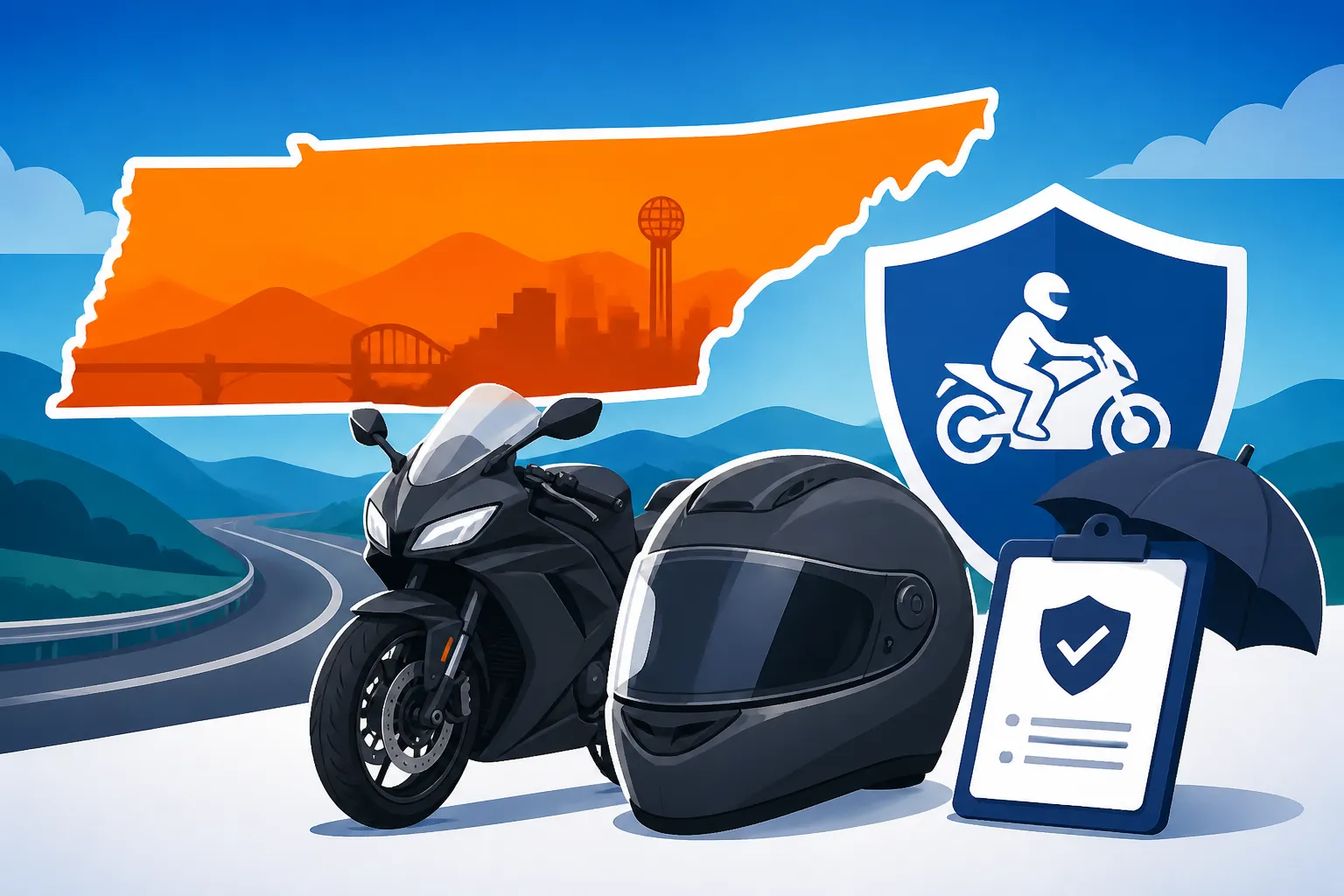
Tennessee is what we in the industry call a universal helmet law state. This means there is no room for interpretation or "opt-out" clauses based on age or insurance coverage levels. If you are on a motorcycle in Tennessee, you must have a helmet on your head. This applies to every single person on the bike, whether you are the seasoned veteran in the driver’s seat or a passenger enjoying the view.
When you look at the Motorcycle Insurance Requirements by State (2026 Guide), you will find that Tennessee is among the stricter jurisdictions in the Southeast. While some neighboring states have toyed with the idea of allowing veteran riders over the age of 21 to go lidless if they carry extra medical insurance, Tennessee has remained steadfast. The law is designed with a "safety first" mentality, but let's be realistic: it is also about the state’s bottom line. Universal laws reduce the public burden of long-term medical care for uninsured riders, which is a major factor in why these laws persist.
For those planning a long trip through the region, comparing Helmet Laws: Universal vs Partial States is essential. If you are coming from a state where helmets are optional for adults, crossing the Tennessee line without one is an immediate invitation for a traffic stop. Local law enforcement, especially in high-traffic tourist areas like Gatlinburg or along the bustling streets of Nashville, are very observant of helmet compliance. It is the easiest "probable cause" for a stop you could possibly give them.
Standards and Specifications for Legal Headgear
Not just any plastic shell will satisfy the Tennessee Highway Patrol. The law specifically demands that your helmet meet Federal Motor Vehicle Safety Standard (FMVSS) 218. In plain English, this means it must be DOT-approved. We often see riders wearing "novelty" helmets—those thin, light shells that look cool but offer about as much protection as a baseball cap. In Tennessee, wearing one of these is legally equivalent to wearing no helmet at all.
A legal helmet under Tennessee law must have a few specific characteristics:
- An inner liner made of firm polystyrene foam that is usually about an inch thick.
- A sturdy chin strap with solid rivets.
- A weight of approximately three pounds; novelty helmets are significantly lighter.
- The "DOT" sticker permanently affixed to the back of the helmet.
Beyond the helmet itself, Tennessee also mandates eye protection. If your motorcycle is not equipped with a windshield that meets state height requirements, you are legally required to wear goggles, a face shield, or safety glasses with impact-resistant lenses. This is a detail many riders forget until they are squinting through the wind on I-40. It is also worth noting that if you are curious about your overall legal standing, you should also check Is Motorcycle Insurance Required in Tennessee? because gear and insurance go hand-in-hand during a legal inspection.
The Financial Reality of Non-Compliance
Let’s talk about what happens when you decide to risk it. If you are pulled over for violating the Tennessee motorcycle helmet law, you are looking at a Class C misdemeanor. While that might sound minor, the costs add up quickly. The fine itself might only be $50, but when you tack on Tennessee’s notorious court costs and litigation taxes, that fifty-dollar mistake can easily turn into a $200 or $300 ordeal depending on the county.
Furthermore, getting a ticket for a helmet violation can have a secondary effect on your pocketbook. Insurance companies view non-compliance with safety laws as an indicator of risk. If you are cited for riding without a helmet, your carrier may see you as a higher-risk client the next time your policy comes up for renewal. If you want to see how these factors influence your premium, take a look at How Much Is Motorcycle Insurance in Tennessee? to get a better idea of the local market rates.
Additionally, don't forget that the police won't just stop at the helmet. If they pull you over for a gear violation, they are almost certainly going to ask for your license and proof of coverage. If you are caught lacking there, you’ll face the Penalties for Riding Without Insurance, which are far more severe than a simple helmet fine, often including vehicle impoundment and license suspension.
How Helmet Use Intersects with Insurance Claims
This is the part that many riders overlook until it is too late. Tennessee follows a "modified comparative fault" rule. This means that if you are involved in an accident, the court or the insurance adjusters will look at how much you contributed to your own injuries. If you were not wearing a helmet—even if the accident was 100% the other driver’s fault—the insurance company will argue that your injuries would have been less severe if you had followed the law.
Think about the math for a second. If you have $100,000 in medical bills from a head injury and the jury decides that 30% of that injury could have been prevented by a helmet, you might only recover $70,000. You are essentially "self-insuring" that remaining $30,000 out of your own pocket. This is why Helmet Law & Insurance: Does Not Wearing One Affect Claims? is such a critical topic for riders in the Volunteer State. It isn't just about the $50 fine; it’s about protecting your right to full compensation.
In the chaotic moments after a crash, knowing What to Do After a Motorcycle Accident (Insurance Steps) can help you navigate these tricky waters. You need to be prepared for the insurance adjuster to ask specifically about your gear. If you were wearing a DOT-approved helmet, make sure that is documented in the police report. It acts as a shield against the "helmet defense" that insurance companies love to use to lower their payouts.
Neighboring State Helmet Law Comparisons
If you are Riding Across State Lines: Insurance & Helmet Rules, you need to know where the rules change. Tennessee is surrounded by eight states, and the laws vary significantly once you cross those borders.
| State | Helmet Law Type | Age Requirement | Eye Protection Required? |
|---|---|---|---|
| Tennessee | Universal | All Riders | Yes (unless windshield present) |
| Kentucky | Partial | Under 21 | Yes |
| North Carolina | Universal | All Riders | Yes |
| Georgia | Universal | All Riders | Yes |
| Alabama | Universal | All Riders | No (Recommended) |
| Mississippi | Universal | All Riders | No (Recommended) |
| Arkansas | Partial | Under 21 | Yes |
| Missouri | Partial | Under 26 (with insurance) | Yes |
As you can see from the table, if you are heading west into Missouri or north into Kentucky, the law might seem to relax. However, keep in mind that even if a state allows you to ride without a helmet, your Minimum Liability Insurance Explained (The Three Numbers) remains your primary financial protection. Just because it is legal to ride "free" doesn't mean it is financially wise to do so.
Passenger Safety and Equipment Requirements
Tennessee is very specific about passengers. In addition to the universal helmet requirement, the motorcycle itself must be designed to carry two people. This means you must have a permanent passenger seat and dedicated footrests for that passenger. You cannot simply have someone "hop on the back" of a solo-seat bobber and expect to ride through downtown Nashville without getting a ticket.
The passenger's helmet must meet the same DOT standards as the driver’s. Many riders keep a "spare" helmet for friends, but if that spare is an old, expired, or non-DOT helmet, you are putting your passenger at legal and physical risk. The driver is typically the one held responsible for ensuring a passenger is legally geared up. If you are riding with a minor, the stakes are even higher, as failing to provide a helmet for a child can lead to more serious child endangerment inquiries in extreme cases.
Tennessee Motorcycle Helmet Law Disclaimer
This guide is intended for informational purposes only and does not constitute legal or professional insurance advice. Laws and regulations regarding motorcycle safety and insurance coverage are subject to change. While we strive to provide the most current information, you should always consult with the Tennessee Department of Safety or a qualified legal professional to verify specific statutes and how they apply to your situation.