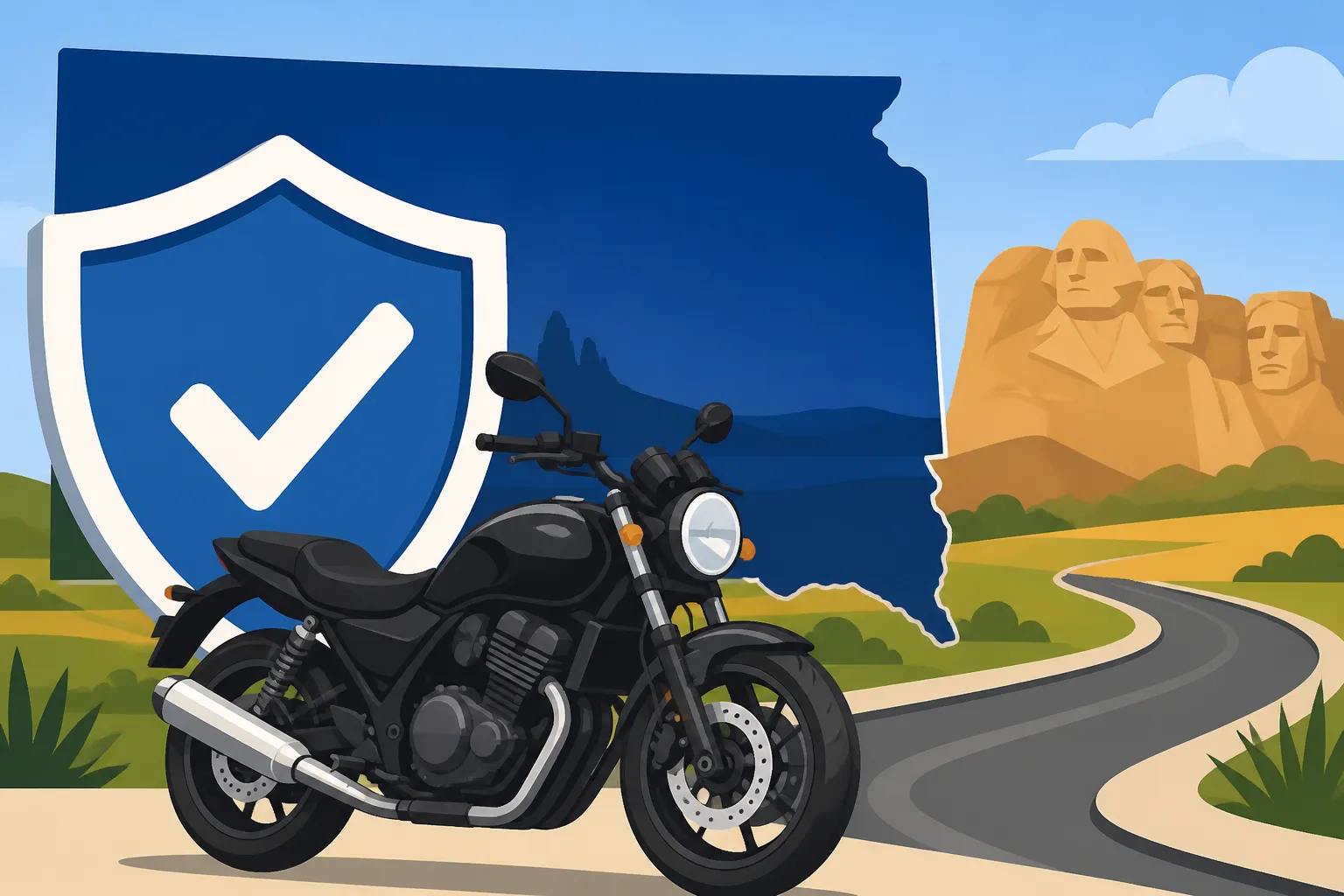
Is Motorcycle Insurance Required in South Dakota?
Let's face it, trying to figure out the exact motorcycle insurance requirements in your state can feel like deciphering ancient hieroglyphs sometimes. You're ready to feel the wind on your face, explore the stunning Black Hills, or cruise along the Missouri River in South Dakota, but the last thing you want is a run-in with the law because you missed a small print insurance rule. This guide is here to cut through the confusion and give you the straight scoop on what motorcycle insurance is actually required to legally ride your bike in the Mount Rushmore State.
Is Motorcycle Insurance Required in South Dakota? The Essentials
Yes, absolutely. If you plan to ride a motorcycle on public roads in South Dakota, you are legally required to carry motorcycle insurance. It's not just a good idea; it's the law. The state operates under an "at-fault" system, meaning the person who causes an accident is responsible for the damages and injuries that result. This is precisely why liability insurance is so crucial. Without it, you're not just breaking the law, you're exposing yourself to immense financial risk if an accident occurs.
Minimum Liability Coverage Explained
South Dakota mandates specific minimum amounts of liability coverage that all registered motorcycles must carry. These numbers might look a little cryptic at first glance, but they're pretty straightforward once you break them down. In South Dakota, the minimum liability limits are often expressed as 25/50/25.
What do these numbers mean for you as a rider?
- $25,000 for bodily injury liability per person: This is the maximum amount your insurance company will pay for the medical expenses, lost wages, and pain and suffering of a single person injured in an accident that you cause. If you're responsible for an accident, and another rider or pedestrian is hurt, your policy will cover up to $25,000 for their injuries.
- $50,000 for total bodily injury liability per accident: This is the total maximum your insurance will pay for all injuries in a single accident you cause, no matter how many people are hurt. So, if three people are injured and their combined medical bills and other damages exceed $50,000, your policy will only pay out $50,000, and you'd be personally responsible for the rest.
- $25,000 for property damage liability per accident: This covers damages to another person's property that you cause in an accident. Think about hitting another vehicle, a fence, or even a building. Your insurance would pay up to $25,000 to repair or replace that damaged property.
Understanding these numbers is key to making sure you meet the legal minimums. For a deeper dive into how these limits work, check out our guide on Minimum Liability Insurance Explained (The Three Numbers).
What Happens If You Ride Without Insurance in South Dakota?
Riding uninsured is a gamble you really don't want to take. The thrill of the open road quickly vanishes if you're caught without the proper coverage. The consequences in South Dakota are serious, and they can quickly turn a fun ride into a legal and financial nightmare. It’s not just a slap on the wrist; it can deeply impact your driving privileges and your wallet.
Penalties and Consequences
If you're caught riding your motorcycle in South Dakota without the mandatory insurance, you're looking at some stiff penalties. The authorities don't mess around when it comes to uninsured motorists, because of the massive financial risks they pose to others on the road.
Here’s a breakdown of what you might face:
- Fines: Expect a significant fine for your first offense. These aren't cheap and can range from several hundred dollars, quickly draining your riding fund. Repeat offenses will see these fines escalate dramatically.
- License Suspension: Your motorcycle license (and potentially your regular driver's license) can be suspended. Imagine not being able to ride your bike for months, or even longer, all because you skipped out on insurance. Getting your license reinstated usually involves paying fees and providing proof of insurance.
- Vehicle Impoundment: Your motorcycle could be impounded on the spot. This means towing fees, storage fees, and the headache of figuring out how to get it back, all while your license is suspended.
- SR-22 Requirement: After being caught without insurance, you might be required to file an SR-22 certificate. This isn't insurance itself, but rather proof that you've obtained high-risk insurance and will maintain it for a specified period, often three years. An SR-22 filing typically means significantly higher insurance premiums, because insurers see you as a higher risk. You can learn more about SR-22 for Motorcycles: When It's Required if you find yourself in this situation.
- Financial Liability: This is arguably the biggest risk. If you cause an accident while uninsured, you are personally responsible for all damages and injuries. This could mean tens of thousands of dollars in medical bills, property damage, and legal fees. Your wages could be garnished, and your assets seized. It’s a truly frightening prospect that can lead to long-term financial ruin.
Think about it: the cost of minimum liability insurance is a fraction of what you'd pay out of pocket in a single accident. The legal system is designed to protect those who follow the rules, and it can be unforgiving to those who don't. Our article, What Happens If You Ride Without Insurance?, offers even more detailed insights into these dire consequences.
Financial Responsibility Laws
South Dakota, like many states, has financial responsibility laws in place. These laws essentially state that every driver or rider must be able to prove they can cover damages if they cause an accident. While theoretically, you could demonstrate financial responsibility through a bond or by depositing a large sum of money with the state treasurer, for the vast majority of riders, obtaining a motorcycle insurance policy is by far the simplest, most practical, and most common way to meet this legal obligation.
Trying to go the route of self-insurance or posting a bond is incredibly complex and requires significant liquid assets that most people simply don't have readily available. This is why insurance exists – to pool risk and provide that financial safety net without requiring you to have hundreds of thousands of dollars sitting in a special account. So, while other methods technically exist, for all intents and purposes, carrying a valid motorcycle insurance policy is how riders in South Dakota satisfy their financial responsibility requirement.
Beyond the Bare Minimum: Recommended Coverage for South Dakota Riders
While meeting South Dakota's minimum liability requirements is legally necessary, it's often not enough to truly protect you and your beloved bike. Many seasoned riders, myself included, will tell you that the bare minimum is just that: bare. It's a starting point, not a comprehensive shield.
Why Minimum Coverage Isn't Always Enough
Let's be realistic. A $25,000 bodily injury limit per person might sound like a lot, but medical bills, especially after a serious motorcycle accident, can skyrocket incredibly fast. Imagine if you're involved in an accident where multiple people are severely injured, or if a single person's medical treatments and lost wages exceed that $25,000 cap. That's where you, personally, become responsible for the overages. The same goes for property damage; if you total a brand-new luxury SUV, $25,000 might not even cover half of it.
Here are a few scenarios where minimum coverage will leave you exposed:
- Your Injuries: Minimum liability only covers others' injuries and property damage if you're at fault. It does nothing for your own medical bills or lost wages. Motorcycle accidents can be particularly brutal, and your health insurance might not cover everything, or you might have high deductibles.
- Damage to Your Bike: If you cause an accident, your minimum liability won't pay a dime to fix your own motorcycle. If your bike is totaled, you're out of luck unless you have additional coverage. This is a tough pill to swallow, especially if your bike is your primary mode of transportation or a significant investment.
- Hit by an Uninsured Driver: What if someone else hits you, and they don't have insurance (or enough insurance)? Your liability coverage won't help you there either. This is a sadly common scenario and one of the biggest frustrations for responsible riders.
This is why most riders choose to beef up their coverage beyond the state minimums. While we're talking about legal requirements, it's also worth understanding What Motorcycle Coverage Do You Actually Need?.
Essential Additional Coverage Options
To truly protect yourself and your investment, consider these vital add-on coverages:
- Collision Coverage: This is your knight in shining armor if your bike gets damaged in an accident, regardless of who is at fault. Whether you hit another vehicle, a tree, or lay your bike down, collision coverage will help pay for the repairs or the actual cash value of your bike if it's totaled, after your deductible. This is pretty much a non-negotiable for most riders.
- Comprehensive Coverage: Think of comprehensive as protection against non-collision incidents. This covers things like theft, vandalism, fire, hail, falling objects (like a branch), or hitting an animal (a common hazard on South Dakota's rural roads). If your motorcycle is stolen from your garage in Sioux Falls, or vandalized while parked in Rapid City, comprehensive coverage steps in. This is especially important for protecting your ride when it's not actually on the road. Our guide, What Is Comprehensive Motorcycle Insurance?, provides a full rundown.
- Uninsured/Underinsured Motorist (UM/UIM) Coverage: As mentioned, this is a lifesaver. This coverage protects you if you're hit by a driver who has no insurance (uninsured) or not enough insurance to cover your damages (underinsured). Given the number of uninsured drivers out there, this coverage is arguably just as important as your liability coverage. It covers your medical bills and, in some cases, property damage.
- Medical Payments (MedPay) or Personal Injury Protection (PIP): While South Dakota is not a no-fault state, MedPay is a crucial add-on. This coverage helps pay for your medical expenses (and sometimes your passenger's) resulting from an accident, regardless of who was at fault. It can cover things like ambulance fees, hospital stays, and doctor visits, up to the policy limit. This can kick in quickly, even before your health insurance, helping to cover deductibles and co-pays.
- Accessories & Custom Parts Coverage: If you've invested in aftermarket exhaust, custom paint, saddlebags, or a fancy GPS system for those long rides through Badlands National Park, your standard policy might not cover their full value. Many insurers offer specialized coverage for accessories and custom parts, which is a must-have for any rider who has personalized their machine. Make sure to discuss this with your insurer, as you’ll want to ensure your modifications are properly documented and valued.
Getting Your South Dakota Motorcycle Insurance Policy
Navigating the process of getting insured doesn't have to be a drag. With a little preparation, you can secure the right coverage efficiently and get back to thinking about your next ride.
Documents You'll Need
When you're ready to get a quote and purchase a policy, having a few key pieces of information and documents handy will make the process much smoother. Insurers need this information to accurately assess your risk and provide you with a precise quote.
Typically, you'll need:
- Your Driver's License/Motorcycle Endorsement: Insurers will need to verify your identity and confirm that you have the proper licensing to operate a motorcycle. This includes your motorcycle endorsement, which is crucial. If you're wondering, Do You Need a Motorcycle Endorsement to Get Insurance?, the answer is almost always yes.
- Motorcycle Details: This includes the year, make, model, and Vehicle Identification Number (VIN) of your bike. The type of motorcycle significantly impacts your rates, with sport bikes often being more expensive to insure than cruisers or touring bikes.
- Registration Information: Proof of current registration for your motorcycle.
- Riding History: Information about your riding experience, any past accidents, or traffic violations. A clean driving record can lead to lower premiums.
- Details on Other Riders: If anyone else will be regularly riding your motorcycle, you'll need their driver's license information as well.
How to Find the Right Policy and Provider
Finding the "right" motorcycle insurance policy isn't just about getting the cheapest rate; it's about finding the right balance of coverage, cost, and a company that will be there for you when you need them most.
Here are some tips for South Dakota riders:
- Shop Around and Compare Quotes: Don't just settle for the first quote you get. Different insurance companies specialize in different types of risks and offer varying rates and discounts. Get quotes from several providers like Progressive, Geico, Dairyland, and Markel. Each company might have a different sweet spot for your rider profile and bike type. Checking out resources like How to Compare Motorcycle Insurance Quotes can be incredibly helpful.
- Look for Discounts: Many insurers offer discounts that can significantly lower your premium. Common discounts include:
- Motorcycle Safety Course Discount: Completing an approved motorcycle safety course (like those offered by the Motorcycle Safety Foundation) often earns you a discount. Not only does it make you a safer rider, but it also saves you money!
- Multi-Policy Discount: Bundling your motorcycle insurance with your car insurance or homeowner's policy can often lead to savings across all policies.
- Experienced Rider Discount: The longer you've been riding safely, the better your rates tend to be.
- Lay-Up or Storage Discount: If you store your bike during the harsh South Dakota winters, some companies offer a discount during the off-season where certain coverages (like collision) are suspended, but comprehensive remains active.
- Consider Your Bike Type: The type of motorcycle you ride will heavily influence your insurance costs. Sport bikes, for example, tend to be more expensive to insure than cruisers.
- Read Reviews and Check Financial Strength: A cheap policy is useless if the company won't pay out when you need them. Look for insurers with good customer service reviews and strong financial ratings.
By taking the time to research and compare, you can find a comprehensive motorcycle insurance policy that protects you and your bike while you explore everything South Dakota has to offer, from the Badlands to the bustling streets of Sioux Falls.
Here's a quick overview of South Dakota's minimum requirements and some recommended coverages:
| Coverage Type | South Dakota Minimum Requirement | What It Covers | Why You Might Need More |
|---|---|---|---|
| Bodily Injury Liability (per person) | $25,000 | Injuries to one person in an accident you cause. | Medical bills can easily exceed this limit, leaving you personally responsible. |
| Bodily Injury Liability (per accident) | $50,000 | Total injuries to all people in an accident you cause. | Multiple injured parties can quickly exhaust this, hitting your personal finances. |
| Property Damage Liability | $25,000 | Damage to another person's property (vehicle, fence, etc.) in an accident you cause. | The cost of repairing newer vehicles or extensive property damage can far exceed this. |
| Uninsured/Underinsured Motorist | Not required | Your injuries and sometimes property damage if hit by a driver with no or insufficient insurance. | Protects you from others who break the law and don't carry sufficient coverage. |
| Collision Coverage | Not required | Damage to your own motorcycle if you hit another vehicle or object, or lay your bike down. | Essential to repair or replace your bike after an accident where you are at fault. |
| Comprehensive Coverage | Not required | Damage to your bike from non-collision events like theft, vandalism, fire, weather, or animal strikes. | Protects your investment when it's not involved in a crash, especially for expensive bikes. |
| Medical Payments | Not required | Your medical expenses (and passengers') after an accident, regardless of fault. | Helps cover immediate medical costs, deductibles, and co-pays quickly. |
| Accessories & Custom Parts | Not required | Damage or loss to aftermarket parts, custom paint, and riding gear. | Safeguards your personal investment in customizing your motorcycle. |
Disclaimer
Please remember that insurance laws and requirements can change. This information is intended for general guidance and informational purposes only, and does not constitute legal or financial advice. Always consult with a qualified insurance professional or the South Dakota Department of Labor and Regulation for the most current and specific requirements applicable to your situation.