Does Liability Cover Damage to My Own Motorcycle?
It's a question that keeps a lot of riders up at night, or at least scratching their helmets: "Does my motorcycle liability insurance actually cover the damage to my own bike if I get into an accident?" This is a massive point of confusion, and frankly, it's one of those hard truths that can leave you financially stranded if you don't understand it before a mishap occurs. Nobody wants to be left with a crumpled fender and a massive repair bill they thought was covered. This guide is dedicated to clearing up this critical misunderstanding, explaining exactly what liability insurance does and doesn't do, and showing you what coverages you actually need to protect your beloved motorcycle.
Understanding Liability Coverage on Your Motorcycle Policy
Let's get straight to the point: standard liability coverage on your motorcycle insurance policy does not cover damage to your own motorcycle. This is a fundamental principle of insurance that often trips people up. Think of liability as coverage for other people and their property when you are deemed at fault in an accident. It's about protecting you from the financial fallout of harming someone else or their stuff, not your own.
Bodily Injury Liability Explained
Imagine you’re cruising down the highway, maybe a little distracted, and you swerve, clipping another car. The driver of that car is injured, perhaps with whiplash or a broken arm. That’s where bodily injury liability steps in. This part of your policy is designed to cover the costs associated with injuries sustained by other people in an accident that you cause. This includes things like:
- Medical Expenses: Hospital bills, doctor visits, physical therapy, and even long-term care for the injured party.
- Lost Wages: If the injured person can't work due to their injuries, your bodily injury liability can cover their lost income.
- Pain and Suffering: Compensation for the non-economic damages the injured party experiences.
- Legal Fees: Should the other party decide to sue you, your liability coverage will typically help with your defense costs.
States across the country have minimum requirements for bodily injury liability. For example, in Texas, the minimum is 30/60, meaning $30,000 for bodily injury per person and $60,000 for bodily injury per accident. It’s crucial to understand these numbers, and many experienced riders will tell you that the state minimums are often woefully inadequate given the rising costs of medical care. You can learn more about these specifics in our guide on Minimum Liability Insurance Explained (The Three Numbers).
Property Damage Liability Explained
Now, let’s revisit that scenario where you clipped another car. Besides the driver's injuries, their car now has a big dent and a broken headlight. Property damage liability is the portion of your policy that pays for the repairs or replacement of their vehicle or other property. This could be:
- Vehicle Repairs: Fixing the other car, truck, or even another motorcycle.
- Property Damage: If you somehow hit a fence, a mailbox, or even a building, your property damage liability would cover those costs.
- Loss of Use: Sometimes, if the other party's vehicle is being repaired, this coverage can help with the cost of a rental car for them.
Like bodily injury, property damage liability also has state-mandated minimums. Using Texas again, the minimum is $25,000 for property damage. So, if you cause $5,000 in damage to another vehicle, your property damage liability would cover it. But what if you total a brand-new luxury SUV? $25,000 might not even scratch the surface, leaving you personally responsible for the rest. This is why understanding your Motorcycle Insurance Requirements by State (2026 Guide) is so vital.
The "At-Fault" Principle
The entire framework of liability coverage hinges on the "at-fault" principle. In most states, when an accident occurs, an investigation determines who is primarily responsible. If you are found to be at fault, your liability insurance kicks in to compensate the other party for their damages and injuries. If they are at fault, their liability insurance would cover your damages and injuries.
This is the key distinction: if you cause an accident, your liability coverage pays for the other person's expenses, not your own. Your own bike, your own medical bills (beyond what your health insurance covers), and your own lost wages would not be addressed by your basic liability policy. It's a tough pill to swallow when you're looking at your mangled machine, realizing you're on the hook for repairs because you only carried the bare minimum.
Protecting Your Own Ride: Beyond Basic Liability
Since liability coverage won't touch the damage to your own motorcycle, you need to add specific types of coverage if you want to protect your investment. These are generally optional, but for most riders, they are absolutely essential, especially if your bike is newer, valuable, or financed.
Collision Coverage: When You Hit Something (or Something Hits You)
This is the hero coverage for fixing your own bike after an accident. Collision coverage pays for damage to your motorcycle resulting from a collision with another vehicle, an object (like a guardrail or a tree), or even if you simply lay your bike down. It doesn't matter who is at fault – if you have collision coverage, your policy will pay for the repairs, minus your deductible.
Let’s say you misjudge a curve and hit a curb, damaging your front wheel and forks. Or maybe someone backs out of a parking space and sideswipes your parked bike. If you have collision, your insurer would cover the repair costs. If the damage is extensive enough that your bike is deemed a "total loss," collision coverage would pay out the actual cash value (ACV) of your motorcycle, again, minus your deductible. This peace of mind is invaluable, especially if you're riding a costly machine like a new Harley-Davidson or a Ducati. For a deeper dive, check out What Is Collision Coverage on a Motorcycle?.
Comprehensive Coverage: The "Other" Damages
While collision covers accidents, comprehensive coverage is your shield against pretty much everything else. Think of it as protection for your motorcycle when it's not in a collision. This includes a wide array of incidents:
- Theft: This is a huge concern for many riders. If your motorcycle is stolen, comprehensive coverage will help reimburse you for its value.
- Vandalism: Someone keys your tank or smashes your headlight.
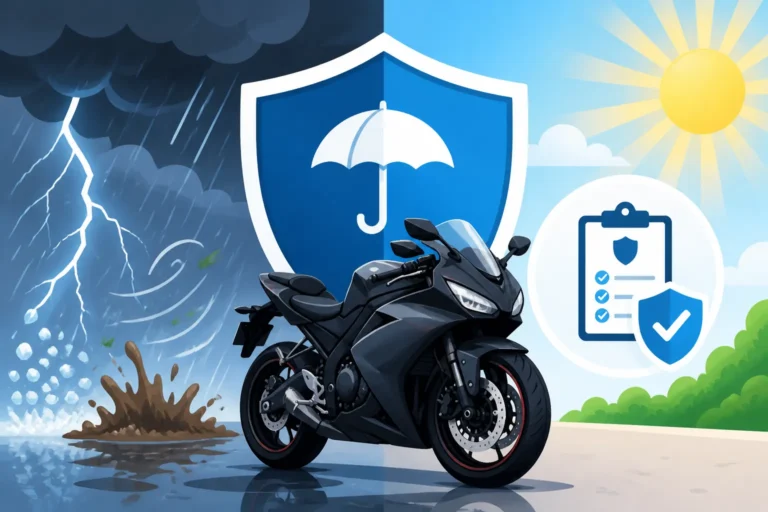
- Natural Disasters: Fire, flood, hail, wind, or even earthquake damage. If your bike is caught in a garage fire or damaged by a hailstorm, comprehensive is what you'll rely on.
- Animal Strikes: Hitting a deer or other animal on the road.
- Falling Objects: A tree branch falls on your bike while it's parked.
Just like collision, comprehensive coverage typically comes with a deductible, which is the amount you pay out of pocket before your insurance kicks in. Having both collision and comprehensive is what most people refer to as What Does Full Coverage Motorcycle Insurance Mean?. It’s particularly important for riders who live in areas prone to specific weather events or have concerns about theft. Our article on What Is Comprehensive Motorcycle Insurance? explains this in full detail.
Actual Cash Value vs. Agreed Value: What Your Bike is Worth
When it comes to getting paid out for your bike, whether through collision or comprehensive, understanding how its value is assessed is crucial.
- Actual Cash Value (ACV): This is the most common payout method. ACV is your motorcycle's replacement cost minus depreciation. So, if your 5-year-old bike was $15,000 new, it might only be worth $8,000 in ACV due to age, mileage, and wear and tear. Most standard policies use ACV, which can be a brutal reality check when you're hoping to replace your bike with a new one.
- Agreed Value: This is often available for classic, custom, or high-value motorcycles. With an agreed value policy, you and your insurer agree on the bike's value before the policy starts. In case of a total loss, the insurer pays out that agreed-upon amount, no questions asked about depreciation. This offers far greater peace of mind for unique or heavily customized bikes. For a custom build that represents countless hours and dollars, having this protection is non-negotiable.
- Stated Value: This is a bit of a trickier one. Stated value policies declare a maximum payout amount, but in the event of a total loss, the insurer will still pay the actual cash value or the stated value, whichever is less. This can be misleading, so always clarify whether a policy is "agreed" or "stated" value.
The difference between these can be tens of thousands of dollars in a total loss situation. If you've invested heavily in modifications, chrome, or performance upgrades, these coverages for Accessories & Custom Parts Coverage Explained become paramount. To truly safeguard your custom ride, you need to understand the nuances explained in our guide Agreed Value vs Stated Value vs Actual Cash Value.
Real-World Scenarios: When Liability Isn't Enough
Let's walk through some common scenarios that illustrate why relying solely on liability coverage for your motorcycle can leave you in a very tight spot financially.
Accidents You Cause: The Cost of Fixing Your Own Bike
Imagine you're making a left turn, and you misjudge the speed of an oncoming car. You turn, they hit you. You're fine, miraculously, but your beautiful Yamaha R6 is now a twisted mess of metal and plastic. The police determine you were at fault for failing to yield.
- What liability covers: The other driver's injuries (medical bills, lost wages) and the damage to their car would be covered by your bodily injury and property damage liability limits.
- What liability doesn't cover: The several thousand dollars it will take to repair your Yamaha. Without collision coverage, you are 100% responsible for those repair costs out of your own pocket. If your bike is totaled, you get $0 from your insurer for your own loss. This is a tough reality for many riders who assume "insurance" means everything is covered. Platforms like The Zebra can help you compare what various insurers like Progressive or Dairyland offer in terms of collision options, making it easier to see how adding it impacts your premium.
Non-Collision Incidents: Theft, Vandalism, and Weather
It's not just accidents that can wreck your day and your finances. Motorcycles are prime targets for theft, and Mother Nature doesn't care about your pride and joy.
- Scenario 1: Theft. You park your Harley-Davidson Road Glide in front of your favorite diner, grab a bite, and come out to an empty space. It's gone. You report it to the police.
- What liability covers: Absolutely nothing. Your liability policy only covers damage you cause to others.
- What liability doesn't cover: The loss of your stolen motorcycle. Without comprehensive coverage, you're out the entire value of your bike. This is why Does Motorcycle Insurance Cover Theft? is such a crucial read.
- Scenario 2: Hailstorm. A sudden, violent hailstorm rolls through while your bike is parked uncovered in your driveway. Your tank is riddled with dents, the fairings are cracked, and your windshield is shattered.
- What liability covers: Again, nothing.
- What liability doesn't cover: The thousands of dollars in damage from the hail. Only comprehensive coverage would step in here to help with the repairs.
These situations highlight that "full coverage" – meaning both collision and comprehensive – isn't a luxury; it's a necessity for protecting your own assets.
Making Smart Coverage Decisions
Now that you know liability won't fix your bike, the big question is: what should you get? There's no one-size-fits-all answer, as it depends on several factors:
- Value of Your Motorcycle: Is it a brand new sport bike, a vintage classic, or an older, less expensive cruiser? The higher the value, the more crucial collision and comprehensive become.
- Financed vs. Paid Off: If your motorcycle is financed, your lender will require you to carry full coverage (collision and comprehensive) to protect their investment. This isn't optional. Our guide on Motorcycle Insurance Requirements for Financed Bikes goes into more detail.
- Your Financial Situation: Can you afford to pay for thousands of dollars in repairs out of pocket if your bike is damaged or stolen? If not, full coverage is a wise investment.
- Risk Tolerance: Are you comfortable taking the risk of self-insuring for damage to your own bike?
- Riding Habits: Do you ride daily in heavy traffic, increasing your collision risk? Or is it a weekend cruiser mostly ridden on scenic, open roads?
When weighing your options, remember to think about the true cost of an incident. While liability insurance is the legal minimum to ride, it's a bare-bones policy designed to protect others from your mistakes, not to protect you or your prized possession. Using online comparison tools from services like The Zebra can help you quickly compare different types of motorcycle insurance coverage, including collision and comprehensive, to find the right balance for your budget and needs. You’ll see that the premium difference for adding these vital coverages might be less than you expect, especially when compared to the potential out-of-pocket costs of a major incident. For general guidance on coverage, check out Types of Motorcycle Insurance Coverage Explained.
Here's a quick comparison of the main types of motorcycle insurance coverage:
| Coverage Type | What it Covers | What it Doesn't Cover | Typical Cost Impact (Relative) | Who It Protects | Mandatory in Most States? |
|---|---|---|---|---|---|
| Bodily Injury Liability | Injuries to other people when you're at fault | Your injuries, damage to your bike | Low (Base) | Other drivers/passengers | Yes (Minimums) |
| Property Damage Liability | Damage to other people's property when you're at fault | Damage to your bike | Low (Base) | Other's property | Yes (Minimums) |
| Collision | Damage to your motorcycle from an accident (your fault or not) | Theft, vandalism, natural disasters | Moderate | Your motorcycle | No (Often Lender Req.) |
| Comprehensive | Damage to your motorcycle from non-collision events (theft, fire, hail, animal strikes, vandalism) | Damage from an accident | Moderate | Your motorcycle | No (Often Lender Req.) |
| Uninsured/Underinsured Motorist | Your injuries/damage if hit by a driver with no or too little insurance | Damage you cause to others, damage to your bike if you're at fault | Low to Moderate | You, your passengers | Yes (Some States) |
Choosing the right amount of coverage means balancing risk with affordability. While state minimums for liability might seem cheap, the peace of mind that comes with knowing your own motorcycle is protected through collision and comprehensive coverage is truly priceless. Always get quotes for various coverage levels to make an informed decision about what's best for you and your riding lifestyle.
Disclaimer
Please remember that insurance policies can vary significantly by provider and state. This information is intended as a general guide and should not be considered legal or financial advice. Always consult with a licensed insurance professional to understand the specifics of your policy and to determine the best coverage for your individual needs.