How Much Accessories Coverage Do I Need?
It’s a tale as old as time for motorcyclists: you pour your heart, soul, and hard-earned cash into customizing your ride, making it truly yours. From performance upgrades to gleaming chrome, every bolt tells a story. But then, a nagging worry creeps in: what happens if something goes wrong? Many riders discover the hard way that their standard motorcycle insurance policy might not fully protect that personal investment, leaving them scrambling after an accident or theft. This guide will help you understand accessories coverage and how to determine exactly how much you need to truly protect your custom masterpiece.
Understanding Motorcycle Accessories and Custom Parts Coverage
When you first get a motorcycle insurance policy, it’s usually set up to cover the bike as it rolled off the factory floor. That makes sense, right? But for us riders, that's often just the beginning. We add, we change, we upgrade – we make it ours. This is where "accessories and custom parts coverage" comes into play, and it’s a critical piece of the puzzle that many riders overlook, sometimes to their great detriment.
Why Standard Policies Often Fall Short
Imagine you've just spent a few thousand dollars on a custom paint job, a high-performance exhaust system, and a comfortable touring seat. You have comprehensive and collision coverage, so you feel secure. Then, disaster strikes – your bike is damaged in a parking lot tip-over or stolen right out of your garage. When you go to file a claim, you might be shocked to learn that your policy only covers the bike's "actual cash value" (ACV) as a stock model, with perhaps a very minimal amount – often just $1,000 to $3,000 – built-in for accessories. That beautiful paint job? Those expensive pipes? They might be drastically undervalued, or worse, not covered at all beyond that small base amount. It’s a gut punch when your pride and joy is damaged, and the insurance payout doesn't even come close to covering your personal investment. This is precisely why it’s so important to dig deeper and understand your specific policy.
Common Frustrations with Valuing Custom Work
One of the biggest frustrations riders face is the subjective nature of valuing custom work. An insurer might look at a hand-tooled leather seat and see a "seat," while you see hours of craftsmanship and unique artistry. The same goes for performance modifications. That aftermarket ECU tune and air intake that boost horsepower significantly? To some adjusters, it might just be "parts" with little added value, not realizing the significant investment in both components and skilled labor. It often feels like you're speaking a different language than the insurance company when trying to explain the true worth of your custom motorcycle. The market value for a stock bike is easy to determine, but the value of unique customizations is a much murkier territory, leading to disputes and disappointing payouts if not properly insured from the start. This is why securing adequate Accessories & Custom Parts Coverage Explained is non-negotiable for anyone with a modified bike.
What Counts as an Accessory or Custom Part?
It might seem obvious, but what an insurance company considers an "accessory" or "custom part" can sometimes differ from a rider's common understanding. Generally, these are items that were not part of the manufacturer's original specification when the bike was new, or they are upgrades that replace original factory parts with more expensive or specialized versions.
Detailed Breakdown of Categories
Accessories and custom parts can generally be broken down into a few categories:
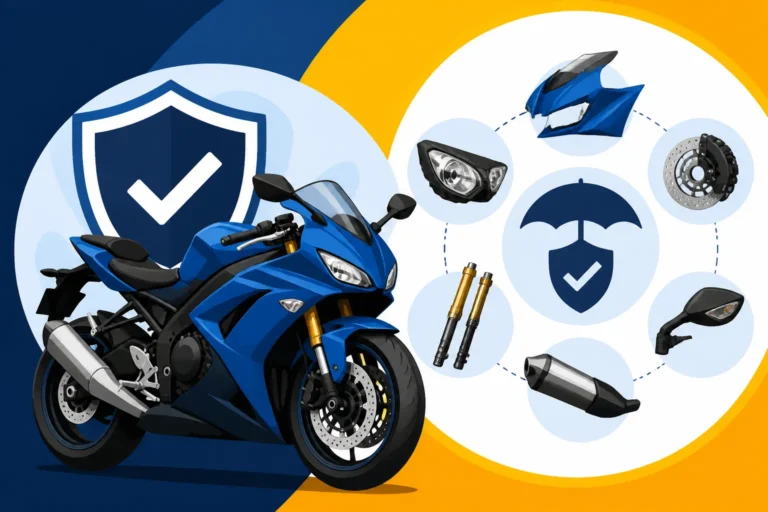
- Aesthetic Enhancements: This is often where a lot of personal expression comes in. Think custom paint jobs, chrome plating, anodized parts, custom fairings, unique lighting, specific handlebars, and aftermarket mirrors. If you've got a Harley-Davidson decked out with Kuryakyn chrome or a custom-built chopper with a unique paint scheme, these are prime examples.
- Performance Upgrades: These are the modifications designed to make your bike go faster, handle better, or sound more aggressive. This includes aftermarket exhaust systems (like Vance & Hines or Akrapovic), performance air filters, fuel tuners, engine mods, upgraded suspension components (Öhlins shocks, for example), and custom brake systems.
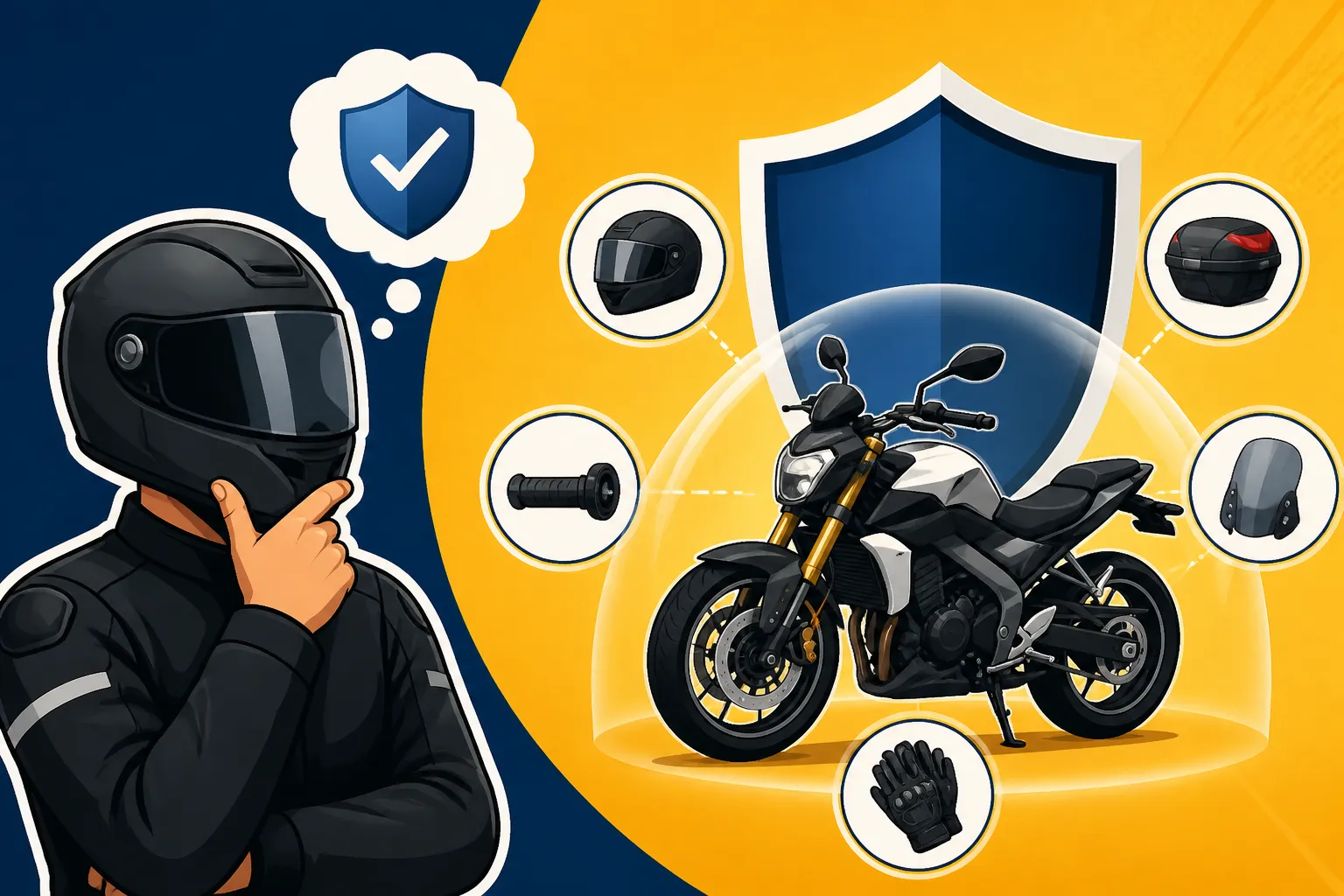
- Comfort and Ergonomics: Many riders upgrade their bikes for a more comfortable or tailored riding experience. This category includes aftermarket seats (e.g., Mustang or Saddlemen), heated grips, taller windshields, extended foot controls, and luggage racks or saddlebags.
- Electronics and Navigation: Modern bikes often get upgraded with advanced electronics. This can range from premium sound systems, GPS navigation units, upgraded dashboard displays, to communication systems integrated into your helmet.
- Safety and Protection: While some factory parts are for safety, many riders add extra layers of protection. Frame sliders, engine guards, upgraded crash bars, and even specific types of upgraded tires that weren't standard can fall into this category.
Understanding these categories helps you inventory your own bike's modifications. If you're wondering, "Does Motorcycle Insurance Cover Custom Parts?", the answer is usually yes, but only if you specifically add enough coverage for them.
The Gray Area: Things That Came on the Bike vs. Added Later
Here’s where it gets tricky. Sometimes, a "custom" part might have been installed by the dealership as part of an optional package when you bought the bike new. Other times, you might have bought a used bike that already had aftermarket modifications. In these scenarios, it’s crucial to clarify with your insurance provider. If it was installed by the manufacturer or dealer as part of the original purchase, it might be included in the base value of the motorcycle. However, if you or a previous owner added it after the initial purchase, it's almost certainly considered an aftermarket accessory and needs specific coverage.
Don't assume anything. A good rule of thumb is: if you can find a receipt for the part and installation that occurred after the bike was originally purchased from the factory, it probably needs dedicated accessories coverage. When you get a quote through a platform like The Zebra, make sure to explicitly list all non-factory installed items to ensure they're accounted for. This transparency prevents headaches down the road.
Determining the Value of Your Customizations
This is arguably the most important step in figuring out how much accessories coverage you need. It’s not just about getting "some" coverage; it’s about getting the right amount that accurately reflects your investment. Overlooking this step can lead to significant financial loss if you ever need to file a claim.
The "Actual Cash Value" vs. "Agreed Value" vs. "Stated Value" Conundrum
When it comes to insuring your motorcycle, especially one with custom parts, the valuation method your policy uses is absolutely critical.
- Actual Cash Value (ACV): This is the default for many standard policies. ACV means the insurance company will pay you the replacement cost of your custom part minus depreciation. So, if you bought a $1,000 exhaust system five years ago, it might only be valued at $400 or $500 today due to wear and tear and age. This can be a huge disappointment for custom parts that often hold their value better or are more difficult to replace. Most base accessories coverage (the small amount built into policies) operates on an ACV basis.
- Stated Value: This is often seen as a step up, but it comes with a catch. With stated value, you declare the maximum amount you believe your bike (and its accessories) is worth. The insurance company agrees to not pay more than this amount in the event of a total loss or significant damage. However, the insurer still retains the right to pay less than the stated value, often reverting to ACV if they determine the market value or depreciated value is lower. It's a ceiling, not a guarantee.
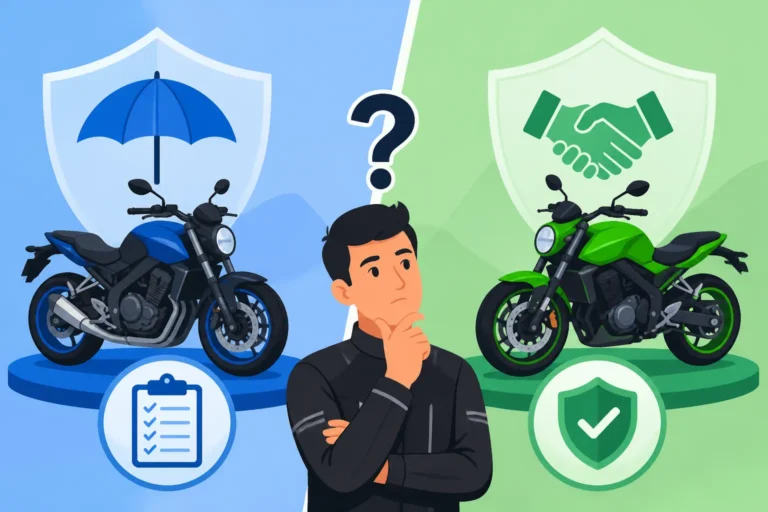
- Agreed Value: This is generally the gold standard for custom and vintage motorcycles. With agreed value, you and the insurance company agree on a specific value for your motorcycle (including all its custom parts and accessories) before the policy is issued. In the event of a total loss, the insurer pays out that exact agreed-upon amount, no questions asked about depreciation. This provides peace of mind that your investment is fully protected. However, policies offering Agreed Value vs Stated Value vs Actual Cash Value often require an appraisal and can be more expensive.
Here's a quick comparison to help you visualize:
| Valuation Method | Description | Payout in Total Loss (Custom Parts) | Rider Protection | Common Scenario |
|---|---|---|---|---|
| Actual Cash Value | Replacement cost minus depreciation (age, wear and tear). Standard default for most basic policies. | Depreciated value of the custom part, often significantly less than original cost. | Low. You bear the risk of depreciation. | Standard factory bikes, limited aftermarket parts. |
| Stated Value | You declare a maximum value. Insurer will pay up to this amount, but may pay less (e.g., ACV). | Up to the stated value, but insurer may still apply depreciation or market value, reducing payout. | Medium. Offers a ceiling but no guarantee of full payout. Often misunderstood. | Moderately customized bikes, where full appraisal isn't done. |
| Agreed Value | You and insurer agree on a fixed value before policy. Requires appraisal or detailed documentation. | The exact agreed-upon amount, regardless of depreciation or market value at time of loss. | High. Your investment is fully protected at the agreed amount. | Heavily customized, vintage, or high-value motorcycles. |
How to Document Your Upgrades
Documentation is your best friend when it comes to accessories coverage. Without solid proof of purchase and installation, an insurance company has little basis to offer a fair payout.
- Keep Every Receipt: This cannot be stressed enough. For every aftermarket part, every custom service (like paint), and every installation labor charge, save the receipt. Keep digital copies and physical copies in a safe place.
- Take Detailed Photos and Videos: Before and after photos of your customizations are invaluable. Take pictures of the parts, the installation process (if you or a friend did it), and the finished product from multiple angles. A video walkthrough of your bike highlighting the custom features can also be incredibly useful.
- Get Appraisals for Significant Custom Work: For major custom builds, unique paint jobs, or rare parts, consider getting an official appraisal from a reputable custom bike shop or an independent appraiser specializing in motorcycles. This provides an objective, professional valuation.
- Maintain a Detailed Spreadsheet: Keep a running list of every custom part, its cost, installation date, and estimated value. Update it regularly. This makes it easy to review with your insurance agent annually.
The Importance of Regular Updates to Your Policy
Your bike is a living, evolving machine, especially if you're a custom enthusiast. As you add new parts or make further modifications, your insurance policy needs to evolve with it. Don't just set it and forget it! If you add a new exhaust system or change out your wheels, inform your insurance company and adjust your accessories coverage immediately. Waiting until after an incident is too late. A quick call to your agent ensures your investment remains protected. This diligent record-keeping and communication are vital steps in How to File a Motorcycle Insurance Claim successfully if the worst happens.
Factors Influencing Your Accessories Coverage Needs
The amount of accessories coverage you need isn't a one-size-fits-all number. It's a highly personal decision influenced by several key factors related to your bike, your budget, and your future plans.
Cost of Parts, Installation Labor, Type of Bike, and Rarity
First and foremost, the actual monetary value you've invested dictates a large portion of your coverage needs. This includes:
- Cost of Parts: Simply add up the purchase price of all your aftermarket and custom components. Don't underestimate small items; they add up quickly.
- Installation Labor: Did you pay a professional shop to install your new suspension or performance engine components? Labor costs can be substantial, and they contribute to the overall value of your customization. Ensure these costs are documented and included in your valuation.
- Type of Bike: A highly customized Harley-Davidson touring bike with extensive chrome, a custom fairing, and a high-end sound system will naturally require much more accessories coverage than a lightly modified entry-level cruiser. Sportbikes often have expensive performance upgrades, while vintage bikes might have rare, custom-fabricated parts that are hard to replace.
- Rarity and Uniqueness: If you have one-off custom parts, hand-built components, or rare vintage accessories, their replacement cost can be extremely high. Finding a direct replacement might be impossible, requiring custom fabrication again. This rarity justifies a higher agreed value.
An insurance provider like Progressive or Dairyland might have different ways of assessing these factors, so it’s always wise to compare. Using a service like The Zebra can help you see which companies are more amenable to insuring highly customized bikes at a fair rate.
Future Plans for More Modifications
Are you planning more custom work down the line? Maybe a new paint job next spring, or a big engine build next winter? If so, factor these future investments into your long-term insurance strategy. You don't necessarily need to insure them today, but having a plan to adjust your coverage as soon as those modifications are complete is crucial. Think of your accessories coverage as an ongoing relationship, not a one-time transaction. If you're constantly evolving your bike, your policy should evolve right along with it.
It also helps to consider how much you're willing to pay out-of-pocket if a modification gets damaged before you've had a chance to update your policy. For many riders, the peace of mind of having everything covered outweighs the small additional premium, especially when the cost of replacement parts for a custom bike can be astronomical.
How Much Coverage Do You Really Need? A Step-by-Step Approach
Okay, so we’ve covered what counts and how to value it. Now, let’s get down to the brass tacks: how do you actually determine the number you need for your accessories coverage? It’s a methodical process, but one that will save you immense heartache and money in the long run.
Practical Guide: Audit Your Bike, Tally Costs, Consider Labor
Here’s a clear pathway to follow:
- Conduct a Full Audit: Walk around your motorcycle with a notepad (or your smartphone's notes app) and meticulously list every single non-factory component or modification. Don't forget the small stuff! Custom grips, levers, footpegs, windshields, mirrors, lights, exhaust, seats, saddlebags, luggage racks, engine covers, chrome pieces, fairings, paint, suspension, wheels, brakes – everything.
- Gather Your Documentation: For each item on your list, pull out the corresponding receipt. Note the purchase price and the date of purchase. If you had professional installation, get those labor receipts too.
- Calculate Total Investment: Sum up all the costs for parts and labor. This will give you your initial baseline figure. This number represents your actual cash outlay.
- Consider Replacement Cost vs. ACV: If your policy defaults to Actual Cash Value (ACV) for accessories, and your custom parts are several years old, you need to understand that you likely won't get your full investment back. If you want true replacement cost without depreciation, you’ll need to seek an "Agreed Value" policy or discuss special endorsements for custom parts with your insurer.
- Factor in Unique Value: For truly unique, one-off, or artisan-crafted items, replacement cost might be impossible. This is where an appraisal becomes invaluable and pushes you toward an "Agreed Value" policy.
For example, if you have a sport bike with a full Akrapovic exhaust ($2,000), Öhlins suspension ($3,000), custom paint ($1,500), and a new seat ($500), your total investment is $7,000 (excluding labor). This is your starting point for accessories coverage. You might decide you need What Motorcycle Coverage Do You Actually Need? beyond just the base liability.
Tips for Discussing with Your Agent
Once you have your detailed list and total value, it’s time to talk to your insurance agent.
- Be Prepared and Thorough: Don't just call and say, "I have some custom parts." Present your organized list of parts, costs, and photos. The more information you provide, the easier it is for your agent to accurately quote and secure the right coverage.
- Ask About Specific Endorsements: Many insurers offer specific endorsements or riders for custom parts and accessories. These are add-ons to your policy that increase the coverage limit for these items and sometimes change the valuation method (e.g., from ACV to stated or agreed value).
- Clarify Valuation Methods: Explicitly ask how your custom parts will be valued in the event of a claim. "Will you use Actual Cash Value, Stated Value, or Agreed Value for my custom exhaust?" Get a clear answer in writing if possible.
- Discuss Deductibles: Understand that accessories coverage often shares a deductible with your comprehensive and collision coverage. A higher deductible might lower your premium, but it means you'll pay more out-of-pocket if you file a claim for damaged accessories.
Reviewing Existing Policies
If you already have a motorcycle insurance policy, don't assume your customizations are covered. Pull out your policy documents and look for sections pertaining to "custom parts," "accessories," or "modifications." You might find a small, built-in amount (e.g., $1,000 or $2,000), but often that's it. Compare that amount to your detailed list of investments. If there's a significant gap, it's time to talk to your agent and increase that limit. Don't be afraid to ask for a full policy review to ensure you're not leaving yourself vulnerable. If you're curious about how your accessories are covered, checking your policy's specifics on Types of Motorcycle Insurance Coverage Explained is a good starting point.
The Risks of Being Underinsured for Your Accessories
It’s easy to think, "It won't happen to me," or "I'll just replace it myself if something minor happens." But the reality is, being underinsured for your custom motorcycle accessories carries significant financial and emotional risks that can turn an already bad situation into an absolute nightmare.
What Happens if You Don't Have Enough Coverage?
The simplest answer is: you pay for it yourself. If your custom parts are valued at $10,000 and your policy only has $2,000 in accessories coverage (and it’s on an ACV basis, so you get even less after depreciation), you’re on the hook for the remaining $8,000. That’s $8,000 out of your own pocket to restore your bike to its former glory. This can be a devastating blow, especially if it comes after a major accident or theft, which already carries its own financial burdens.
Think about a rider in Texas who spent $6,000 on engine upgrades and a custom seat for their cruiser. After a non-fault accident where their bike was damaged, the standard policy only offered $1,500 for accessories. They were left to decide whether to pay the remaining $4,500 themselves, or downgrade their beloved custom bike. This situation is unfortunately common and entirely avoidable with proper planning.
The Heartbreak of a Totaled Bike with Minimal Payout for Custom Work
This is perhaps the most painful scenario. When your motorcycle is deemed a "total loss," the insurance company determines the cost to repair it exceeds a certain percentage of its market value. If you only have basic coverage for accessories, the payout for your totaled bike will largely ignore all the personal investment you've made. For example, if your custom chopper, which you invested $30,000 into (including $15,000 in custom work), is totaled, and the insurer only values the "stock" bike at $10,000 with a $2,000 accessories limit, you could be looking at a payout of just $12,000. That’s a staggering $18,000 loss from your investment. You lose your unique bike, and you don't even get enough to replace it or build a new one to your specifications. This is why understanding What Happens When Your Motorcycle Is Totaled? is vital for custom bike owners.
Real-World Scenarios of Claims Gone Wrong
I’ve heard countless stories from riders who faced this exact frustration. One rider in Florida had a beautiful, hand-painted tank on their custom Softail. The bike was stolen, and while the insurer paid out for the base bike, the unique paint job was barely recognized. Another rider, with a sport bike full of high-end track day components, was involved in a collision. Because they hadn't specifically listed and covered their upgraded suspension and brakes, the insurer only paid out for stock components, leaving them with thousands of dollars in uncovered replacement costs.
These aren't isolated incidents. They are common pitfalls for riders who don't take the time to properly insure their accessories. The financial sting, combined with the emotional distress of losing or damaging a cherished custom ride, is a powerful reminder of why adequate coverage isn't just a suggestion—it's a necessity. It’s also important to remember that Does Motorcycle Insurance Cover Theft? applies differently to the base bike versus its custom parts without proper endorsement.
Tips for Getting the Right Accessories Coverage
Finding the right coverage for your custom motorcycle shouldn't feel like a treasure hunt. With a strategic approach, you can ensure your unique ride is adequately protected.
Shop Around and Compare Policies
Not all insurance companies treat custom parts and accessories the same way. Some providers are more custom-bike friendly, offering higher default accessory limits or more flexible "Agreed Value" options. It’s crucial to shop around and get quotes from multiple insurers. Don't just settle for the first quote you receive.
- Utilize Online Comparison Tools: Websites like The Zebra can be incredibly useful here. They allow you to input your motorcycle details and specific modifications, and then provide comparative quotes from several different carriers. This can quickly show you which companies offer better terms or more comprehensive options for your custom setup. When using a tool like The Zebra, be as detailed as possible about your modifications to get the most accurate quotes.
- Look for Specialty Insurers: While major players like Progressive and Geico offer motorcycle insurance, some smaller, specialty carriers focus specifically on custom, classic, or high-value motorcycles. They might have a deeper understanding of the value of custom work and offer more tailored policies.
- Don't Just Look at the Bottom Line: While price is always a factor, don't let it be the only factor. A slightly more expensive policy that offers "Agreed Value" for your $10,000 in custom parts is almost always a better deal than a cheaper policy that only covers $2,000 at ACV.
This process helps you understand How to Compare Motorcycle Insurance Quotes effectively, especially for specialized needs like custom accessories.
Don't Just Go with the Cheapest Option
This ties directly into the point above. The "cheapest" motorcycle insurance policy often means the most basic coverage. For a stock, older bike, that might be perfectly acceptable. But for a custom build, the cheapest option is almost certainly going to leave you massively underinsured for your accessories. The small savings on your premium will be dwarfed by the out-of-pocket costs if your custom parts are damaged and not properly covered.
Consider your investment in the custom work. If you've spent thousands, an extra $50 or $100 a year on your premium to properly cover those modifications is a minor expense for significant peace of mind. It's truly a case of "you get what you pay for." For example, while you might find a cheap liability-only policy, it won't cover your custom parts if you have an accident. You'll need collision and comprehensive, plus the accessories rider. Understanding How to Get Cheap Motorcycle Insurance usually involves balancing cost with adequate protection.
Work with an Agent Who Understands Custom Bikes
Not all insurance agents are created equal, especially when it comes to the nuances of motorcycle insurance. Seek out an agent who rides themselves, or who specializes in motorcycle policies. They’ll be more likely to understand the jargon, appreciate the value of custom work, and guide you towards the best options.
A knowledgeable agent can:
- Help you accurately value your custom parts.
- Suggest specific endorsements or separate policies for high-value customizations.
- Explain the pros and cons of ACV, Stated Value, and Agreed Value in the context of your specific modifications.
- Advise you on Best Motorcycle Insurance Companies (2027) that are known for their strong custom bike coverage.
Regular Policy Reviews
Your bike, like your life, isn't static. As mentioned earlier, your policy needs to keep up. Set a reminder to review your motorcycle insurance policy annually, or whenever you make significant changes to your bike. Update your agent with new receipts, photos, and an updated total value for your accessories. This ensures that if you ever need to make a claim, your policy accurately reflects the current state of your cherished ride.
By following these tips, you can transform the daunting task of insuring your custom motorcycle into a straightforward process, guaranteeing that your two-wheeled work of art is protected as thoroughly as you’ve built it. Don't let your customizations become an afterthought until it's too late!
Disclaimer
Please remember that this information is for educational purposes only and should not be considered legal or financial advice. Insurance policies vary widely, and it's crucial to consult with a qualified insurance professional to discuss your specific needs and obtain accurate quotes based on your individual circumstances and local regulations. Always read your policy documents carefully to understand your coverage.