Texas Motorcycle Helmet Law
Navigating the dusty backroads of the Texas Hill Country or weaving through the dense morning traffic on I-35 in Austin brings a unique set of challenges that only a rider can truly understand. One of the most persistent points of confusion for both new and veteran riders is the complexity surrounding the Texas Motorcycle Helmet Law. This guide is designed to clear the fog, detailing exactly who needs a helmet, the specific insurance requirements for going lidless, and how these choices impact your legal and financial standing if the unthinkable happens.
The Legal Framework of Helmet Use in Texas
In the Lone Star State, the law regarding headgear is not a simple "yes" or "no" proposition. Under the Texas Transportation Code, specifically Section 661.003, the state mandates that all riders and passengers must wear a helmet that meets the Federal Motor Vehicle Safety Standard #218. However, Texas is a state that values individual choice for adults, which is why there are specific exemptions carved out for those who meet certain criteria.
The first and most non-negotiable rule is the age requirement. If you are under the age of 21, you must wear a helmet at all times while operating or riding on a motorcycle. There are zero exceptions for minors. This is a point of frequent frustration for parents who might be seasoned riders themselves, but the state is firm: the brain of a young rider is seen as a priority for protection until they reach legal adulthood. If you are planning a family ride out to the Luckenbach area, ensuring every minor has a DOT-approved helmet is the first step to staying legal.
For those 21 and older, the path to riding without a helmet involves meeting one of two specific legal hurdles. You must either have successfully completed a motorcycle operator training and safety course approved by the state, or you must be covered by a specific amount of health insurance. It is a common misconception that simply being an "experienced" rider is enough to ditch the lid. Without the physical proof of either that safety course completion or the right insurance policy, you are technically in violation of the law the moment you pull out of your driveway in Houston or San Antonio.
The Intersection of Helmet Laws and Motorcycle Insurance
One of the most critical components of the Texas helmet exemption is the insurance requirement. To legally ride without a helmet as an adult, you must carry at least $10,000 in medical insurance coverage for injuries resulting from a motorcycle accident. This is where many riders get tripped up. Your standard Minimum Liability Insurance Explained (The Three Numbers) policy covers the damage you do to others, but it does not necessarily satisfy the health insurance requirement for riding without a helmet.
When you look at Texas Motorcycle Insurance Requirements, you will notice that the state’s minimum liability limits are 30/60/25. This means $30,000 for each injured person, up to a total of $60,000 per accident, and $25,000 for property damage. However, these numbers are for third-party liability. To go helmetless, you need a health insurance policy that specifically covers motorcycle-related injuries, or you need to add Personal Injury Protection (PIP) or Medical Payments (MedPay) to your motorcycle policy. Many riders assume their employer-provided health insurance covers them, but some private health policies have "extreme sports" or "motorcycle exclusions" that could leave you legally exposed and financially ruined if you are caught without a helmet.
The financial stakes are even higher when you consider how Helmet Law & Insurance: Does Not Wearing One Affect Claims? plays out in the Texas court system. Texas follows a "modified comparative negligence" rule, often called the 51% rule. This means that if you are in an accident and you weren't wearing a helmet, the insurance company for the other driver may argue that you are partially responsible for the severity of your own injuries. If a jury decides you are 20% responsible for your head injury because you chose not to wear a helmet, your total compensation could be slashed by 20%. If they decide you are more than 50% responsible for the damages, you could be barred from recovering any money at all. This makes understanding Is Motorcycle Insurance Required in Texas? more than just a matter of following the law—it is a matter of protecting your right to a fair settlement.
Enforcement and the Reality of Roadside Stops
A significant change occurred in 2009 that many riders still find surprising: Texas law enforcement officers cannot pull you over for the sole purpose of checking if you are complying with the helmet exemption requirements. In the past, an officer in Dallas or El Paso might see a rider without a helmet and initiate a stop just to see if they had their safety course certificate or insurance card. Today, they need another "probable cause" to pull you over, such as a speeding violation or a non-functioning tail light.
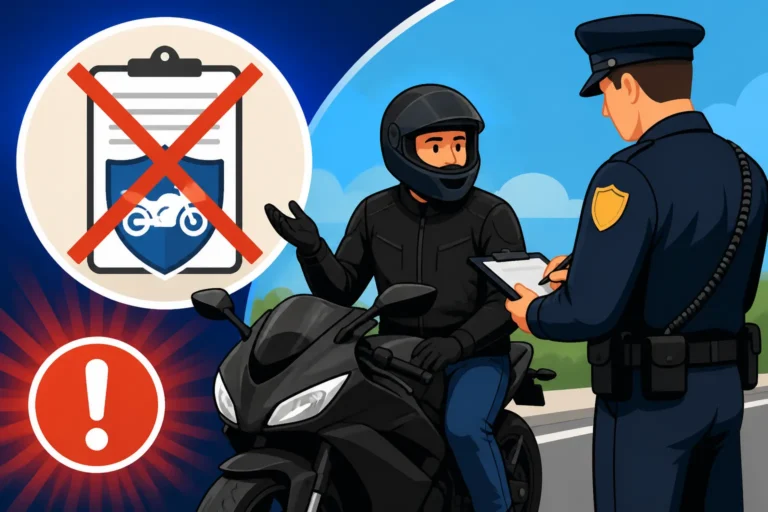
However, do not mistake this for a free pass. If you are pulled over for any other reason—even a minor infraction like failing to signal a turn—and you are not wearing a helmet, the officer will immediately ask for proof of your exemption. If you cannot provide a valid certificate of a completed safety course or proof of that $10,000 medical coverage, you will face a citation. This is often where riders discover that their Penalty for No Motorcycle Insurance in Texas can compound with a helmet violation, leading to heavy fines and potentially higher insurance premiums for years to come.
It is also important to remember that these rules apply to your passengers as well. If you are riding through the beautiful curves of the Twisted Sisters and you have a passenger on the back, they are subject to the same 21-and-over and insurance/safety course rules. Many riders forget that Motorcycle Insurance Requirements for Passengers are just as strict. If your passenger is 22 but hasn't taken a safety course and doesn't have the required health coverage, they must wear a helmet, or you, as the operator, could be the one receiving the ticket.
| Rider Category | Helmet Requirement | Exemption Criteria |
|---|---|---|
| Under 21 Years Old | Mandatory | None |
| 21+ with Safety Course | Optional | Must carry proof of course completion |
| 21+ with Health Insurance | Optional | Must have $10,000+ in medical coverage |
| Passengers (Under 21) | Mandatory | None |
| Passengers (21+) | Optional | Must meet Safety Course or Insurance rules |
Practical Steps for Staying Legal in the Lone Star State
If you have decided that the freedom of riding without a helmet is part of the experience you want, you need to be meticulous about your documentation. Texas is a big state, and while a deputy in a rural county might be lenient, a motorcycle cop in a major metro area likely won't be. Start by keeping a digital or physical copy of your safety course completion card in your riding jacket or in a weather-proof compartment on your bike. Many riders find that Proof of Insurance & Registration for Motorcycles is easier to manage when it is organized in a small, dedicated folder.
Next, have a very honest conversation with your insurance agent about your policy limits. Ask specifically: "Does my current policy provide the $10,000 in medical coverage required by the Texas helmet exemption law?" If the answer is no, you might want to look into How Much Is Motorcycle Insurance in Texas? to see how much adding PIP or MedPay will cost you. Often, the increase in your monthly premium is less than the cost of a single steak dinner, a small price to pay for legal peace of mind.
For those who are financing their ride, the bank might have its own set of rules. While the state of Texas might allow you to go lidless, Motorcycle Insurance Requirements for Financed Bikes often include "comprehensive and collision" clauses that don't care about state exemptions. Some lenders may even have stipulations in their fine print about safety gear, as they want to protect their investment (which is you being able to pay the loan back). Always check your loan agreement before deciding to tuck your helmet away in the garage.
Finally, consider the logistical reality of riding across state lines. If you are starting a tour in Amarillo and heading north into Oklahoma or west into New Mexico, the laws change the moment you cross that invisible line. While Texas allows adults a choice, other states may have universal helmet laws. Being caught unaware is a quick way to turn a dream road trip into a legal headache. Knowing What Happens If You Get Caught Riding Without Insurance? or without proper gear in a neighboring state is just as important as knowing the rules at home.
Final Thoughts for the Road
Choosing whether or not to wear a helmet is one of the most personal decisions a rider makes. In Texas, that choice is protected by law for adults, provided you have done your homework and covered your financial bases. Whether you are commuting through the humid sprawl of Houston or enjoying a sunset ride near the Big Bend, staying informed about the Texas Motorcycle Helmet Law ensures that your focus remains where it should be: on the road ahead and the machine beneath you.
Remember that the legal minimum is rarely the same as the practical maximum. Just because you can ride without a lid doesn't mean you shouldn't weigh the risks of the local traffic environment. A quiet Sunday morning in the suburbs is a very different animal than a Friday night on the 6th Street district in Austin. Protect your right to ride by staying legal, staying insured, and making the choices that keep you in the saddle for years to come.
Disclaimer
This guide is provided for informational purposes only and does not constitute legal or professional insurance advice. Laws and regulations regarding motorcycle operation and insurance requirements in Texas are subject to change. Always consult with the Texas Department of Public Safety (DPS) or a licensed insurance professional to ensure you are in full compliance with current statutes.