Is Motorcycle Insurance Required in Tennessee?
Riding the open roads of Tennessee on two wheels is an experience unlike any other, with breathtaking views from the Great Smoky Mountains to the Mississippi River. But before you hit those scenic routes, there’s a crucial step many riders fret over: understanding the local motorcycle insurance laws. It can feel like navigating a maze of regulations, leaving you wondering if you're truly covered or if you're unknowingly breaking the law. This guide is here to untangle all that, giving you a clear, comprehensive breakdown of motorcycle insurance requirements in Tennessee, so you can ride with peace of mind and full confidence.
Is Motorcycle Insurance Required in Tennessee?
Let's cut right to the chase, because this is one of the most common questions on every rider's mind: yes, motorcycle insurance is absolutely required if you plan on operating your bike on public roads in Tennessee. It's not just a suggestion; it's a legal mandate, much like it is for cars. The state's financial responsibility law means you must be able to cover potential damages if you're found at fault in an accident. Without adequate insurance, you're not just risking legal trouble; you're risking your entire financial future should an unfortunate incident occur.
The Mandate for Tennessee Riders
The Volunteer State takes its road safety and financial responsibility seriously. Every rider on Tennessee's public roads must carry proof of financial responsibility, and for the vast majority of us, that means a valid motorcycle insurance policy. This isn't just about protecting other drivers or their property; it's about protecting yourself from potentially devastating financial fallout. Imagine being involved in an accident, even a minor one, and discovering you're on the hook for thousands, or even tens of thousands, in damages or medical bills because you didn't have the right coverage. That's a nightmare scenario no one wants to face. This requirement ensures that there's a safety net in place, not just for others, but for you too, preventing a single mishap from turning your life upside down.
Minimum Liability Coverage Explained
Tennessee, like many states, mandates specific minimum amounts of liability insurance you must carry. These minimums are often referred to as "split limits" and are typically presented as three numbers. For motorcycles in Tennessee, the minimum liability coverage is 25/50/15. Let's break down what each of those numbers truly represents, because understanding them is key to making sure you're adequately covered, even if you only meet the bare minimum:
- $25,000 for bodily injury liability per person: This is the maximum amount your insurance company will pay for medical expenses, lost wages, and pain and suffering for each individual injured in an accident where you are at fault. So, if you hit another rider and they sustain injuries, your policy would pay up to $25,000 for their costs.
- $50,000 for total bodily injury liability per accident: This is the absolute maximum your policy will pay for all injuries in a single accident you cause, regardless of how many people are hurt. If you hit a car with three occupants, and their collective medical bills and other injury-related costs total $75,000, your policy would only cover $50,000, leaving you personally responsible for the remaining $25,000.
- $15,000 for property damage liability per accident: This covers the cost of repairing or replacing property you damage in an accident, like another vehicle, a fence, a mailbox, or even a building. If you accidentally knock over a luxury car and cause $20,000 in damage, your policy would cover $15,000, and you'd be on the hook for the remaining $5,000.
It's really important to remember that these are just the minimums. In today's world, where vehicle repair costs and medical expenses can skyrocket quickly, these amounts might not be enough to fully cover the damages from a serious accident. Many riders choose to carry higher liability limits to better protect their assets, and for good reason. Just imagine hitting a brand-new Ford F-150 and the driver needs extensive physical therapy; those minimums can disappear faster than you can say "fender bender." If you're looking into Minimum Liability Insurance Explained The Three Numbers, you'll see how these figures are a national standard, but their actual impact can vary wildly.
Navigating Tennessee's Financial Responsibility Laws
Understanding the basics of required insurance is one thing, but truly grasping Tennessee's financial responsibility laws means knowing the consequences of non-compliance and how to properly demonstrate your coverage. It’s not just about having a policy; it’s about having it readily available and understanding what happens when you don't. The state wants to ensure that anyone operating a vehicle, including a motorcycle, can be held financially accountable for damages or injuries they might cause. This system is designed to protect everyone on the road, including you.
What Happens if You Ride Without Insurance?
Riding without motorcycle insurance in Tennessee is a gamble with incredibly high stakes, and the house always wins. If you're caught without the required coverage, the penalties can be severe and far-reaching, impacting your wallet, your driving privileges, and even your ability to register a motorcycle in the future. It’s not just a slap on the wrist; it can genuinely disrupt your life and empty your bank account.
The initial consequences for a first offense of no proof of insurance in Tennessee typically include a fine of up to $100. While that might not sound like a fortune, it's just the beginning. The state can also suspend your driver's license and your motorcycle registration. Reinstating these can involve additional fees, not to mention the hassle of being unable to legally ride or drive for a period. Imagine having your bike in the garage, ready for a weekend trip, but you can't even legally start the engine because your license is suspended.
If you have multiple offenses, the penalties become even stiffer, with increased fines and longer suspensions. Beyond these direct legal repercussions, there’s the enormous financial risk. If you cause an accident while uninsured, you become personally responsible for all damages and injuries. This means paying for vehicle repairs, medical bills, lost wages, and potentially pain and suffering out of your own pocket. A serious accident could easily lead to hundreds of thousands of dollars in debt, potentially forcing you into bankruptcy. In some cases, you might even be required to file an SR-22 for Motorcycles: When It's Required, which is a certificate of financial responsibility that proves you carry the minimum required liability insurance. This usually leads to much higher insurance premiums for a considerable period. Frankly, the minor cost of insurance pales in comparison to the immense financial burden and stress of riding uninsured. For a deeper dive, read more about What Happens If You Ride Without Insurance?.
Proof of Insurance and Verification
Having motorcycle insurance is one thing, but being able to prove it is another. In Tennessee, you're required to carry proof of insurance whenever you're operating your motorcycle. This proof needs to be readily available for law enforcement if you're pulled over or involved in an accident. Historically, this meant fumbling through your wallet for a paper insurance card, often weathered and dog-eared. However, many states, including Tennessee, have embraced modern technology to make this process much simpler.
You can typically present proof of insurance in several ways: a physical insurance card, an electronic image of the card on your smartphone, or through a mobile application provided by your insurance carrier. Most major insurers like Progressive, Geico, and Dairyland offer digital cards and apps that make showing proof incredibly convenient. The key is that the information must be clear, legible, and verifiable. If you're stopped and can't provide valid proof of insurance, even if you actually have a policy, you could still face a citation. It's similar to forgetting your wallet and ID—you might be who you say you are, but without proof, there's a problem. Always ensure your digital proof is easily accessible, perhaps even downloaded for offline access, just in case you find yourself without cell service in a remote area on one of Tennessee's beautiful country roads. Understanding Proof of Insurance Digital vs Paper for Riders can help you determine the best way to carry your documentation.
Beyond the Basics: Other Important Tennessee Motorcycle Laws
While insurance is paramount, riding safely and legally in Tennessee involves more than just having a policy. The state has other regulations in place designed to protect riders and other road users. Being aware of these additional laws, from head protection to proper licensing, is crucial for any motorcyclist cruising through the state's diverse landscapes. These rules work in conjunction with insurance requirements to create a safer environment for everyone.
Tennessee Helmet Laws for Riders
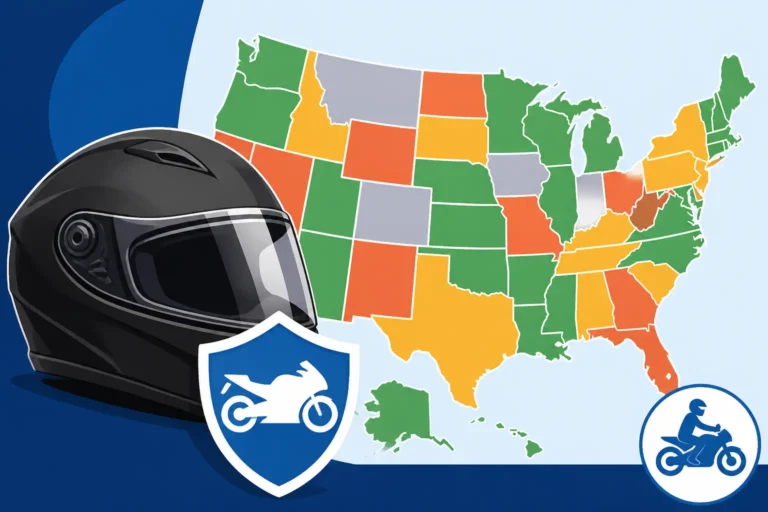
When it comes to head protection, Tennessee stands firm: it is a universal helmet law state. This means that all motorcyclists and their passengers, regardless of age, are required to wear a U.S. Department of Transportation (DOT)-compliant helmet at all times when riding on public roadways. There are no exceptions for age or experience, which is a stark contrast to partial helmet law states where only younger riders or those without specific training are mandated to wear one.
This universal helmet law is a critical safety measure, proven to significantly reduce the risk of head injuries and fatalities in motorcycle accidents. A DOT-compliant helmet means it meets rigorous safety standards for impact absorption and penetration resistance. Wearing a helmet isn't just about avoiding a ticket; it's about safeguarding your life and well-being. Furthermore, while your insurance policy will still cover you if you're involved in an accident and wearing a non-DOT helmet or no helmet at all, not complying with helmet laws could potentially impact certain aspects of a claim, especially if it's determined that your injuries were exacerbated by the lack of proper head protection. Insurance companies often look at adherence to safety laws, even if it doesn't directly invalidate your policy. Staying informed about Motorcycle Helmet Laws by State can give you a broader understanding of different state regulations.
Registration, Licensing, and Endorsements
Before you even think about insurance, you need to ensure you're legally prepared to ride in Tennessee. This involves proper registration, a valid driver's license, and, crucially, a motorcycle endorsement. These components form the trifecta of legal riding.
First, your motorcycle must be properly registered with the state of Tennessee. This process typically requires proof of ownership (like a title) and, yes, proof of insurance. You generally cannot register a motorcycle without showing that you have met the minimum insurance requirements. So, if you're wondering Motorcycle Registration Without Insurance Possible?, the answer in Tennessee is generally no.
Second, you need a valid driver's license. But not just any driver's license—you need a specific motorcycle endorsement on your license. This isn't something you get by simply buying a motorcycle; it requires passing a specialized knowledge test and a skills test, typically through the Tennessee Department of Safety and Homeland Security. This endorsement signifies that you have demonstrated the specific skills and knowledge necessary to safely operate a motorcycle. Riding a motorcycle with only a standard car driver's license is illegal and can lead to significant penalties, including fines and potentially impoundment of your bike. It also complicates any insurance claims, as operating a vehicle without the proper licensing can be a basis for claim denial or reduced payout. For anyone considering getting their license, understanding Motorcycle License, Endorsement & Insurance is a crucial first step.
Finding the Right Motorcycle Insurance in Tennessee
So, you know you need insurance, and you understand the minimums. Now comes the practical part: actually finding a policy that fits your needs and your budget in Tennessee. It can feel a bit overwhelming with all the choices out there, but by understanding the factors that influence your rates and knowing how to compare options, you can secure reliable coverage without overspending. Remember, the cheapest policy isn't always the best, but the most expensive isn't necessarily the most comprehensive either.
Factors Affecting Your Rate
Motorcycle insurance rates, much like car insurance, are highly personalized. They depend on a multitude of factors, and what one rider pays can be vastly different from another, even for the same bike. Understanding these key variables can help you anticipate costs and even work towards lowering your premiums.
Here’s a breakdown of common factors that influence your Tennessee motorcycle insurance rate:
- Your Riding History: This is a big one. A clean driving record with no accidents or traffic violations (especially speeding tickets) will almost always get you better rates. If you have a history of accidents or infractions, expect to pay more.
- Your Age and Experience: Younger, less experienced riders, particularly those under 25, typically face higher premiums because they are statistically more prone to accidents. As you gain more riding experience and age, your rates generally decrease, assuming you maintain a clean record.
- The Type of Motorcycle You Ride: This is a huge factor. A high-performance sport bike, like a Yamaha R1 or a Kawasaki Ninja, is usually more expensive to insure than a cruiser like a Harley-Davidson Sportster or an Indian Scout. Sport bikes have higher theft rates, are more prone to high-speed accidents, and are more expensive to repair. The engine size (CCs) also plays a role, with larger, more powerful engines often correlating to higher costs. You can learn more about Motorcycle Insurance Cost by Bike Type to see how different models are rated.
- Where You Live: Urban areas with higher traffic density, greater theft rates, and more accidents generally have higher insurance premiums than rural areas. Even specific zip codes within a city can influence your rate.
- Your Credit History: In many states, including Tennessee, your credit score can influence your insurance rates. Insurers use credit-based insurance scores as a predictor of how likely you are to file a claim.
- Coverage Limits and Deductibles: Choosing higher liability limits (more than the state minimums) will increase your premium, but offers greater financial protection. Similarly, opting for a lower deductible (the amount you pay out-of-pocket before your insurance kicks in for collision or comprehensive claims) will result in a higher premium, and vice-versa.
- Storage and Security: Where and how you store your motorcycle can also affect rates. A bike garaged overnight in a secure location might get a discount compared to one consistently parked on the street.
- Discounts: Don't forget to ask about discounts! Many insurers offer price breaks for completing a motorcycle safety course, being a member of certain riding clubs, having multiple policies with the same company (bundling), or even having anti-theft devices installed on your bike. Learning about Motorcycle Insurance Discounts You're Missing can help you save a good chunk of change.
Comparing Quotes and Coverage Options
When you're ready to buy motorcycle insurance in Tennessee, don't just jump on the first quote you get. The best strategy is to shop around and compare offers from several different providers. This is where you can truly find value and ensure you're getting the most bang for your buck.
Here’s how to approach comparing quotes:
- Gather Your Information: Before you start, have all your details handy: your driver's license number, motorcycle make, model, year, VIN, any modifications, and information about your riding history.
- Contact Multiple Insurers: Reach out to various insurance companies that offer motorcycle policies in Tennessee. Major national providers like Progressive, Geico, and State Farm are popular choices, but also consider specialty insurers like Dairyland or Markel, who sometimes offer more tailored policies for riders. Many companies offer online quote tools, or you can work with an independent insurance agent who can get quotes from multiple carriers for you.
- Compare Apples to Apples: This is crucial. When comparing quotes, make sure you're looking at identical coverage types and limits. For instance, compare full coverage from Company A to full coverage from Company B, both with the same liability limits, deductibles, and any added coverages like roadside assistance or custom parts coverage. A table like the one below can be incredibly useful for organizing your findings.
- Consider Beyond Price: While cost is a significant factor, it shouldn't be the only factor. Look into the company's reputation for customer service, especially their claims process. A slightly more expensive policy from an insurer known for excellent support might be worth it if you ever have to file a claim. Read reviews, and if possible, ask fellow riders for their experiences.
- Ask About Discounts: As mentioned earlier, always inquire about any discounts you might be eligible for. A motorcycle safety course discount can significantly lower your premium, for example. Bundling your motorcycle insurance with your auto or home insurance policy is another common way to save.
Here's a sample comparison table you might use:
| Coverage Type / Feature | Progressive (Quote 1) | Geico (Quote 2) | Dairyland (Quote 3) |
|---|---|---|---|
| Bodily Injury Liability | $25,000/$50,000 | $50,000/$100,000 | $25,000/$50,000 |
| Property Damage Liability | $15,000 | $25,000 | $15,000 |
| Collision Deductible | $500 | $1,000 | $500 |
| Comprehensive Deductible | $500 | $500 | $500 |
| Uninsured/Underinsured Motorist | Included | Optional | Included |
| Roadside Assistance | Yes | Yes | Yes |
| Custom Parts Coverage | Up to $3,000 | Not offered | Up to $5,000 |
| Annual Premium | $450 | $520 | $480 |
| Safety Course Discount | Applied | Applied | Applied |
By taking the time to compare thoroughly, you can feel confident that you’re getting the best possible coverage for your specific needs in Tennessee. For more detailed insights, check out How to Compare Motorcycle Insurance Quotes.
Disclaimer
Please note that insurance laws and requirements can change. While this guide provides comprehensive information based on current data, it is always recommended to verify the most up-to-date regulations with the Tennessee Department of Safety and Homeland Security or a licensed insurance professional in Tennessee. This content is for informational purposes only and does not constitute legal or financial advice.