Is Motorcycle Insurance Required in Indiana?
Alright, let's talk about hitting the open road in Indiana. There's often a lot of confusion, even among seasoned riders, about what exactly the law demands when it comes to motorcycle insurance. Nobody wants to get caught unprepared, especially when it could mean fines or worse. This guide is here to cut through the noise and give you the definitive, no-nonsense answers about motorcycle insurance requirements in Indiana, so you can ride with confidence and stay on the right side of the law.
The Straight Answer: Is Motorcycle Insurance Required in Indiana?
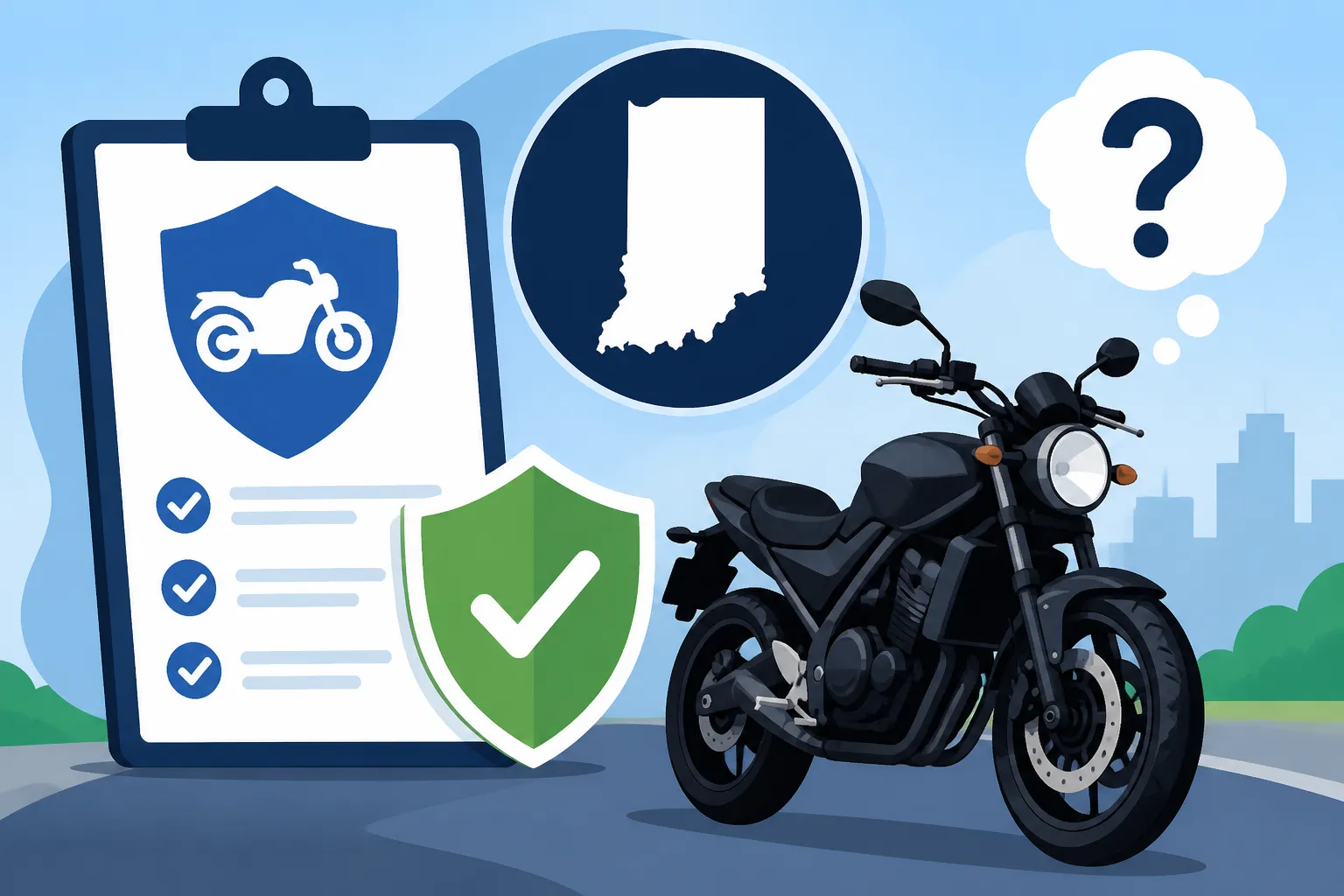
Let's get right to it: yes, absolutely. If you're planning on riding your motorcycle on public roads in Indiana, you are legally required to carry motorcycle insurance. This isn't just a suggestion; it's a non-negotiable part of being a responsible rider in the Hoosier State. The state operates under what's known as a "fault" system, meaning that if you cause an accident, you are financially responsible for the damages and injuries that result. Your insurance is there to cover those costs, up to your policy limits.
Indiana's Financial Responsibility Law in Practice
Indiana's Motor Vehicle Financial Responsibility Law states that every driver, including motorcyclists, must be able to prove financial responsibility in the event of an accident. For most of us, that means having an active motorcycle insurance policy. You can't just promise to pay; you need actual proof that you can pay, should the unthinkable happen. This law isn't unique to motorcycles; it applies to all registered vehicles on Indiana roads. Without this proof, you're not just risking a ticket; you're risking your financial future. It's a fundamental part of Motorcycle Insurance Requirements by State (2026 Guide) and how states ensure some level of protection for everyone on the road.
Think about it: if you're involved in an accident and you're at fault, the other party's medical bills, property damage, and even lost wages could quickly add up. Without insurance, that entire burden falls squarely on your shoulders. It’s not just about protecting others, though; having proper coverage protects you from facing devastating out-of-pocket expenses and potential lawsuits. Even if you're an incredibly careful rider, you can't control what other drivers do, which is why having your financial ducks in a row is so vital.
Minimum Liability Coverage in the Hoosier State
So, what kind of insurance are we talking about? Indiana mandates specific minimum liability coverage limits that every motorcyclist must carry. These limits are typically expressed as three numbers, and they represent how much your insurance company will pay out for bodily injury per person, bodily injury per accident, and property damage per accident.
In Indiana, those minimum limits are currently 25/50/25. This means your policy must provide at least:
- $25,000 for bodily injury liability for one person injured in an accident.
- $50,000 for total bodily injury liability for all persons injured in an accident.
- $25,000 for property damage liability for one accident.
These are the absolute minimums to legally operate your motorcycle in Indiana. While meeting these minimums ensures you're compliant with the law, it's really important to understand what these numbers actually mean in a real-world collision scenario, and why many riders choose to carry more. We'll dive into that next. Understanding these numbers is crucial, similar to grasping Minimum Liability Insurance Explained (The Three Numbers) for any vehicle.
Understanding Indiana's Minimum Coverage Limits
Those numbers – 25/50/25 – might seem a bit abstract, but they have very real consequences if you ever have to use your insurance. It's not just about meeting a legal checkbox; it's about what protection those numbers truly offer in the aftermath of an accident. Let’s break it down in a way that makes sense, because knowing what you have is the first step to knowing if it's enough.
Breaking Down 25/50/25 Coverage
When you see those limits, remember: they refer to liability coverage, which covers damages you cause to other people and their property. It doesn't pay for your own injuries or damage to your motorcycle.
- $25,000 Bodily Injury Liability Per Person: This is the maximum amount your insurance company will pay for medical expenses, lost wages, and pain and suffering for one individual you injure in an accident where you are at fault. Imagine you cause an accident and the other driver breaks a leg, requires surgery, and can't work for a few weeks. Hospital bills alone can quickly eat up that $25,000. If their total damages exceed this, you could be on the hook for the difference.
- $50,000 Bodily Injury Liability Per Accident: This is the maximum amount your insurance company will pay for all bodily injuries if more than one person is injured in an accident where you are at fault. So, if you hit a car with three occupants, and their combined medical bills and other damages total $75,000, your policy would only pay out $50,000. The remaining $25,000? That comes out of your pocket. This is where the limitations of minimum coverage really start to sting, especially if you have passengers. It's an important aspect of Motorcycle Insurance Requirements for Passengers.
- $25,000 Property Damage Liability Per Accident: This is the maximum amount your insurance company will pay for damage to another person's property (like their car, fence, or storefront) in an accident where you are at fault. Modern vehicles are expensive to repair or replace. A new sedan can easily cost over $25,000, let alone a luxury vehicle or a severe collision that totals a car. If the damage you cause is $35,000, your policy pays $25,000, and you're responsible for the remaining $10,000.
These specific limits are common across many states, and knowing Motorcycle Insurance Minimums: 25/50/25 Meaning is fundamental for any rider.
Why Minimum Coverage Might Not Be Enough
While meeting Indiana's minimum liability requirements keeps you legal, it's often not enough to truly protect you financially. In today's world, where medical costs are skyrocketing and vehicle repair expenses are continually on the rise, even a minor accident can quickly exceed these limits.
Let's consider a realistic scenario: You're riding through downtown Indianapolis, and due to a momentary lapse, you swerve and clip a brand-new SUV, causing it to hit a light pole. The driver sustains a concussion and whiplash, requiring emergency room visits, follow-up appointments, and physical therapy. The SUV is totaled, and the light pole needs to be replaced.
- Driver's medical bills: $30,000
- Driver's lost wages: $5,000
- SUV replacement cost: $40,000
- Light pole replacement: $10,000
Total Damages: $85,000.
Your minimum 25/50/25 policy would pay out $25,000 for the driver's injuries (since it's one person, it's capped at $25k per person, not the total $35k) and $25,000 for the property damage (SUV and light pole, capped at $25k for property).
Your insurance would pay a total of $50,000. That leaves you personally responsible for the remaining $35,000. This could mean wage garnishment, asset forfeiture, or even bankruptcy. Suddenly, that seemingly small amount saved on a minimum policy doesn't seem like such a good deal. Many riders find that opting for higher liability limits, like 50/100/50 or even 100/300/100, offers a much greater sense of security for a relatively small increase in premium. This is why understanding How Much Liability Insurance Do You Need on a Motorcycle? is so critical.
What Happens If You Ride Without Insurance in Indiana?
Riding without the legally required motorcycle insurance in Indiana isn't just a minor infraction; it carries serious legal and financial repercussions that can impact your life for years to come. Many riders, especially those new to the scene, might underestimate the gravity of operating an uninsured vehicle. It's crucial to understand the very real risks you're taking. This isn't just about a simple ticket; it’s about navigating a complex legal system and potentially facing significant financial hardship.
Penalties for Non-Compliance
Indiana's Bureau of Motor Vehicles (BMV) is pretty serious about financial responsibility. If you're caught riding without the proper motorcycle insurance, the penalties can escalate quickly:
- First Offense: For your first offense, you could face fines, a suspended driver's license for 90 days, and a suspended vehicle registration. To get your license and registration reinstated, you'll have to pay reinstatement fees, provide proof of financial responsibility (your new insurance policy), and possibly file an SR-22 certificate for a period. An SR-22 isn't insurance itself, but a certification from your insurance company to the state proving you have minimum coverage. This filing often signals you're a high-risk driver, leading to significantly higher insurance premiums. If you ever have to deal with this, knowing about SR-22 for Motorcycles: When It's Required will be essential.
- Subsequent Offenses: If you're caught riding uninsured again within a short period (typically five years), the penalties become much more severe. Your license and registration suspension could jump to a full year, and the fines will be substantially higher. Imagine being unable to legally ride your motorcycle or even drive a car for a year because you decided to skip insurance. For many, that's not just an inconvenience; it's a major disruption to work, family, and daily life.
- Impoundment: In some cases, law enforcement might even impound your motorcycle on the spot if you're found to be uninsured. Getting it out of impound comes with towing fees, daily storage fees, and administrative costs, all before you even address the original penalties.
The Indiana State Police are well-versed in checking for proof of insurance, and digital proof is usually accepted. Make sure you understand Proof of Insurance: Digital vs Paper for Riders so you're always ready.
Financial Ramifications Beyond Legal Penalties
Beyond the fines and license suspensions, the financial consequences of riding without insurance can be truly catastrophic, especially if you cause an accident.
- Personal Liability for Damages: As we discussed, Indiana is a "fault" state. If you cause an accident and injure someone or damage their property while uninsured, you are personally liable for all those costs. This isn't just medical bills; it can include lost wages, pain and suffering, property repairs, vehicle replacement, and even legal fees if the other party sues you. Without an insurance company to step in and pay, every dollar comes directly from your assets.
- Lawsuits and Asset Forfeiture: The injured party and their insurance company (if they have one) will come after you directly to recoup their losses. This can lead to civil lawsuits, judgments against you, and potentially the garnishment of your wages, seizure of your bank accounts, or even the forced sale of your home or other assets. Think about losing your savings, your home, or even your future earnings because of one decision to ride uninsured.
- No Coverage for Your Own Injuries or Bike: Remember, minimum liability only covers other people. If you crash and get injured, or if your motorcycle is damaged, with no insurance, you're looking at paying all of your own medical bills and repair costs out of your own pocket. A trip to the emergency room for a broken bone can easily cost tens of thousands of dollars. Repairing a damaged motorcycle can also run into the thousands. You'd be facing double the financial hit: paying for damages you caused to others, and paying for your own damages. This is a key part of understanding What Happens If You Ride Without Insurance? and why it's such a terrible gamble.
In short, riding without insurance in Indiana is a gamble where the stakes are incredibly high, and the house almost always wins. It's a risk that could easily set you back financially for decades, far outweighing any perceived savings from not paying premiums.
Beyond the Basics: Other Important Indiana Motorcycle Insurance Considerations
While meeting Indiana's minimum liability requirements is essential, it's truly just the starting point for comprehensive protection. For many riders, the peace of mind that comes from having more robust coverage far outweighs the additional cost. Let's explore some other important considerations that can provide a much deeper safety net when you're out on the open road.
Uninsured/Underinsured Motorist Coverage
This type of coverage, often abbreviated as UM/UIM, is incredibly valuable and, in some cases, almost as critical as liability insurance, especially in Indiana. Here’s why: even though Indiana requires all drivers to carry insurance, many people still don't. Or, they carry only the minimum limits, which, as we discussed, might not be enough to cover serious damages.
- Uninsured Motorist (UM): This coverage protects you if you're involved in an accident with a driver who has no insurance at all, and they are at fault. Your UM bodily injury coverage would help pay for your medical expenses and lost wages, while UM property damage would cover repairs to your bike. It essentially acts as the uninsured driver's insurance, protecting you.
- Underinsured Motorist (UIM): This coverage kicks in if you're in an accident with an at-fault driver who does have insurance, but their liability limits aren't high enough to cover all your damages. In this scenario, after their policy pays out its maximum, your UIM coverage would help cover the remaining costs, up to your UIM limits.
Given the number of uninsured drivers on the road, carrying UM/UIM is highly recommended. It essentially protects you from the irresponsible choices of other drivers, which is a big concern for any rider. For many, this coverage is a non-negotiable part of their policy. This type of coverage is critical, and understanding Uninsured & Underinsured Motorist Coverage (UM/UIM) is vital for any rider.
Additional Coverage Options for Peace of Mind
Beyond liability and UM/UIM, there are several other coverage options that many Indiana riders choose to add to their policies for more comprehensive protection. These are optional but can make a huge difference in specific situations:
- Collision Coverage: This coverage pays for damage to your motorcycle if you hit another vehicle, a stationary object (like a tree or guardrail), or if your bike rolls over. Even if you're at fault, collision coverage helps cover the repair or replacement costs of your motorcycle, minus your deductible. For anyone with a newer or more expensive bike, this is often a must-have.
- Comprehensive Coverage: This is your "non-collision" damage protection. It covers things like theft, vandalism, fire, natural disasters (hail, floods, wind), and hitting an animal. If your bike is stolen from your garage in Fort Wayne, comprehensive coverage is what would help you replace it. If you're wondering Does Motorcycle Insurance Cover Theft?, comprehensive is the answer.
- Medical Payments (MedPay): This coverage pays for medical expenses for you and your passengers, regardless of who was at fault in an accident. It's a quick way to get immediate medical bills covered, often with lower deductibles or no deductible at all, and it can supplement your health insurance.
- Custom Parts and Accessories Coverage: If you've spent a lot of money customizing your Harley-Davidson with aftermarket exhausts, custom paint, or special saddlebags, your standard policy might not cover their full value. This add-on specifically protects the investment you've made in your bike's unique features. Many riders find that their standard policies fall short when it comes to covering the true value of their custom rides, making this a critical addition. Learn more about Accessories & Custom Parts Coverage Explained.
- Roadside Assistance: This can be a lifesaver if your bike breaks down, you run out of gas, or get a flat tire. It typically covers towing services, fuel delivery, and other emergency services to get you and your motorcycle to a safe location or repair shop. It's truly a small add-on that offers enormous convenience.
- Trip Interruption Coverage: For those long rides or tours through the scenic roads near Bloomington or along the Ohio River, this coverage can come in handy. If your bike breaks down hundreds of miles from home, it can help cover expenses like lodging, food, and alternative transportation while your motorcycle is being repaired.
Choosing the right mix of coverages depends on your riding habits, your bike's value, and your personal risk tolerance. While liability coverage keeps you legal in Indiana, these additional options are what truly give you comprehensive protection and peace of mind on every journey. This deep dive into options can also help you determine What Motorcycle Coverage Do You Actually Need?
Indiana Motorcycle Insurance Minimums Overview
To make it easy to remember, here's a quick summary of Indiana's minimum liability insurance requirements:
| Coverage Type | Minimum Required Limit in Indiana | What it Covers |
|---|---|---|
| Bodily Injury Liability Per Person | $25,000 | Max for one person's injuries (medical, lost wages, pain/suffering) you cause |
| Bodily Injury Liability Per Accident | $50,000 | Max for all persons' injuries you cause in one accident |
| Property Damage Liability Per Accident | $25,000 | Max for damage to other people's property you cause |
Keep in mind, these are the minimums. Most insurance professionals and experienced riders will strongly recommend carrying higher limits for more robust financial protection against the often steep costs associated with a serious accident.
Disclaimer
This article is for general informational purposes only and does not constitute professional advice. Laws, prices and regulations vary by location and change over time. Consult a qualified professional for guidance on your specific situation.