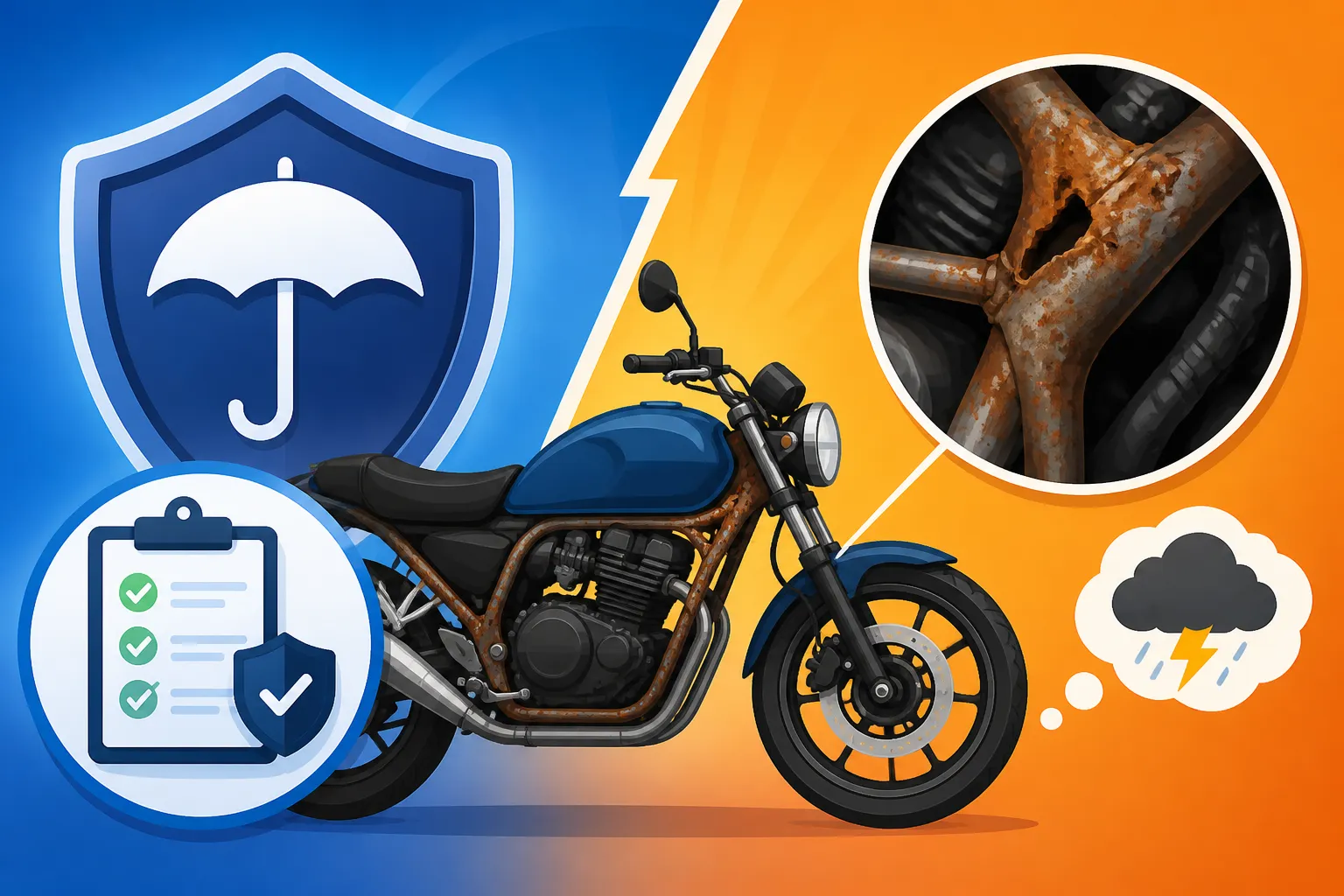
Does Motorcycle Insurance Cover Frame Rust?
It's a gut-wrenching feeling, isn't it? You're giving your beloved motorcycle a good once-over, maybe after a long winter or a particularly wet riding season, and there it is: that tell-tale reddish-brown enemy on your frame. Your immediate thought jumps to "Oh no, repair costs!" and then, naturally, "Will my motorcycle insurance even cover this?" It’s a valid concern, as frame rust can compromise both the aesthetics and structural integrity of your bike. This guide will clarify why frame rust is generally not covered by insurance and what you can do to protect your ride.
Understanding Motorcycle Insurance and Common Exclusions
Before we dive into the nitty-gritty of rust, it’s important to understand the fundamental principles of how motorcycle insurance works. Most policies are designed to cover "sudden and accidental" losses, not gradual deterioration or preventable maintenance issues. This distinction is crucial when considering something like rust.
The "Sudden and Accidental" Principle in Insurance
Insurance policies, whether for your home, car, or motorcycle, are built around the concept of covering unforeseen events that happen abruptly and without intention. Think about a collision: it's a sudden event. A theft is sudden. Even damage from a hailstorm or a fire is typically considered sudden. These are the kinds of events that catch you off guard and for which insurance is designed to provide a financial safety net.
When it comes to something like rust, however, the process is almost always gradual. It doesn't appear overnight in most cases; it develops slowly over time due to exposure to moisture, salt, and other corrosive elements. This slow, progressive nature generally means it doesn't fit the "sudden and accidental" criteria that insurers use to determine coverage. It's often viewed more as an ongoing process of wear and tear, which is typically excluded.
Standard Coverage Types and What They Usually Exclude
Let's briefly touch upon the main types of motorcycle insurance coverage to help illustrate why rust typically falls outside their scope.
- Liability Coverage: This is the most basic and often legally required coverage, covering bodily injury and property damage you might cause to others in an accident. It offers absolutely no protection for your own motorcycle, so it definitely wouldn't cover rust. You can read more about what liability coverage for motorcycles explained means for you.
- Collision Coverage: This pays for damages to your motorcycle if it collides with another vehicle or object, or if it overturns. This is classic "sudden and accidental" coverage. If you lay your bike down or hit a guardrail, collision coverage steps in. Rust, being a slow process, simply isn't a collision.
- Comprehensive Coverage: This is where many riders hope to find a solution for rust, but it's usually not the case. Comprehensive coverage protects your bike from non-collision incidents like theft, vandalism, fire, natural disasters (like floods or hail), and hitting an animal. While these events are often sudden, and some might lead to rust, comprehensive coverage itself isn't a maintenance policy. It doesn't cover wear and tear, mechanical breakdown, or gradual damage. If you're wondering what is comprehensive motorcycle insurance, it's primarily for events outside of a crash.
- Other common exclusions: Most policies explicitly exclude damage due to neglect, poor maintenance, mechanical failures, and general wear and tear. Rust, unfortunately, almost always falls into one of these categories from an insurer's perspective. Even with what many consider "full coverage motorcycle insurance," you'll find these same limitations.
So, while these coverages are invaluable for protecting your investment against major, unforeseen events, they generally don't act as a shield against the slow creep of corrosion. This is a common point of frustration for riders, as keeping a bike in pristine condition takes effort, and discovering rust feels like a significant loss.
Why Frame Rust Falls Outside Typical Coverage
The disappointment of finding rust on your motorcycle frame is real, especially when you consider how much you invest in your ride. However, from an insurance standpoint, there are very clear reasons why this kind of damage is almost universally excluded. It boils down to the nature of rust itself and the core purpose of insurance.
Rust as a Maintenance Issue and Wear and Tear
Imagine an insurance company covering every instance of rust on a vehicle. The costs would be astronomical, and premiums would skyrocket for everyone. Insurers operate on the principle of managing risk, and certain risks are deemed controllable by the owner. Rust is one of them.
- Preventable nature: Rust often develops due to a lack of proper care and maintenance. Leaving your motorcycle exposed to the elements, not washing off road salt, or failing to address small scratches and chips in the paint (which protect the metal) can all accelerate rust formation. These are actions, or inactions, that the owner has control over.
- Gradual deterioration: As mentioned, rust isn't a sudden catastrophic event. It's a slow, progressive chemical reaction. Insurance is not designed to cover the natural aging process of a vehicle, or the deterioration that occurs over time with normal use and exposure. This is why mechanical breakdowns, worn-out tires, or faded paint are also typically not covered – they fall under the umbrella of "wear and tear." Think of it like this: your motorcycle's frame rust is akin to your house's paint peeling from sun exposure; it's a gradual process, not a sudden, insurable event.
This perspective isn't unique to motorcycles. Your car insurance won't cover rust on your car's fender, and your home insurance won't cover a rusted out gutter unless the rust was a direct result of a covered peril, which is a rare and specific scenario we'll discuss next.
The Difference Between Preventable Damage and Covered Perils
Insurance distinguishes sharply between damage that is preventable through regular maintenance and damage caused by an unforeseen "peril." A peril is a cause of loss, like fire, theft, or a collision.
- Covered perils: If a tree falls on your bike during a storm (a covered comprehensive peril) and damages the frame, that damage is covered. If a thief attempts to steal your bike and damages the frame (a covered comprehensive peril), that's covered. In these cases, the damage is a direct result of an external, sudden, and accidental event.
- Preventable damage: Rust, on the other hand, is generally seen as preventable. If you regularly clean and wax your motorcycle, keep it stored in a dry environment, and address any paint chips promptly, you significantly reduce the risk of frame rust. When rust does occur, it's often attributed to a failure to take these preventative measures, which the insurer expects you, as the owner, to handle. It's simply considered part of the long-term responsibility of owning and maintaining your vehicle.
Therefore, the core reason motorcycle insurance does not cover frame rust is that it typically falls under the category of wear and tear, gradual deterioration, or damage stemming from inadequate maintenance, rather than a sudden, accidental, or external peril. This is consistent across nearly all insurance providers, from major players like Progressive and GEICO to specialized insurers like Dairyland and Markel.
Indirect Scenarios Where Rust Might Be Relevant to a Claim
While direct coverage for frame rust is generally off the table, there are a few nuanced situations where the presence of rust could indirectly impact an insurance claim. These are not instances where insurance pays to fix the rust itself, but rather where rust plays a secondary role in a larger claim.
Rust Stemming from a Covered Event (e.g., Flood or Fire Damage)
This is perhaps the closest you'll get to an insurance policy acknowledging rust, but it's important to understand the distinction. Insurance won't cover existing rust, but if a covered peril causes new rust or exacerbates existing rust to the point of total loss, that's a different story.
- Flood damage leading to rust: Let's say your motorcycle is caught in a severe flood, an event typically covered by comprehensive insurance. Water, especially saltwater or contaminated floodwaters, can rapidly accelerate the rusting process on many components, including the frame. If the flood damage is so extensive that the frame rusts significantly and contributes to the bike being deemed a total loss, the insurance payout would be for the total loss due to flood, which implicitly accounts for the severe corrosion caused by the event. The flood itself is the covered peril, and the rust is a direct, immediate consequence of that peril, not a gradual one. This is distinct from rust that appears over months of normal exposure. If you're dealing with weather damage, understanding how your policy handles that specifically can be key.
- Fire suppression leading to rust: Another rare example could be if your motorcycle is involved in a fire (a comprehensive peril), and water or chemicals used to extinguish the fire lead to rapid corrosion of the frame and other components. Again, the fire is the covered event, and the rust is a direct result.
In these specific scenarios, the insurer isn't paying for "rust repair" but rather for the overall damage caused by the covered peril, which includes the rapid deterioration and structural compromise that rust might cause as a consequence of that event. It's a subtle but critical difference.
Pre-Existing Rust and Accident Claims
This scenario is less about coverage for rust and more about how existing rust might affect the value of your bike or the outcome of a claim following an accident.
- Impact on assessed value after a collision: Imagine you're involved in a collision (covered by collision insurance) that severely damages your motorcycle's frame. When the insurance adjuster assesses the damage and determines the actual cash value (ACV) of your bike, they will take into account its pre-loss condition. If your frame already had significant rust, especially structural rust, it could diminish the bike's value in their eyes. This means the payout you receive might be lower than if your bike had been in pristine condition. Insurers often use factors like mileage, maintenance records, and overall condition to determine the ACV, and visible rust is a clear indicator of a less-than-perfect condition.
- Structural integrity and total loss decisions: In some extreme cases, pre-existing, severe frame rust might be a factor in pushing a damaged bike into a "total loss" category. If a collision causes damage that, combined with the weakened state of a rusted frame, makes repairs unsafe or economically unfeasible, the insurer might total the bike rather than repair it. Again, they're not paying for the rust, but the rust influences the repair-or-replace decision. This can be particularly frustrating, as the rust itself wasn't the cause of the claim, but it impacts the financial recovery. Learning what happens when your motorcycle is totaled can be helpful here.
These situations highlight that while insurance doesn't cover rust directly, maintaining your motorcycle and addressing rust promptly is crucial. It not only ensures your safety but can also protect your financial interests should you need to file a claim for a separate, covered incident. Reputable companies, like those found through comparison tools from The Zebra, will always assess the pre-loss condition of your bike meticulously.
Proactive Steps to Prevent Frame Rust on Your Motorcycle
Since motorcycle insurance generally won't cover frame rust, prevention truly is your best defense. Taking proactive steps can save you a significant headache, maintain your bike's integrity, and protect its resale value. It's all about consistent care and smart habits.
Regular Cleaning and Inspection Routines
This might sound basic, but it's the first and most critical line of defense against rust.
- Frequent washing, especially after exposure: If you ride in the rain, through puddles, or especially on roads treated with salt or de-icers (common in winter months in colder climates like New England or the Midwest), washing your bike thoroughly afterwards is non-negotiable. Salt is a rust accelerator. Pay special attention to hidden nooks and crannies, under the tank, swingarm, and inside wheel wells, where moisture and grime tend to collect and can lead to early signs of corrosion. A good, thorough rinse followed by a proper dry is essential.
- Detailing and waxing: After cleaning, applying a good quality wax or paint sealant to painted frame components, or a metal polish to chrome parts, creates a barrier against moisture and air. This sacrificial layer takes the brunt of environmental exposure, protecting the underlying metal.
- Close inspections: Make it a habit to regularly inspect your frame. Look for any chips in the paint, especially around welds, mounting points, and areas prone to stone chips. Even a tiny chip can expose bare metal to the elements, leading to surface rust that, if ignored, can spread. If you find a chip, touch it up immediately with appropriate paint. A small bottle of touch-up paint is far cheaper than a frame repair or repaint.
These simple routines are not just for aesthetics; they are fundamental to preserving the structural health of your motorcycle.
Proper Storage and Environmental Control
Where and how you store your motorcycle plays a huge role in rust prevention, especially if you live in areas with high humidity, frequent rain, or harsh winters.
- Dry, well-ventilated space: Ideally, your motorcycle should be stored in a dry garage or shed. Proper ventilation is key to preventing moisture buildup. If your garage tends to be damp, consider using a dehumidifier, especially during humid seasons or if you're storing the bike for an extended period, such as over winter. For extended storage, especially in cold areas, it's worth reviewing articles like Do You Need Insurance to Store a Motorcycle? or Seasonal Lay-Up & Winter Storage Insurance, which often cover protecting your bike from the elements.
- Motorcycle covers: A good quality, breathable motorcycle cover can offer an extra layer of protection against dust and accidental scratches, but be careful. A non-breathable cover can trap moisture underneath, creating a humid environment that actually promotes rust. Always ensure the bike is completely dry before covering it, and opt for covers designed for outdoor use that allow air circulation.
- Elevate off concrete: If you're storing your bike on a concrete floor for a long time, consider putting a piece of plywood or a mat underneath the tires and frame. Concrete can wick moisture, and prolonged contact can contribute to rust on parts of the frame closest to the ground.
These storage practices, especially when combined with diligent cleaning, can make a monumental difference in preventing rust from ever taking hold.
Protective Treatments and Coatings
Beyond cleaning and storage, there are specialized products designed to offer enhanced rust protection.
- Rust-inhibiting sprays and coatings: Products like ACF-50, Corrosion X, or various wax-based undercoating sprays are fantastic for providing long-term protection, particularly in hard-to-reach areas. These can be sprayed directly onto metal surfaces, creating a barrier that repels water and inhibits corrosion. They are especially popular with riders who frequently face wet conditions or live in coastal areas.
- Frame protectants: Some manufacturers offer specific frame protectants or clear coatings that can be applied to maintain the factory finish and add an extra layer of defense. These can be particularly beneficial for custom frames or bikes with exposed metal elements.
- Greasing and lubricating: Ensure all pivot points, cables, and other moving metal parts are properly greased and lubricated. This not only ensures smooth operation but also protects these areas from moisture ingress and rust.
By incorporating these preventative measures, you're not just hoping for the best; you're actively safeguarding your motorcycle's frame from the insidious threat of rust. This diligence ensures your bike remains safe, reliable, and aesthetically pleasing for years to come, long after you've considered the various types of motorcycle insurance coverage.
Addressing Frame Rust: Repair Options and Implications
So, you've discovered rust on your motorcycle frame despite your best efforts. What now? The actions you take next are crucial for both your safety and your bike's longevity and value.
Assessing the Severity of Rust Damage
The first step is a thorough assessment of the rust. Not all rust is created equal, and understanding its severity will dictate your next moves.
- Surface rust: This is the least severe type, typically appearing as a reddish-brown discoloration on the surface of the metal or within paint chips. It hasn't deeply penetrated the metal and often hasn't compromised the structural integrity. It's unsightly but usually manageable with sanding and repainting. You might find it on surface areas, weld joints, or around bolt heads.
- Flaking rust: This is more serious. If you can chip away layers of rust, it means corrosion has begun to eat into the metal. At this stage, the metal might feel pitted or rough, and there's a greater concern for localized weakening. This requires more aggressive removal and treatment.
- Perforating rust (Rust-through): This is the most dangerous and damaging type. If the rust has eaten completely through the metal, creating holes or significant thinning, the structural integrity of the frame is severely compromised. This type of rust is a major safety concern, especially on critical load-bearing parts of the frame. A frame with perforating rust can fail under stress, potentially leading to catastrophic consequences while riding.
It’s always best to be overly cautious. If you're unsure about the severity, especially if it looks like flaking or perforating rust, consult a professional motorcycle mechanic or a frame specialist. Your life literally depends on the integrity of your frame.
Professional Repair vs. DIY Solutions
Once you've assessed the rust, you need to decide on a course of action. This decision largely depends on the severity and your own mechanical skills.
- DIY for surface rust: If it's truly just surface rust on a non-structural area, you might be able to tackle it yourself. This usually involves:
- Cleaning: Thoroughly clean the rusted area.
- Rust removal: Using a wire brush, sandpaper (starting with coarser grits and moving to finer), or a rust-removing chemical treatment to get down to bare metal. Ensure all rust is gone.
- Primer: Apply a rust-inhibiting primer to the bare metal.
- Paint/Clear coat: Finish with appropriate motorcycle paint and a clear coat that matches your frame.
This is a detailed process and requires patience, but it's achievable for many riders.
- Professional help for flaking or perforating rust: For anything beyond minor surface rust, especially on critical frame components, a professional is highly recommended. Frame repair is a specialized skill that often involves welding, precision alignment, and expert finishing. A reputable shop will have the tools and expertise to:
- Properly remove deep rust without further damaging the metal.
- Weld in new metal if necessary (this should only be done by certified welders who understand frame metallurgy and geometry).
- Ensure the frame remains straight and structurally sound.
- Apply durable protective coatings that will last.
Trying to DIY extensive frame rust repair without proper knowledge and equipment can lead to an unsafe motorcycle.
Safety and Resale Value Concerns
Frame rust isn't just an aesthetic issue; it has serious implications for both safety and the financial value of your motorcycle.
- Safety first: A rusted frame is a weakened frame. Any compromise in the structural integrity of your motorcycle's frame can lead to unpredictable handling, vibrations, and, in the worst-case scenario, catastrophic failure at speed. Imagine hitting a pothole or taking a corner aggressively with a compromised frame – the risks are immense. Never ride a motorcycle with severe, unrepaired frame rust. This is paramount, more important than any insurance consideration or resale value.
- Impact on resale value: When it comes time to sell your bike, frame rust is a huge red flag for potential buyers. Even surface rust can deter buyers or significantly lower the price you can command. Perforating rust can effectively make your motorcycle worthless for resale unless it's for parts or a complete, expensive restoration. Buyers will typically inspect the frame meticulously, and visible rust will lead to questions about maintenance and overall care. A well-maintained, rust-free frame demonstrates that the bike has been cared for and is a safe investment. You'll want to be able to demonstrate your bike's value, which is harder with rust.
In summary, while motorcycle insurance doesn't cover frame rust, being proactive with prevention and knowing how to address it if it appears is crucial. Don't compromise on safety, and understand that maintaining a rust-free frame protects both your life and your investment in the long run.
Disclaimer
Please remember that this article provides general information and guidance regarding motorcycle insurance and rust. Insurance policies can vary significantly based on your provider, your specific policy details, and state regulations. Always consult your individual insurance policy documents or speak directly with your insurance agent for precise information regarding your coverage. This content is not legal or financial advice.