How to File a Motorcycle Insurance Claim in Pennsylvania
Getting into a motorcycle accident is one of the most jarring, stressful experiences a rider can face. Beyond the immediate physical and emotional toll, figuring out how to navigate the aftermath and file a motorcycle insurance claim in Pennsylvania can feel like a daunting, confusing maze. This comprehensive guide is here to cut through the complexity, offering you a clear, step-by-step roadmap to handle your PA motorcycle insurance claim with confidence and ensure you get the support you need.
Immediate Steps After a Motorcycle Accident in Pennsylvania
When the worst happens on the road, your actions in the moments following a motorcycle accident are absolutely critical. It’s easy to feel overwhelmed, but taking these immediate steps can significantly impact the success of your insurance claim in Pennsylvania.
Prioritizing Safety and Seeking Medical Attention
Your safety and the safety of others should always be your top priority. Even if you feel fine, adrenaline can mask injuries, and the state of Pennsylvania has specific requirements for reporting accidents involving injuries.
First, if you're able, move yourself and your motorcycle to a safe location out of the flow of traffic, if possible. This prevents further accidents. Turn on your hazard lights. Then, check yourself for injuries. Don't try to tough it out. Seek medical attention immediately, even for seemingly minor scrapes or bruises. Many serious injuries, especially those affecting the neck, back, or head, might not manifest fully until hours or even days later. A prompt medical evaluation creates an official record of your injuries, which is vital for any future claims. Remember, Pennsylvania law requires all registered vehicles, including motorcycles, to carry at least $5,000 in medical benefits coverage, which can help cover these initial costs regardless of who was at fault. This specific requirement means your own policy will pay for your medical expenses up to that limit, alleviating immediate financial stress while liability is being determined.
Documenting the Scene and Gathering Information
Once safety is secured, start collecting as much information as you can from the accident scene. This documentation is your strongest ally when it comes to proving your case to your insurance company.
Take photos and videos with your phone from multiple angles. Capture the position of the vehicles, any damage to your motorcycle and other vehicles involved, road conditions, skid marks, traffic signs, and any relevant landmarks. Don't forget to get wide shots of the overall scene as well as close-ups of specific damage. Exchange information with everyone involved: names, phone numbers, insurance companies and policy numbers, and vehicle license plate numbers. If there were any passengers on your bike or in other vehicles, gather their contact information too. Look for witnesses – their statements can be invaluable. Get their names and phone numbers immediately, as they might not stick around.
It's also a good idea to record the exact location, time, and date of the accident. These details will be crucial when you eventually How to File a Motorcycle Insurance Claim with your provider.
Reporting the Accident to Authorities
In Pennsylvania, certain accidents legally require reporting to the police. If there's an injury, a fatality, or if property damage prevents any vehicle from being driven away from the scene, you must report it to the police. Even if it seems minor and doesn't meet these thresholds, it's always a good practice to call the police to the scene.
A police report provides an official, unbiased record of the incident. It will include details like the date, time, location, parties involved, witness information, and often an officer's assessment of fault. This report becomes a cornerstone of your motorcycle insurance claim. If police don't respond, or if it's a minor incident not requiring an official police report, you may still need to file a driver's accident report (Form AA-600) with PennDOT within five days if the crash involves injury or property damage to the extent that a vehicle cannot be driven. This isn't just a suggestion; it’s a legal obligation that could have ramifications for your license if ignored. Making sure this is handled correctly helps avoid complications down the line, especially when dealing with the various Motorcycle Insurance Requirements by State (2026 Guide).
Notifying Your Insurance Company in Pennsylvania
You’ve taken care of the immediate aftermath, now it’s time to loop in your insurance provider. This step can feel a bit intimidating, but knowing what to expect can ease the process considerably.
Understanding Your Policy and Coverage
Before you even pick up the phone to call your insurance company, take a few minutes – if you’re able – to review your motorcycle insurance policy documents. Understanding your coverage limits and what types of protection you have (like liability, collision, comprehensive, or medical payments) will empower you during your conversation with the insurer. For instance, if you have Uninsured & Underinsured Motorist Coverage (UM/UIM), it’s important to know your limits, especially if the other party is uninsured, which unfortunately happens more often than we'd like to admit.
In Pennsylvania, the minimum liability coverage for motorcycles is 15/30/5: $15,000 for bodily injury per person, $30,000 for bodily injury per accident, and $5,000 for property damage. As mentioned, you also need that $5,000 in medical benefits. Knowing these numbers, and what additional coverage you purchased, will help you understand what your policy is designed to do for you. Don't assume anything; read the fine print or have it readily available to reference.
The Initial Contact and What to Expect
Once you’ve gathered your thoughts and documents, contact your insurance company as soon as reasonably possible. Most policies require prompt notification of an accident. Delaying could potentially complicate your claim. When you call, you'll likely speak to a claims representative who will open a claim file. They'll ask for basic details about the accident, including:
- Date, time, and location of the incident.
- The parties involved (names, contact info, insurance details).
- A brief description of what happened.
- Information about any injuries or property damage.
- The police department involved and the report number, if applicable.
Be factual and concise. Don't speculate or admit fault, even if you think you know what happened. Stick to the observable facts. This initial call is typically just about reporting the incident and opening a claim. An adjuster will then be assigned to your case, often within a day or two, to begin a more in-depth investigation. Companies like Progressive, known for their large presence, have streamlined processes for this initial contact, often allowing you to file online or through an app, in addition to calling.
Common Pitfalls to Avoid During Notification
It’s easy to make missteps during what's already a stressful time. Being aware of common pitfalls can save you a lot of grief down the road.
Firstly, avoid giving recorded statements until you’ve had a chance to fully recover and consult with an attorney, especially if injuries are significant. While you need to cooperate with your insurer, you're not obligated to give a detailed, recorded statement immediately. Stick to the facts you’ve documented. Secondly, do not sign any releases or settlement agreements without fully understanding their implications. Once you sign away your rights, you can’t go back and claim more later, even if new injuries or damages arise. Finally, don't engage in extensive discussions about the accident with the other party's insurance company without first speaking with your own insurer or legal counsel. Their adjusters are looking out for their client's best interest, not yours. If you're unsure about anything, it's always better to pause and seek advice. Resources like The Zebra can provide general information and help compare policies, but for your specific claim, direct consultation with your insurer or a legal professional is paramount.
Navigating the Pennsylvania Motorcycle Insurance Claim Process
The initial report is just the beginning. The real work of an insurance claim starts now, as your assigned adjuster investigates and determines the next steps.
Working with the Adjuster and Providing Documentation
Your adjuster is the person at your insurance company responsible for investigating your claim, determining liability, and calculating payouts. They'll be your primary point of contact. Be prepared to provide all the documentation you collected at the scene: photos, witness statements, police report numbers, and medical records. The more organized and complete your documentation, the smoother this process will be.
The adjuster will likely want to inspect your damaged motorcycle. They'll assess the damage and determine whether it's repairable or a total loss. They might also want to speak with you in more detail about the accident. Again, be truthful and stick to the facts, but avoid speculating or offering opinions on fault. If you've sought medical treatment, provide them with the necessary information for your Medical Payments (MedPay) for Riders coverage to kick in. Keep a detailed log of all your communication with the adjuster, including dates, times, names, and a brief summary of what was discussed. This creates a valuable paper trail.
Understanding Liability and Fault in PA
Pennsylvania operates under a "modified comparative negligence" rule. This is a big deal when it comes to who pays for what. Here’s how it works: if you are found to be 51% or more at fault for the accident, you generally cannot recover any damages from the other party. If you are found to be less than 51% at fault, your recoverable damages will be reduced by your percentage of fault.
For example, if you sustained $10,000 in damages but were found 20% at fault, you would only be able to recover $8,000 from the other party (your $10,000 in damages minus 20%). The adjuster will investigate to determine each party's percentage of fault, which is why your documentation and any police reports are so vital. It’s important to remember that even though Pennsylvania has "no-fault" rules for car insurance, motorcycles generally fall under the traditional "at-fault" tort system for liability claims. However, your own medical benefits coverage remains primary for your injuries, regardless of fault, up to your policy limit. This is a common point of confusion, so understanding the specific nuances of Pennsylvania motorcycle insurance requirements is key.
Handling Repairs, Total Losses, and Settlements
Once liability is determined and damages are assessed, you'll move into the repair or settlement phase. If your motorcycle is repairable, your insurance company will typically approve the repairs. You'll likely have a choice of repair shops, though they might recommend preferred vendors.
However, if the cost of repairs exceeds a certain percentage of your motorcycle's actual cash value (known as the "total loss threshold"), your insurer will declare it a total loss. This can be devastating, especially if your bike was cherished. If your motorcycle is totaled, the insurer will offer you a settlement based on its actual cash value (ACV) at the time of the accident, minus your deductible. This amount can sometimes feel low, so knowing What Happens When Your Motorcycle Is Totaled? is important. You have the right to negotiate this settlement. If you believe their valuation is too low, you can provide evidence of similar bikes for sale in your area, recent appraisals, or receipts for custom parts and accessories (assuming you have Accessories & Custom Parts Coverage Explained). Sometimes, getting a fair total loss settlement requires a bit of back and forth, and possibly even guidance on How to Negotiate a Motorcycle Total Loss Settlement. Be persistent and provide clear, supporting documentation.
What to Do If Your Pennsylvania Claim Hits a Snag
Even with the best preparation, insurance claims can sometimes hit roadblocks. Don't despair; there are avenues for recourse.
Dealing with Delays or Denials
It’s incredibly frustrating when your claim is delayed, or worse, outright denied. If you're experiencing excessive delays, start by reaching out to your adjuster and asking for a specific timeline for resolution. Follow up in writing, referencing your claim number. If you're still not getting answers, ask to speak with their supervisor. Insurance companies have obligations to handle claims promptly and in good faith.
A denial can be even more upsetting. When your claim is denied, the insurance company must provide a clear reason in writing. Review this reason carefully. Common reasons for denial include insufficient coverage, policy exclusions, or disputes over fault. If you believe the denial is unjustified or in bad faith, you have options. Gather all your documentation, including the denial letter, and be prepared to present your case. This is where your meticulous record-keeping truly pays off.
Seeking Legal Counsel or State Assistance
If you're facing persistent delays, an unfair settlement offer, or an unjust denial, it might be time to seek outside help. Consulting with a personal injury attorney experienced in motorcycle accidents in Pennsylvania can be invaluable. An attorney can review your case, understand the nuances of PA law, negotiate with the insurance company on your behalf, and if necessary, represent you in court. They can help navigate the complexities of modified comparative negligence and ensure your rights are protected.
Another resource is the Pennsylvania Insurance Department. If you believe your insurance company is acting improperly or not upholding its obligations, you can file a complaint with the Department. They regulate insurance companies within the state and can intervene to ensure fair practices. While they won't act as your lawyer, their involvement can often prompt an insurer to take your claim more seriously and review their decision.
Understanding Uninsured Motorist Claims in PA
Unfortunately, despite Is Motorcycle Insurance Required? State-by-State in most places, many riders in Pennsylvania still encounter uninsured or underinsured drivers. This adds a whole new layer of stress to an already difficult situation. If the at-fault driver either has no insurance or insufficient insurance to cover your damages and injuries, your own Uninsured/Underinsured Motorist (UM/UIM) coverage becomes your fallback.
If you have UM/UIM coverage on your policy, it steps in to cover your medical expenses, lost wages, and property damage up to your policy limits, essentially acting as the other driver's insurance would have. To file this type of claim, you’ll typically need to prove that the other driver was at fault and that they are indeed uninsured or underinsured. This often involves extensive communication with your insurer and possibly the at-fault driver (or attempts to contact them). Filing How to File a Claim When Hit by an Uninsured Driver requires diligence, but it's a vital protection that every Pennsylvania rider should consider carrying. It can mean the difference between financial ruin and receiving the compensation you deserve after an accident with a financially irresponsible driver.
Navigating a motorcycle insurance claim in Pennsylvania isn't a walk in the park, but by understanding the process, taking careful steps, and knowing your rights, you can face it with greater confidence and work towards a fair resolution.
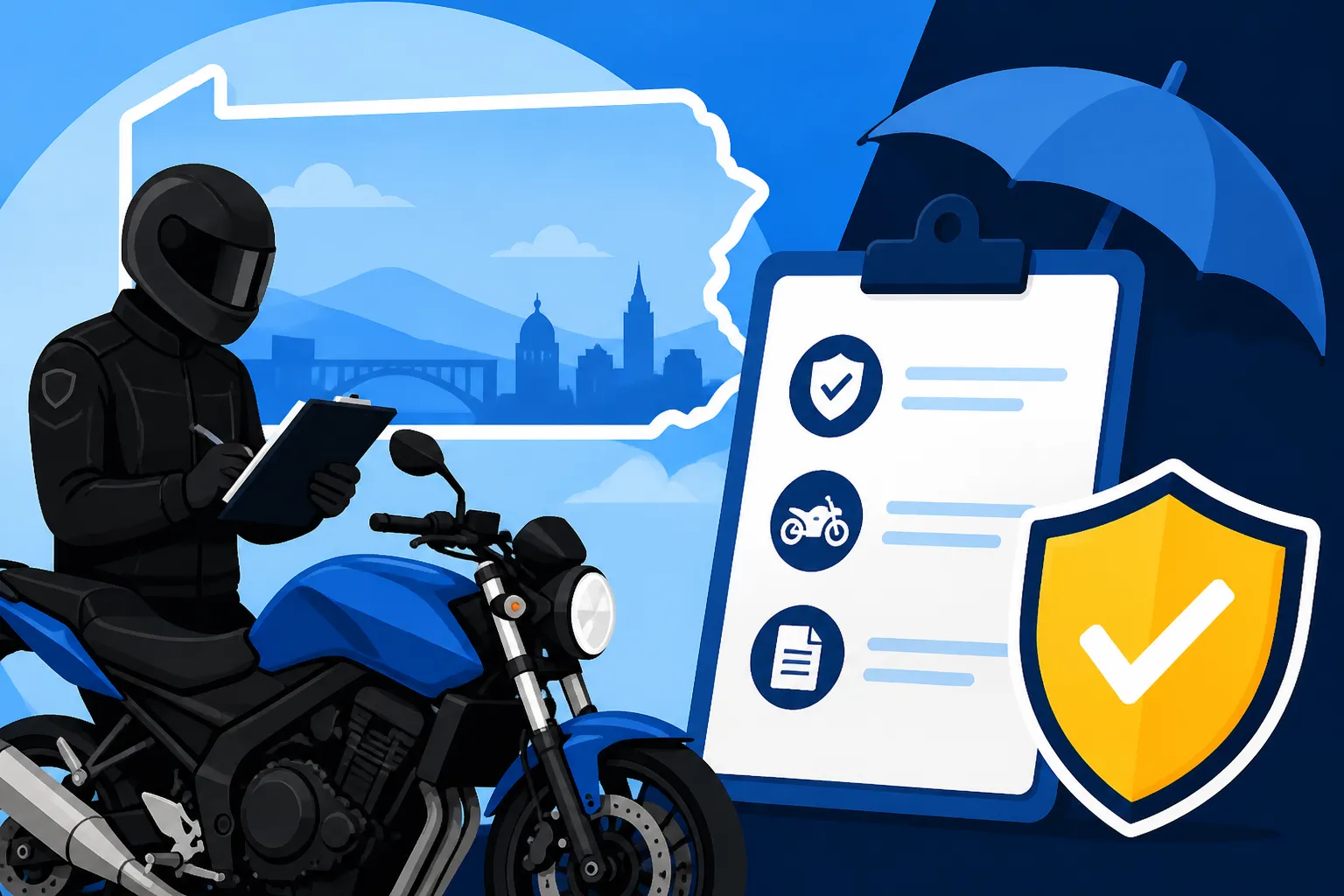
Post-Accident Motorcycle Claim Checklist for Pennsylvania Riders
Here's a quick reference guide to help you keep track of the critical steps after a motorcycle accident in Pennsylvania:
| Action Item | Priority | Details |
|---|---|---|
| Ensure Safety & Move to Safe Location | Immediate | Prevent further harm. Turn on hazards. |
| Check for Injuries & Seek Medical Help | Immediate | Don't delay medical evaluation, even for minor symptoms. Create official medical record. |
| Call 911 (Police) | Immediate | Mandatory for injuries, fatalities, or disabled vehicles. Recommended for all accidents. Obtain report number. |
| Document the Scene | High | Take extensive photos/videos. Note road conditions, signs, damage. |
| Exchange Information | High | Names, contacts, insurance details, license plates of all involved parties and witnesses. |
| Notify Your Insurance Company | Urgent | Contact your insurer promptly to open a claim. Provide factual details, no speculation. |
| Review Your Policy | High | Understand your coverage limits (liability, MedPay, UM/UIM, collision) before detailed discussions. |
| Cooperate with Adjuster | Ongoing | Provide requested documents (photos, police report, medical records). Schedule bike inspection. |
| Track Communications | Ongoing | Keep a log of all calls, emails, and conversations with dates, names, and summaries. |
| Understand PA Fault Laws | Ongoing | Be aware of "modified comparative negligence" (51% rule) and its impact on your recovery. |
| Evaluate Settlement Offers | Critical | Don't accept or sign anything until fully recovered and informed. Negotiate if total loss offer is low. |
| Seek Legal/State Assistance if Needed | As Needed | Consider an attorney or contact the PA Insurance Department for unfair delays or denials. |
Disclaimer
The information provided in this article is for general informational purposes only and does not constitute legal, financial, or insurance advice. While we strive to provide accurate and up-to-date content, laws and regulations regarding motorcycle insurance claims can change, and individual circumstances vary. It is always recommended to consult with a qualified legal professional, insurance agent, or the Pennsylvania Department of Insurance for advice tailored to your specific situation.