How Do I Prove My Custom Parts in a Claim?
It’s a frustrating reality for many motorcycle enthusiasts: you’ve poured your heart, soul, and a significant chunk of change into customizing your ride, only to wonder what happens if something goes wrong. The thought of an accident, theft, or even a minor tip-over bringing an insurance claim into the picture can be a real headache, especially when you start picturing an adjuster giving you pennies on the dollar for those bespoke parts. This guide will walk you through exactly how to prove the value of your custom motorcycle parts in an insurance claim, ensuring your unique investment is truly protected.
The Initial Dread: Why Custom Parts Are a Claim Headache
Let's be real, the moment you start adding anything beyond stock to your motorcycle, you're venturing into territory that standard insurance policies aren't always designed for. It’s not just about the cost of the parts; it’s the labor, the vision, and the personal touch that make your bike yours. And that’s precisely why navigating an insurance claim with custom parts can feel like an uphill battle.
The 'Actual Cash Value' Trap
One of the biggest pitfalls for custom motorcycle owners is the concept of "Actual Cash Value" (ACV). Most basic insurance policies default to this, and it can be a real gut-punch when you're trying to recoup losses on custom work. Here’s why: ACV essentially pays out the depreciated value of your motorcycle and its components at the time of the loss.
Imagine you spent $5,000 on a custom paint job and a new exhaust system two years ago. Under an ACV policy, the insurance company isn't going to give you $5,000 to replace those items. Instead, they'll factor in depreciation based on age and wear. That custom exhaust might be considered two years old, and its "actual cash value" could be significantly less than what you paid for it, let alone what it would cost to replace with a similar custom piece today. It’s like trying to get paid for a vintage guitar at its current market value when the insurer just wants to give you what a mass-produced, worn-out equivalent would fetch. This approach completely ignores the unique value and often appreciating nature of quality custom work, leaving riders feeling shortchanged and frustrated.
Standard Policy Blind Spots
Beyond the depreciation issue, many standard motorcycle insurance policies have inherent limitations when it comes to custom parts and accessories. Often, these policies will have a very low, if any, included coverage limit for modifications. You might find your policy only covers a few hundred dollars' worth of "accessories" as part of your base comprehensive or collision coverage.
For instance, if your policy includes a $1,000 limit for accessories and you've got $10,000 worth of custom chrome, upgraded suspension, and a tricked-out infotainment system, you're in for a rude awakening after a claim. This gap means that unless you've specifically added an endorsement or a rider for your custom parts, those shiny, expensive upgrades you cherish might as well be invisible to your insurer when it comes time to file a claim. It's a classic case of what you don't know can hurt you, especially when that custom headlight housing costs more than the policy's entire accessory limit.
Before Disaster Strikes: Proactive Steps to Protect Your Investment
The absolute best time to think about proving your custom parts in a claim is before anything happens. Being proactive with your insurance choices and meticulous with your documentation can save you immense stress and financial loss down the road.
Getting the Right Coverage from the Start
This is hands-down the most crucial step for any rider with custom parts. Standard policies rarely cut it, which is why you need to seek out specific coverage. Many reputable insurers, like Progressive, offer dedicated "Custom Parts and Equipment" or "Accessories Coverage" as an optional add-on. This isn't just a nice-to-have; it's essential.
When you're shopping for motorcycle insurance, explicitly ask about this type of coverage. Don't assume anything. You'll typically be asked to declare the value of your custom parts and accessories, and this will determine your coverage limit for these items. For example, if you've added $8,000 worth of performance upgrades, a custom seat, and premium saddlebags, you'd want to ensure your custom parts coverage reflects that $8,000 or more. Some policies might even offer "stated value" or "agreed value" options for highly customized bikes. With agreed value, you and the insurer agree on a fixed value for your motorcycle and its modifications when you purchase the policy. This means that in the event of a total loss, you'll receive that agreed-upon amount, sidestepping the dreaded depreciation trap of actual cash value. This can be a game-changer for unique builds. To really understand the nuances, you might find it helpful to read up on Agreed Value vs Stated Value vs Actual Cash Value. Comparing options from different providers through services like The Zebra can help you find a policy that truly understands and values your custom work. Don't just settle for minimum liability insurance explained (the three numbers); push for comprehensive coverage that includes your custom components. You can learn more about What Does Full Coverage Motorcycle Insurance Mean? to understand what might be best for your custom ride. Another article to check out is What Is Accessories Coverage on a Motorcycle?.
Documenting Every Custom Piece
Documentation is your best friend when it comes to proving custom parts. Think of it as building an ironclad case for your bike's true value. This isn't just about snapping a quick photo; it requires a systematic approach.
- Receipts, Receipts, Receipts: Every single receipt for custom parts purchased, and every invoice for professional installation or custom work done, needs to be saved. This is non-negotiable. Keep them organized, perhaps in a dedicated folder, both physically and digitally (scans are your friend!). If you bought something used or had a friend do custom fabrication, try to get a written estimate of the value or a detailed description of the work and materials used.
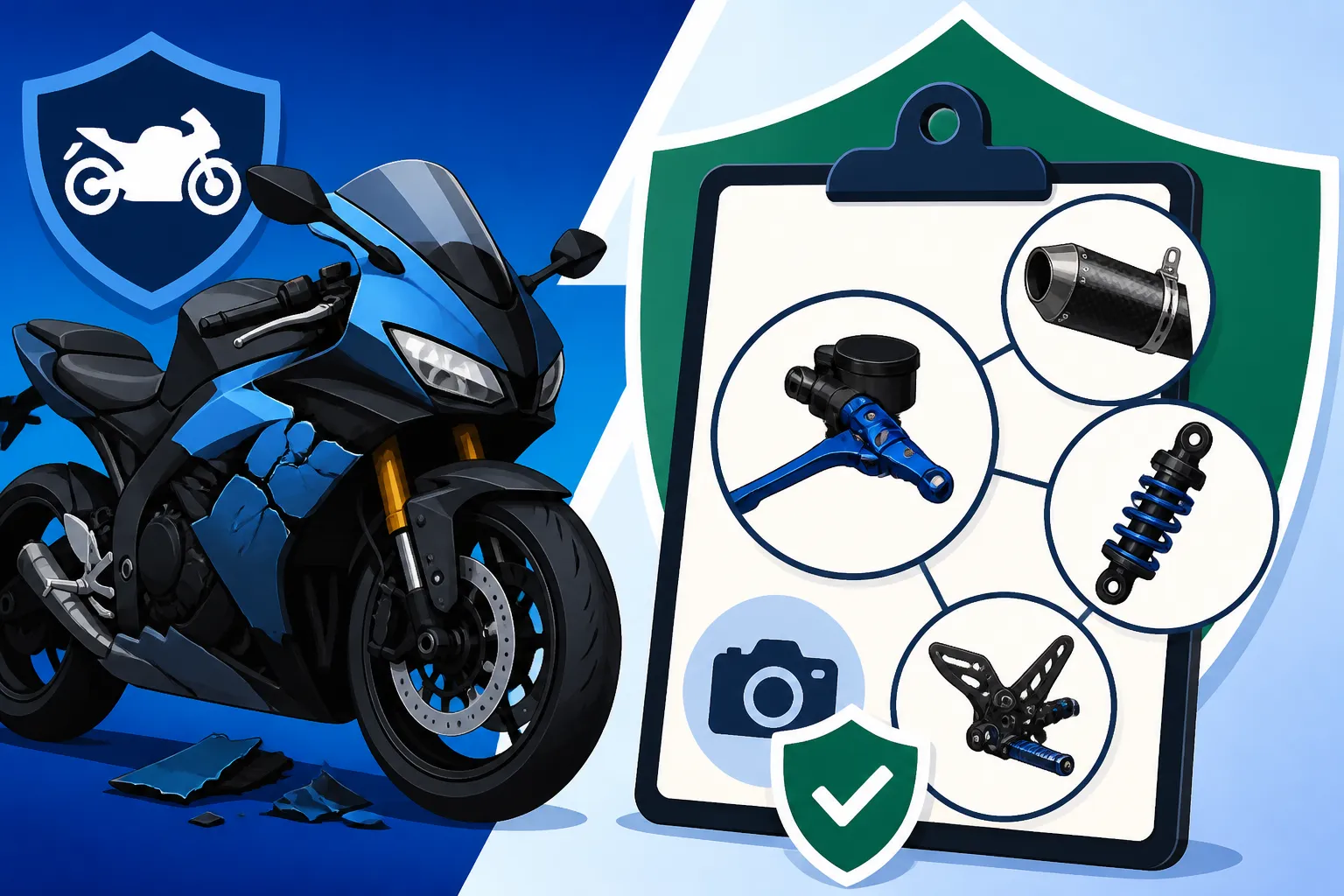
- High-Quality Photos and Videos: Before and after photos are invaluable. Take clear, high-resolution pictures of every custom part, from multiple angles. If you installed it yourself, document the process with photos. Videos are even better – narrate what you've added, when, and its estimated cost. Show the condition of the parts, highlight unique features, and capture the overall aesthetic of your customized bike. Don’t forget to photograph your riding gear and helmet, especially if you have high-end items that could be covered under some policies.
- Appraisals for High-Value Builds: For truly extensive custom bikes, especially those with significant modifications, a professional appraisal from a certified motorcycle appraiser can be worth its weight in gold. This is an unbiased, expert opinion on your bike's value, taking into account all modifications, labor, and market demand. It’s a powerful piece of evidence that's hard for an insurance company to dispute.
- Detailed Spreadsheet: Create a spreadsheet listing each custom part, its description, purchase date, cost, where it was purchased, and any associated installation costs. Link it to your digital receipts and photos. This organized approach makes it easy for an adjuster to see the full scope of your investment.
- Policy Review Notes: Keep records of your conversations with your insurance agent where you discussed your custom parts coverage. Note down names, dates, and what was discussed, especially if you increased your coverage limit for custom parts.
| Documentation Type | What It Proves | Best Practice |
|---|---|---|
| Receipts/Invoices | Cost of parts, professional labor | Keep digital & physical copies, date-stamped. |
| High-Res Photos | Visual proof of parts, condition, installation | Capture multiple angles, before/after, close-ups. |
| Detailed Videos | Comprehensive visual record, narrative | Walk-through of bike, highlight modifications. |
| Professional Appraisals | Expert valuation for extensive builds | Obtain from certified motorcycle appraiser. |
| Itemized Spreadsheet | Organized list of all custom components | Include description, cost, date, source. |
When the Worst Happens: Navigating a Claim with Custom Parts
Even with the best preparation, filing a claim is never fun. But when your custom ride is involved, having your ducks in a row can make a world of difference in the outcome.
Immediate Steps After an Incident
The moments right after an accident are often chaotic and stressful, but what you do (or don't do) can heavily impact your custom parts claim. First and foremost, ensure your safety and the safety of others. Then, if you're able:
- Document the Scene: Take photos and videos of the accident scene, the damage to your motorcycle, and any other vehicles involved. Don't just focus on the visible damage; capture the overall scene, road conditions, and any potential evidence. The more visual evidence you have right then and there, the better.
- Contact Law Enforcement and Your Insurer: Call the police, even for minor incidents, as an official report provides crucial third-party documentation. Then, notify your insurance company as soon as safely possible. Be clear that your motorcycle has significant custom parts and accessories, as this might prompt them to assign a specialized adjuster. For a detailed guide on what to do, refer to What to Do After a Motorcycle Accident (Insurance Steps) and How to File a Motorcycle Insurance Claim.
- Do Not Make Assumptions: Avoid discussing fault or agreeing to anything at the scene. Stick to factual observations. When speaking with your insurer, clearly state that you have custom parts coverage and that you expect those modifications to be fully assessed. If your bike was financed, remember that specific Motorcycle Insurance Requirements for Financed Bikes might apply, often necessitating comprehensive coverage that should ideally include your custom work.
Presenting Your Evidence to the Adjuster
Once the initial shock wears off, you'll be working with an insurance adjuster. This is where all your meticulous pre-claim documentation comes into play. Your goal is to educate the adjuster on the value of your custom work and advocate for proper compensation.
- Organize and Present Your Documentation: Don't just dump a box of receipts on them. Present your organized spreadsheet, complete with links to digital receipts, photos, and videos. If you have an appraisal, lead with that. The more clearly and professionally you present your evidence, the easier you make their job, and the harder it is for them to undervalue your claim.
- Highlight Specifics: Walk the adjuster through your documentation, pointing out specific custom parts, their costs, and how they enhance your motorcycle. Explain the labor involved, especially for custom fabrication or intricate paintwork. If a component like a custom exhaust costs significantly more than a stock replacement, explain why—better materials, improved performance, unique design.
- Be Prepared for Questions: The adjuster will likely have questions about the age of the parts, their condition before the incident, and how they relate to the overall damage. Answer honestly and refer back to your documentation. If your claim involves damage from a seemingly minor incident, like a How to File a Claim for a Dropped or Tipped-Over Bike, ensure you highlight how even small impacts can wreak havoc on delicate custom components.
- Advocate for Full Replacement: If your policy includes specific custom parts and accessories coverage, you should be pushing for replacement with like-kind and quality custom parts, not just standard OEM replacements. This is the difference that dedicated coverage makes. This directly addresses the question, Does Motorcycle Insurance Cover Custom Parts?.
Dealing with Valuation Discrepancies
It’s not uncommon for an initial offer from an insurance company to be lower than you expect, especially when custom parts are involved. Don't get discouraged, and certainly don't accept it without questioning.
- Review the Adjuster's Report Carefully: When you receive the adjuster's estimate, go through it line by line. Do they accurately list all damaged custom parts? Is the valuation for each part fair and reflective of replacement cost, not depreciated ACV? If your policy has stated or agreed value, ensure they are adhering to that.
- Provide Counter-Evidence: If you find discrepancies, present your counter-evidence. For example, if they've valued a custom exhaust at $500, but you have a receipt for $1,500 and photos proving it's a premium custom piece, present that. Show them current market prices for similar custom parts from online retailers or specialty shops.
- Seek an Independent Appraisal: If negotiations with your adjuster reach an impasse, consider getting an independent appraisal. This is particularly useful if your policy is on an ACV basis but you believe the custom work significantly increases the bike's value beyond what the insurer is offering. This outside expert opinion can provide leverage in your negotiations. Be prepared that you might have to pay for this out-of-pocket, but the potential increase in payout could be well worth it.
- Escalate if Necessary: If you're still not satisfied, you have options. You can ask to speak with a supervisor or manager at the insurance company. If that doesn't resolve it, you can file a complaint with your state's Department of Insurance. This should generally be a last resort, but it’s a powerful tool to ensure the insurer is upholding its end of the contract.
Avoiding Future Headaches: Regular Reviews and Updates
Protecting your custom motorcycle isn't a one-and-done deal. It requires ongoing attention, just like maintaining the bike itself.
Keeping Your Coverage Current
Your motorcycle is a living, evolving machine, especially if you're constantly tinkering and upgrading. Your insurance policy needs to evolve with it.
- Annual Policy Review: Make it a habit to review your motorcycle insurance policy annually, or whenever you make significant changes to your bike. Sit down with your agent and go through your custom parts coverage limits. Have you added more expensive components? Increased the total value of your modifications? If so, your coverage limits need to be updated to reflect that.
- Update Documentation: Every time you add a new custom part or make a significant modification, update your documentation. Take new photos, save new receipts, and add the details to your spreadsheet. This ensures your "proof" is always current and accurate. A small effort now can prevent a huge headache later.
- Factor in Inflation and Market Value: The cost of custom parts and labor can increase over time. What you paid for a custom fairing five years ago might not be what it costs to replace it today. Discuss this with your insurer to ensure your coverage is keeping pace with current market realities. Remember, What Affects Your Motorcycle Insurance Rate? includes these detailed considerations.
The Value of a Motorcycle Specialist Insurer
While many large insurers offer motorcycle policies, some companies specialize in motorcycle insurance, and these can often be a better fit for riders with custom bikes. Companies like Dairyland or Markel, for example, often have a deeper understanding of the unique needs of motorcyclists, including the complexities of custom parts.
Specialist insurers are generally more attuned to the value of custom work, the nuances of different bike types, and the rider lifestyle. They might offer more flexible custom parts coverage options, higher limits by default, or adjusters who are more experienced in valuing unique modifications. While Progressive is a major player and offers excellent custom parts coverage, exploring a specialist could yield an even better fit or more nuanced understanding. When comparing options, consider their reputation for handling custom claims. Do they offer OEM parts replacement clauses, or specific coverage for helmets and riding gear? These are the details that matter when your bike is more than just transportation; it's a statement.
Disclaimer
This article is for general informational purposes only and does not constitute professional advice. Laws, prices and regulations vary by location and change over time. Consult a qualified professional for guidance on your specific situation.