What to Do After a Motorcycle Accident (Insurance Steps)
Riding a motorcycle offers unparalleled freedom, but it also comes with unique risks. If you've just been in a motorcycle accident, the immediate aftermath can be a whirlwind of shock, pain, and confusion. It's tough to think clearly when your adrenaline is pumping and your bike might be in pieces. This comprehensive guide is here to walk you through the essential insurance steps and other critical actions you need to take after a motorcycle accident, ensuring you protect your rights, your health, and your financial well-being.
Immediate Actions at the Scene of a Motorcycle Accident
When a crash happens, whether it's a fender bender or something more serious, your first few moments are crucial. It's easy to feel overwhelmed, but taking a deep breath and focusing on these steps can make a world of difference for your safety and your eventual insurance claim.
Prioritizing Safety and Well-being
Seriously, your health is always, always the top priority. Forget the bike, forget the paperwork for a second. First, check yourself for injuries. Even if you feel fine, adrenaline can mask pain. Can you move? Do you feel any sharp pains? Look for visible injuries, cuts, or bruises. If you're able to, try to move yourself and your motorcycle out of the path of ongoing traffic to a safer location, like the side of the road or a nearby parking lot. This minimizes the risk of another collision.
Once you're in a safer spot, check on anyone else involved – the other driver, passengers, or even bystanders. Ask if they're okay and if they need medical attention. If someone is severely injured or unconscious, do not move them unless they are in immediate danger of further harm. Remember, a head injury isn't always obvious, and even a mild concussion can have serious long-term effects. Always err on the side of caution when it comes to potential injuries.
Contacting Emergency Services and Law Enforcement
Even if the accident seems minor, calling 911 is almost always a good idea, especially if there are any injuries, significant damage to property, or if the accident is blocking traffic. Police officers will create an official accident report, which is absolutely vital for your insurance claim. This report documents the scene, gathers statements from all parties, and often assigns fault, which can significantly impact how your claim proceeds. Without a police report, it can become a "he said, she said" situation, making it much harder to prove your side of the story.
When the police arrive, be cooperative but stick to the facts. Provide your driver's license, registration, and proof of insurance. If you're asked for a statement, describe what happened as objectively as possible. Do not admit fault, even if you think you might be partially to blame. Let the investigators do their job. Get the police report number and the names and badge numbers of the responding officers before they leave the scene. This information will be critical when you eventually file your claim.
Gathering Critical Information from All Parties
While the police are handling their investigation, you should also be diligently collecting information. This is your personal backup to the official report. You'll need:
- Other Driver's Information: Full name, phone number, address, driver's license number.
- Vehicle Information: Make, model, year, license plate number, and Vehicle Identification Number (VIN) of all vehicles involved.
- Insurance Information: The other driver's insurance company name and policy number.
- Witness Information: Names and contact details of any witnesses. Their unbiased account can be incredibly valuable.
- Police Report Information: As mentioned, the report number and officer details.
It can be tempting to chat friendly with the other driver, but again, avoid discussing fault or speculating about the accident's cause. Just exchange information. It's a common mistake for people to apologize reflexively, which can later be interpreted as an admission of guilt by insurance companies. For more details on what documents you'll need later, you might find our guide on What Documents Do You Need to File a Motorcycle Claim? helpful.
Documenting the Scene with Photos and Videos
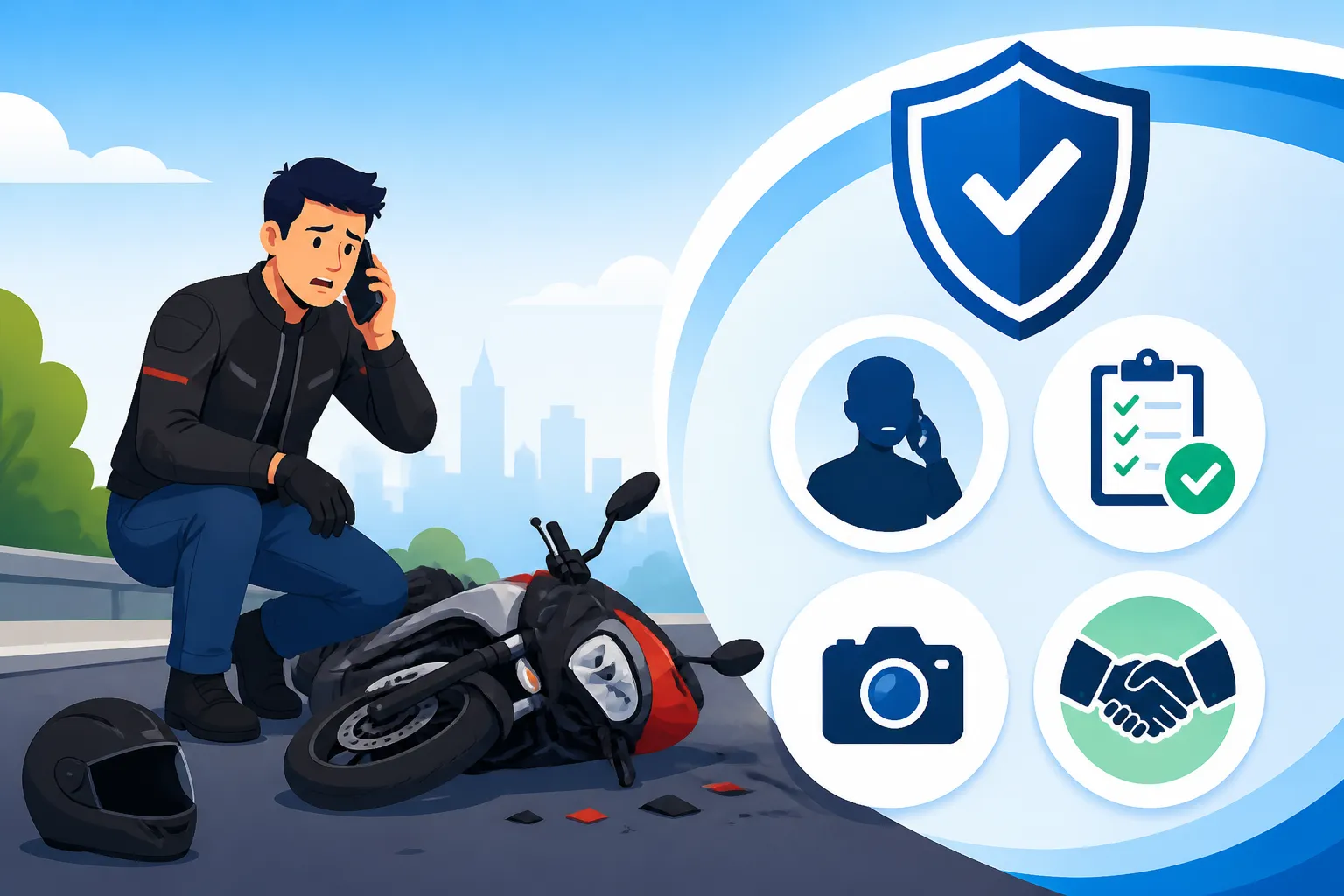
In today's world, your smartphone is one of your most powerful tools after an accident. Take as many photos and videos as you possibly can. Don't be shy.
- Damage to Your Motorcycle: Get close-ups of all damage, from multiple angles. Also take wider shots that show the full bike and its position relative to other vehicles or landmarks.
- Damage to Other Vehicles: Document the damage on any other vehicles involved, particularly focusing on the point of impact.
- The Accident Scene: Take photos of the overall scene, showing road conditions, skid marks, traffic signs, traffic lights, debris on the road, and the position of all vehicles involved before they are moved.
- Injuries: If you or anyone else has visible injuries, photograph them.
- Other Details: Capture anything else that seems relevant – weather conditions, time of day, road hazards, or even the general vicinity.
The more visual evidence you have, the stronger your case will be with your insurance company. Pictures speak volumes and can help an adjuster understand the full scope of what happened. Think of it as creating a visual story of the accident for those who weren't there.
Notifying Your Insurance Company
Once you're out of immediate danger and have gathered all the necessary information, contacting your own motorcycle insurance company is the next crucial step. Don't delay this, even if you believe the other driver was at fault.
Understanding Reporting Deadlines and Policies
Most insurance policies require you to report an accident promptly, often within a few days or even 24 hours. Check your policy documents, but generally, the sooner the better. Delaying notification can sometimes be used by the insurance company to deny or reduce your claim, especially if they believe the delay hindered their ability to investigate. Even if you're not sure if you'll file a claim, it's wise to at least inform them about the incident.
Remember, the clock starts ticking from the moment of the accident. It's a stressful time, but pushing through to make that call is important. If you're wondering, How Long Do I Have to File a Motorcycle Claim? can give you more specific insights into these deadlines.
What Information to Provide During the Initial Call
When you call your insurance company, they'll want to gather some initial details. Be prepared to provide:
- The date, time, and exact location of the accident.
- A brief, factual description of what happened – stick to what you know, not what you think or assume.
- Information about the other vehicles and drivers involved (names, contact info, insurance details).
- The police report number and the name of the law enforcement agency.
- Details about any injuries you or your passenger sustained, or if you sought medical attention.
- A description of the damage to your motorcycle.
Again, this is not the time to admit fault. Simply state the facts as you observed them. Your insurance company will investigate the incident, and an admission of fault could complicate their ability to defend you or recover damages from the other party. Companies like Progressive have dedicated claims departments that can walk you through this process, but being prepared with your information will make the call smoother.
The Role of Your Insurance Agent
Your insurance agent isn't just there to sell you a policy; they can be a valuable resource after an accident. While the claims department handles the specifics of the investigation and payout, your agent can often guide you through the process, answer questions about your specific coverages, and sometimes even advocate on your behalf. They understand the nuances of your policy and can help clarify what's covered and what isn't.
Building a good relationship with your agent before an accident ever happens can pay off immensely. When you call, they can help you understand the next steps, such as setting up an appointment with an adjuster or understanding the paperwork involved. They can also explain how the claim might impact your future rates and whether certain coverages like accident forgiveness apply.
Navigating the Claims Process
After the initial reports are made, the real work of the insurance claim begins. This is where your preparedness at the scene will truly shine.
Understanding Your Coverage Types
Before you dive deep into the claims process, it's really important to understand what types of motorcycle insurance coverage you actually have. This dictates what your policy will pay for.
- Liability Coverage: This is typically required by law in most states. It covers damages and injuries you cause to other people and their property if you're at fault in an accident. It doesn't pay for your own injuries or bike damage. Understanding Liability Coverage for Motorcycles Explained is crucial.
- Collision Coverage: This pays for damage to your own motorcycle if you hit another vehicle, an object (like a guardrail), or if your bike rolls over, regardless of who is at fault.
- Comprehensive Coverage: This covers damage to your motorcycle from non-collision events, such as theft, vandalism, fire, natural disasters (like hail or floods), or hitting an animal. If your bike was stolen from your garage, this is the coverage you'd use.
- Uninsured/Underinsured Motorist (UM/UIM) Coverage: This is incredibly important for motorcyclists. It protects you if you're hit by a driver who has no insurance (uninsured) or not enough insurance (underinsured) to cover your damages and injuries. Since many drivers are underinsured, this coverage can be a lifesaver. You can learn more about Uninsured & Underinsured Motorist Coverage (UM/UIM).
- Medical Payments (MedPay) or Personal Injury Protection (PIP): These cover medical expenses for you and your passengers, regardless of fault. MedPay is common in many states, while PIP is typically found in no-fault states like Florida or Michigan. Our article What Is Medical Payments MedPay for Riders? dives into this.
- Accessories and Custom Parts Coverage: If you've invested in aftermarket parts, custom paint, or expensive gear, standard collision/comprehensive might not fully cover them. This add-on ensures your modifications are protected.
Knowing what you're covered for helps you anticipate what the insurance company will cover and what you might be responsible for. Many riders opt for What Does Full Coverage Motorcycle Insurance Mean? to ensure they have comprehensive protection against a wide range of incidents.
Working with the Claims Adjuster
Once your claim is filed, an insurance adjuster will be assigned to your case. This person is responsible for investigating the accident, determining fault, assessing damages, and ultimately authorizing payouts. Their job is to ensure the claim is handled fairly, based on the policy terms and the facts of the incident.
When communicating with the adjuster:
- Be Patient and Organized: The claims process can take time. Keep all your documentation – photos, police report, contact info, medical bills, repair estimates – in one place.
- Be Factual: Stick to the facts you know. Avoid speculation, emotional statements, or admitting fault.
- Provide Requested Information Promptly: The adjuster will likely ask for various documents and may want to inspect your motorcycle. Cooperating quickly can speed up the process.
- Don't Feel Rushed: If you feel an offer is too low or you need more time to gather information, don't hesitate to say so. You have a right to a fair settlement.
The adjuster will often review the police report, witness statements, and your provided documentation. If there's a dispute over fault, they might even consult accident reconstruction specialists.
Getting Your Motorcycle Repaired or Deemed a Total Loss
One of the most immediate concerns after an accident is getting your beloved bike fixed. The adjuster will assess the damage to your motorcycle. They'll typically ask you to get an estimate from a repair shop, or they might send their own appraiser.
If the cost of repairs exceeds a certain percentage of your motorcycle's Actual Cash Value (ACV), the insurance company will likely declare it a "total loss." This threshold varies by state and insurer, but it often ranges from 70% to 100% of the ACV. If your bike is totaled, the insurance company will pay you the ACV of the motorcycle, minus your deductible. This can be a hard pill to swallow, especially if you have a strong emotional attachment to your bike or if you've put a lot of custom work into it.
It's important to understand your options if your bike is deemed a total loss. Sometimes, you can negotiate the settlement amount if you believe their ACV assessment is too low. Providing documentation of recent sales of similar bikes, or receipts for custom parts (if you have adequate custom parts coverage), can help. Our detailed guide, What Happens When Your Motorcycle Is Totaled?, offers an in-depth look at this process.
Dealing with Medical Injuries and Costs
Beyond the damage to your bike, your personal injuries are a critical part of any motorcycle accident claim. Your health should always be paramount.
Seeking Medical Attention Promptly
Even if you feel okay at the scene or only have minor scrapes, it is absolutely vital to get checked out by a medical professional as soon as possible after a motorcycle accident. Adrenaline can mask pain, and some serious injuries, like concussions, internal bleeding, or soft tissue damage, might not manifest symptoms until hours or even days later. Delaying medical attention can not only jeopardize your health but also weaken your insurance claim. The insurance company might argue that your injuries weren't directly caused by the accident if there's a significant gap between the incident and your first medical visit.
Keep detailed records of all your medical visits, diagnoses, treatments, medications, and any recommendations from doctors. Documenting your recovery journey is crucial for your claim.
Utilizing Medical Payments or Health Insurance
If you have Medical Payments (MedPay) coverage on your motorcycle insurance policy, it will pay for your medical expenses, regardless of who was at fault for the accident, up to your policy limits. This can be incredibly helpful for immediate costs like ambulance rides, emergency room visits, and initial doctor appointments. MedPay works quickly, often without a deductible, to get you the care you need.
If you don't have MedPay, or if your medical costs exceed its limits, your personal health insurance will step in. In many cases, your health insurance might pay for your treatment first, and then seek reimbursement from the at-fault driver's liability insurance (a process called subrogation) or from your own MedPay or UM/UIM coverage. It's a good idea to inform both your motorcycle insurer and your health insurer about the accident.
Long-Term Injury Considerations and Settlements
For more serious injuries that require extensive treatment, rehabilitation, or result in long-term disability or pain, the medical claims process becomes more complex. Your initial medical bills are just part of the picture. You'll also need to consider:
- Future Medical Expenses: Will you need more surgeries, physical therapy, or medication in the future?
- Lost Wages: Have your injuries prevented you from working, and will they continue to do so?
- Pain and Suffering: The emotional and physical toll the injuries have taken.
- Impact on Quality of Life: How have your injuries affected your daily activities and overall enjoyment of life?
These types of claims often take much longer to resolve because the full extent of your injuries and their long-term impact needs to be understood. This is where having legal counsel can become incredibly beneficial, as personal injury attorneys specialize in calculating and negotiating these complex damage awards.
Special Scenarios and Legal Considerations
Sometimes, accidents aren't straightforward, and you might find yourself in situations that require extra care or even legal intervention.
Accidents with Uninsured or Underinsured Motorists
It's a scary thought, but it happens all too often: you're involved in an accident, and the other driver either has no insurance or their policy limits are too low to cover all your damages. This is a nightmare scenario for any rider, and unfortunately, motorcyclists are often more vulnerable to severe injuries and higher medical costs.
This is precisely why Uninsured/Underinsured Motorist (UM/UIM) coverage is so critically important. If the at-fault driver lacks adequate insurance, your UM/UIM policy can step in to cover your medical bills, lost wages, and even pain and suffering, up to your policy limits. Without it, you might be left paying out-of-pocket for significant expenses or attempting to sue the at-fault driver personally, which can be a long and difficult road.
If you find yourself in this situation, promptly notify your insurance company that the other driver is uninsured or underinsured. They will typically open a claim under your UM/UIM coverage. Navigating these claims can be tricky, so it's worth reading our guide on How to File a Claim When Hit by an Uninsured Driver to understand the process.
When Legal Counsel Becomes Necessary
While you might handle a minor claim directly with your insurance company, there are several situations where hiring a personal injury attorney for a motorcycle accident is highly advisable:
- Serious Injuries: If you or your passenger sustained significant injuries requiring extensive medical treatment, long-term care, or resulting in permanent disability.
- Disputed Fault: If the insurance companies or the other driver are trying to place blame on you, even when you believe you weren't at fault.
- Lowball Settlement Offers: If your insurance company or the other driver's insurer offers a settlement that doesn't seem to cover all your expenses and damages.
- Uninsured/Underinsured Drivers: As discussed, a lawyer can help maximize your recovery from your UM/UIM coverage.
- Multiple Parties Involved: Accidents involving more than two vehicles or complex circumstances often benefit from legal expertise.
- Denial of Claim: If your insurance claim is outright denied.
An attorney can protect your rights, gather evidence, negotiate with insurance companies, and represent you in court if necessary. They understand the intricacies of personal injury law and can help you receive the compensation you deserve.
Handling Disputes and Appeals
It’s disheartening when you feel like you’ve done everything right, only for your claim to be denied or an offer to come in that feels insultingly low. But don't despair; you have options. If your claim is denied, your insurance company is required to provide a reason in writing. Review this denial carefully and understand why they made their decision.
You can often appeal the decision. This usually involves submitting additional evidence, such as more detailed medical reports, independent repair estimates, or witness statements that counter the insurance company's initial findings. It might also involve escalating the matter to a higher-level claims supervisor within the company. If you're struggling with a denial, our guide on What to Do if Your Claim Is Denied can provide a step-by-step approach to appealing their decision. Remember, being persistent and having solid documentation are your best assets here.
After the Claim: What to Expect
Even after your claim is settled and your bike is repaired (or replaced), the accident can have lasting effects on your riding life, particularly concerning your insurance.
Impact on Your Insurance Rates
One of the most common worries after an accident is how it will affect your insurance premiums. If you are found to be at fault for the accident, it's highly likely that your rates will increase upon renewal. The exact amount of the increase can vary significantly based on:
- Severity of the Accident: A major accident with significant damages and injuries will typically lead to a higher increase than a minor fender-bender.
- Your Driving Record: If you have a history of accidents or violations, a new at-fault accident will be viewed more harshly.
- Your Insurance Company's Policies: Each insurer has its own underwriting rules. Some might offer accident forgiveness programs for a first at-fault accident, but these are often optional add-ons.
- Your State's Regulations: Insurance laws vary by state, influencing how accidents impact rates.
If you weren't at fault, your rates generally shouldn't increase, though some companies might apply a slight increase due to the "risk profile" of having been involved in an incident. It's frustrating, but it happens. For a deeper dive into how incidents affect your premiums, check out What Happens to My Rate After a Motorcycle Claim?.
Reviewing Your Policy and Making Adjustments
An accident, while terrible, can also be a stark wake-up call to reassess your current motorcycle insurance policy. Many riders find that after an incident, they realize their coverage limits were too low, or they were missing crucial coverages like UM/UIM or MedPay.
Now is the time to sit down and thoroughly review your policy. Consider whether your liability limits are sufficient to protect your assets in case of a serious at-fault accident. Evaluate if your collision and comprehensive deductibles still make sense for your financial situation. Think about adding roadside assistance if you didn't have it, or increasing your accessories coverage if your custom work wasn't fully protected.
Don't be afraid to shop around. Your current insurer might not offer the best rates for your new risk profile after an accident. This is where tools like The Zebra can be incredibly useful, allowing you to compare quotes from various providers side-by-side to ensure you're getting the best coverage at a competitive price.
The Importance of a Motorcycle Safety Course
While it might feel like the last thing you want to do after an accident, taking an advanced motorcycle safety course can be incredibly beneficial. Not only does it help you hone your riding skills, refresh your knowledge of defensive riding techniques, and potentially rebuild your confidence, but it can also sometimes lead to insurance discounts. Many insurance companies, including Progressive, offer discounts for riders who complete approved safety courses.
These courses, often provided by organizations like the Motorcycle Safety Foundation (MSF), cover everything from advanced braking and cornering to hazard avoidance. Investing in your riding education is an investment in your safety and can demonstrate to your insurer that you're a responsible rider, which might help mitigate future rate increases. You can learn more about how this can save you money in our article Does a Motorcycle Safety Course Lower Insurance?.
Immediate vs. Follow-Up Actions After a Motorcycle Accident
To help you keep track, here's a quick summary table of the actions you should take:
| Immediate Actions (At the Scene) | Follow-Up Actions (Days/Weeks After) |
|---|---|
| 1. Prioritize your safety and check for injuries. | 1. Follow up on all medical appointments and treatments. |
| 2. Move to a safe location if possible. | 2. Keep detailed records of all expenses (medical, repair, lost wages). |
| 3. Call 911 (for injuries, major damage, etc.). | 3. Regularly communicate with your insurance adjuster. |
| 4. Gather driver, vehicle, and insurance information. | 4. Get repair estimates or negotiate total loss settlement. |
| 5. Collect witness contact details. | 5. Consider legal counsel for serious injuries or disputes. |
| 6. Take extensive photos and videos of the scene and damage. | 6. Review your insurance policy and make necessary adjustments. |
| 7. Do NOT admit fault. | 7. Consider taking an advanced motorcycle safety course. |
| 8. Notify your own insurance company as soon as possible. | 8. Monitor your insurance rates for changes upon renewal. |
Disclaimer
The information provided in this article is for general informational purposes only and does not constitute legal, financial, or insurance advice. While we strive to provide accurate and up-to-date content, laws and insurance policies are complex and constantly changing. Always consult with a qualified legal professional, insurance agent, or financial advisor for advice tailored to your specific situation. Reliance on any information provided in this article is solely at your own risk.