How Much Is Motorcycle Insurance in New York?
Trying to figure out how much motorcycle insurance will set you back in a bustling state like New York can feel like navigating Times Square at rush hour – confusing, overwhelming, and full of unexpected twists. It's not just about getting the legal minimum; it's about protecting yourself and your ride without breaking the bank. This guide is here to untangle the complexities, offering a clear, realistic look at what to expect for motorcycle insurance costs in New York and how to manage them.
Understanding New York's Motorcycle Insurance Landscape
New York isn't just a state known for its iconic skyline and vibrant culture; it also has a unique insurance environment that impacts motorcyclists. The rules and factors that determine your premiums here can be a bit different from other places, and it's essential to grasp these nuances to avoid surprises and ensure you're adequately covered.
Minimum Coverage Requirements in the Empire State
First things first, let's talk about what's absolutely non-negotiable when it comes to riding legally in New York. Just like cars, motorcycles are subject to specific minimum liability insurance requirements. These aren't suggestions; they're the law, and riding without them can land you in serious trouble. The minimum liability coverage in New York State is often expressed as three numbers: 25/50/10.
What do these numbers mean for you?
- $25,000 for bodily injury liability per person: This is the maximum amount your insurance company will pay for injuries to one person in an accident that you cause. Imagine you're riding through upstate New York, and an unforeseen event leads to a collision where another driver is injured. This portion of your policy steps in to cover their medical bills, lost wages, and other related expenses, up to $25,000.
- $50,000 for bodily injury liability per accident: This is the total maximum amount your insurance company will pay for all bodily injuries in an accident that you cause, regardless of how many people are injured. So, if two or more people are hurt in that upstate collision, your policy would cover up to $50,000 for their combined injuries.
- $10,000 for property damage liability per accident: This covers damage you cause to another person's property, such as their vehicle, a fence, or even a building, up to $10,000. If you accidentally scrape a parked car in a tight Brooklyn street, this is the part of your policy that pays for the repairs to their vehicle.
It's also crucial to remember that New York mandates Uninsured Motorist Bodily Injury coverage, also at 25/50. This is a lifesaver, covering your medical expenses if you're hit by a driver who doesn't have insurance or in a hit-and-run situation. While this covers your bodily injuries, it's worth noting that property damage from an uninsured motorist is typically not covered by this specific provision. For that, you'd usually need collision coverage on your own policy. You can dive deeper into what these numbers really mean by looking into Minimum Liability Insurance Explained The Three Numbers.
One common point of confusion for riders moving to or living in New York is the "no-fault" aspect. While New York is generally a no-fault state for car insurance, requiring Personal Injury Protection (PIP) benefits, motorcycles are explicitly exempt from this no-fault system. This means that if you're injured in a motorcycle accident, you can't typically claim PIP benefits through your auto policy or the other driver's. Because of this, many seasoned riders strongly recommend adding Medical Payments (MedPay) coverage to your motorcycle policy. It's an optional coverage, but it can be incredibly valuable for covering your medical bills regardless of who is at fault, essentially filling the gap left by the motorcycle no-fault exemption.
Factors Unique to New York That Influence Rates
Beyond the bare minimums, several factors specific to New York State can really swing your insurance premiums. It's not just about what you ride, but where you ride it and what the overall environment is like.
Population Density and Traffic: It's no secret that New York, especially New York City and its surrounding boroughs, is densely populated. More people generally mean more vehicles on the road, more traffic congestion, and, unfortunately, a higher likelihood of accidents. Insurance companies look at zip codes, and if you live in a bustling area with higher accident rates, your premiums will naturally be higher. Conversely, if you're out in a more rural part of the state, say near the Adirondacks, you might see slightly lower rates due to less traffic exposure. For instance, a rider in Manhattan will almost certainly pay more than a rider in Watertown for the exact same coverage. This hyper-local risk assessment is a significant driver of cost.
Weather and Riding Season: New York experiences all four seasons in full force, and that includes some pretty brutal winters. Most motorcyclists in New York don't ride year-round. This seasonal usage can sometimes lead to different insurance considerations. While it might not directly lower your annual premium significantly, some companies offer seasonal lay-up coverage, allowing you to reduce your coverage (and cost) during months when your bike is stored. This is a smart way to save money if you're not riding in the snow and ice. However, the shorter riding season also means that insurance companies factor in the concentrated risk during the warmer months.
Theft Rates: Metropolitan areas, particularly New York City, tend to have higher rates of motorcycle theft compared to more rural areas. If you own a popular model like a Kawasaki Ninja or a Harley-Davidson Sportster, and you live in an area with a high theft index, your comprehensive coverage (which covers theft) will reflect that increased risk. Insurers track these statistics diligently, and they price policies accordingly. Using anti-theft devices can sometimes help offset these costs, but the baseline risk remains a significant factor for New Yorkers.
Road Conditions: Let's be honest, New York's roads can be a bit of a mixed bag. Potholes, construction, and general wear and tear are common, especially after a harsh winter. These conditions can increase the risk of single-vehicle accidents or damage to your motorcycle, which insurers factor into their pricing. A state with generally well-maintained roads might see slightly lower rates than one battling constant road repairs.
Average Motorcycle Insurance Costs in New York
So, what's the magic number? The truth is, there isn't one. The cost of motorcycle insurance in New York is as varied as the riders and bikes themselves. However, we can look at averages and the key factors that push those numbers up or down to give you a clearer picture. While it's impossible to give an exact figure without knowing your specifics, resources like The Zebra can provide a starting point for comparing quotes and understanding general price ranges across different providers.
Breaking Down Costs by Rider Profile
Your personal characteristics play a massive role in how much you'll pay for motorcycle insurance. Insurers assess you as a risk, and certain demographics and behaviors are statistically linked to higher or lower claim frequencies.
Age and Experience: This is perhaps one of the biggest determinants.
- Younger Riders (Under 25): If you're a young rider, especially a teenager or in your early twenties, prepare for some of the highest premiums. Insurers view this group as having less experience and a higher likelihood of accidents. For example, an 18-year-old in New York trying to insure a sport bike might face annual premiums well over $2,000, even for minimum coverage, simply due to their age and perceived risk. Getting your Motorcycle License, Endorsement & Insurance at a younger age might be exciting, but the insurance cost can be a real hurdle.
- Middle-Aged Riders (25-50): This group generally sees the most favorable rates. You've got more riding experience under your belt, likely a cleaner driving record, and statistically, you're considered a lower risk. Premiums typically start to decrease significantly around age 25 and remain relatively stable through your 30s and 40s. A rider in their mid-30s with a clean record might pay anywhere from $500 to $1,200 per year for a standard cruiser with good coverage.
- Senior Riders (Over 50): While experience is a plus, rates can start to tick up slightly again for older riders, particularly those in their late 60s and beyond. This is often due to an increased risk of injury or slower reaction times, though the increase is usually less dramatic than for young riders. Many senior riders often have multi-policy discounts or loyalty discounts that help keep their rates competitive.
Riding History and Driving Record: This one is a no-brainer. A clean riding and driving record is your best friend when it comes to insurance rates.
- Tickets and Accidents: Speeding tickets, especially multiple ones, or at-fault accidents will almost certainly increase your premiums. A single minor infraction might bump your rate by 10-20%, while a major one, like a DUI, could double or triple it and even require an SR-22 filing, which is a whole other beast for your insurance costs. If you're curious, you can find out How Much Is Motorcycle Insurance After a Speeding Ticket?.
- Motorcycle Safety Courses: Completing an approved motorcycle safety course, like those offered by the New York State Motorcycle Safety Program, can often net you a discount. Insurers see this as a sign of a responsible rider committed to improving their skills and reducing risk. Many companies offer a 5-15% discount for these courses, which can add up, especially for younger riders.
Credit Score: In New York, like most states, your credit-based insurance score can influence your premiums. Insurers use these scores as a predictor of how likely you are to file a claim. Generally, a higher credit score correlates with lower premiums, as individuals with good credit are statistically less likely to file claims. If you have a lower credit score, you might find your rates are a bit higher. It's not a direct correlation, but it's one of many data points insurers consider.
Impact of Motorcycle Type and Usage
The type of motorcycle you ride and how often you ride it are massive factors in your New York insurance rates. Not all bikes are created equal in the eyes of an insurance company.
Motorcycle Classification:
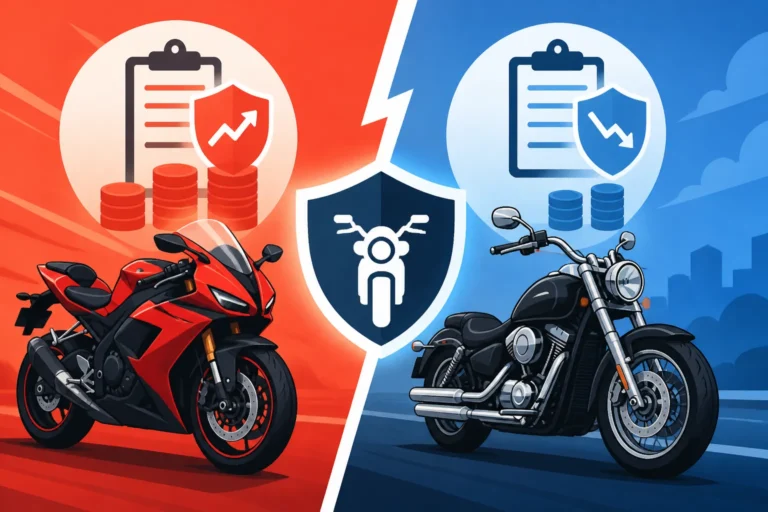
- Sport Bikes (e.g., Yamaha YZF-R1, Suzuki GSX-R, Honda CBR): These high-performance machines typically come with the highest insurance premiums. Their powerful engines, lightweight frames, and association with higher speeds mean a greater risk of severe accidents and higher repair costs. If you're eyeing a brand-new supersport bike in New York, be prepared for substantial insurance quotes, especially if you're a younger rider. Some insurance companies even specialize in high-risk vehicles, and a quick comparison on platforms like The Zebra might show you which insurers are more competitive.
- Cruisers (e.g., Harley-Davidson Street Glide, Indian Chief, Honda Rebel): Cruisers generally fall into the mid-range for insurance costs. They are often less powerful and less prone to high-speed incidents than sport bikes. They're popular for their comfort and style, and their riders tend to be a bit more experienced and sedate. Expect moderate premiums for these bikes. Harley-Davidson Insurance Cost can vary, but it's usually more manageable than a sport bike.
- Touring Bikes (e.g., Honda Gold Wing, Harley-Davidson Road Glide): These large, heavy bikes designed for long-distance comfort often carry a higher price tag to purchase, but their insurance premiums can sometimes be comparable to cruisers or even slightly lower than sport bikes. While they have many features and can be expensive to repair, they are typically ridden by experienced, careful individuals who prioritize safety over speed.
- Standard/Naked Bikes (e.g., Kawasaki Z650, Yamaha MT-07): These versatile bikes offer a good balance of performance and practicality. Their insurance costs are often quite reasonable, falling below sport bikes and sometimes even cruisers, making them a popular choice for new or budget-conscious riders.
- Dirt Bikes/Off-Road Motorcycles: If you're insuring a dirt bike that's only used off-road, the requirements are different. Generally, if it's not street-legal and won't be ridden on public roads in New York, it won't need the same liability coverage as a street bike. However, you might still want comprehensive or collision coverage to protect against theft or damage while riding off-road. Check out Off-Road & Dirt Bike Insurance Requirements for more specific details.
- Scooters and Mopeds: Smaller, less powerful scooters and mopeds often have the lowest insurance rates. New York laws can be a bit tricky on these, depending on engine size and speed capabilities, but typically, they are much cheaper to insure than a full-sized motorcycle. If you're wondering Do You Need Insurance for a 50cc Scooter?, the answer in New York is generally yes, if you plan to ride it on public roads.
Usage Patterns and Annual Mileage: How much you ride and for what purpose can also factor into your rates.
- Daily Commuter vs. Weekend Warrior: If your bike is your primary mode of transportation, covering hundreds of miles each week, your insurer will see a higher exposure to risk than someone who only takes their bike out for leisure rides on sunny weekends.
- Annual Mileage: Some insurers ask for your estimated annual mileage. While not always a huge factor, significantly low mileage (e.g., less than 2,000 miles a year) might earn you a small discount with some providers, as it indicates less time on the road and thus less risk.
- Storage and Seasonal Riding: As mentioned before, New York's long winters mean many bikes are stored for months. Inquire about seasonal lay-up coverage. This doesn't mean canceling your policy, but rather reducing your coverage (e.g., keeping only comprehensive for fire, theft, or vandalism while stored) during the off-season. This can lead to noticeable savings. If you need more info, look into Do You Need Insurance to Store a Motorcycle?.
Here's a generalized look at potential annual averages for basic liability coverage in New York, keeping in mind that full coverage will always be higher and individual rates vary wildly:
| Motorcycle Type | Average Annual Liability Cost (New York) | Typical Rider Age Range | Factors Influencing Cost |
|---|---|---|---|
| Sport Bike | $1,200 – $3,000+ | Young (18-30) | High performance, higher risk of accidents, theft rates |
| Cruiser | $600 – $1,500 | Mid-Age (30-60) | Lower perceived risk, stable riders |
| Touring Bike | $700 – $1,600 | Mid-Age to Senior (40+) | High purchase price, but experienced riders, lower accident frequency |
| Standard/Naked | $500 – $1,200 | All Ages | Balanced performance, often good for beginners |
| Scooter/Moped | $200 – $700 | All Ages | Low engine displacement, low speed |
Note: These figures are general estimates for liability-only coverage in New York and can fluctuate based on location within the state, rider history, chosen deductibles, and specific insurance provider.
Strategies to Lower Your Motorcycle Insurance Premiums in New York
Let's face it, nobody wants to pay more than they have to for insurance, especially when the goal is to enjoy the open road. Fortunately, there are several smart strategies you can employ to potentially reduce your motorcycle insurance premiums in New York without compromising on essential protection. It's all about being proactive and understanding what insurers value.
Leveraging Discounts for Savings
Insurance companies love to reward responsible behavior and loyalty, and they offer a variety of discounts that New York riders should definitely inquire about. Don't be shy; always ask your agent or check online when getting a quote.
- Motorcycle Safety Course Discount: This is often one of the most impactful discounts, especially for newer or younger riders. Completing a Motorcycle Safety Foundation (MSF) approved course, like the Basic RiderCourse, shows insurers you're serious about safety and skill development. Many companies, including major providers like Progressive and Dairyland, offer a significant percentage off your premium for completing such a course. Not only does it make you a safer rider, but it also directly saves you money. You can learn more about this by checking out How Much Can You Save With Motorcycle Discounts?.
- Multi-Policy/Bundling Discount: If you already have car insurance, homeowners insurance, or even renters insurance with one provider, bundling your motorcycle policy with them can lead to substantial savings. Insurers appreciate your consolidated business. For example, if your car is insured with GEICO, getting your motorcycle policy through them might earn you a 10-20% discount on both policies. This is a simple yet powerful way to save, and it's always worth asking about Bundling Motorcycle and Auto Insurance Worth It?.
- Loyalty Discount: The longer you stay with the same insurance company, the more likely you are to receive a loyalty discount. While it's always smart to shop around periodically, there's value in a long-standing relationship with a good insurer.
- Anti-Theft Device Discount: Given New York's varying theft rates, especially in urban centers, installing an approved anti-theft device (like an alarm system, a GPS tracker, or even a robust disc lock) can sometimes qualify you for a discount on your comprehensive coverage. Always check with your insurer beforehand to ensure the device is on their approved list.
- Rider Group/Association Discount: Are you a member of a motorcycle club or a national riding organization like the American Motorcyclist Association (AMA)? Some insurance companies offer discounts to members of these groups. It’s a niche discount, but if it applies to you, it's easy savings.
- Homeowner Discount: Even if you don't bundle your home insurance, simply being a homeowner can sometimes qualify you for a discount on your motorcycle policy, as it often indicates financial stability.
When comparing quotes, whether through an independent agent or a comparison site like The Zebra, make sure you disclose all applicable discounts. It's often the cumulative effect of several small discounts that makes a noticeable difference in your total premium.
Smart Coverage Choices and Deductibles
Beyond discounts, strategically selecting your coverage types and deductible amounts can have a significant impact on your annual premiums. It's about finding the sweet spot between adequate protection and affordability.
- Review Your Coverage Levels: While you must meet New York's minimum liability requirements, you don't necessarily need to carry sky-high limits unless your personal assets warrant it. Reassess your financial situation and your comfort level with risk. For instance, if you have substantial assets to protect, higher liability limits are a wise choice. However, if your bike is older and paid off, you might consider dropping collision and comprehensive coverage to save money, especially if the bike's actual cash value is less than your deductible plus the annual premium cost. You can learn more about What Motorcycle Coverage Do You Actually Need?.
- Adjusting Deductibles: Your deductible is the amount you pay out-of-pocket before your insurance kicks in for a claim. Generally, choosing a higher deductible (e.g., $1,000 instead of $250 or $500) will lower your monthly or annual premium. This is because you're taking on more of the initial financial risk. However, it's crucial to choose a deductible you can comfortably afford to pay if you do need to file a claim. There's no point in saving $100 a year on premiums if you can't come up with $1,000 after an accident.
- Consider Comprehensive-Only Coverage During Storage: For New York riders who store their bikes during the long winter months, switching to comprehensive-only coverage can be a clever way to save. This means you maintain coverage for non-collision events like theft, vandalism, fire, or weather damage while your bike is parked, but you temporarily suspend collision and liability when it's not being ridden. This significantly reduces your premium during the off-season. Just remember to reinstate full coverage before you hit the road again in the spring! Read more about Do You Need Insurance to Store a Motorcycle? for detailed guidance.
- Avoid Lapses in Coverage: Insurance companies frown upon gaps in your coverage history. Even a short lapse can flag you as a higher risk and lead to increased premiums when you try to get a new policy. Maintain continuous coverage, even if it's just the minimum required, to demonstrate responsible insurance practices. Understanding What Happens If You Let Coverage Lapse Then Restart? is essential for any rider.
- Regularly Shop Around: Your needs and the insurance market are always changing. Don't just stick with the same insurer year after year without checking other options. It's a good practice to get multiple quotes every year or two, especially if you've had a life change (new bike, moved, improved credit score). Different companies specialize in different types of riders or bikes, and a new company might offer you a much better deal than your current one. Websites like The Zebra make it easy to compare quotes from several providers at once, helping you find the most competitive rates available in New York.
Ultimately, balancing cost with protection is key. While chasing the absolute cheapest policy might save you a few bucks upfront, it could leave you dangerously exposed if you're ever involved in a serious incident. A truly "cheap" policy is one that provides sufficient coverage at a fair price, ensuring you're financially protected while enjoying the incredible riding New York has to offer.
Disclaimer
Please remember that this information is intended for general guidance only and should not be considered legal or financial advice. Motorcycle insurance requirements and costs can change, and your specific situation will dictate your actual premiums and coverage needs. Always consult with a licensed insurance professional to discuss your individual circumstances and obtain personalized quotes and advice.