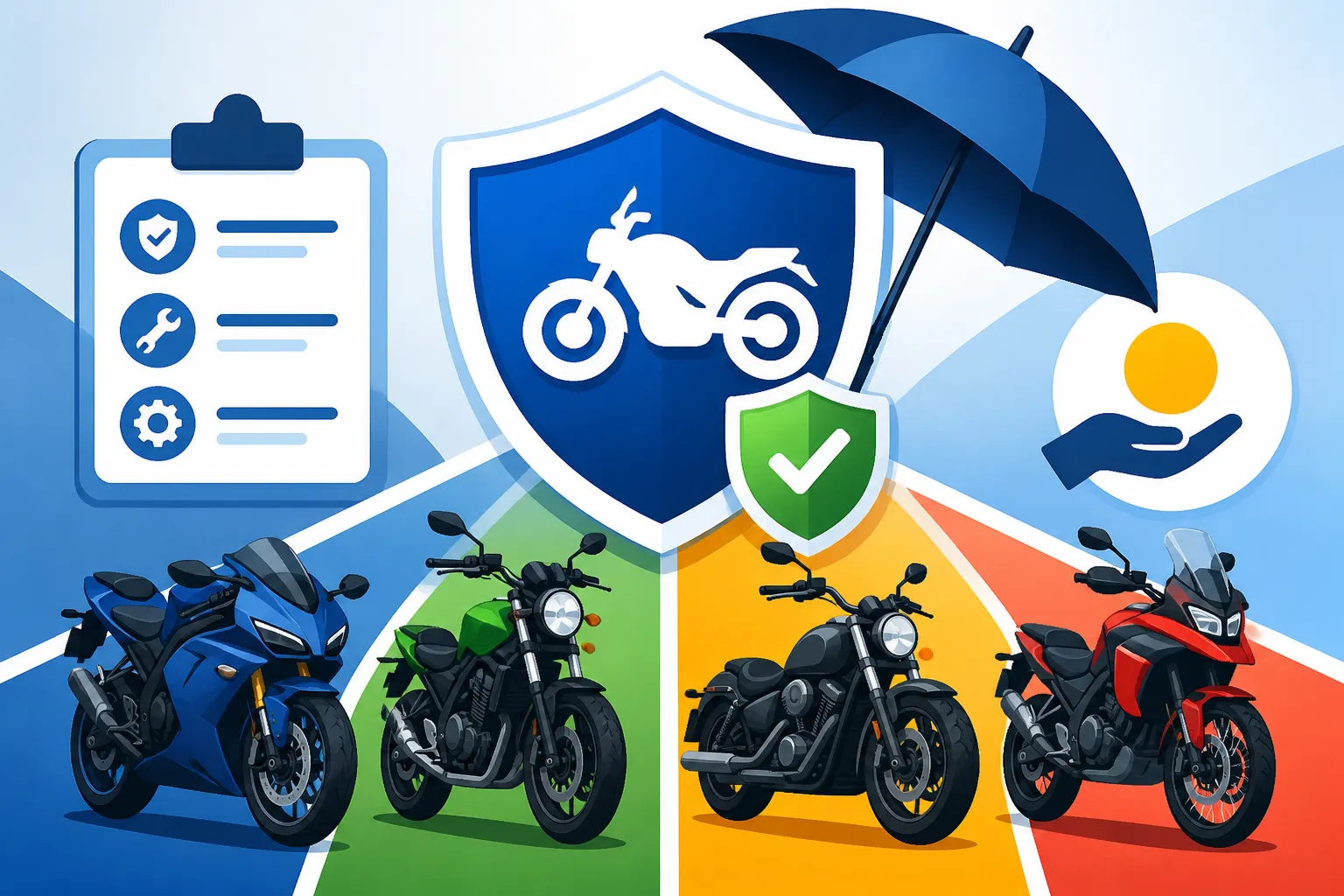
Motorcycle Insurance Cost by Bike Type
You finally find that perfect 2024 Kawasaki Ninja or a classic Harley Heritage Softail, only to realize the insurance quote is nearly half of your monthly bike payment. It’s a common frustration for riders who focus on the purchase price but overlook the long-term cost of ownership. This guide breaks down exactly why your bike’s DNA dictates your insurance premium and how to plan ahead.
Why Your Bike Type Is the Number One Factor in Insurance Pricing
When you sit down to get a quote, the insurance company isn't just looking at your age or your driving record; they are looking at the machine sitting in your garage. Every motorcycle has a statistical "risk profile." Actuaries at major insurance companies look at decades of data to determine how likely a specific model is to be involved in a high-speed accident, how often it gets stolen, and how much it costs to fix when it tips over in a parking lot. This is why a bike with the same engine displacement as another might cost three times as much to insure.
Consider the difference between a 600cc cruiser and a 600cc supersport. While the engine size is identical, the way those bikes are ridden is worlds apart. A cruiser is designed for low-speed stability and relaxed riding, often by experienced riders who value the scenery. A supersport is a race bike with lights and a license plate, often attracting younger, more aggressive riders. Insurance companies know that the supersport is significantly more likely to be involved in a high-impact claim, and they price the policy accordingly.
Beyond the rider's behavior, the physical construction of the bike plays a massive role. A naked bike with an exposed engine is often cheaper to repair after a minor slide than a fully-faired sport bike. When a sport bike goes down, those expensive plastic fairings act as a giant "skid plate," often shattering or scratching so badly they require a total replacement. These parts are surprisingly expensive, sometimes costing thousands of dollars for a single side panel. Tools like The Zebra can help you see how these physical differences impact your monthly premium across different carriers.
The Statistics of Speed and Power
The power-to-weight ratio is a metric that insurance companies obsess over. A lightweight bike with a high-horsepower engine is a recipe for high premiums. When a motorcycle can go from zero to sixty in under three seconds, the margin for error for the rider disappears. Insurers categorize these bikes as high-performance, and they often carry a "surcharge" simply because the potential for a catastrophic loss is so high.
It isn't just about the top speed, either. It’s about how that power is delivered. A bike with a "peaky" power band—where the power kicks in suddenly at high RPMs—is more difficult to control than a bike with a linear power delivery. This mechanical nuance is reflected in your rates. When you look at What Affects Your Motorcycle Insurance Rate? you will find that the specific engineering of your engine is just as important as your zip code.
Mechanical Complexity and Parts Availability
If you ride a rare Italian exotic or a limited-edition boutique build, your insurance agent might start sweating. Why? Because if you have an accident in a place like rural Montana or even a major hub like Chicago, getting parts for a Ducati or a Bimota is significantly more difficult than finding parts for a Honda. Shipping costs, specialized labor rates at European-certified shops, and the sheer cost of the components themselves drive up the "Comprehensive" and "Collision" portions of your policy.
Furthermore, modern bikes are increasingly reliant on complex electronics. Features like IMU-based traction control, electronic suspension, and TFT displays are wonderful for the rider, but they are incredibly expensive to replace. A simple low-side crash that wouldn't have totaled a bike twenty years ago might total a modern adventure bike simply because the electronic dashboard and its associated sensors were damaged.
Theft Risk Factors by Model
Some bikes are simply more "popular" with the wrong crowd. High-demand sport bikes and certain cruisers are frequent targets for professional thieves because they can be stripped and sold for parts within hours. If you live in an urban area like Houston or San Francisco, your Average Motorcycle Insurance Cost by State will be heavily influenced by the local theft rates for your specific bike model.
Insurers track which bikes are most commonly stolen and apply a higher "Comprehensive" premium to those models. If you’re eyeing a bike that tops the most-stolen lists, you might want to invest in a high-quality GPS tracker or a secure garage, as some insurers offer discounts for verified anti-theft devices. However, the base rate will still reflect the inherent risk of the model itself.
Cruiser Motorcycle Insurance Costs
Cruisers are the bread and butter of the American motorcycling world. They are built for the open road, featuring long wheelbases, low seat heights, and an emphasis on torque over top-end horsepower. Because they are generally ridden more conservatively, the Cruiser Motorcycle Insurance Cost tends to be among the most affordable in the industry. Insurance companies view cruiser riders as "mature" risks, even if the rider is younger, simply because the machine doesn't lend itself to high-speed stunts.
However, the "cheap" nature of cruiser insurance can be deceptive if you start adding up the value of the bike. While the liability portion might be low, the cost to cover the physical bike can be high if you’re riding a premium American V-twin. Cruisers are often the most customized bikes on the road, and if you don't account for those upgrades, you could be underinsured.
Harley-Davidson Insurance Cost
When discussing cruisers, Harley-Davidson is the elephant in the room. The Harley-Davidson Insurance Cost is unique because of the brand's incredible resale value and the high cost of original equipment manufacturer (OEM) parts. A Harley isn't just a motorcycle; it’s an investment. Because these bikes hold their value so well, the "Total Loss" payout for a stolen or crashed Harley is much higher than for a similarly aged metric cruiser.
Additionally, Harley owners are famous for their "chrome budgets." If you've added $5,000 worth of Screamin' Eagle parts, custom paint, and leather bags, a standard policy won't cover them. You need to look into "Custom Parts and Equipment" (CPE) coverage. Without it, the insurance company will only pay to return the bike to its factory-stock condition, leaving you out of pocket for all those expensive modifications.
Metric Cruisers and Their Savings
If you want the cruiser look and feel without the premium price tag, "metric" cruisers—those made by Japanese manufacturers like Honda, Yamaha, Kawasaki, and Suzuki—are a fantastic option. Models like the Honda Rebel 500 or the Kawasaki Vulcan S are incredibly popular for a reason: they are reliable and cheap to insure. Because the parts are mass-produced and widely available, repair costs are lower, which trickles down to your premium.
Metric cruisers also tend to have smaller engine displacements available, which is a major factor in cost. If you’re a beginner, starting on a 500cc cruiser will result in a much lower Motorcycle Insurance Cost by Age than starting on a 1200cc heavyweight. These bikes are seen as manageable and less likely to be involved in the types of high-speed accidents that plague the sport bike world.
Customizations on Cruisers
The culture of cruiser riding is deeply tied to personalization. Whether it's adding a "batwing" fairing for better wind protection on the highway or upgrading to "ape hanger" handlebars, every change you make can affect your insurance. Some modifications might even be seen as increasing risk. For example, extremely tall handlebars can affect the handling of the bike, and some insurers may refuse to cover bikes with radical frame modifications or "chopped" front ends.
Always be transparent with your provider about your mods. Using a comparison site like The Zebra allows you to see which companies are "mod-friendly." Some insurers specialize in custom bikes and will offer "Agreed Value" coverage, which ensures that if your one-of-a-kind custom is totaled, you get a check for what it's actually worth, not just its "Blue Book" value.
| Bike Category | Typical Engine Range | Primary Cost Driver | Insurance Tier |
|---|---|---|---|
| Cruiser | 500cc – 1900cc | Chrome/Custom Parts | Low – Moderate |
| Sport Bike | 300cc – 1000cc+ | Speed/Fairing Repairs | High – Very High |
| Touring | 1000cc – 1800cc | Technology/Electronics | Moderate – High |
| Adventure | 650cc – 1250cc | Tech/Off-road Damage | Moderate |
| Standard | 400cc – 900cc | Parts Availability | Low |
| Dual-Sport | 250cc – 650cc | Theft/Casualty Risk | Very Low |
Sport Bike and Supersport Insurance Costs
This is where things get expensive. If you’re looking at a Yamaha R1, a Suzuki GSX-R, or a Kawasaki Ninja ZX-10R, you need to prepare for a significant insurance bill. The Sport Bike Insurance Cost (Why So High) is driven by a "perfect storm" of risk factors: high speed, lightweight frames, expensive plastics, and a demographic of riders that—statistically speaking—takes more risks.
In many cases, the annual insurance premium for a young rider on a liter-bike (1000cc) can be 25% to 50% of the actual value of the bike. This leads many riders to "self-insure" by only carrying liability coverage, but this is a dangerous game. If you crash your $15,000 sport bike and only have liability, you’re left with a pile of expensive scrap metal and no way to replace it.
Why Is Sport Bike Insurance So Expensive?
The primary driver is the "Frequency and Severity" of claims. Sport bikes are designed to be flickable and fast, which makes them exhilarating to ride but also easy to lose control of. When a sport bike crashes, it rarely results in a "fender bender." Because of the speeds involved, these accidents often result in total losses for the machinery and high medical payouts for the rider.
Then there is the "Plastic Tax." A full set of OEM fairings for a modern sport bike can easily cost $3,000 or more. Even a simple "tip-over" in a driveway can cause enough cosmetic damage to trigger a claim that costs more than the deductible. Because of this, many sport bike owners find that their "Collision" coverage is the most expensive part of their policy.
Insurance for 600cc vs 1000cc Sport Bikes
In the world of sport bikes, displacement is king. A "600" is often considered a middleweight, while a "1000" is a flagship. The jump in insurance cost between these two classes can be staggering. While a 600cc bike is already incredibly fast, the 1000cc "liter-bikes" are essentially street-legal missiles.
Does engine size really matter that much? Absolutely. When you look at Does Engine Size (CC) Affect Insurance Cost? you'll see that 1000cc+ sport bikes often move into a "Super-Performance" tier that many standard auto insurers won't even touch. You may have to seek out specialty motorcycle insurers who understand the risk but charge a premium for the privilege.
Minimizing Costs for Young Sport Bike Riders
If you’re under 25 and dead-set on a sport bike, there are ways to keep the costs from spiraling out of control. First, consider a "naked" sport bike like the Yamaha MT-07 or the Kawasaki Z650. These bikes have the same engines as their "faired" siblings but lack the expensive plastic bodywork. Insurers often classify these as "Standard" motorcycles, which can save you hundreds of dollars a year.
Second, never underestimate the power of a safety course. Completing an MSF (Motorcycle Safety Foundation) course doesn't just make you a better rider; it provides a guaranteed discount with almost every insurer. Also, consider higher deductibles. If you’re willing to pay the first $1,000 of a repair yourself, your monthly premium will drop significantly.
Touring and Adventure Bike Insurance
Touring bikes and Adventure (ADV) bikes are the SUVs of the motorcycle world. They are built for long distances, carrying heavy loads, and—in the case of ADVs—tackling unpaved roads. The Touring Motorcycle Insurance Cost (Gold Wing) is generally moderate, but the complexity of these machines adds a different kind of risk. These bikes are often the most expensive to buy new, often exceeding $25,000, which means the "Total Loss" value is high.
Adventure bikes, like the BMW GS series or the KTM Adventure line, present a unique challenge for insurers. They are designed to be ridden off-road, where the likelihood of a "drop" is nearly 100%. Insurers have to balance the high purchase price and advanced electronics with the fact that these bikes are frequently used in rugged environments.
Honda Gold Wing Insurance Cost
The Gold Wing is the gold standard for luxury touring. It features an airbag, reverse gear, navigation, and a six-cylinder engine. Because the typical Gold Wing rider is older and very experienced, the liability rates are often quite low. However, the comprehensive coverage can be pricey because of the sheer amount of "stuff" on the bike.
If you have a minor accident on a Gold Wing, the cost to repair the intricate fairings, the audio system, and the integrated luggage can be astronomical. When you're shopping for quotes on The Zebra, make sure you're looking at "Replacement Cost" coverage rather than "Actual Cash Value" for these high-end touring machines, as you want to be able to actually replace the bike if the worst happens.
BMW GS Insurance Cost
The BMW R1250GS (and the newer R1300GS) is the king of the adventure segment. These bikes are marvels of German engineering, but that engineering comes at a price. The Telelever front suspension and the complex electronics mean that specialized shops are required for repairs.
Furthermore, ADV riders often add "Protection" parts like crash bars, skid plates, and reinforced handguards. While these parts are designed to save the bike, they also add to the "Custom Parts" value. If you’re planning on taking your GS through the backroads of the Appalachians or the deserts of the Southwest, ensure your policy covers "Off-Road Use." Some standard policies have exclusions for accidents that occur on unpaved roads.
Multi-State Riding Considerations
If you own a touring or adventure bike, you're likely crossing state lines. It is vital to understand that your insurance requirements might change as you travel. While your home state's policy will generally follow you, some states have higher minimum liability requirements.
For example, if you ride from a state with low limits into a state like New York or California, you want to ensure your "Underinsured Motorist" coverage is robust. Touring riders are also more likely to carry passengers. Always verify that your policy includes "Guest Passenger Liability," as some basic policies exclude the person sitting on the pillion seat behind you.
Standard, Naked, and Dual-Sport Insurance
For the budget-conscious rider, "Standard" motorcycles and "Dual-Sports" are the holy grail. These bikes are utilitarian, easy to work on, and generally ignored by the high-risk statistical models that plague sport bikes. A "Standard" bike, like a Honda CB series or a Triumph Bonneville, offers a neutral riding position and a classic look. Because they are "Jack of all trades" machines, they are seen as the safest bet by insurers.
Dual-sport motorcycles are even more affordable. These are essentially dirt bikes with blinkers and a mirror. Because they are lightweight and have very few expensive parts to break, they are incredibly cheap to insure. In fact, a dual-sport might be the How to Get Cheap Motorcycle Insurance solution you've been looking for if you just need a way to commute and have some fun on the weekends.
The Versatility of Naked Bikes
The "Naked" bike trend has been a godsend for riders who want sport bike performance without the sport bike insurance premium. By stripping away the fairings, manufacturers created a category that insurers treat much more favorably. A Ducati Monster or a KTM Duke 890 is just as fast as many sport bikes, but because they are classified as "Standard" or "Naked," the rates stay grounded.
However, be careful with "Super-Nakeds." Bikes like the Kawasaki Z H2 or the Ducati Streetfighter V4 are so powerful that insurance companies have caught on. They may still carry a high-performance surcharge even without the fairings. Always run a quote through The Zebra before assuming a naked bike will be cheap to insure.
Dual-Sport and Off-Road Requirements
Dual-sport bikes like the Suzuki DRZ-400 or the Honda CRF450RL are street-legal, but they spend a lot of time in the dirt. One thing to watch out for is theft. Because these bikes are light, two people can easily lift one into the back of a van. This means your "Comprehensive" coverage—which protects against theft—might be higher than you'd expect for such a simple machine.
You also need to clarify where you’re covered. If you’re riding on a dedicated motocross track or a private off-road park, your standard street policy might not apply. However, for most "fire roads" and public trails, your dual-sport policy will keep you legal and protected. Check the Moped & Scooter Insurance Requirements by State if you are looking at even smaller displacement bikes, as the rules can vary wildly once you drop below 250cc.
Vintage and Retro Bikes
Riding a vintage bike like a 1970s Honda CB750 or a classic Norton is a style statement, but it can be an insurance headache. Standard insurers might only offer you "Actual Cash Value," which for a 50-year-old bike is practically nothing. But to you, that bike is a restored treasure worth $8,000.
For these bikes, you need "Agreed Value" coverage through a specialty vintage insurer. They understand the market for classic bikes and will ensure that if your vintage beauty is damaged, you have the funds to source the rare parts needed to fix it. This is a niche area of the market, but it’s essential for preserving the value of a classic machine.
Comparing and Lowering Your Rates Regardless of Bike Type
No matter what you ride, you aren't stuck with the first quote you receive. The motorcycle insurance market is incredibly competitive, and different companies use different algorithms to weigh your risk. One company might hate sport bikes but love cruisers, while another might offer a massive discount for bundling your bike with your homeowner's insurance.
The most important thing you can do is shop around. Don't just look at the big names; look at smaller, motorcycle-specific carriers who might have a better understanding of your specific bike type. Platforms like The Zebra make this process effortless, allowing you to compare dozens of options in one place.
Factors That Influence Every Quote
While the bike type is the foundation, your personal profile builds the rest of the house. Your credit score is a major factor in many states, as insurers have found a correlation between financial responsibility and riding safety. Your zip code also matters—not just for theft, but for traffic density. Riding in downtown Atlanta is statistically more dangerous than riding in rural Georgia.
Your riding history is, of course, paramount. A single speeding ticket or a "fault" accident can double your rates overnight. If you have a less-than-perfect record, look for companies that offer "Accident Forgiveness" or those that specialize in high-risk riders. You can also lower your rate by choosing a "lay-up" policy if you live in a cold climate, which reduces your coverage during the months you aren't riding.
Using Comparison Tools
The days of calling ten different agents are over. Using a modern comparison tool allows you to see the "market rate" for your bike in seconds. When you enter your information, you can toggle different coverage levels and deductibles to see how they affect the bottom line.
For example, you might find that adding "Roadside Assistance" only costs an extra $2 a month, but it gives you peace of mind if you get a flat tire on a bridge in the middle of the night. Or you might realize that the difference between $25,000 and $100,000 in liability coverage is surprisingly small. Being an informed consumer is the best way to ensure you aren't overpaying for the thrill of two wheels.
Disclaimer
This guide is provided for informational purposes only and does not constitute legal or financial advice. Insurance laws, requirements, and pricing fluctuate frequently. Always consult with a licensed insurance professional and verify the specific laws in your state before purchasing a policy or operating a motorcycle.