Is Motorcycle Insurance Mandatory for a Learner’s Permit?
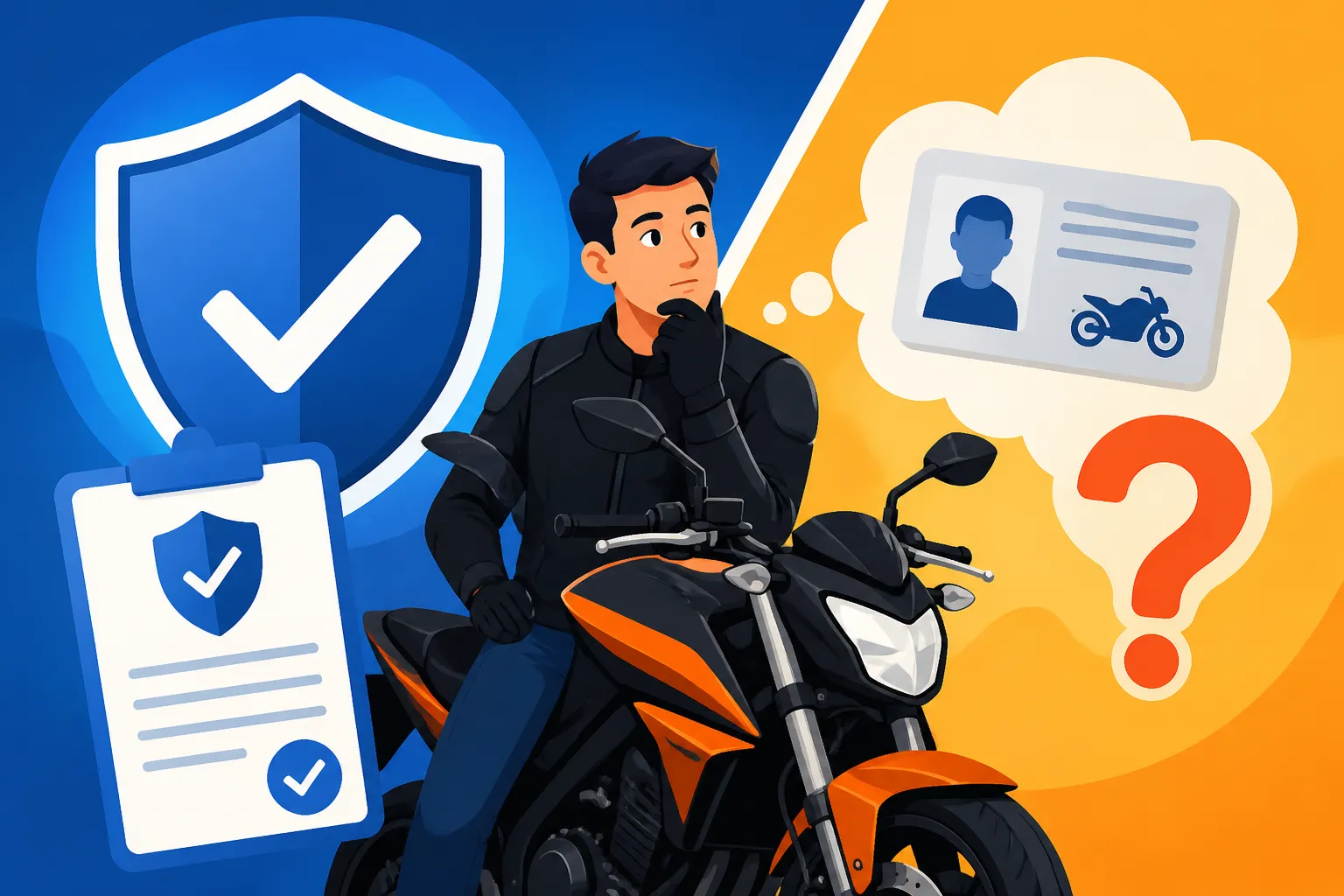
Getting your first motorcycle learner's permit is an exhilarating milestone, but it often comes with a confusing side of legal fine print and bureaucratic headaches. Many new riders wonder if they can wait until they have a full license before paying for a policy, but the reality is that operating a bike on public roads—even with a permit—triggers the same financial responsibility laws as a seasoned pro. This guide solves the confusion by breaking down exactly why and how insurance is mandatory for permit holders across the country.
The Legal Reality of Riding with a Learner's Permit
It is a common misconception among new riders that a learner's permit acts as a "grace period" where insurance is optional. I remember talking to a young rider in Austin who thought that because he was only allowed to ride during daylight hours and without a passenger, the state wouldn't require a full insurance policy yet. Unfortunately, the law does not see it that way. In nearly every state, if the rubber meets the asphalt on a public street, that vehicle must be backed by a valid insurance policy.
The core reason for this requirement is the "financial responsibility" principle. When you are on the road, you are a potential liability to others. If you were to accidentally clip a car or cause a multi-vehicle pileup, the state needs to know you can pay for the damages. Because permit holders are statistically more likely to be involved in a mishap during their learning phase, the legal system is actually more adamant about coverage during this period, not less. Before you even think about kickstarting the engine, you need to verify whether motorcycle insurance is required in your specific jurisdiction to avoid a very expensive day in court.
Furthermore, many riders forget that a permit is technically a restricted license. It grants you the privilege to operate a motor vehicle, and with that privilege comes the burden of following all traffic laws, including those related to insurance. Whether you are in California or New York, the police officer who pulls you over for a minor signaling error is going to ask for "license, registration, and proof of insurance." Handing over just a permit without that insurance card is a surefire way to lose your bike to an impound lot before you ever get the chance to take your skill test.
Public Road Access and Liability
The moment you leave your driveway and enter a public thoroughfare, you are entering a space where you are legally obligated to protect others from your mistakes. Liability insurance is the most basic form of this protection. It doesn't cover your bike or your injuries; it covers the people you hit. Because a learner's permit allows you to ride on these same roads as trucks, cars, and pedestrians, the state mandates that you carry at least the minimum liability limits.
For example, if you are practicing your cornering on a quiet suburban street and lose control, sliding into a neighbor's parked SUV, the repair costs could easily exceed several thousand dollars. Without insurance, that neighbor can sue you personally, and the state can revoke your permit indefinitely. This is why Minimum Liability Insurance Explained (The Three Numbers) is such a critical concept for beginners to grasp. Those numbers represent the shield between your bank account and a life-altering lawsuit.
Riding on a permit actually puts you in a higher risk category for insurance companies. They know you are still mastering the mechanics of balance, shifting, and emergency braking. However, having that permit and a valid policy shows the state that you are taking the responsibility of riding seriously. Sites like The Zebra can help you navigate which carriers are willing to take on a permit-holder, as some companies are more beginner-friendly than others.
Registration and the Insurance Link
Another hurdle many new riders face is the registration process. You might have just bought a beautiful used Honda Rebel and you’re itching to get your plates. In almost every state, you cannot register a motorcycle in your name without showing proof of insurance first. This creates a "chicken and the egg" scenario: you need the bike to practice for your license, you need a permit to ride the bike, but you can't get the plates to ride legally without insurance.
When you walk into the DMV or your local tag office, they will expect a valid insurance binder. They don't care that you only have a permit; they only care that the VIN (Vehicle Identification Number) is associated with an active policy. If you try to bypass this, you’ll find yourself stuck in a cycle of "fix-it" tickets and late registration fees. Dealing with these Penalties for Riding Without Insurance is far more stressful than simply setting up a policy from day one.
Using a comparison tool like The Zebra allows you to see the different price points for registering a bike under a permit versus a full license. While it might be slightly more expensive initially, it is the only legal way to get your bike tagged and titled so you can actually use it for its intended purpose: learning how to ride.
State Specific Nuances for Permit Holders
While the general rule is "ride on road, need insurance," the specific levels of coverage and how they are enforced can vary wildly from one state line to the next. For instance, if you are in the Pacific Northwest, you might find different enforcement levels than someone riding through the deep south. It is vital to look at your local regulations to see how they treat new riders. You can find detailed breakdowns in guides like California Motorcycle Insurance Requirements or Texas Motorcycle Insurance Requirements to ensure you aren't missing a local quirk.
In some states, the insurance requirement is tied directly to the issuance of the permit. In others, it is tied to the vehicle itself. This distinction matters because if you are practicing on a friend's bike, you need to ensure their policy covers a "permissive user" who only has a learner's permit. Not all policies are created equal, and some explicitly exclude riders who do not have a full motorcycle endorsement. This is a trap that many beginners fall into, thinking they are covered by the owner's policy when, in fact, they are riding completely uninsured.
To help visualize how these requirements can differ, consider the following table which highlights the minimum liability requirements in a few major states where permit riding is common:
| State | Bodily Injury (Per Person) | Bodily Injury (Per Accident) | Property Damage |
|---|---|---|---|
| California | $15,000 | $30,000 | $5,000 |
| Texas | $30,000 | $60,000 | $25,000 |
| Florida | $10,000 (Optional*) | $20,000 (Optional*) | $10,000 |
| Ohio | $25,000 | $50,000 | $25,000 |
| New York | $25,000 | $50,000 | $10,000 |
Note: Florida has unique laws regarding whether insurance is "mandatory" for registration vs. accidents.
The Florida Exception and Its Risks
Florida is often a source of massive confusion for riders. Technically, you don't need to show proof of insurance to register a motorcycle or get a permit in the Sunshine State. However, don't let this fool you into thinking you are off the hook. If you are in an accident and don't have insurance, you can lose your permit and your tags immediately under the state's financial responsibility law. For a deeper dive into this confusing mess, check out Florida Motorcycle Insurance Requirements.
For a permit holder in Florida, the stakes are actually higher. If you crash without coverage, the state can require you to purchase a specialized high-risk insurance filing called an SR-22 for three years. This is incredibly expensive and a total vibe-killer for a new hobby. Even if the law says you don't "need" it to get the permit, common sense and financial self-preservation say you absolutely should have it.
Many riders in Florida use The Zebra to find "liability-only" policies that meet the financial responsibility threshold without breaking the bank. It provides a safety net that protects your right to ride in the future. The last thing you want is to be a brand-new rider who is already flagged as high-risk by the state.
Strict Enforcement in California and Texas
On the other end of the spectrum, states like California and Texas are very strict. If you are caught riding on a permit without insurance in Los Angeles or Dallas, you are looking at heavy fines and a potential suspension of your driving privileges—not just for your bike, but for your car too. You can read about the specific What Happens If You Get Caught Riding Without Insurance? to see the financial wreckage it can cause.
In these states, the "proof of insurance" must be carried with you at all times. Digital copies on your phone are usually acceptable, but you must be able to produce it the moment you are asked. For a permit holder, the police may also check to see if you are following permit restrictions, such as not riding at night or staying off the freeways. If you are violating a permit restriction and you don't have insurance, the legal consequences multiply.
The Zebra can be a lifesaver here because it allows you to quickly compare the costs of adding a "permit rider" to an existing policy. Sometimes, if you already have auto insurance, adding the motorcycle is relatively cheap. Other times, a standalone policy is the better move. Regardless, in these high-enforcement states, skipping insurance is simply not an option.
Can You Even Buy Insurance with Just a Permit?
This is the big question that keeps many beginners up at night. You might think, "I want to be legal, but will a company even sell me a policy if I haven't passed my test yet?" The answer is a resounding yes. Most major insurance carriers are perfectly happy to sell you a policy while you have a learner's permit. In fact, it is a standard part of their business model.
When you apply, you will simply disclose that you have a learner's permit rather than a full M-class endorsement. The company will likely ask when you plan to take your skill test. Can You Insure a Motorcycle Without a License? is a common path for those who have bought their bike and are in the 30-to-90-day window of practicing. Carriers like Progressive, Geico, and Dairyland have specific systems in place to handle permit-level risks.
The catch is that your premiums will likely be higher until you pass that test. Insurance is all about math and probability. A permit holder is a "statistically unproven" rider. Once you pass your test and get that endorsement, you can often call your agent, update your status, and see an immediate drop in your monthly or annual premium. It’s an incentive to practice hard and get licensed as soon as possible.
The Financed Bike Requirement
If you are like many new riders, you might be financing your first bike through a dealership or a bank. If there is a lien on your title, the lender will absolutely require you to have "full coverage" (comprehensive and collision) in addition to the state-mandated liability. They don't care if you have a permit, a license, or if the bike is just sitting in your garage—they want their investment protected.
Riding a financed bike with just a permit and no insurance is a violation of your loan agreement. If the bank finds out, they can "force-place" insurance on your behalf, which is usually three to four times more expensive than a policy you would find on your own using The Zebra. Even worse, they could potentially repossess the bike for a breach of contract.
To avoid this, make sure you have your insurance lined up before you even sign the papers at the dealership. There is often a Motorcycle Insurance Grace Period When Buying, but it is very short—usually only a few days. Don't rely on it. Have your quotes ready so you can activate the policy the moment you take delivery of the keys.
Why Your Rates Might Be Higher (And How to Fix It)
As a permit holder, you are categorized in the highest risk tier alongside teenagers and people with multiple speeding tickets. It’s frustrating, especially if you’ve been driving a car for twenty years without a single scratch. But in the eyes of the insurer, motorcycle riding is a completely different skill set. They see a permit as a "warning sign" that you might drop the bike or misjudge a turn.
Using The Zebra to shop around is the best way to mitigate these high initial costs. Different companies weigh the "permit factor" differently. One company might charge you an extra $50 a month, while another might only add $10. By comparing them side-by-side, you can find the one that doesn't penalize you too heavily for being a beginner.
Another way to lower that "permit premium" is to enroll in a Motorcycle Safety Foundation (MSF) course. Many insurers will give you a discount the moment you show them your completion certificate, even if you still only have your permit. In some states, completing this course even allows you to skip the DMV road test, getting you to that "licensed" status (and lower rates) much faster.
Practical Steps to Staying Legal While Learning
If you’re feeling overwhelmed by the paperwork, take a deep breath. Getting legal is a step-by-step process. First, get your permit from the DMV. Second, buy your bike (or find the one you’ll be practicing on). Third, use a tool like The Zebra to find a policy that covers permit holders. Once you have that digital or paper insurance card in your pocket, you can finally focus on what actually matters: learning how to ride safely.
Remember that Is Motorcycle Insurance Mandatory for a Learner's Permit? is ultimately about protecting your future. One bad day on a bike without insurance can result in thousands of dollars in debt, a seized motorcycle, and a suspended driver's license. It is simply not worth the risk just to save a few bucks while you are learning the ropes.
Practicing in "Private" Areas
Many riders ask if they need insurance if they are only practicing in an empty church parking lot or a dead-end private road. While the legal requirement for insurance usually only applies to "public ways," the risk of damage or injury is still there. If you drop your bike in a private lot and it leaks oil everywhere, or if you accidentally hit a light pole, you are still liable for those costs.
Furthermore, getting your bike to that "private" lot usually involves riding on a public road or towing it. If you're riding it there, you need insurance. If you're towing it, you might think your car insurance covers it—but it usually doesn't cover damage to the motorcycle itself or liability caused by the motorcycle if it falls off the trailer. Having a dedicated motorcycle policy is the only way to be 100% sure you are protected from the moment you move the bike.
Moving from Permit to License
The transition from a permit to a full license is the best time to re-evaluate your insurance. Don't just let your "permit-priced" policy roll over. The day you get your endorsement stamped on your license, call your insurance provider. Tell them the good news. Most of the time, they will re-rate your policy on the spot.
If your current company doesn't give you a significant discount for being licensed, that is your cue to head back to The Zebra and shop again. Now that you are a "licensed rider," a whole new world of cheaper premiums opens up to you. You are no longer a high-risk beginner in the eyes of the algorithm; you are a qualified operator. This transition can save you hundreds of dollars a year, which is a lot of extra gas money for those weekend trips you’ve been planning.
Motorcycle Insurance Disclaimer
This guide is provided for informational purposes only and does not constitute legal or professional insurance advice. Insurance laws and requirements for motorcycle learner's permits vary significantly by state and are subject to frequent changes. Always consult with your local Department of Motor Vehicles (DMV) or a licensed insurance agent to verify the specific requirements in your jurisdiction before operating a motorcycle. Failure to maintain proper insurance can lead to severe legal and financial consequences.