Is Motorcycle Insurance Required in Maine?
Riding a motorcycle in the Pine Tree State brings an unparalleled sense of freedom, especially when you're cruising along the scenic coastal routes or winding through Acadia National Park. But before you can truly enjoy those open roads, there's a crucial piece of the puzzle you need to understand: motorcycle insurance. It's a question many riders ponder: "Is motorcycle insurance required in Maine?" The simple answer is yes, and understanding the nuances of Maine's requirements is absolutely essential to avoid headaches and keep your rides worry-free.
Is Motorcycle Insurance Required in Maine? The Short Answer
Let's cut right to the chase because nobody wants to be caught off guard when it comes to legalities. Yes, motorcycle insurance is absolutely required in Maine. Just like with cars, the state of Maine mandates that all registered motorcycles carry at least a minimum amount of liability insurance. This isn't just some bureaucratic hoop to jump through; it's a fundamental part of Maine's financial responsibility laws, designed to protect everyone on the road.
Yes, It Is: Maine's Mandatory Coverage
The state of Maine operates under a "fault" system, which means if you're involved in an accident, the person who caused it is financially responsible for the damages and injuries that result. This is precisely why having liability insurance is non-negotiable for motorcyclists. It ensures that if you are found at fault in an accident, there's a financial safety net to cover the costs incurred by other parties. This includes their medical bills, lost wages, and damage to their property. Without this coverage, you would be personally on the hook for potentially devastating expenses, which can quickly spiral into the tens, or even hundreds, of thousands of dollars. It’s a harsh reality, but an important one to acknowledge.
Imagine you're taking a leisurely ride down Route 1 in Scarborough, and due to an unforeseen circumstance, you accidentally clip another vehicle. If you don't have the proper insurance, you would be personally responsible for repairing that car, covering the other driver's potential medical expenses, and even defending yourself in court. The peace of mind that comes with knowing you're financially protected, and protecting others, is truly invaluable. So, while it's a requirement, it's also a smart decision for any responsible rider. If you're looking for a broader overview of requirements, you might want to check out our comprehensive guide on Motorcycle Insurance Requirements by State (2026 Guide).
Understanding Maine's Minimum Motorcycle Insurance Requirements
Knowing that insurance is required is one thing, but understanding the specifics of what Maine demands is another entirely. It's not enough to just have "a policy"; that policy needs to meet certain thresholds set by the state to be considered legal. These are known as the minimum coverage limits, and they dictate the maximum amount your insurance company will pay out for specific types of damages if you're at fault in an accident.
Decoding the Coverage Limits
Maine's financial responsibility law specifies minimum liability coverage limits that all motorcycle insurance policies must meet. These limits are typically expressed as a series of three numbers, and in Maine, those numbers are usually 50/100/25, along with mandatory Uninsured/Underinsured Motorist coverage. Let's break down what each of those figures actually signifies for a motorcycle policy:
- $50,000 for Bodily Injury Liability per Person: This is the maximum amount your insurance will pay for medical expenses, lost wages, and pain and suffering for any single person injured in an accident where you are at fault. So, if a passenger in the other vehicle, or even another pedestrian, is hurt due to your negligence, your insurance will cover up to $50,000 for their individual injuries.
- $100,000 for Total Bodily Injury Liability per Accident: This is the total maximum your insurance will pay for all bodily injuries in a single at-fault accident, regardless of how many people were injured. If two people are injured and their combined medical bills and other damages exceed $100,000, your policy would only pay up to $100,000, and you would be personally responsible for the rest.
- $25,000 for Property Damage Liability per Accident: This figure represents the maximum amount your insurance will pay to repair or replace property damaged in an accident where you are at fault. This primarily refers to other vehicles, but it could also include things like fences, mailboxes, or even buildings. If you cause $35,000 worth of damage to a new luxury car, your insurance pays $25,000, and the remaining $10,000 falls on you.
In addition to these liability coverages, Maine also requires Uninsured/Underinsured Motorist (UM/UIM) coverage with minimum limits of $50,000 per person and $100,000 per accident. This is a critical protection for you as a rider. It kicks in if you are involved in an accident with another driver who is at fault but either has no insurance (uninsured) or not enough insurance to cover your damages (underinsured). Given the number of uninsured drivers on the road, having this coverage can be a lifesaver. It protects you and your passengers if another driver can't or won't pay for your injuries and damages.
Understanding these numbers can feel a bit like deciphering a secret code, but it's crucial for your financial well-being. For a deeper dive into these figures, our article on Minimum Liability Insurance Explained (The Three Numbers) can offer more clarity.
Here's a quick look at Maine's minimum coverage requirements:
| Coverage Type | Minimum Limit (Per Person / Per Accident / Property) |
|---|---|
| Bodily Injury Liability | $50,000 / $100,000 |
| Property Damage Liability | $25,000 |
| Uninsured Motorist Bodily Injury | $50,000 / $100,000 |
| Underinsured Motorist Bodily Injury | $50,000 / $100,000 |
What These Minimums Actually Cover
It's vital to grasp what these minimum coverages actually do, and perhaps more importantly, what they don't do. When you carry Maine's minimum liability coverage, you're primarily protecting other people and their property.
- Protection for Others: If you're involved in an accident and determined to be at fault, your bodily injury liability will help pay for the other party's medical treatment, rehabilitation costs, lost wages due to injury, and even funeral expenses in the tragic event of a fatality. Your property damage liability will cover the cost of repairing or replacing their vehicle or other damaged property. This is your commitment to financial responsibility.
- Protection for Yourself (Indirectly): While liability coverage doesn't directly pay for your injuries or damage to your motorcycle, it does protect your assets. Without it, the other party could sue you personally for damages that exceed your ability to pay out-of-pocket, potentially leading to garnished wages, liens on your property, or even bankruptcy.
- Uninsured/Underinsured Motorist Protection: This specific part of the mandatory coverage directly protects you and your passengers. If you're hit by a driver who doesn't have insurance or whose insurance isn't enough to cover your medical bills, your UM/UIM coverage will step in. This is incredibly important because, let's be honest, not everyone plays by the rules and carries adequate coverage.
However, a common misconception is that minimum liability covers everything. It doesn't. These minimums do not cover:
- Damage to Your Motorcycle: If your bike is damaged in an accident you cause, or if it's stolen, vandalized, or damaged by natural events like a tree falling on it, your basic liability policy won't pay a dime. For that, you'd need additional coverages like collision and comprehensive.
- Your Medical Bills: Unless you have medical payments (MedPay) or personal injury protection (PIP) as an add-on (which isn't mandatory for motorcycles in Maine, but often available and highly recommended), your own medical expenses after an at-fault accident won't be covered by your liability policy. Your UM/UIM coverage would cover your medical bills if an uninsured driver hits you.
- Roadside Assistance or Towing: These are separate add-on coverages that provide invaluable help when you're stranded.
Many riders, especially those with newer or more expensive bikes, choose to carry more than just the minimum required coverage. Often, full coverage motorcycle insurance is a smart investment, which typically includes collision and comprehensive coverage to protect your own investment. If you're unsure about how much is enough, considering the actual value of your bike and your personal financial situation is key. Looking into "How Much Is Motorcycle Insurance?" can help you weigh your options based on costs.
The Serious Consequences of Riding Without Insurance in Maine
Thinking about skipping motorcycle insurance in Maine? Let me tell you, it's simply not worth the risk. The financial and legal ramifications can be severe, far outweighing any perceived savings on premiums. It's not just a slap on the wrist; it can fundamentally disrupt your life and finances.
Penalties You Could Face
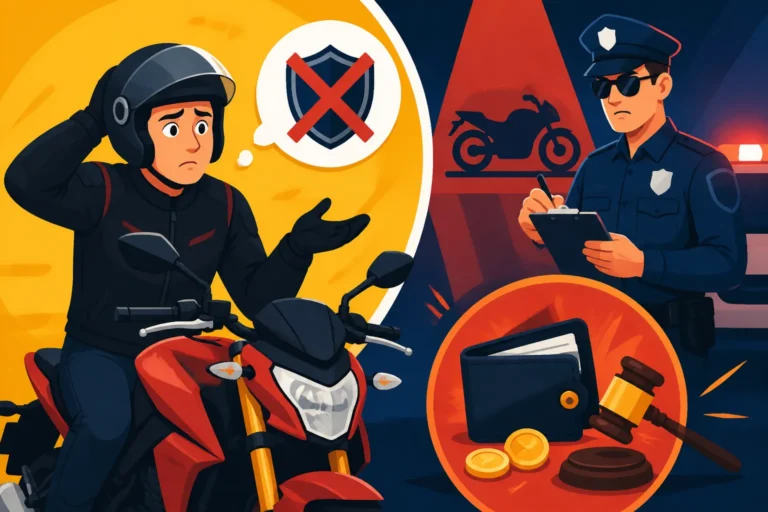
Maine's Bureau of Motor Vehicles (BMV) takes its financial responsibility laws seriously. If you're caught riding without the required insurance, you're looking at a range of penalties:
- Fines: The most immediate consequence will be a hefty fine. For a first offense, fines can be substantial, and they only increase with subsequent violations.
- License and Registration Suspension: This is where it really starts to hurt. Your motorcycle registration can be suspended, meaning your bike is effectively illegal to ride. Even worse, your driver's license can be suspended. Losing your driving privileges means no more riding, and it can even impact your ability to drive a car for work or daily necessities. Reinstating them often involves fees and proving future financial responsibility.
- SR-22 Requirement: In many cases, after a conviction for driving without insurance, you might be required to obtain an SR-22 filing. An SR-22 is not insurance itself, but a certificate your insurance company files with the state to prove you have the minimum required coverage. This requirement typically lasts for several years and usually results in significantly higher insurance premiums. It labels you as a "high-risk" driver in the eyes of insurers.
- Vehicle Impoundment: In some situations, especially for repeat offenders, law enforcement can impound your motorcycle on the spot. Getting it back means paying towing fees, storage fees, and proving you now have valid insurance.
- Potential Jail Time: While less common for a first offense of simply lacking insurance, repeat offenses or involvement in an accident without insurance can lead to more severe legal consequences, including potential jail time.
These penalties are designed to be a strong deterrent, and they certainly are. It’s far cheaper and less stressful to simply secure the proper coverage from the start. We’ve covered these issues in depth in our guide, Penalties for Riding Without Insurance, so if you want to know more about the specifics of what happens, it's a good resource.
Financial Fallout from an Accident
The legal penalties are just one side of the coin. The financial fallout from being involved in an accident without insurance is often far more devastating. Remember, Maine is a "fault" state. If you cause an accident and lack insurance, you are personally liable for all damages.
Consider this nightmare scenario: You're riding near Portland and are involved in an accident that's determined to be your fault.
- Other Driver's Medical Bills: The other driver and their passengers sustain injuries. Their ambulance ride, emergency room visit, follow-up appointments, physical therapy, and lost wages could quickly add up to tens of thousands of dollars, or even hundreds of thousands if injuries are severe or long-term. Without liability insurance, you're responsible for every cent.
- Property Damage: The other vehicle is totaled. A new car can easily cost $30,000 to $50,000. If you damaged a new truck, that bill could be even higher. Plus, if you hit a roadside stand or damaged municipal property, those repair costs are also yours.
- Your Own Damages: And let's not forget about you. Your motorcycle is likely damaged, possibly totaled, and you're injured. Without collision and comprehensive coverage, and potentially MedPay, you're paying for your own bike repairs, your own medical bills, and any lost income from your job.
- Legal Fees: Even if you don't go to jail, you'll likely face civil lawsuits from the injured parties. Attorney fees alone can be exorbitant, even if you eventually settle the case.
This isn't just hypothetical; these situations happen every day. A single accident can put you into crippling debt for years, destroy your credit, and wipe out any savings you have. It's a risk no rider should ever take.
Getting and Maintaining Your Motorcycle Insurance in Maine
Alright, so we've established why you need insurance. Now, let's talk about the how—getting your policy squared away and making sure you stay compliant with Maine's regulations. It's not as complicated as it might seem, but there are a few key steps and considerations.
Showing Proof of Insurance
Once you've secured your motorcycle insurance policy that meets Maine's minimum requirements, you'll receive proof of insurance from your provider. This proof is crucial because you must be able to present it to law enforcement if you are pulled over or involved in an accident.
Traditionally, this meant carrying a physical insurance card in your wallet or on your bike. However, like many other states, Maine recognizes digital proof of insurance. This means you can often show proof on your smartphone through an insurance company app or a digital copy of your insurance card. While this offers convenience, it's always a good idea to have a physical copy as a backup, just in case your phone battery dies or you're in an area with no signal. You wouldn't want to get a ticket simply because technology failed you. Our article, Proof of Insurance: Digital vs Paper for Riders, delves into the pros and cons of each method.
Make sure your insurance card, whether digital or physical, is current and clearly displays the policy number, effective dates, and the covered vehicle. Keeping this information easily accessible is a minor effort that can save you significant trouble on the road.
Registering Your Motorcycle in Maine
Another essential step in the process of becoming a legal rider in Maine is registering your motorcycle with the state's Bureau of Motor Vehicles (BMV). And here's the kicker: you cannot register your motorcycle in Maine without first having valid motorcycle insurance. The BMV will require proof of insurance before they issue you registration plates and a certificate.
This makes perfect sense when you think about it. The state wants to ensure that every vehicle legally on its roads is financially covered in case of an accident. It's a safeguard built into the system. So, the sequence is clear:
- Purchase your motorcycle.
- Obtain your motorcycle insurance policy, meeting Maine's minimum requirements.
- Gather your proof of insurance, title, bill of sale, and any other necessary documents.
- Head to your local BMV office or authorized registration agent to register your bike.
Attempting to register without insurance will only lead to delays and frustration. It's a common query whether Motorcycle Registration Without Insurance: Possible? is an option, but in Maine, the answer is a firm no.
When you are registering your motorcycle, the officials will confirm that your policy is active and meets the 50/100/25 liability and UM/UIM requirements. Keep your documents organized, and the process should be fairly smooth. Remember, even if you're not planning to ride your motorcycle immediately after purchasing it, you'll still need insurance to complete the registration process if you want to legally title and register it in your name for road use.
Disclaimer
This article is for general informational purposes only and does not constitute professional advice. Laws, prices and regulations vary by location and change over time. Consult a qualified professional for guidance on your specific situation.