Illinois Motorcycle Helmet Law
Riding into Illinois often leaves motorcyclists confused about what gear is legally required, especially when neighboring states have strict mandates. This guide breaks down the specific legal landscape of the Illinois Motorcycle Helmet Law, ensuring you stay on the right side of the law while navigating the unique risks of the Prairie State’s open roads.
The Reality of Helmet Laws in the Land of Lincoln
If you have spent any time riding through the Midwest, you know that the rules of the road can change the moment you cross an invisible line on the pavement. One minute you are in a state that requires a DOT-approved lid, and the next, you are in Illinois, where the wind-in-your-face lifestyle is fully protected by law. Illinois remains one of the few states in the country with no motorcycle helmet law on the books. This applies to everyone: whether you are 16 or 60, a seasoned veteran or a brand-new rider, the state of Illinois does not mandate that you wear a helmet.
This lack of a mandate is a point of pride for many local riding groups who view the decision as a matter of personal liberty and adult responsibility. However, for those visiting from out of state, it can feel like a bit of a legal twilight zone. You might find yourself constantly checking your mirrors for flashing lights, wondering if you missed a sign. Rest assured, you haven't. While the Illinois Department of Transportation (IDOT) and various safety advocacy groups strongly encourage helmet use, there is no statute that will get you pulled over for riding bareheaded.
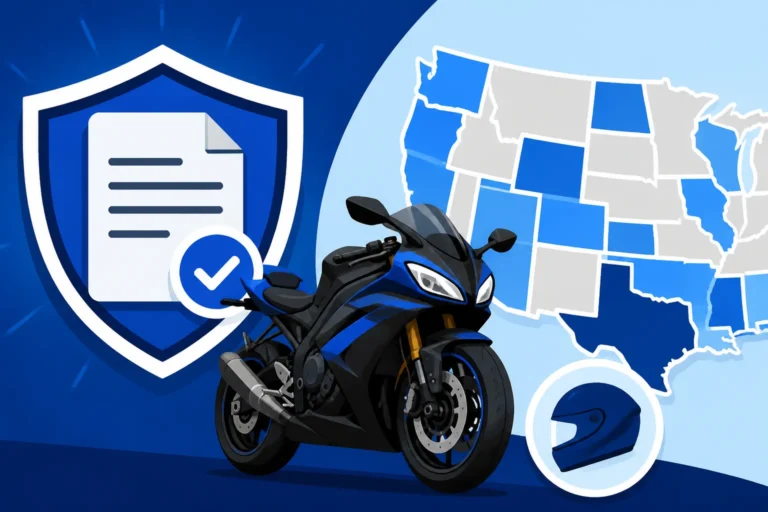
When comparing this to the broader national landscape, you’ll see that Illinois is an outlier. Most states fall into two categories: those with universal laws and those with partial laws. To understand how Illinois fits into the bigger picture, it helps to look at Motorcycle Helmet Laws by State to see just how rare this total freedom really is. While the legal freedom is absolute in Illinois, the social and safety debates remain as heated as ever, especially when you consider the high-traffic corridors of Chicago or the rural stretches of the Great River Road.
The Eye Protection Mandate That Riders Often Miss
While you are legally free to leave the helmet at home, do not make the mistake of thinking Illinois has no equipment requirements at all. There is one specific rule that catches many riders off guard: the eye protection law. According to the Illinois Vehicle Code, all operators and passengers of a motorcycle must be protected by some form of eye gear. This isn't just a suggestion; it is a primary enforcement rule. If a police officer sees you squinting into the wind without glasses or a shield, they have every right to pull you over.
The law is relatively specific about what counts as protection. You need to have glasses, goggles, or a transparent shield. This protection must be "shatter-resistant," meaning your trendy, thin-framed fashion sunglasses might not technically meet the legal standard if they aren't designed for impact. The goal here is to prevent road debris, insects, or even high-velocity wind from obstructing your vision and causing a catastrophic loss of control.
Interestingly, the law does provide a slight loophole regarding windshields. If your bike is equipped with a windshield that meets certain height and safety standards, it may satisfy the requirement for the operator, though most safety experts and veteran riders will tell you that a windshield doesn't stop a stray pebble from bouncing off the tank and into your eye. When you are preparing for a trip, especially when Riding Across State Lines: Insurance & Helmet Rules are involved, checking your eyewear is just as important as checking your tire pressure.
Why Eye Protection is Non-Negotiable
The physics of riding a motorcycle at 70 mph on I-80 means that a simple June bug can feel like a pebble, and a real pebble can feel like a bullet. In Illinois, the legal focus is on "operational safety"—the idea that as long as you can see and control the vehicle, your personal safety (like head protection) is your own business. This is why you will see riders in Illinois wearing nothing but a pair of wrap-around ballistic glasses. It meets the letter of the law while maintaining the aesthetic of the open road.
Standards for Legal Eyewear
To stay legal in Illinois, your eyewear should ideally be:
- Shatter-resistant (ANSI Z87.1 standards are the gold standard).
- Securely fastened (wind can easily blow off loose aviators).
- Transparent or tinted (but keep in mind that tinted lenses are a hazard after sunset).
Comparing Illinois to Neighboring States
Illinois is surrounded by states with wildly different views on rider safety. If you are planning a weekend trip that takes you through the Midwest, you are going into a patchwork of regulations. Understanding the difference between Helmet Laws: Universal vs Partial States is crucial for any cross-border journey. If you head north into Wisconsin, for example, the law changes. Wisconsin has a partial law, requiring helmets only for those under 18 or those riding with a learner’s permit.
If you cross the bridge into Iowa, you are in a similar situation to Illinois, as Iowa also has no helmet mandate. However, if you venture south into Missouri, the laws have fluctuated over the years, and currently, they have a law that allows riders over 26 to go without a helmet only if they can prove they have significant health insurance. This demonstrates why it is so important to know if Is Motorcycle Insurance Required in Illinois? and how that coverage interacts with the laws of the states you are visiting.
| State | Helmet Law Status | Age Requirement for Helmets | Eye Protection Required? |
|---|---|---|---|
| Illinois | None | None | Yes |
| Wisconsin | Partial | Under 18 | No (if bike has windshield) |
| Indiana | Partial | Under 18 | No |
| Iowa | None | None | No |
| Missouri | Partial | Under 26 (with insurance) | No |
| Kentucky | Partial | Under 21 | No |
As you can see, Illinois is the most "relaxed" in terms of headgear but the most "strict" in terms of eye protection. This creates a unique legal environment where you can get a ticket for missing glasses but not for missing a helmet.
How Helmet Use Impacts Insurance and Legal Claims
This is the section where reality sets in for many riders. Just because something is legal doesn't mean it won't cost you in other ways. In Illinois, the legal system operates under a principle known as "modified comparative negligence." This means that if you are involved in an accident, the court (or the insurance adjusters) will look at your actions to determine how much you contributed to your own injuries.
If you are involved in a crash that wasn't your fault, but you weren't wearing a helmet, the opposing insurance company is going to fight tooth and nail to reduce your payout. They will argue that while you didn't cause the accident, your choice not to wear a helmet caused the severity of your head injuries. This is a common point of contention when people ask, Helmet Law & Insurance: Does Not Wearing One Affect Claims?. In Illinois, while a jury isn't supposed to use the lack of a helmet as a "get out of jail free" card for the person who hit you, it can absolutely affect the "damages" portion of a settlement.
If you are severely injured, those medical bills can skyrocket into the hundreds of thousands. If a court decides you were 20% responsible for the severity of your injuries because you opted for the wind-in-your-hair experience, your $100,000 settlement just dropped to $80,000. That $20,000 gap is a heavy price to pay for a choice that was technically “legal.” This is why understanding the minimum motorcycle insurance in Illinois is only the beginning; you need to think about how your gear choices interact with your financial protection.
The High Cost of Riding Without Protection
We often talk about the "cost" of riding in terms of gas and gear, but the real cost of the Illinois helmet law is found in the emergency room. Illinois has some of the highest rates of motorcycle-related head injuries in the Midwest, largely because the freedom to ride without a helmet is so widely utilized. When a rider is involved in a "minor" low-speed tip-over, a helmet is often the difference between a funny story and a traumatic brain injury (TBI).
Because Illinois does not mandate helmets, many riders skip out on other forms of protection as well. It is common to see riders in the Chicago suburbs or downstate in Peoria wearing t-shirts and shorts. This creates a massive liability risk. If you are hit by a driver who has no coverage, you will be relying entirely on your own policy. This is a terrifying scenario that many face, making it vital to know What Happens if You Crash Without Insurance? and how to protect yourself before the wheels even start turning.
Furthermore, medical payments coverage becomes much more important in a state like Illinois. Since the state doesn't force you to wear a helmet, your insurance company might offer specific add-ons for medical expenses. You should ask yourself, Is Medical Payments Coverage Worth It on a Motorcycle?, especially if you plan on taking advantage of the Illinois helmet freedom. Having What Is Medical Payments (MedPay) for Riders? can be a literal lifesaver when you are facing hospital bills that your standard health insurance might not fully cover.
Navigating a Claim After an Illinois Accident
If the worst happens and you are involved in an incident on Illinois roads, the process of filing a claim can be complicated by the gear you were—or weren't—wearing. Even though you were following the Illinois Motorcycle Helmet Law by not wearing one, the insurance adjuster's job is to save the company money. They will look at every detail of the accident report. If the police officer noted that you didn't have a helmet, it will be in the file.
When you start the process of How to File a Motorcycle Insurance Claim in Illinois, you need to be prepared for questions about your safety equipment. If you were wearing eye protection, as required by law, make sure that is documented. If you weren't wearing eye protection and you were hit, the insurance company might even try to claim that your lack of vision contributed to the accident, potentially shifting the fault onto you.
Being a rider in Illinois means taking on a higher level of personal responsibility. You have the freedom to choose your gear, but you also have the burden of the consequences of those choices. Whether you are cruising through the Shawnee National Forest or navigating the "Spaghetti Bowl" interchange in downtown Chicago, your gear, your insurance, and your knowledge of the law are your only real safety nets.
Illinois Motorcycle Helmet Law Disclaimer
This guide is intended for informational purposes only and does not constitute legal or professional insurance advice. While every effort has been made to ensure the accuracy of the information provided regarding the Illinois Motorcycle Helmet Law and related regulations, laws are subject to change and interpretation by local authorities. Motorcyclists should always consult with the Illinois Secretary of State or a qualified legal professional to confirm current statutes before riding. Riding a motorcycle involves inherent risks, and the choice to wear or not wear protective gear, including helmets, is a personal decision that carries significant safety and legal implications. Always ride within your limits and stay informed of the specific requirements in any jurisdiction where you operate a motor vehicle.