Is Liability Coverage Worth It on a Motorcycle?
It’s a frustrating reality: you just want to ride your motorcycle, but navigating the maze of insurance requirements can feel like an impossible task. You’ve probably heard about liability coverage, but does it really offer enough protection for the open road, or is it just another mandatory box to check? Many riders grapple with whether the minimum liability is truly "worth it" or if it leaves them exposed. This guide will break down exactly what motorcycle liability insurance does, why it’s so critical, and how to figure out the right level of coverage for your peace of mind.
Understanding the Core of Motorcycle Liability Insurance
When we talk about motorcycle insurance, liability coverage is often the first thing that comes up. It's the bedrock of any policy, designed to protect other people and their property if you're deemed at fault in an accident. It's a selfless coverage, really, in that it doesn't do much directly for you or your bike, but it's absolutely vital for keeping you financially solvent after a mishap.
What Liability Coverage Actually Does
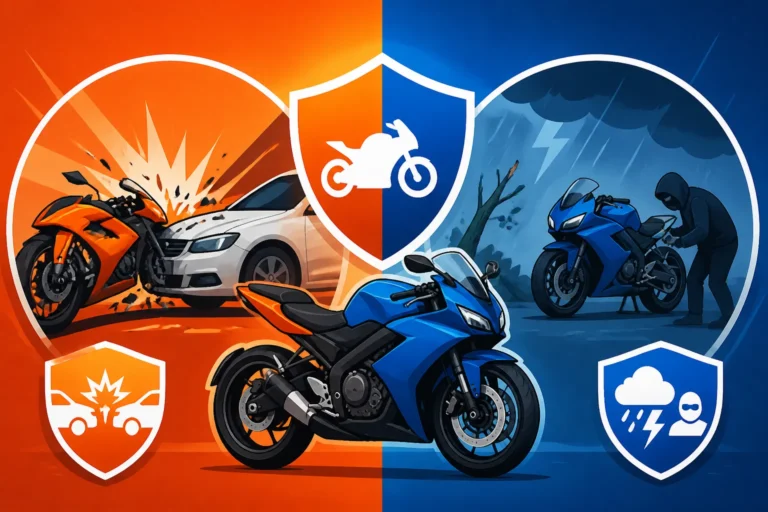
At its heart, motorcycle liability insurance is all about covering damages and injuries you might cause to others. It’s split into two main components: bodily injury liability and property damage liability. Bodily injury coverage steps in to pay for medical expenses, lost wages, and pain and suffering for anyone you injure in an accident. Imagine you misjudge a turn on a busy street in Miami and clip a car, causing a passenger whiplash. Your bodily injury liability would cover their hospital bills and recovery costs, potentially saving you from a massive out-of-pocket expense.
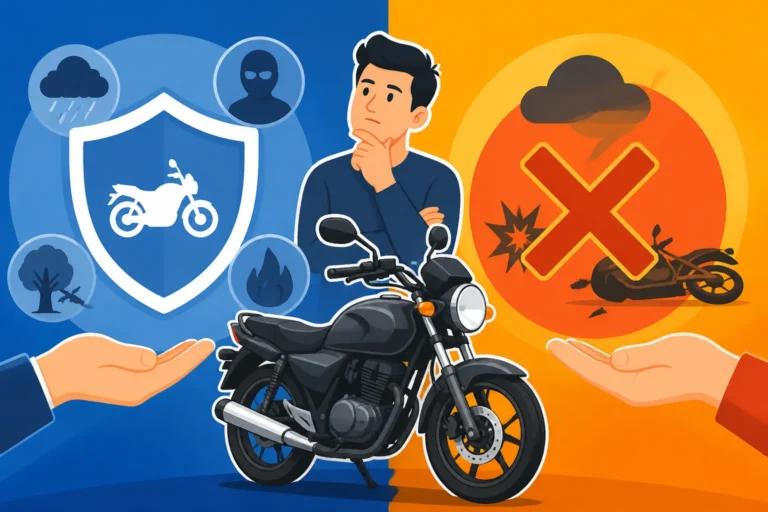
Property damage liability, on the other hand, covers the costs to repair or replace another person's property if you're responsible for damaging it. This could be anything from a fender bender where you scratch someone's car door, to a more severe incident where you total their vehicle. It can also extend to other property, like a mailbox, fence, or even a building, though those scenarios are less common with motorcycles. What it doesn't cover, and this is a crucial point many riders misunderstand, are your own injuries, your own medical bills, or any damage to your motorcycle. For those protections, you need additional coverages like Medical Payments (MedPay), Collision, and Comprehensive.
Why It's Legally Required Almost Everywhere
The vast majority of states in the U.S. mandate that motorcyclists carry a minimum amount of liability insurance. This isn't just an arbitrary rule; it's a fundamental part of traffic law designed to ensure that victims of accidents caused by an insured driver can receive compensation for their damages. Without these laws, if an at-fault driver had no assets, injured parties would be left with no recourse for their medical bills or damaged property.
Riding without at least minimum liability coverage can lead to severe consequences. If you're pulled over or involved in an accident and can't provide Proof of Insurance & Registration for Motorcycles, you could face hefty fines, suspension of your license, impoundment of your bike, and even jail time in some jurisdictions. In states like California or Texas, the Penalties for Riding Without Insurance can be financially devastating and make it incredibly difficult to get affordable insurance in the future. It’s not just about avoiding a ticket; it's about adhering to the Motorcycle Insurance Requirements by State (2026 Guide) and safeguarding your future on two wheels.
The "Three Numbers" Explained Split Limits
You’ve probably seen insurance policies listed with three numbers, like "25/50/25" or "15/30/10." This is what's known as split limit liability, and it's essential to understand what each number represents. These numbers dictate the maximum amount your insurance company will pay out in a liability claim.
Let's break down the common "25/50/25" example, which is often a state's minimum requirement for Minimum Liability Insurance Explained The Three Numbers:
- The first number (25) refers to the maximum amount, in thousands of dollars, your insurer will pay for bodily injury to one person in an accident you cause. So, $25,000 for one person's injuries.
- The second number (50) is the maximum amount, in thousands of dollars, your insurer will pay for bodily injury to all persons in a single accident you cause. So, $50,000 total, no matter how many people are injured.
- The third number (25) represents the maximum amount, in thousands of dollars, your insurer will pay for property damage in an accident you cause. So, $25,000 for damage to vehicles or other property.
Imagine you're involved in a collision in a state with 25/50/25 minimums. You're found at fault. Two people in the other car are injured, and their medical bills come to $30,000 each (totaling $60,000). The damage to their car is $15,000. Your policy would pay $25,000 to each injured person (hitting the per-person limit), but since the total is $60,000 and your total bodily injury limit is $50,000, you'd be personally responsible for the remaining $10,000. The property damage would be fully covered as it's below the $25,000 limit. This scenario highlights how easily even seemingly adequate minimum coverage can fall short, leaving your personal assets vulnerable.
Beyond the Bare Minimum: When Basic Liability Isn't Enough
While meeting state minimums for motorcycle liability insurance keeps you legal, it often doesn't provide adequate financial protection in the event of a serious accident. The costs associated with medical care and vehicle repairs have skyrocketed, making minimum coverage a risky gamble for many riders.
The Financial Risks of Under-Insuring
Choosing only the bare minimum liability coverage might seem like a way to save a few bucks on your premium, but it can be a penny-wise, pound-foolish decision. Consider a scenario where you're involved in a significant accident in a busy city like Phoenix, Arizona. You cause a multi-car pile-up on the freeway. Several individuals are seriously injured, requiring extensive medical treatment, and two luxury vehicles are totaled. Even if your state's minimums are something like 25/50/25, the actual damages could easily reach hundreds of thousands of dollars.
When your insurance policy's payout limits are exhausted, you are personally responsible for the remaining balance. This isn't just an abstract idea; it means your personal savings, your home equity, and even future earnings could be on the line. Accident victims, or their insurance companies, can pursue you in court to collect the difference. This can lead to garnished wages, liens on property, and years of financial strain. For most riders, the potential for such a financial catastrophe far outweighs the small savings on a lower monthly premium. It’s a harsh reality, but an important one to face when considering your coverage levels.
Common Scenarios Where You'll Wish You Had More
Let's dig into some specific, common situations where standard minimum liability could leave you in a world of hurt. Imagine you're cruising down a scenic route in Colorado, and a momentary lapse in judgment causes you to swerve into another lane, resulting in a collision. You hit a new pickup truck, which sustains $35,000 in damage, and the driver suffers a broken arm and concussion, racking up $40,000 in medical bills. If your liability coverage is set at 25/50/25, your property damage coverage maxes out at $25,000, leaving you to pay the remaining $10,000 for the truck. For the injured driver, your bodily injury limit is $25,000 per person, so you'd be on the hook for another $15,000 in medical costs. That's $25,000 out of your own pocket from a single incident.
Now consider a more severe case: hitting a pedestrian. Pedestrian injuries are often extensive and incredibly costly, involving long hospital stays, surgeries, rehabilitation, and lost income. Minimum bodily injury limits, often designed decades ago, are simply not equipped to handle today's medical expenses. A serious injury could easily top $100,000 for just one person. If your bodily injury liability is $25,000, the remaining $75,000 or more would become your personal debt. These are not rare, worst-case scenarios; they happen every day on roads across the country.
How Your State's Financial Responsibility Laws Play In
It's important to understand that nearly every state has what are known as Financial Responsibility Laws for Riders. These laws essentially mean that if you cause an accident, you are financially responsible for the damages and injuries. While carrying liability insurance is the most common way to meet this requirement, some states might theoretically allow alternative proof of financial responsibility, such as posting a bond or depositing a significant sum of money with the state treasurer.
However, these alternatives are generally impractical and inaccessible for the average rider. For instance, in New York, you might theoretically be able to deposit a significant amount of cash or securities, but this is far more cumbersome and risky than simply buying an insurance policy. The point is, while there might be obscure alternatives, liability insurance is the practical and widely accepted method to demonstrate financial responsibility. Relying on an alternative method, or worse, riding without any proof of financial responsibility, is an invitation for severe legal and financial repercussions if you're ever involved in an accident. The system is designed to protect the public, and if you can't prove you can pay for damages you cause, the state will make sure you do through other means.
Weighing the Cost vs. Protection: Is It Truly Worth It?
When you’re looking at your motorcycle insurance bill, it’s easy to feel the pinch. You might wonder if paying more for liability is really "worth it" when you're already shelling out for premiums. But let’s be realistic: the perceived savings from minimum coverage could vanish instantly if you ever have an at-fault accident.
The True Cost of Motorcycle Liability
The cost of motorcycle insurance, including liability, isn't a fixed number. It varies wildly based on a whole host of factors, like your age, riding experience, the type of bike you own (a sport bike often costs more to insure than a cruiser), your driving record, and even your geographic location. For example, liability coverage might be more expensive in a densely populated urban area with higher accident rates, like Los Angeles, compared to a rural town in Montana. For a new rider in their early 20s with a sport bike, even basic liability can feel expensive, while a seasoned rider over 40 with a touring bike might find it quite affordable.
However, the good news is that increasing your liability limits from the state minimums to more robust protection often doesn't increase your premium as dramatically as you might think. For instance, jumping from 25/50/25 to 100/300/50 might only add a relatively small percentage to your overall How Much Is Motorcycle Insurance? 2026 Cost Guide, especially compared to the exponential increase in financial protection you gain. Tools like The Zebra can be incredibly helpful here, allowing you to quickly compare quotes from multiple insurers like Progressive, Geico, or Dairyland to see how different liability limits impact your specific rate. This allows you to find a balance between affordability and robust protection.
Peace of Mind: An Unquantifiable Benefit
Beyond the dollars and cents, there's an immense value in the peace of mind that comes with knowing you're adequately protected. As a veteran rider, I can tell you that cruising down the highway, knowing that if the unthinkable happens, you won't lose everything you've worked for, is priceless. It allows you to focus on the road, enjoy the ride, and not constantly worry about the "what ifs."
Imagine the stress of getting into an accident, even a minor one, and then having to grapple with a lawsuit because your liability limits were too low. That kind of financial and legal burden can consume your life, affecting your job, your family, and your mental well-being. Opting for higher liability limits mitigates this significant stressor. It’s an investment not just in financial security, but in your ability to maintain your quality of life should an unfortunate event occur. This peace of mind isn't something an insurance company can put a number on, but it's a profound benefit of comprehensive coverage.
When Liability-Only Might Be a Tempting, But Risky, Choice
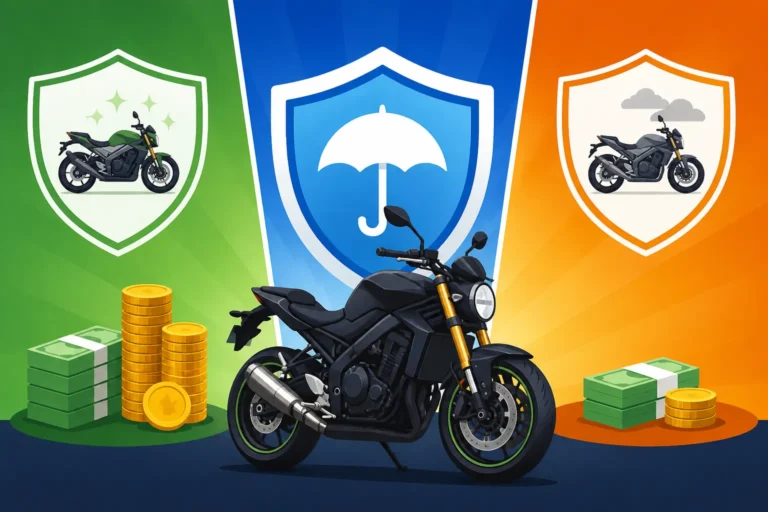
For some riders, particularly those with older, low-value motorcycles that are paid off and could be easily replaced, the idea of carrying only liability insurance can be tempting. If your bike is only worth a couple of thousand dollars, paying for collision and comprehensive coverage might not seem financially prudent because the premiums could quickly outpace the bike's actual cash value. In such cases, some riders might choose to self-insure for damage to their own bike, accepting the risk that if it's totaled, they'll simply buy a new one out of pocket.
However, this decision only applies to coverage for your own motorcycle. It’s a completely separate consideration from liability. Even if your bike is a beat-up antique, the potential for causing significant damage or injury to others remains the same as if you were on a brand-new Harley. Therefore, while dropping collision and comprehensive on an old bike might be a justifiable risk, reducing your liability coverage to the bare minimum is almost always a risky proposition, regardless of your motorcycle's value. Remember, liability protects your assets from claims made by others, not your motorcycle.
Deciding On Your Optimal Liability Coverage
So, how do you figure out the "right" amount of liability coverage for your motorcycle? It’s not a one-size-fits-all answer. What makes sense for a single rider in an apartment might be drastically different from what a homeowner with a family needs. It's about taking a realistic look at your personal circumstances and understanding the potential impact of an accident.
Assessing Your Personal Risk Factors
The first step in determining your optimal liability coverage is to honestly assess your personal financial exposure. Do you own a home? Have significant savings or investments? Do you have a high-earning career that could be impacted by wage garnishments? If you have substantial assets to protect, you should lean towards significantly higher liability limits. Many financial advisors recommend carrying liability limits that are at least equal to your net worth, or at the very least, enough to protect your major assets like your home.
Consider your riding habits as well. Do you commute daily in heavy traffic, increasing your exposure to potential accidents? Or do you only ride on weekends on quiet country roads? While even a single accident can be devastating, higher exposure might warrant extra caution. Also, think about your deductible. While not directly related to liability limits, it influences your overall insurance strategy. You need to consider how much you're comfortable paying out of pocket before your insurance kicks in. A higher deductible can lower your premiums, but ensure it's an amount you can comfortably afford in an emergency.
Exploring Options to Balance Cost and Coverage
Finding the sweet spot between adequate protection and an affordable premium is key. There are several strategies you can employ to achieve this balance. Firstly, always shop around. Don't just stick with the first quote you get. Different insurers calculate risk differently, so what's expensive with one company, like Geico, might be more affordable with another, such as Progressive or Dairyland. Comparison websites, like The Zebra, allow you to get multiple quotes simultaneously, making the process much easier.
Secondly, look into available discounts. Many insurers offer a range of discounts for things like completing a motorcycle safety course, having multiple policies (like bundling your motorcycle and car insurance), being a mature rider, or having a clean driving record. Taking a safety course, such as those offered by the Motorcycle Safety Foundation, not only makes you a better, safer rider but can also significantly reduce your premiums. Ask your insurance provider about every possible discount. You’d be surprised how much you can save with a few smart choices. Learning How to Get Cheap Motorcycle Insurance is a journey of asking questions and comparing options.
Other Essential Coverages to Consider Alongside Liability
While this guide focuses on liability, it’s critical to remember that it's just one piece of the puzzle. To be truly well-protected, you'll want to consider other coverages that complement liability and safeguard you, your passengers, and your motorcycle.
- Uninsured/Underinsured Motorist (UM/UIM) Coverage: This is incredibly important because not everyone on the road carries enough, or any, insurance. Uninsured & Underinsured Motorist Coverage (UM/UIM) protects you if an at-fault driver has no insurance or insufficient insurance to cover your damages and injuries.
- Medical Payments (MedPay): This coverage pays for your medical expenses and those of your passengers, regardless of who is at fault. It can be a lifesaver for immediate medical costs after an accident.
- Collision Coverage: This pays for damages to your motorcycle if it's involved in a collision with another vehicle or object, regardless of who is at fault.
- Comprehensive Coverage: This covers non-collision incidents like theft, vandalism, fire, or hitting an animal.
Choosing What Does Full Coverage Motorcycle Insurance Mean? typically combines liability, collision, and comprehensive, offering a much broader safety net. While liability is mandatory for others, these additional coverages are what truly protect you and your investment. Think about What Affects Your Motorcycle Insurance Rate? to understand how these choices impact your premium, but never compromise on essential protection for yourself.
Here's a quick comparison of minimum vs. recommended liability coverage:
| Coverage Type | State Minimum Liability (e.g., 25/50/25) | Recommended Liability (e.g., 100/300/50) |
|---|---|---|
| Bodily Injury Per Person | $25,000 | $100,000 |
| Bodily Injury Per Accident | $50,000 | $300,000 |
| Property Damage | $25,000 | $50,000 |
| Primary Beneficiary | Injured third parties & their property | Injured third parties & their property |
| Your Coverage | None (for your injuries/bike damage) | None (for your injuries/bike damage) |
| Financial Exposure | High risk of personal asset liability | Significantly reduced personal asset liability |
| Typical Scenario | Pays out for minor accidents, but quickly exhausted by serious injuries or expensive property damage. You're personally responsible for anything over these limits. | Provides robust protection for most common serious accidents, offering peace of mind and reducing the likelihood of personal lawsuits. |
Ultimately, the decision on "Is Liability Coverage Worth It on a Motorcycle?" boils down to protecting your financial future. While the legal minimums keep you on the right side of the law, they rarely provide enough security in today's world of escalating costs. Investing a little more in robust liability coverage is often one of the smartest decisions you can make as a rider. To learn more about how to compare different options, check out our guide on How to Compare Motorcycle Insurance Quotes.
Disclaimer
This article is for general informational purposes only and does not constitute professional advice. Laws, prices and regulations vary by location and change over time. Consult a qualified professional for guidance on your specific situation.