Does Insurance Cover a Motorcycle Used for Delivery?
It's a really common misconception these days, especially with the rise of gig economy apps like DoorDash, Uber Eats, and Grubhub, that your regular motorcycle insurance policy will somehow just "flex" to cover you when you're out making deliveries. The truth is, that assumption can lead to some seriously tough times if you ever find yourself in an accident while on the job. This guide is here to shed some light on why standard policies usually won't protect you and what kind of coverage you actually need to ride for delivery with peace of mind.
The Harsh Reality: Personal Policies Don't Cover Commercial Use
Let's cut right to the chase because this is where many riders get caught off guard: your standard personal motorcycle insurance policy is almost certainly not designed to cover you when you're using your bike for paid delivery work. It's a tough pill to swallow, especially when you're trying to make an honest living, but insurance companies draw a very clear line between riding for pleasure or personal commuting and riding for commercial gain.
Think about it from an insurer's perspective. When you tell them you're using your motorcycle for personal use, they assess a certain level of risk. This risk calculation changes dramatically when you introduce elements like increased mileage, the pressure of timed deliveries, riding in high-traffic areas more frequently, and the simple fact that you're operating as part of a business transaction. These factors significantly elevate the chances of an accident, and that's not something a personal policy is built to absorb without a specific add-on or a different type of policy altogether. If you're wondering about the foundational protection, you can learn more about Types of Motorcycle Insurance Coverage Explained and how they're typically defined for personal use.
What's Considered "Personal Use" vs. "Commercial Use"?
This distinction is crucial, and it's often where the confusion begins. "Personal use" typically means using your motorcycle for things like riding to work or school, cruising on the weekends, going on a road trip, or running personal errands like grocery shopping. It's about getting from point A to point B for your own non-business purposes. Most standard policies are explicitly written with these scenarios in mind.
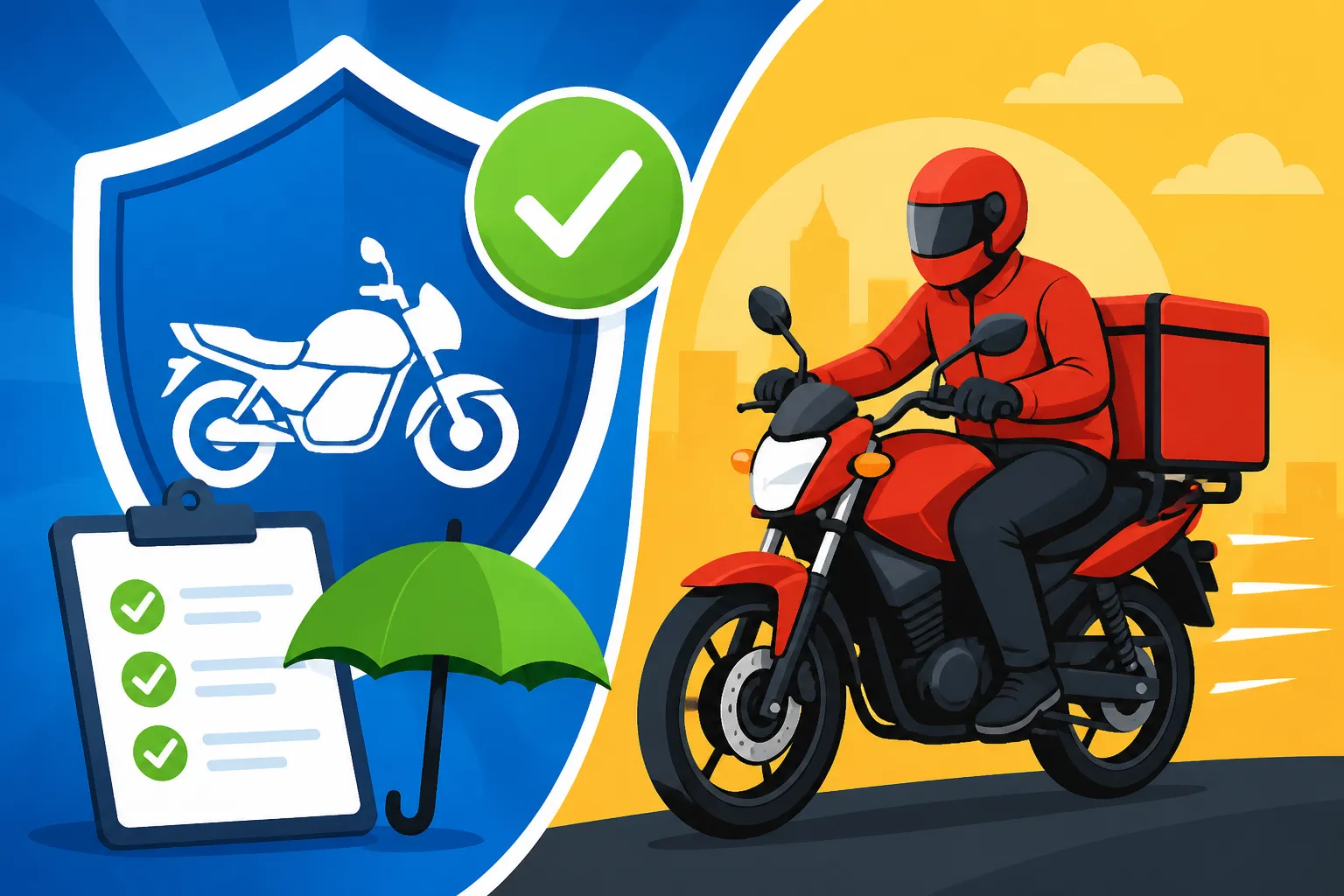
"Commercial use," on the other hand, kicks in the moment you start receiving payment for using your motorcycle as part of a business operation. This isn't just about hauling heavy loads or having a sidecar for commercial purposes; it includes carrying food, packages, or people for a fee. Even if it's just a few hours a week picking up takeout for an app, that's commercial activity. This also includes courier services, food delivery apps, and any other task where your motorcycle is an integral part of generating income. Insurers view this as a fundamentally different risk profile because the frequency and nature of riding change, leading to a higher likelihood of incidents. If your motorcycle is your primary tool for earning a living, understanding this difference is paramount.
The Risk Factor: Why Insurers Are Wary of Delivery Riders
Insurance companies are essentially in the business of calculating and mitigating risk. When you're making deliveries, several factors contribute to a heightened risk profile:
- Increased Time on the Road: Delivery riders spend significantly more hours on the road compared to a casual rider or commuter, especially during peak traffic times and in adverse weather conditions. More time on the road directly translates to more exposure to potential accidents.
- Time Pressure: Many delivery gigs are time-sensitive, leading riders to rush, take less-than-ideal routes, or make quick decisions that could increase accident risk. Imagine trying to beat the clock to deliver a hot pizza; that added pressure can lead to hurried maneuvers that a leisurely rider wouldn't typically undertake.
- Frequent Stops and Starts: Navigating urban environments involves constant stopping, starting, turning, and parking in often congested or unfamiliar areas. This increases the chances of low-speed drops, parking lot incidents, or being involved in minor collisions.
- Carrying Cargo: While a motorcycle might not carry heavy freight, even a insulated food bag can shift weight and alter handling characteristics, particularly at speed or during turns. The distraction of securing cargo or navigating with a delivery on board can also contribute to accidents.
These factors make delivery riding a different beast from personal riding in the eyes of an underwriter. They require a different set of coverage considerations and often a completely separate type of policy. Getting caught without the right coverage could mean that not only is your claim denied, but you could also be personally liable for damages and injuries, which could be financially ruinous. It's vital to know What Happens If You Ride Without Insurance? as the consequences are severe.
Specialized Insurance Solutions for Delivery Motorcycles
So, if your personal policy won't cut it, what are your options for proper coverage when using your motorcycle for delivery? The good news is that specialized insurance solutions exist, but you have to know what to look for and be proactive in securing them.
Commercial Motorcycle Insurance: The Go-To Solution
For riders who primarily use their motorcycles for delivery or courier services, a dedicated commercial motorcycle insurance policy is often the most robust and appropriate solution. This type of policy is specifically designed to cover vehicles used for business purposes. It factors in the increased risk associated with commercial operations and provides the necessary liability and physical damage coverage that a personal policy lacks.
Commercial policies can be tailored to your specific needs, offering higher liability limits to protect you against costly lawsuits if you're found at fault in an accident while working. They can also include coverage for your cargo (though often with specific limits) and ensure your bike is protected against collision and comprehensive perils even when it's being used commercially. This is particularly important for your livelihood; without your bike, you can't work. When comparing options, you'll find that commercial policies often come from specialty insurers, though some larger carriers like Progressive and State Farm might offer commercial endorsements or standalone policies as well. Understanding What Does Full Coverage Motorcycle Insurance Mean? in a commercial context is crucial, as it will likely include elements beyond just basic liability.
Hybrid Policies and Rideshare/Delivery Endorsements
The gig economy has evolved, and so too have some insurance products. Recognizing the growing number of individuals using their personal vehicles for part-time delivery or rideshare work, some insurance providers have begun to offer hybrid policies or rideshare/delivery endorsements that can be added to your personal policy. These endorsements essentially bridge the gap between personal and commercial use.
Here's how they typically work: Your personal policy covers you when you're riding for personal errands. When you log into a delivery app (like DoorDash, Uber Eats, or Grubhub) and are actively making deliveries, the endorsement kicks in to provide coverage. This is a far better solution than relying solely on the coverage offered by the delivery app itself, which is often secondary and limited, usually only covering you from the moment you accept a fare or pickup request until the delivery is completed. The time you spend logged into the app but waiting for a request, or the time you're offline but still riding, might be a "gap" in coverage without a proper endorsement.
However, these hybrid options aren't universally available, and the specifics vary widely by state and insurer. You might find that providers like Geico or Dairyland offer these types of add-ons in certain regions. It's essential to have a frank conversation with an insurance agent to understand exactly what is covered and what isn't. Don't assume anything, because an uncovered incident could lead to devastating financial consequences. Platforms like The Zebra can be a good starting point to compare what's available in your area from different providers.
Understanding Coverage Gaps and What Delivery Apps Provide
The biggest danger for delivery riders is operating in a "coverage gap" – a period or situation where neither your personal policy nor the delivery app's insurance provides adequate protection. It's a tricky area, and it's why a specialized policy or endorsement is so critical.
What the Delivery Apps Actually Cover
Many delivery apps do provide some form of insurance coverage for their drivers/riders, but it's crucial to understand its limitations. Typically, this coverage is secondary and only applies during specific "active" periods, which usually means from the moment you accept a delivery request until the item is dropped off.
Consider these scenarios:
- Period 0 (App Off): You're just riding your motorcycle for personal reasons, or you're not logged into the app. Your personal policy should cover you here.
- Period 1 (App On, Waiting for Request): You're logged into the app and waiting for a delivery request. This is a major coverage gap. Your personal policy might deny a claim here because you're technically using your bike for commercial intent, but the app's commercial policy typically hasn't kicked in yet. This is where a rideshare/delivery endorsement can save you.
- Period 2 (Accepted Request, On Way to Pickup): You've accepted a request and are en route to pick up the food or package. Most delivery apps' commercial liability coverage kicks in here, offering third-party liability up to a certain limit.
- Period 3 (Item Picked Up, On Way to Drop-off): You have the item and are heading to the customer. The app's coverage is usually fully active here, providing liability and sometimes contingent collision/comprehensive coverage if you have it on your personal policy.
The key takeaway is that the app's coverage is often designed to protect third parties (the people you might hit or their property) and usually has a high deductible for your own bike's damage, if it covers it at all. It rarely covers your injuries or damage to your motorcycle comprehensively, and it almost never covers the "Period 1" gap. This is where understanding your Liability Coverage for Motorcycles Explained becomes paramount, as the app's liability limits might be sufficient for a car accident but potentially inadequate for a motorcycle accident where injuries can be more severe.
The Dangers of Coverage Gaps
Operating in a coverage gap means that if an accident occurs during one of those unprotected periods, you could be left entirely on your own. Imagine this: You're logged into the Uber Eats app, waiting for a ping in downtown Portland. You glance down at your phone for a second, looking for a request, and accidentally clip a parked car. Your personal insurer might deny your claim because you were "working," and Uber Eats might deny it because you hadn't "accepted a request" yet. You'd be solely responsible for damages to your bike, the parked car, and any injuries you sustained.
This situation can be financially devastating, potentially leading to thousands of dollars in out-of-pocket expenses. It could even put your personal assets at risk if you're sued. That's why simply relying on the app's stated coverage is a risky gamble. It’s crucial to understand your own Motorcycle Insurance Requirements by State (2026 Guide) to ensure you're always legally covered, even if your specific delivery work isn't fully protected.
Consequences of Riding for Delivery Without Proper Coverage
The temptation to save a few bucks on insurance by not declaring your delivery work can be strong, but the potential ramifications are so severe they almost always outweigh any perceived savings. It’s not just about what happens if you get into an accident, but also the legal and financial pitfalls that follow.
Denied Claims and Out-of-Pocket Expenses
The most immediate and painful consequence of riding for delivery without proper commercial or endorsement coverage is a denied claim. If you get into an accident while working and your personal insurance discovers you were using your motorcycle for commercial purposes, they have every right to deny your claim. Most personal policies contain an "exclusion for commercial use" clause, and that's exactly what they'll cite.
When a claim is denied, suddenly everything is on you:
- Damage to Your Motorcycle: You'll be responsible for the full cost of repairs to your beloved bike, or its replacement value if it's totaled. These costs can easily run into the thousands, especially for modern bikes.
- Medical Bills: Motorcycle accidents, unfortunately, often result in serious injuries for the rider. Without insurance to cover your medical expenses, you could face astronomical hospital bills, rehabilitation costs, and lost wages.
- Third-Party Damages: If you were at fault in the accident, you'd also be personally liable for any property damage or injuries sustained by other parties. This includes their vehicle repairs, medical bills, lost wages, and potentially pain and suffering. A significant accident could easily result in hundreds of thousands of dollars in damages, leading to lawsuits that could strip you of your savings, house, or other assets. It's a stark reminder of the Penalties for Riding Without Insurance, even if you technically have a policy.
Imagine a scenario where you're on a delivery in Seattle, and you swerve to avoid a pedestrian, hitting a parked car and injuring your arm. If your personal policy discovers you were making a delivery, they'll deny the claim. Now, you're looking at potentially $5,000 in bike repairs, $20,000 in medical bills, and $10,000 in damages to the parked car, all out of your own pocket. This isn't a hypothetical; it's a very real risk.
Legal Ramifications: Fines, License Suspension, and More
Beyond the financial hit, there are legal consequences for riding without the appropriate insurance, especially if you're involved in an accident. Many states consider operating a vehicle for commercial purposes without the correct commercial insurance akin to riding without any insurance at all, especially if your personal policy denies the claim.
These legal penalties can include:
- Hefty Fines: Fines for operating without proper insurance can range from a few hundred to several thousand dollars, depending on your state and the severity of the incident. In California, for instance, fines can be substantial.
- License and Registration Suspension: Your motorcycle license and registration could be suspended, sometimes for an extended period. This means you wouldn't be able to ride legally, effectively ending your delivery gig and any personal riding.
- Vehicle Impoundment: Your motorcycle could be impounded, leading to additional towing and storage fees before you can even attempt to get it back, assuming you can resolve the insurance issues.
- SR-22 or FR-44 Requirements: If you're involved in an accident and found to be uninsured or improperly insured, you might be required to file an SR-22 or FR-44 form with your state's DMV for a period of several years. This certification proves you have minimum liability coverage, but it also flags you as a high-risk driver, dramatically increasing your future insurance premiums for both motorcycles and cars. If you ever need one, you can learn about SR-22 for Motorcycles: When It's Required.
- Criminal Charges: In severe cases, especially if serious injury or death occurs, you could face criminal charges for reckless endangerment or operating an uninsured vehicle, which carries even more severe penalties, including potential jail time.
It’s a cascade of problems that can quickly spiral out of control. Any short-term savings on insurance premiums are dwarfed by the potential costs and legal headaches you could face.
Finding the Right Coverage for Your Delivery Gig
Navigating the world of motorcycle insurance, especially for a specialized use like delivery, can feel overwhelming. But taking the time to find the right coverage is an investment in your financial security and peace of mind.
Working with Your Current Insurer vs. Specialty Providers
Your first step should always be to talk to your existing motorcycle insurance provider. Be completely transparent about your delivery work. Ask them if they offer any specific riders, endorsements, or commercial policies that would cover your motorcycle for delivery purposes. Some larger insurers, like Progressive, often have options for gig-economy workers. They might be able to simply add an endorsement to your existing policy, which can be the simplest and most cost-effective solution if available. This also allows for easier management, potentially even allowing you to Bundle Motorcycle and Auto Insurance: Worth It?.
If your current insurer doesn't offer suitable coverage or the options are too expensive, then it's time to explore specialty insurance providers. Companies like Dairyland or Markel often specialize in niche motorcycle insurance markets, including high-risk riders, custom bikes, and, yes, even commercial motorcycle use. These companies might have more tailored policies specifically designed for delivery riders. Don't be afraid to cast a wide net; comparing options is always a smart move.
Key Questions to Ask Before You Buy
When you're speaking with agents, whether from your current provider or a specialty insurer, make sure you ask very specific questions to avoid any misunderstandings. Your goal is to ensure there are no grey areas regarding your coverage when you're out making deliveries.
Here are some essential questions:
- "Does this policy or endorsement explicitly cover me when I am logged into a delivery app (e.g., DoorDash, Grubhub, Uber Eats) and waiting for a request?" (This addresses the "Period 1" gap.)
- "Does this policy cover me from the moment I accept a delivery request until the item is dropped off?" (This addresses the primary "active" delivery period.)
- "What are the liability limits for third-party property damage and bodily injury when I'm making deliveries?" (Ensure these are adequate for the risks involved.)
- "Does this policy include collision and comprehensive coverage for my motorcycle when it's being used for delivery?" (Crucial for protecting your asset.)
- "What is the deductible for collision and comprehensive claims if an accident occurs during a delivery?"
- "Are there any exclusions for specific types of cargo, geographic areas, or times of day?"
- "Does this policy cover my medical expenses if I'm injured in an accident while making a delivery?" (Look for Medical Payments or Personal Injury Protection, depending on your state.)
- "If an accident occurs, will my personal driving record be impacted differently because it was a commercial activity?"
- "How does this policy interact with the insurance provided by the delivery app itself?" (Clarify if it's primary, secondary, or if there are any conflicts.)
- "What documents would I need to provide in the event of a claim while on a delivery?"
Asking these detailed questions will help you get a clear picture of what you're actually paying for. Remember, you're not just trying to get the cheapest policy; you're trying to get the right policy.
Cost Considerations for Commercial Coverage
Let's be realistic: adding commercial coverage or purchasing a dedicated commercial policy will likely increase your insurance premiums. This is simply because, as discussed, the risk profile for delivery riders is higher. However, consider this increased cost as a necessary business expense and an investment in your protection.
The cost will vary based on several factors, including:
- Your riding record: A clean record will always help keep costs down.
- Type of motorcycle: A sport bike will generally cost more to insure than a cruiser, even for commercial use. You can explore Motorcycle Insurance Cost by Bike Type for more insights.
- Your age and experience: Younger, less experienced riders typically face higher premiums.
- Location: Urban areas with more traffic and higher accident rates often have higher premiums.
- Coverage limits and deductibles: Higher liability limits and lower deductibles will increase your premium.
- The specific delivery apps you work for: Some insurers might view certain types of delivery work as riskier than others.
To manage costs, look for available discounts. Many insurers offer discounts for completing a motorcycle safety course, having a multi-policy discount (if you also insure your car with them), or having an anti-theft device on your bike. While finding How to Get Cheap Motorcycle Insurance is always a goal, for delivery work, prioritize comprehensive protection over the absolute lowest price. Comparing quotes from multiple providers, perhaps through a platform like The Zebra, can also help you find the most competitive rates for the coverage you need.
| Coverage Type | Personal Use (Standard Policy) | Delivery Use (Standard Policy) | Delivery Use (Commercial Policy/Endorsement) |
|---|---|---|---|
| Liability (3rd Party) | Typically covered | Likely Denied | Covered |
| Collision (Your Bike) | Typically covered | Likely Denied | Covered (with deductible) |
| Comprehensive (Theft, Vandalism, etc.) | Typically covered | Likely Denied | Covered (with deductible) |
| Medical Payments (Your Injuries) | Often covered | Likely Denied | Often covered |
| Uninsured/Underinsured Motorist | Often covered | Likely Denied | Often covered |
| "Period 1" (App On, Waiting) | Yes, if no commercial intent | Likely Denied | Covered (via endorsement) |
| "Period 2 & 3" (Active Delivery) | Likely Denied | App's secondary liability only | Covered (Primary coverage) |
Remember, the goal isn't to discourage you from using your motorcycle for delivery work, but to ensure you do so safely and with proper financial protection. Being informed and proactively securing the right insurance is the smartest move any delivery rider can make.
Disclaimer
Please remember that this article provides general information and guidance regarding motorcycle insurance for delivery use. Insurance policies and regulations vary significantly by state, insurer, and specific circumstances. It is crucial to consult directly with a licensed insurance professional to discuss your individual needs and to obtain personalized advice and quotes. Do not rely solely on the information presented here when making decisions about your insurance coverage.