What Is Trip Interruption Coverage on a Motorcycle?
Few things can throw a wrench into a perfectly planned motorcycle trip quite like an unexpected breakdown or accident hundreds of miles from home. The stress of being stranded, coupled with the sudden financial burden of lodging, meals, and alternative transportation, can quickly turn an epic adventure into a nightmare. This guide is here to walk you through exactly what trip interruption coverage is, how it works, and why it might be the essential safety net every long-distance rider needs to protect their journeys.
What Exactly is Motorcycle Trip Interruption Coverage?
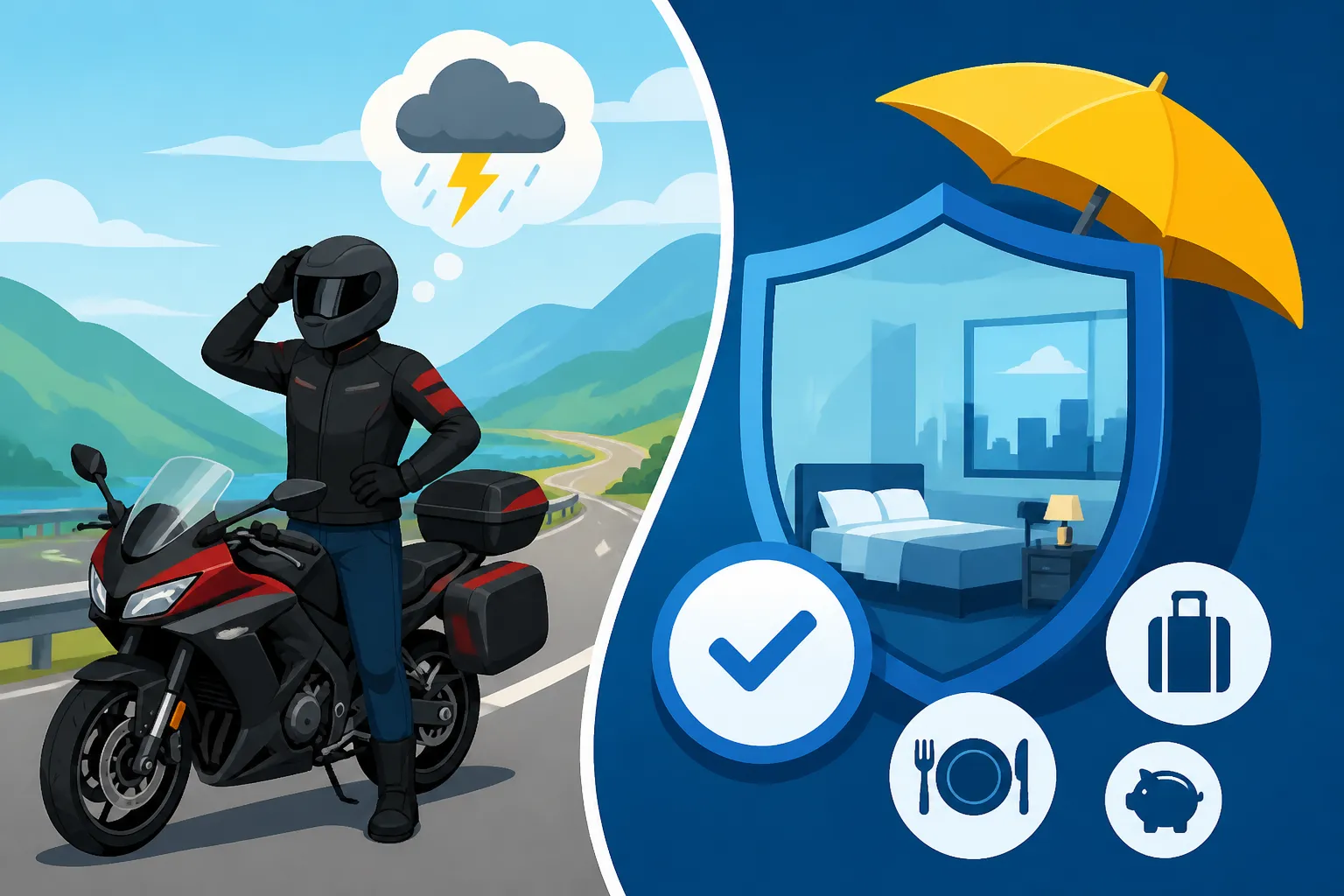
Imagine you’re cruising down a scenic highway, miles from the nearest familiar face, and your bike suddenly sputters, then dies. Or worse, you have a minor fender bender. While you’ve got roadside assistance to get your bike towed, what about you? Where do you stay? How do you eat? How do you get home or continue your journey once the bike is repaired? That's precisely where trip interruption coverage steps in – it's designed to reimburse you for those unexpected, out-of-pocket expenses when a covered event disrupts your ride far from your home base.
Beyond Just Roadside Assistance
Many riders mistakenly believe that having a good roadside assistance plan is enough. And while that's a fantastic start for getting your bike to a repair shop, it usually stops there. Roadside assistance will get your bike off the side of the road, but it won't pay for your hotel room, your meals while you wait for repairs, or a rental car to get you back on track. Trip interruption coverage fills this crucial gap. Think of it this way: roadside assistance handles the bike; trip interruption coverage handles you and your travel needs.
For example, let's say you're on a two-week tour through the Rocky Mountains, and your rear tire blows out completely near Grand Junction, Colorado. Your roadside assistance will tow your bike to a nearby authorized dealer. But what if the dealer can't get the specific tire you need for three days? That's three nights in a hotel, three days of meals, and possibly a rental car or bus ticket if you decide to continue your journey without your bike or need to get back home. Without trip interruption coverage, all those costs come directly out of your pocket. With it, your policy could reimburse you up to certain limits for those very expenses, turning a potentially disastrous situation into a mere inconvenience. It’s a specialized add-on that really shines when you're truly stuck.
Common Covered Events
The key to trip interruption coverage is understanding what qualifies as a "covered event." This isn't a free pass for any random hiccup on the road. Generally, policies specify events that are sudden, unexpected, and outside of your control, often requiring you to be a certain distance from your primary residence (usually 100 miles or more, but this varies by insurer and policy).
Common events that most policies will cover include:
- Mechanical Breakdown: This is often the most common scenario. Your engine seizes, your transmission gives out, or some other critical component fails, rendering your motorcycle inoperable and requiring repairs that take time.
- Accident: If you're involved in a collision that makes your motorcycle unsafe or impossible to ride, this coverage can kick in. This is separate from your collision coverage, which handles the bike's repairs; trip interruption focuses on your personal expenses during the disruption.
- Theft: Should your motorcycle be stolen while you're on your trip, and it's reported to the police, trip interruption coverage can help with the expenses incurred while you deal with the situation and arrange alternative travel. For more details on this, you might want to look into how Does Motorcycle Insurance Cover Theft?.
- Medical Emergency: If you or a covered passenger experience a sudden, serious illness or injury during the trip that requires hospitalization or prolonged recovery, this coverage can help with lodging and other related expenses for yourself and any companions.
- Fire, Vandalism, or Natural Disaster: If your motorcycle is damaged by one of these events while on your trip, preventing you from continuing your journey, this coverage can assist with your personal disruption costs.
It's crucial to remember that these events typically need to be verified, and you'll usually need documentation like repair estimates, police reports, or medical statements. Each insurance provider, whether it's Progressive or Dairyland, will have its own specific list of what constitutes a covered event, so always review your policy documents carefully.
How Trip Interruption Coverage Works in Real Life
Understanding the theory is one thing, but knowing how to practically use trip interruption coverage when you’re actually out there on the road is another. It’s not just about having it; it’s about knowing the rules of engagement.
Eligibility and Distance Requirements
One of the first things you'll encounter with trip interruption coverage is the distance requirement. Insurers aren't going to pay for a hotel room if your bike breaks down ten miles from your driveway. Most policies specify that the covered event must occur a certain number of miles away from your primary residence – typically 100 miles or more, but it could be 50 miles, or even 200 miles depending on your specific policy and provider. This is designed to cover legitimate long-distance travel disruptions, not just a broken clutch on your daily commute.
Let’s say you live in Phoenix, Arizona, and you’re riding through the desert toward San Diego. If your bike breaks down in Yuma, which is about 180 miles from Phoenix, you’d likely meet the 100-mile distance requirement. However, if it broke down just outside Glendale, you wouldn’t. The event must also be unexpected and cause your trip to be interrupted for a set period, often requiring an overnight stay. So, if your bike gets a flat and is fixed within an hour, even if you’re far from home, it typically won't trigger trip interruption benefits because there's no overnight delay or significant disruption beyond the immediate repair.
Claiming Your Benefits
When a covered event derails your ride, claiming your trip interruption benefits needs to be handled systematically. The process is pretty straightforward, but it requires diligent record-keeping.
- Contact Your Insurer: As soon as it's safe and practical, notify your insurance provider. They will open a claim and guide you through the next steps. They can confirm your coverage limits and what documentation you'll need.
- Document Everything: This is paramount. Keep all receipts for lodging, meals, and alternative transportation. If your bike is being repaired, get a written estimate or invoice from the shop indicating the nature of the repairs and the expected completion time. If it was an accident or theft, ensure you have a police report number. For medical issues, documentation from the healthcare provider will be necessary.
- Adhere to Policy Limits: Be aware of your policy's daily limits for expenses (e.g., $100-$150 per day for lodging and meals) and the total maximum benefit per incident (e.g., $500-$1,000). You'll only be reimbursed up to these amounts. Some policies might also have a deductible that applies to trip interruption claims, meaning you pay the first portion of the covered expenses.
- Submit Your Claim: Once your trip is resumed or you've returned home, gather all your documentation and submit it to your insurer. They will review it and, if approved, issue a reimbursement.
Companies like Markel or Harley-Davidson Insurance often have dedicated claims departments that specialize in motorcycle-specific issues, which can sometimes make the process smoother. However, regardless of the provider, good record-keeping is your best friend when filing a claim. You can also explore general guides on how to file a motorcycle insurance claim if you're unsure about the overall process.
What It Typically Doesn't Cover
Just as important as knowing what's covered is understanding the exclusions. Trip interruption coverage isn't an all-encompassing travel insurance policy. Here’s what it generally won't cover:
- Elective Repairs or Routine Maintenance: If you decide to get your oil changed or a scheduled tune-up while on a trip, and it takes longer than expected, those delays won't trigger coverage. The event must be an unexpected breakdown or accident.
- Weather Delays (Unless Causing a Covered Event): Simply stopping your trip because of heavy rain, snow, or extreme heat generally isn't covered. However, if severe weather causes an accident or a mechanical failure (e.g., hydroplaning into a ditch, or an engine overheating due to extreme temperatures leading to breakdown), then the resulting covered event might qualify.
- Change of Plans or Rider Fatigue: Deciding to cut your trip short because you're tired, homesick, or simply changed your mind is not a covered event.
- Pre-Existing Issues: If your motorcycle had known mechanical problems before the trip and those problems caused a breakdown, your claim might be denied. Insurers expect your vehicle to be in reasonable operating condition when you embark on a journey.
- Loss of Enjoyment or Business Interruption: This coverage is about reimbursing direct financial expenses for lodging, meals, and transportation, not for the intangible costs of a ruined vacation or lost work wages.
Always check the "Exclusions" section of your policy to avoid surprises. A good resource for understanding these nuances can often be found by comparing various policies through a service like The Zebra, which highlights the differences in coverage terms from multiple providers.
Is Trip Interruption Coverage Worth the Investment for Riders?
For many riders, especially those who dream of cross-country tours or regularly embark on multi-day journeys, trip interruption coverage can be an absolute game-changer. It's often one of those "nice-to-have" add-ons that suddenly becomes "absolutely essential" the moment you need it.
The Peace of Mind Factor
The biggest benefit, hands down, is the peace of mind. Knowing that if something unforeseen happens far from home, you won’t be left scrambling for cash to cover unexpected hotel stays and meals, allows you to truly enjoy the open road. Imagine you're on a long-anticipated ride through Big Sur, California, or navigating the scenic byways of the Blue Ridge Parkway. If your bike breaks down in a small town with limited services, the last thing you want to worry about is finding a motel you can afford or how you're going to eat for a few days while parts are shipped in.
This coverage alleviates a significant portion of that financial stress. It means you can focus on getting your bike repaired and safely resuming your journey, rather than agonizing over the rapidly accumulating bill for incidentals. For riders who finance their bikes, this peace of mind is even more valuable, as an unexpected breakdown could put additional financial strain on top of monthly payments. Speaking of financing, understanding Motorcycle Insurance Requirements for Financed Bikes is another important piece of the puzzle.
Cost vs. Benefit Analysis
When it comes to motorcycle insurance, every rider wonders if adding another layer of coverage is worth the extra premium. The good news is that trip interruption coverage is typically one of the more affordable add-ons, often costing only an additional $10-$30 per year, depending on your insurer, location, and the limits you choose.
Now, consider the potential cost of not having it. A single night in a motel can easily run $100-$150. Add three meals a day, and you're looking at another $50-$75. If you're stuck for three days, you could be out $450-$675. Compare that to an annual premium increase of $20. The math quickly shows the value proposition. Even if you only take one or two long trips a year, the risk of a breakdown is always there. For those who frequently take extended trips, the benefit far outweighs the minimal additional cost. This coverage is usually much cheaper than, say, increasing your liability limits or adding comprehensive coverage. To truly see the impact on your wallet, it’s always a good idea to compare costs by asking, "How much is full coverage motorcycle insurance?" versus just adding a specific rider like this.
How to Add It to Your Policy
Adding trip interruption coverage is usually quite simple.
- Contact Your Current Insurer: Start by calling your existing motorcycle insurance provider. Ask if they offer trip interruption coverage as an endorsement (an add-on) to your current policy. Inquire about the distance requirements, daily limits, overall maximum payout, and any deductibles that might apply.
- Shop Around: If your current insurer doesn't offer it, or if you're not happy with their terms or pricing, it's a perfect opportunity to shop around. Websites like The Zebra allow you to compare motorcycle insurance quotes from multiple providers simultaneously, making it easy to see which companies offer this coverage and at what cost. Companies like Geico, Progressive, and Nationwide are known for offering a wide range of motorcycle endorsements.
- Review the Details: Once you get quotes, don't just look at the price. Read the policy details for the trip interruption coverage specifically. What are the exact covered perils? What are the exact distance requirements? How long does the delay need to be for it to kick in? Understanding these specifics is key to making an informed decision. For a broader view, you might want to learn about the Types of Motorcycle Insurance Coverage Explained.
Key Considerations When Choosing a Policy
When you’re looking to add trip interruption coverage, it's not a "one size fits all" situation. There are specific policy elements that you need to scrutinize to ensure you’re getting the right protection for your riding style and travel habits.
Understanding Limits and Deductibles
Every insurance policy comes with limits, and trip interruption coverage is no exception. These limits dictate the maximum amount your insurer will pay for various expenses. You’ll typically see:
- Daily Limits for Lodging and Meals: This is the maximum amount reimbursed per day for your hotel stay and food expenses. Common limits range from $75 to $150 per day. For example, if your policy has a $100/day limit and your hotel room costs $120, you’ll be reimbursed $100.
- Total Per Incident Limit: This is the overall maximum amount the policy will pay out for one single qualifying event. This could be anywhere from $500 to $1,000, or sometimes even more, depending on the provider and the premium you pay.
- Deductible: While not all trip interruption coverages have a separate deductible, some might. This means you'd pay a certain amount out-of-pocket (e.g., $100 or $250) before the coverage kicks in. It's essential to clarify if a deductible applies specifically to this add-on or if it falls under a broader policy deductible.
When evaluating a policy, think about your typical travel expenses. If you prefer budget motels and diner food, a lower daily limit might be sufficient. If you appreciate a bit more comfort, you might want to look for policies with higher daily limits. For a deeper dive into how deductibles work on other claims, consider reading How Do Deductibles Work on a Motorcycle Claim?.
Comparing Providers and Their Offerings
Not all insurance companies offer trip interruption coverage, and those that do may have significantly different terms. It’s not just about the big names; smaller, specialized motorcycle insurers often have great options too.
Here's what to look for:
- Breadth of Covered Events: Does the policy cover just breakdowns and accidents, or does it extend to theft and medical emergencies?
- Distance Requirements: Some insurers are more lenient with their "miles from home" stipulation.
- Daily and Total Limits: As discussed, these can vary greatly and impact your potential reimbursement.
- Ease of Filing a Claim: Ask about the claims process. Are they known for quick and hassle-free reimbursements, or do they make you jump through hoops? Websites like The Zebra are excellent for getting side-by-side comparisons of various providers like Progressive, Geico, and Dairyland, highlighting their specific offerings. This helps you identify which motorcycle insurance companies are cheapest while still providing the coverage you need.
Read the Fine Print
This can’t be stressed enough: always read the fine print. The specific language used in your policy can drastically change what is or isn't covered. Pay close attention to:
- Definitions: What exactly does the insurer mean by "mechanical breakdown," "accident," or "inoperable vehicle"? These definitions can be surprisingly precise.
- Exclusions: Look for a section listing what the policy specifically does not cover. This is where you'll find details about elective repairs, normal wear and tear, or specific weather-related issues.
- Documentation Requirements: Understand what records you need to keep (receipts, repair orders, police reports) to ensure your claim is processed smoothly.
- Time Limits for Filing Claims: Some policies have strict deadlines for reporting an incident or submitting reimbursement requests.
Taking the time to understand these details upfront can save you a lot of headache and potential disappointment if you ever need to use your trip interruption coverage. It's an investment in your peace of mind and the smooth continuation of your motorcycle adventures.
| Covered Event Type | Typical Expenses Reimbursed | Common Daily Limits | Common Total Limits | Key Conditions |
|---|---|---|---|---|
| Mechanical Breakdown | Lodging, Meals, Alternative Transport | $75 – $150 | $500 – $1,000 | >100 miles from home; verifiable repair delay |
| Accident | Lodging, Meals, Alternative Transport | $75 – $150 | $500 – $1,000 | >100 miles from home; vehicle inoperable |
| Theft | Lodging, Meals, Alternative Transport | $75 – $150 | $500 – $1,000 | >100 miles from home; police report required |
| Medical Emergency | Lodging (for delay/companions) | $75 – $150 | $500 – $1,000 | >100 miles from home; sudden, serious illness/injury |
Disclaimer
Please remember that this article provides general information about motorcycle trip interruption coverage. Insurance policies and requirements can vary significantly by state, provider, and individual circumstances. It is always recommended to consult directly with a licensed insurance professional or your chosen insurance provider to understand the specific terms, conditions, exclusions, and limits of your policy. Policy details, availability, and costs are subject to change.