What’s the Penalty for Letting Motorcycle Insurance Lapse?
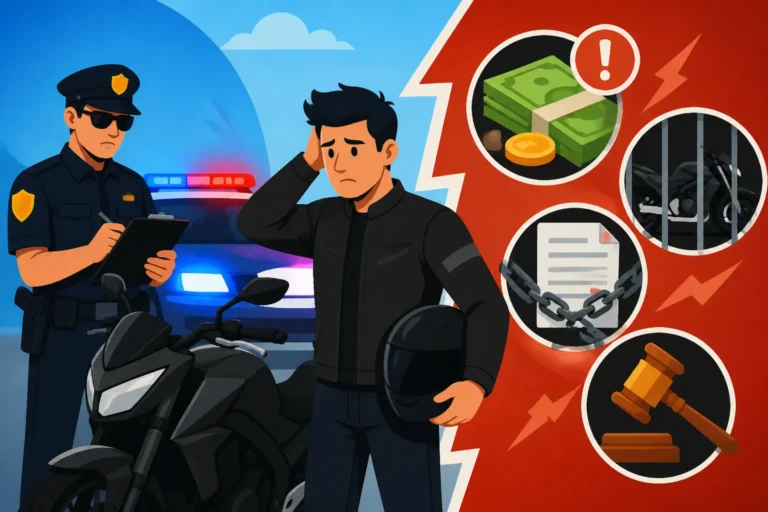
Imagine you are geared up for a Saturday morning ride, the weather is finally perfect, and you pull out of your driveway feeling that familiar sense of freedom. Then, you see the flashing lights in your rearview mirror for a minor tail light issue. When the officer asks for your paperwork, you realize with a sinking chest that the renewal email you ignored last month wasn't just a reminder—your policy actually expired. This guide breaks down the severe financial and legal penalties for letting your motorcycle insurance lapse and provides a clear roadmap for how to get back on the road legally.
The Immediate Legal Fallout of a Coverage Gap
For many riders, a lapse in insurance isn't a choice; it’s a mistake born of a missed notification or a card that expired in an auto-pay system. However, state DMVs don't typically distinguish between a forgotten payment and a deliberate choice to ride uninsured. Most states now use electronic insurance verification systems that notify the Department of Motor Vehicles the moment your carrier cancels your policy. This means you can be penalized even if you never leave your garage.
In states like California or Texas, the Penalty for No Motorcycle Insurance in California or the Penalty for No Motorcycle Insurance in Texas can be shockingly swift. You might receive a letter in the mail demanding proof of coverage within a specific timeframe. If you fail to provide it, your motorcycle's registration can be suspended automatically. If you are actually caught riding during this window, the consequences escalate from a simple fix-it situation to a full-blown legal headache involving hefty fines and potential vehicle impoundment.
Police officers today have real-time access to insurance databases. Gone are the days when showing an old paper card would get you a "warning." If their system shows a lapse, they are often legally required to cite you. This citation stays on your driving record, which is the first domino in a long line of financial hits. For more details on the specific laws in your area, you should check out the Motorcycle Insurance Requirements by State (2026 Guide) to see exactly how your local authorities handle these gaps.
Financial Consequences and the High Risk Label
The most painful part of an insurance lapse often isn't the court fine; it’s the long-term impact on your wallet. Insurance companies view a gap in coverage as a massive red flag. Even if you haven't had a single accident in ten years, a lapse of just a few days can reclassify you from a "preferred" rider to a "high-risk" rider. This shift can cause your premiums to double or even triple when you try to start a new policy.
When you have a lapse, you also lose your "continuous coverage" discount. This is one of the most significant discounts offered by major carriers. Insurers reward loyalty and stability; by letting your policy fall away, you are essentially starting from scratch. You might find yourself asking, Why Is My Motorcycle Insurance So Expensive? when you see your new quotes. This is where tools like The Zebra become invaluable. By using a platform like The Zebra to compare multiple carriers, you can find the few companies that might be more lenient toward a short-term lapse, potentially saving you hundreds of dollars in "high-risk" surcharges.
Beyond the premium increase, there is the issue of the SR-22. If your lapse resulted in a conviction for riding without insurance, the state might require your insurance company to file an SR-22 form on your behalf. This is a certificate of financial responsibility that proves you are carrying the state-mandated minimums. The filing itself usually costs a small fee, but the underlying insurance policy is almost always significantly more expensive. You can learn more about this in our guide on SR-22 for Motorcycles: When It's Required.
Loss of Protection and Personal Liability Risks
The legal and premium-based penalties are one thing, but the personal risk you take during a lapse is astronomical. If you are involved in an accident while your policy is inactive, you are personally responsible for every cent of damage and medical bills. This is a terrifying prospect, where even a minor hospital stay can cost tens of thousands of dollars.
If the accident is your fault, the other party can sue you directly, potentially leading to garnished wages or liens on your property. Even if the accident is not your fault, many states have "No Pay, No Play" laws. In these jurisdictions, if you are riding uninsured, you are barred from suing for non-economic damages like pain and suffering, regardless of how much the other driver was at fault. This essentially strips you of your legal rights on the road.
Furthermore, if you are still paying off your bike, a lapse in insurance is often a breach of your loan agreement. Lenders require Motorcycle Insurance Requirements for Financed Bikes to protect their investment. If they are notified of a lapse, they may force-place insurance on your account. Force-placed insurance is notoriously expensive and only protects the lender’s interest in the bike, not your liability or your medical needs. If you don't rectify the situation, they may even have the right to repossess the motorcycle entirely.
| Lapse Duration | Common Legal Penalty | Estimated Premium Increase | Registration Impact |
|---|---|---|---|
| 1 – 7 Days | Warning letter / Small fine | 5% – 15% | Risk of suspension |
| 8 – 30 Days | Moderate fine ($100-$500) | 20% – 40% | Suspension likely |
| 31 – 90 Days | Heavy fine / Court appearance | 50% – 100% | Mandatory suspension |
| 90+ Days | License revocation / Vehicle impound | 100%+ / SR-22 Requirement | Revocation of plates |
The Hidden Danger of Seasonal Lapses
A common mistake made by veteran riders is the "winter lapse." Many people believe that if they aren't riding their bike during the snowy months, they can simply stop paying for insurance to save a few bucks. This is a dangerous misconception. Even if the bike is sitting in a locked garage, letting the policy expire triggers all the same DMV notifications and "high-risk" labeling discussed above.
Instead of a full cancellation, most savvy riders use a "lay-up" policy or a seasonal storage option. This maintains the legal continuity of your insurance—satisfying the DMV and keeping your loyalty discounts—while significantly lowering your costs because you've removed the "collision" and "liability" portions of the coverage while the bike is off the road. If you find yourself in this situation, check Do You Need Insurance for a Motorcycle You're Not Riding? to understand how to park your bike without ruining your insurance record.
If you already have a lapse and are worried about the bike being stolen or damaged while it’s sitting there uninsured, you are in a tough spot. Standard comprehensive coverage won't apply retroactively. However, you can often find competitive rates by looking into How to Get Cheap Motorcycle Insurance even with a less-than-perfect recent history. Using The Zebra can help you filter through companies that specialize in getting riders back on their feet after a seasonal mistake.
How to Fix a Lapsed Policy and Minimize the Damage
If you realize your insurance has lapsed, the very first thing you should do is stop riding the motorcycle immediately. Do not "take it home" or "ride it to the agent's office." Every mile you cover without insurance is a massive legal and financial gamble. Once the bike is safely parked, follow these steps to minimize the fallout:
- Contact your current or former insurer immediately. If the lapse is very recent (often within 24-48 hours), they may offer a "reinstatement with no loss of coverage" if you pay a small fee and the outstanding balance. This is the best-case scenario because it erases the gap as if it never happened.
- If they won't reinstate, ask for a new policy. If the rate is too high, start shopping immediately. Use a comparison site like The Zebra to see who currently has the best appetite for a rider with a recent gap.
- Once you have a new policy, get your proof of insurance to the DMV as fast as possible. Most states allow you to upload your Proof of Insurance: Digital vs Paper for Riders through their online portal to clear any pending registration suspensions.
- If you have been cited by an officer, do not skip your court date. Providing proof that you obtained a new policy quickly can often lead a judge to reduce your fines or dismiss the charges, as it shows a "good faith" effort to comply with the law.
Dealing with the aftermath of a lapse is stressful, but it is fixable. For those who are struggling with high quotes after a lapse, look into What's the Penalty for Letting Motorcycle Insurance Lapse? specifics in your particular state to see if there are any amnesty programs or low-cost state-sponsored insurance options available for those who need to get legal.
Prevention Strategies for the Future
Once you have restored your coverage, you never want to go through this process again. The stress of potentially losing your license or paying double for insurance is a heavy burden. The easiest way to prevent a lapse is to set up auto-pay with a credit card that has a long expiration date, and always keep a secondary contact method (like a secondary email or a physical mailing address) updated with your insurer.
Another tip is to align your insurance renewal with another major event, like your birthday or the start of the year, so it is easier to remember. Many riders also find it helpful to purchase a full year of coverage upfront. Not only does this usually come with a significant discount, but it also means you only have to think about your insurance once every twelve months, reducing the chances of a monthly payment failing without your knowledge.
Finally, keep an eye on your mail and your "Promotions" or "Spam" folders in your email. Insurance companies are required by law to send notice before they cancel a policy for non-payment, but these notices often get buried. If you are ever unsure, a quick five-minute call to your agent can confirm your status and give you peace of mind. For those looking to keep their records spotless, reading up on What Happens If You Ride Without Insurance? can serve as a potent reminder of why staying current is so important.
Motorcycle Insurance Disclaimer
This article is for informational purposes only and does not constitute legal or financial advice. Insurance laws and penalties for lapses vary significantly by state and are subject to change. Always consult with a licensed insurance professional or your state's Department of Motor Vehicles to ensure you are in compliance with current local regulations and requirements.