Is Total Loss Coverage Worth It on a Motorcycle?
It’s a thought that crosses every rider's mind, usually right after you’ve forked over another hefty premium payment: "What am I really paying for if my beloved bike gets totaled? Will it even cover what I owe, let alone replace it?" It’s a frustrating question because the answer isn't always clear-cut, and the financial ramifications of a totaled motorcycle can be devastating if you don't have the right coverage. This comprehensive guide is here to untangle the complexities of total loss coverage, helping you understand its true value and decide if it's a worthwhile investment for your specific riding situation and bike.
Unpacking Total Loss Coverage on Your Motorcycle
Before we dive into whether it's worth it, let's get crystal clear on what "total loss" actually means in the world of motorcycle insurance. It’s not just when your bike looks like a twisted mess on the side of the road, though that certainly qualifies! Insurers have a specific formula, and understanding it is key to protecting your investment.
What Constitutes a Total Loss?
The term "total loss" doesn't mean your bike has to be completely obliterated. Instead, it’s an economic decision made by your insurance company. Generally, a motorcycle is considered a total loss when the cost to repair the damage, plus the salvage value of the wrecked bike, exceeds a certain percentage of its actual cash value (ACV) immediately before the incident. This percentage, known as the total loss threshold, varies by state and insurer. For instance, in some states like Texas, it might be around 100% of the ACV, meaning repairs would have to equal or exceed the bike’s market value. In others, like Florida, the threshold can be as low as 80%.
Imagine you have a bike worth $10,000. If the repair estimate comes in at $8,500, and your state's threshold is 80%, your insurer might declare it a total loss, even if it looks repairable. Why? Because that $8,500 repair cost already exceeds 80% of its value, and they'd rather pay you out and deal with the salvage than invest more in repairs. It's a business decision, not always a reflection of your bike's actual condition. This concept ties directly into understanding your Types of Motorcycle Insurance Coverage Explained since comprehensive and collision coverages are what provide this protection.
Valuation Methods: ACV, Agreed Value, and Stated Value
This is where many riders get blindsided. How your insurance company values your motorcycle significantly impacts your payout in a total loss scenario. There are primarily three methods, and each has distinct implications.
Actual Cash Value (ACV)
Most standard motorcycle insurance policies default to Actual Cash Value. This means that if your bike is totaled, the insurer will pay you what the bike was worth at the moment of the loss, minus your deductible, factoring in depreciation due to age, mileage, and wear and tear. They'll look at comparable bikes for sale in your area, using resources like Kelly Blue Book or NADAguides. The biggest frustration here is that what you believe your bike is worth, especially if you’ve lovingly maintained it or added custom parts, is often far more than the insurer's ACV calculation.
Consider a 2020 Harley-Davidson Street Glide you bought new for $22,000. Four years later, with 25,000 miles on it, and after a nasty accident, the insurer might only value it at $14,000 due to depreciation. If you still owe $16,000 on your loan, you're suddenly $2,000 in the hole, even after the payout. This gap is a significant worry for many riders and highlights why understanding Agreed Value vs Stated Value vs Actual Cash Value is so important.
Agreed Value Coverage
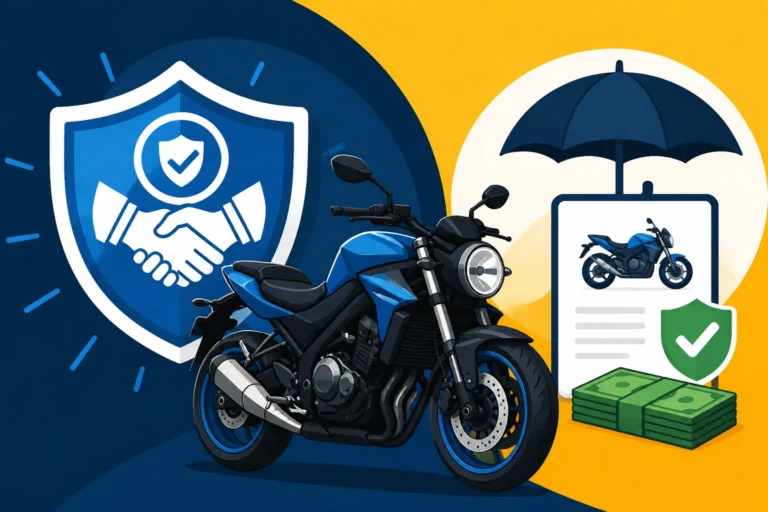
This is often considered the gold standard for custom, classic, or high-value motorcycles, or even newer bikes with significant aftermarket additions. With agreed value, you and your insurance company agree on a specific value for your motorcycle when you purchase the policy. In the event of a total loss, that's the amount you'll receive, minus your deductible, regardless of depreciation. This provides peace of mind, knowing your investment is truly protected.
If you have a custom chopper with thousands invested in paint, chrome, and engine work, ACV would likely leave you high and dry. An agreed value policy ensures that if your prized possession is totaled, you'll get the pre-agreed amount, reflecting the true cost and effort you've put into it. This type of coverage often requires a professional appraisal of your bike.
Stated Value Coverage
Stated value coverage can be a bit of a trickster. You state a value for your motorcycle when you get the policy, but the insurer generally reserves the right to pay out either that stated amount or the actual cash value (ACV), whichever is less, in the event of a total loss. While it seems similar to agreed value, it doesn’t offer the same ironclad guarantee.
It's crucial to clarify with your insurer which valuation method they use. If you're comparing quotes through a service like The Zebra, make sure you're asking specifically about the valuation method for total loss scenarios, as this can dramatically change your eventual payout. It's a subtle but vital difference that can prevent a lot of heartache if your bike is ever declared a total loss.
When Total Loss Coverage Becomes a Must-Have
For many riders, especially in certain situations, total loss coverage isn't just a nice-to-have; it's an absolute necessity. It provides a financial safety net that can prevent significant hardship.
Protecting Your Financed Motorcycle
If you've got a loan on your motorcycle, total loss coverage is usually non-negotiable. Lenders almost always require you to carry Motorcycle Insurance Requirements for Financed Bikes that includes comprehensive and collision coverage, which in turn covers total loss. This is because the bank wants to protect its asset. If your bike is totaled, they want to ensure they get their money back.
The real kicker here is the concept of "loan gap." As discussed earlier, if your motorcycle is totaled, and the insurance company's ACV payout is less than what you still owe on your loan, you're stuck paying the difference out of pocket. This is where Do You Need Gap Insurance on a Motorcycle? becomes incredibly important. Gap insurance bridges that financial "gap" between what your standard policy pays and your outstanding loan balance. Without it, you could be without a bike and still making payments on a machine that no longer exists. For a new bike, especially one that depreciates quickly, gap coverage is almost always a wise decision.
Safeguarding Newer and High-Value Bikes
The newer and more expensive your motorcycle, the more critical total loss coverage becomes. Newer bikes, by their very nature, have a higher actual cash value. This means that if they're severely damaged, the repair costs are more likely to push them over the total loss threshold. Imagine totaling a brand-new Ducati Panigale V4. The parts alone could be astronomically expensive, almost certainly leading to a total loss declaration.
For these bikes, having robust What Does Full Coverage Motorcycle Insurance Mean? that includes comprehensive and collision, and thus total loss protection, gives you the confidence that you'll be able to replace your investment. You won't be left scrambling to find tens of thousands of dollars to get back on two wheels. Plus, the peace of mind knowing you're covered against major financial hits from accidents, theft, or even natural disasters, is invaluable.
Protecting Custom Builds and Rare Classics
If you've poured your heart, soul, and considerable funds into a custom build, or if you own a rare vintage machine, total loss coverage with an agreed value clause is practically non-negotiable. Standard ACV policies simply won't cut it. They don't account for the unique craftsmanship, rare parts, or historical significance that give your bike its true value.
Think about a meticulously restored 1970s Honda CB750 or a completely customized Harley-Davidson Softail. An ACV policy might only give you a fraction of what you invested, leaving you devastated. With agreed value, you and your insurer establish the bike's worth upfront, based on appraisals, receipts for custom work, and detailed documentation. This way, if disaster strikes, you know you'll receive the amount needed to either rebuild or replace your one-of-a-kind ride. Companies like Markel or Hagerty often specialize in agreed value policies for these unique machines.
Riders with Limited Financial Reserves
Let's be realistic, not everyone has a hefty emergency fund sitting around to replace a motorcycle if it gets totaled. For many riders, their bike is a significant investment and a primary mode of transportation. If a total loss would present a major financial hardship, making it difficult or impossible to replace your bike, then total loss coverage is absolutely worth the premium.
It’s about mitigating risk. If losing your bike means you're out of transportation, struggling to cover a loan, or simply can't afford a replacement, then the cost of the coverage provides essential financial security. It means that should the worst happen, you won't be left in a desperate situation, wondering how you'll get to work or enjoy your passion again.
| Coverage Type | How Payout is Determined | Pros | Cons | Ideal For |
|---|---|---|---|---|
| Actual Cash Value (ACV) | Market value minus depreciation at time of loss | Lower premiums, standard option | Payout can be significantly less than purchase price/loan; doesn't account for custom work | Older, lower-value bikes; bikes with no loan or significant mods |
| Agreed Value | Specific value agreed upon with insurer at policy inception | Guaranteed payout amount; protects custom work, rare parts, and unique value; eliminates depreciation debate | Higher premiums; often requires appraisal; not all insurers offer it for all bikes | Custom builds, vintage/classic bikes, high-value bikes, peace of mind for unique assets |
| Stated Value | Stated amount OR ACV, whichever is LESS | Can appear to offer higher coverage than ACV at first glance | Payout is still subject to ACV; can be misleading, as you might not get the stated amount | Niche use cases where agreed value isn't available but ACV is too low, use with caution |
Considering When to Scale Back or Skip Total Loss Coverage
While total loss coverage is vital for many, it’s also true that for some riders and certain bikes, the cost might outweigh the benefits. It's about finding that sweet spot between adequate protection and affordable premiums.
Older, Lower-Value Motorcycles
Once a motorcycle gets to a certain age, or if its market value is quite low, the cost of comprehensive and collision coverage that includes total loss protection might start to feel disproportionate to the potential payout. If your 15-year-old cruiser is only worth $3,000, and your comprehensive/collision premiums are $300 a year with a $500 deductible, you’d be paying 10% of its value each year just for the chance to get $2,500 back (after deductible).
In these cases, many riders choose to drop their comprehensive and collision coverage entirely, opting for a Liability Coverage for Motorcycles Explained policy only. This still covers damage you cause to others, which is the legal minimum in most states. It’s a calculated risk, but if you could easily replace the bike out of pocket or simply wouldn’t bother, it might be a financially sound decision. Just remember, without it, you're on the hook for any damage to your own bike, whether it’s from an accident, theft, or act of nature.
Paid-Off Bikes and Robust Savings
If your motorcycle is fully paid off, you don't have a lender breathing down your neck, demanding comprehensive and collision coverage. This gives you more flexibility. If you also have a healthy emergency fund or significant savings that would allow you to comfortably replace your bike should it be totaled, then the necessity of total loss coverage decreases.
For these riders, the decision often comes down to personal risk tolerance. Are you comfortable taking on the financial burden of replacing your bike if it's totaled, in exchange for lower monthly premiums? If the answer is yes, then scaling back to liability-only or significantly increasing your deductibles on collision and comprehensive might make sense. However, always remember that even if you can afford to replace it, the desire to not have to dip into savings for something covered by insurance is a powerful motivator for many.
Infrequent Riders or Stored Motorcycles
If your motorcycle spends most of its time tucked away in a garage, only seeing the light of day a few weekends a year, you might question the value of full total loss coverage. While collision risk is certainly lower, don’t forget that comprehensive coverage also protects against non-collision events like theft, vandalism, fire, and natural disasters.
For bikes stored long-term, some riders consider a "storage-only" policy, which typically covers comprehensive risks but not collision. This can save you money on premiums while still protecting against common total loss scenarios that don't involve riding. However, if you do ride it even occasionally, you'd need to ensure you have active liability and potentially collision coverage for those times. It's a balancing act, and you’ll need to check your specific policy terms carefully.
Maximizing Your Payout: What Happens When Your Motorcycle Is Totaled?
Nobody ever wants to face a total loss, but understanding the process and how to advocate for yourself can make a world of difference in your payout. Knowledge is power, especially when dealing with insurance adjusters.
The Total Loss Process: From Accident to Payout
After an incident that results in significant damage to your motorcycle, the process usually unfolds something like this:
- Report the Claim: Immediately report the accident or incident to your insurer. The sooner the better. This is also covered in our guide on How to File a Motorcycle Insurance Claim.
- Assessment by Adjuster: An insurance adjuster will inspect your motorcycle. They'll determine the extent of the damage and get estimates for repairs.
- Total Loss Determination: Based on the repair estimates and the bike's valuation (ACV or Agreed Value, depending on your policy), the adjuster will decide if it's a total loss.
- Valuation and Offer: If declared a total loss, the insurer will calculate the payout amount. For ACV policies, they'll use various databases (like CCC One, Audatex, Mitchell) to determine market value, factoring in condition, mileage, and depreciation. For agreed value policies, they'll adhere to the pre-determined amount.
- Negotiation (for ACV): If you disagree with the ACV offer, you have the right to negotiate. This is critical. Gather evidence: receipts for maintenance, recent appraisals, listings for comparable bikes in your area in better condition, or even custom part invoices if your policy allows for their consideration.
- Payout and Title Transfer: Once an agreement is reached, the insurer will pay you (or your lender, if applicable) the agreed-upon amount, minus your deductible. You'll typically have to sign over your bike's title to the insurance company, as they now own the salvage.
- Salvage Title: The bike will then likely receive a salvage title, indicating it was declared a total loss.
It's a process that can feel overwhelming, especially after an accident. Knowing what to expect and what your rights are can help you navigate it more smoothly. For more on what happens when your bike is totaled, check out our article on What Happens When Your Motorcycle Is Totaled?.
The Fight for Fair Valuation (Especially with ACV)
This is often the most contentious part for riders. When your policy uses Actual Cash Value, the insurer’s initial offer might feel insultingly low. They're looking to pay the minimum, while you're looking to get enough to replace your bike.
To effectively advocate for a higher payout:
- Do Your Homework: Don’t just accept the first offer. Research recent sales of identical or very similar motorcycles in your local market. Look for bikes with similar mileage, condition, and features. Print out these listings.
- Document Everything: Have receipts for any major maintenance, upgrades, or aftermarket parts you've installed. While ACV typically doesn't fully cover custom parts unless you have specific Accessories & Custom Parts Coverage Explained, proof of a well-maintained bike can argue against excessive depreciation.
- Point Out Errors: Review the adjuster's valuation report meticulously. Did they correctly identify your bike's trim level, features, and condition? Sometimes, they use generic data that doesn’t reflect your specific motorcycle.
- Negotiate Firmly: Present your evidence calmly and clearly. Be prepared to explain why your bike is worth more than their initial offer. If you used a service like The Zebra to compare initial quotes, you might have some insight into how different carriers value bikes.
Remember, the adjuster's job is to settle the claim for the insurance company. Your job is to ensure you get a fair settlement.
Deciding if Total Loss Coverage is Right for Your Ride
Making the right decision about total loss coverage comes down to a few key factors: your bike, your finances, and your comfort level with risk. There's no one-size-fits-all answer, but by asking yourself the right questions, you can arrive at the best choice for you.
Assessing Your Bike's True Value and Depreciation
The first step is to realistically assess what your motorcycle is worth today. Forget what you paid for it years ago; what could you sell it for on the open market if it were in perfect condition? Use online valuation tools like NADAguides, Kelley Blue Book, and even recent sales on sites like Cycle Trader.
Consider its depreciation curve. Sportbikes, for example, tend to depreciate faster than cruisers like a Harley-Davidson. If your bike is rapidly losing value, and your premiums aren't decreasing proportionally, the cost-benefit analysis of total loss coverage might shift over time. If you have custom parts, are they covered? Standard policies often only include a very small amount for aftermarket parts, if any. If you've invested heavily, specific Custom Parts Coverage Explained is vital, which works hand-in-hand with agreed value to truly protect your investment.
Reviewing Your Financial Position and Risk Tolerance
Could you comfortably replace your motorcycle tomorrow if it were totaled, without significant financial strain? This is a crucial question. If your bike is financed, especially if it’s relatively new, you must consider Do You Need Gap Insurance on a Motorcycle? to protect yourself from owing money on a non-existent bike.
If you have a paid-off, older bike and ample savings, you might be comfortable taking on the risk of a total loss yourself in exchange for lower premiums. However, if losing your bike would mean taking on new debt, depleting savings, or being without transportation, then total loss coverage provides essential peace of mind. Your personal risk tolerance plays a huge role here – are you someone who sleeps better knowing every scenario is covered, or are you comfortable with a bit of financial exposure to save on monthly costs?
Getting and Comparing Quotes
The best way to determine if total loss coverage is "worth it" for your specific situation is to get multiple quotes and compare them thoroughly. Don't just look at the bottom-line premium. Dive into the details:
- Deductibles: How much would you pay out of pocket if you had a total loss?
- Valuation Method: Is it ACV, agreed value, or stated value? This is paramount.
- Custom Parts Coverage: If applicable, how much is covered?
- Added Benefits: Does the policy include roadside assistance or rental reimbursement that might soften the blow of a total loss?
Utilize online comparison tools, like The Zebra, to quickly gather quotes from several different providers. This allows you to see how different insurers price their comprehensive and collision coverages for your specific motorcycle and rider profile. By comparing, you might find that one insurer offers much better rates for the same level of total loss protection, making it a more attractive option. Regularly comparing How to Compare Motorcycle Insurance Quotes is key to ensuring you're always getting the best deal for the coverage you need.
Ultimately, total loss coverage is a powerful tool to protect one of your most prized possessions. It might cost a bit more upfront, but when you consider the potential financial fallout of not having it, it's often an investment that pays for itself many times over in the worst-case scenario.
Disclaimer
Please remember that insurance policies, state laws, and personal circumstances can vary significantly. This guide provides general information and should not be considered legal or financial advice. Always consult with a licensed insurance professional to discuss your specific needs and ensure you have the appropriate coverage for your motorcycle.