Is Custom Parts Coverage Worth It on a Motorcycle?
You've poured your heart, soul, and hard-earned cash into making your motorcycle truly yours, adding unique parts that reflect your style and enhance its performance. From custom paint jobs and upgraded exhaust systems to performance-enhancing engine modifications, these aren't just accessories; they're extensions of your riding identity. But what happens if all that custom work gets damaged in an accident, stolen, or vandalized? The thought alone can be gut-wrenching. This guide will dive deep into whether custom parts coverage on your motorcycle insurance is a smart investment, helping you understand its value and navigate your options.
Understanding Custom Parts and Accessories Coverage
When you think about motorcycle insurance, you usually picture coverage for the bike itself and any damage you might cause to others. But a standard policy often has limitations when it comes to the unique modifications and personalized touches that make your ride stand out. That's where custom parts and accessories (CPA) coverage comes in.
What Qualifies as a Custom Part?
This is where things can get a little fuzzy if you don't read your policy carefully. Generally, "custom parts and accessories" refers to anything that wasn't original equipment installed by the factory. This can include a huge range of modifications, both aesthetic and performance-based. Think about that custom saddle with intricate stitching, the aftermarket chrome exhaust that gives your cruiser its signature rumble, or the performance tuner chip you installed for extra horsepower.
Common items that typically fall under custom parts coverage include:
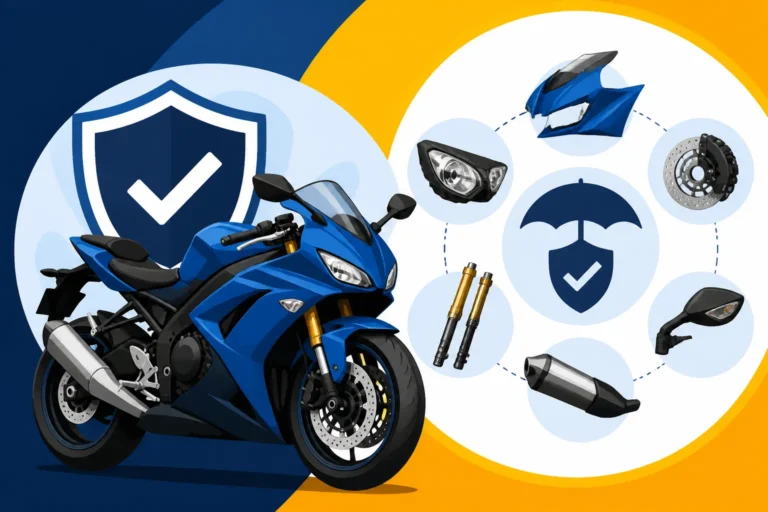
- Aesthetic Modifications: Custom paint jobs, special graphics, chrome additions, custom seats, unique handlebars, bespoke fairings, LED lighting kits, upgraded mirrors, and custom wheels.
- Performance Enhancements: Aftermarket exhaust systems, engine modifications (like turbochargers, superchargers, or performance cams), upgraded suspension components, custom brakes, and fuel management systems.
- Functional Accessories: Saddlebags, luggage racks, sissy bars, windshields, navigation systems, sound systems, and heated grips that weren't factory installed.
It's crucial to understand that many standard motorcycle insurance policies provide a very limited amount of coverage for these items, often a small, blanket sum like $1,000 or $3,000, which is then lumped into your comprehensive or collision coverage. For many riders, especially those with extensively customized bikes, this amount barely scratches the surface of what they've invested. This is why a separate, dedicated custom parts and accessories endorsement is so important.
How It Differs from Standard Coverage
Let's break down how custom parts coverage stands apart from your basic policy. When you purchase standard comprehensive or collision coverage, it's designed to cover the factory-original value of your motorcycle. This means if your bike is totaled or significantly damaged, the insurance company will typically base the payout on the actual cash value (ACV) of a stock motorcycle of the same make, model, and year. They might offer a small, predetermined amount for "accessories," but it's rarely enough to cover custom work.
For example, imagine you have a Harley-Davidson Street Glide. A standard collision policy might cover the cost to repair or replace the bike's stock components after an accident. If you've added a Screamin' Eagle exhaust, a custom fairing, and a high-end infotainment system, those expensive additions would likely only be covered up to that meager base accessory limit. Without specific custom parts coverage, you'd be looking at thousands of dollars out of pocket to restore your bike to its customized glory.
Custom parts coverage, on the other hand, allows you to specifically insure the value of your modifications. When you add this endorsement, you'll declare the value of your custom parts, and your insurer will then provide coverage up to that specified limit, which can often be as high as $30,000 or even more, depending on the insurer and the extent of your modifications. This ensures that in the event of a covered loss, you're compensated for the true value of your personalized investment, not just the stock bike. It's a fundamental shift from generic protection to tailored security for your unique ride. Many riders find that understanding the difference between Agreed Value vs Stated Value vs Actual Cash Value becomes incredibly important here, as it dictates how their modifications are valued.
The Financial Reality: Is the Cost Justified?
Deciding whether to spring for custom parts coverage often comes down to a cost-benefit analysis. On one hand, it's an additional premium; on the other, it's protection for a significant investment. For riders who've poured thousands into their bikes, the decision can feel like a no-brainer, but for others, it requires a deeper look.
Assessing the Value of Your Modifications
The first step in determining if custom parts coverage is worth it is to be brutally honest about the financial value of your modifications. This isn't just about the purchase price of the parts; it also includes the labor costs if you had a professional shop install them. Did you spend $500 on a new seat or $5,000 on a custom engine rebuild? The difference is critical.
Let's consider a real-world scenario: you own a classic Indian Scout, and you've spent the last two years restoring and customizing it. You added a vintage-style fairing, a bespoke exhaust, upgraded chrome accents, and a professionally applied custom paint job that alone cost $3,000. All told, you've invested well over $10,000 in parts and labor beyond the bike's original value. If your standard policy only offers $2,000 in accessory coverage, you're on the hook for $8,000 if those items are damaged or stolen. This kind of financial exposure can be devastating.
To truly assess the value, gather all your receipts, invoices, and even photographs of the installation process. This documentation is not only vital for calculating how much coverage you need but also invaluable if you ever need to file a claim. Without proper records, an insurer might dispute the actual cost of your customizations, leaving you short-changed. This thorough assessment helps you quantify the risk and understand the potential financial loss without adequate coverage.
The Impact of Accidents, Theft, and Vandalism
Motorcycles, unfortunately, are susceptible to a variety of risks, and your custom parts are right there on the front line. Accidents are an obvious concern; even a minor tip-over can scratch an expensive custom paint job or bend unique handlebars. In a more serious collision, your custom fairings, exhaust, and even engine modifications could be utterly destroyed.
Beyond accidents, theft is a pervasive threat to motorcycle owners. A beautifully customized bike can be a prime target for thieves. If your motorcycle is stolen, and your custom parts aren't adequately insured, you're not just losing the bike; you're losing all the personal investment that made it unique. Similarly, vandalism can be disheartening and costly. A scratched tank, a slashed custom seat, or a broken aftermarket light can quickly add up to hundreds or thousands of dollars in repairs, especially if the parts are rare or require specialized fabrication.
Consider a rider in a dense urban area like Los Angeles. They've invested heavily in anti-theft devices, but their highly visible custom sport bike is still a target. Even if the bike is recovered, critical custom components could be missing or severely damaged. Without specific custom parts coverage, their standard comprehensive policy might cover the stock value of the bike, but leave them facing a hefty bill to replace the specialized racing exhaust or the custom carbon fiber bodywork. This potential financial hit, across multiple common scenarios, often makes the modest additional premium for custom parts coverage seem like a sound investment. Understanding how this fits into your broader protection strategy can also involve looking into What Does Full Coverage Motorcycle Insurance Mean?.
Factors to Consider Before You Buy
While custom parts coverage sounds like a great idea for any rider with modifications, it’s not a one-size-fits-all solution. Several factors should influence your decision, from how your bike is financed to your riding habits and where you store your pride and joy.
Financed Bikes and Loan Requirements
If your motorcycle is financed, especially if you added customizations soon after purchase, you might not even have a choice in the matter. Lenders often require you to carry certain levels of insurance coverage to protect their investment, and this can extend to significant aftermarket modifications. If you've financed a brand-new Honda CBR and immediately put on an expensive Akrapovič exhaust and some performance tuning, your lender may insist on full coverage, which could implicitly or explicitly include custom parts coverage up to a certain limit.
Failing to meet these requirements could put you in breach of your loan agreement, which could lead to severe penalties, including the lender forcing costly insurance upon you or even repossessing the bike. It's always best practice to review your financing agreement thoroughly and speak directly with your lender about their insurance stipulations, particularly regarding custom parts. This is especially important as Motorcycle Insurance Requirements for Financed Bikes can vary significantly. Adding custom parts can increase the total value of the collateral, making it even more critical to ensure that value is protected.
Your Riding Habits and Storage Solutions
The way you ride and where you keep your motorcycle significantly impact your risk profile and, consequently, the "worth" of custom parts coverage. Do you primarily use your customized cruiser for weekend jaunts on scenic routes, or is it your daily commuter, battling city traffic and parked on busy streets?
A bike that's ridden aggressively, frequently taken on long tours, or used for spirited canyon carving faces a higher risk of accidents. If your custom fairings, handlebars, or suspension are integral to this riding style, covering them makes a lot of sense. Conversely, if your custom vintage cafe racer is mostly a showpiece, ridden only on rare sunny afternoons, and stored in a locked, climate-controlled garage, the risk of road-related damage might be lower.
However, even a garage queen isn't immune. Theft and vandalism can happen anywhere. If your storage isn't perfectly secure, or if your bike is often parked in public spaces, the risk of a non-collision claim against your custom parts remains. Think about a custom Harley-Davidson Road King, meticulously maintained and often parked at bike rallies or popular destinations. Its visibility increases its appeal to thieves or vandals, making the coverage highly valuable even if it's not a daily rider. Evaluating your personal exposure to these risks will help you decide if the added premium aligns with your peace of mind.
Comparing Insurers and Coverage Options
Not all insurance companies treat custom parts coverage equally. Some insurers, like Progressive and Dairyland, are well-known for their flexible and robust options for custom motorcycles, often offering higher limits and a clear definition of what constitutes a custom part. Other, more general insurers might have lower limits or stricter definitions.
When you're shopping for motorcycle insurance, especially if your bike has significant modifications, it's crucial to compare quotes from several different providers. Don't just ask for "full coverage"; specifically inquire about their custom parts and accessories coverage limits, deductibles, and how they value those parts in a claim. Some companies might offer "stated value" for custom parts, where you declare a specific value, and they agree to insure it for that amount. Others might use "actual cash value," which depreciates over time, potentially leaving you with less than you expect.
Using an online comparison tool, like The Zebra, can be incredibly helpful here. You can input your bike's details, including the value of your customizations, and get multiple quotes quickly. This allows you to see how different insurers price the same level of custom parts coverage and whether they have specific programs for highly modified bikes. Don't be afraid to dig into the policy details or speak directly with an agent to ensure you understand exactly what's covered and what isn't. Remember, finding the Best Motorcycle Insurance for Custom Bikes often means looking beyond the base premium.
Maximizing Your Custom Parts Protection
Once you've decided that custom parts coverage is a smart move for your motorcycle, the next step is ensuring you get the most out of it. This involves more than just adding it to your policy; it requires proactive documentation and regular reviews to keep your coverage current and effective.
Documenting Your Modifications Properly
This cannot be stressed enough: documentation is your best friend when it comes to custom parts. Without solid proof of purchase, installation costs, and the existence of your modifications, even the best coverage might fall short during a claim. Insurance companies require evidence to validate your loss, and for custom parts, this evidence is often overlooked.
Here's a step-by-step approach to thorough documentation:
- Keep Every Receipt and Invoice: This includes the cost of the parts themselves and any labor charges from professional installation. Store these digitally (scans, photos) and in a physical file.
- Take Detailed Photographs: Before and after installation photos are ideal. Capture different angles, close-ups of specific parts, and overall shots of your bike. Date-stamp these photos if possible.
- Create an Itemized List: Compile a spreadsheet or document detailing each custom part, its purchase date, cost, installation cost, and where you bought it. Include serial numbers if applicable.
- Get Appraisals for High-Value Work: For extensive custom paint jobs, engine builds, or unique handcrafted components, consider getting a professional appraisal. This provides an objective valuation that an insurer will likely respect.
- Review With Your Agent: Share your documentation with your insurance agent when you add or update your custom parts coverage. They can help ensure your declared values are realistic and accurately reflected in your policy.
Imagine having a custom exhaust system, a popular target for theft, stolen from your bike. If you have clear photos of it on your motorcycle, the original receipt, and an itemized list, your claim process will be significantly smoother. Without it, you might be relying on estimates or generic valuations, which rarely account for your specific investment. This meticulous approach ensures that if a loss occurs, you have all the necessary evidence to support your claim for the full value of your custom parts. This attention to detail can be the difference between a full payout and a disappointing settlement. You might also want to consult a guide like How to File a Motorcycle Insurance Claim if you ever find yourself in that unfortunate situation.
Reviewing and Updating Your Policy Regularly
Your motorcycle isn't a static object; it evolves. You might add new modifications, upgrade existing ones, or even remove some. Your custom parts coverage needs to evolve with it. Unfortunately, many riders set it and forget it, only to find their coverage outdated when they need it most.
It's a good practice to review your motorcycle insurance policy annually, or whenever you make significant changes to your bike. This isn't just about ensuring your custom parts coverage is adequate; it's also about checking for new discounts, adjusting your liability limits, or exploring options like Roadside Assistance & Towing for Motorcycles.
Here's why regular review is crucial for custom parts coverage:
- New Modifications: If you install a new, expensive custom fairing or upgrade your suspension, the declared value of your custom parts needs to be increased. Failing to do so means those new additions might not be covered, or only minimally so.
- Depreciation and Appreciation: While many custom parts don't depreciate as rapidly as stock components, some might, or their value might be affected by market trends. Conversely, some unique, handcrafted parts might even appreciate over time. Discussing this with your insurer can help you maintain accurate coverage limits.
- Policy Changes: Insurance companies periodically update their policies, terms, and conditions. What was covered last year might have different limits or definitions this year. A quick check-in ensures you're always aware of your current protection.
Consider a rider who got custom parts coverage for their sport bike after adding a high-end exhaust and seat. Two years later, they upgraded to custom wheels and a new brake system but never updated their policy. When their bike was stolen, the insurer would only cover the originally declared custom parts, leaving the rider with a substantial loss for the newer, uninsured modifications. Services like The Zebra can also remind you to review your policy and help you compare updated quotes that reflect your bike's current modifications, ensuring you're not underinsured. This proactive approach ensures your custom parts remain fully protected, providing true peace of mind on every ride.
Comparing the Cost and Benefit of Custom Parts Coverage
Deciding if custom parts coverage is truly "worth it" boils down to a personal assessment of risk, investment, and peace of mind. To help you weigh your options, let's look at a scenario where it's almost always a good idea versus when you might choose to skip it.
| Scenario | Custom Parts Coverage "Worth It" | Why It Matters | Potential Cost of Not Having It |
|---|---|---|---|
| High-Value Customizations (e.g., $5,000+ in parts/labor) | YES – Absolutely Essential | Standard comprehensive/collision limits (often $1,000-$3,000) will be grossly insufficient to replace or repair your significant investment. | Thousands of dollars out-of-pocket for custom paint, engine mods, or unique aesthetic parts in case of damage or theft. |
| Financed Motorcycle with Mods | YES – Often Required & Prudent | Lenders typically mandate full coverage to protect their asset. Custom parts increase the collateral value, making their protection crucial for loan security. | Breach of loan agreement, potential forced-placed insurance, or a huge financial gap if the bike is totaled and custom parts aren't covered. |
| Show Bike or Collectible with Unique Mods | YES – Critical for Preservation | These bikes hold value primarily in their uniqueness and craftsmanship. Standard policies only see the base model, ignoring the bespoke value. | Irreplaceable custom elements lost or damaged without adequate compensation, severely diminishing the bike's overall value and historical significance. |
| Frequent Rider / High-Traffic Areas | YES – Increased Exposure** | More time on the road or parked in public means higher risk of accidents, theft, or vandalism, which directly impacts custom parts. | Higher likelihood of needing to repair or replace expensive custom parts at your own expense. |
| Minimal, Easily Replaced Mods (e.g., $500 in easily sourced parts) | Likely NO – May not be cost-effective | The cost of the additional premium might outweigh the potential payout, especially if your standard policy offers a small accessory allowance. | A few hundred dollars out-of-pocket, which might be less than years of extra premiums. |
| Older, Low-Value Bike with Few Mods | Likely NO – Focus on core protection | The overall value of the bike (including mods) might not justify the extra premium, especially if liability is your primary concern. | Similar to above; the financial risk is simply lower overall. |
| Bike Stored Very Securely, Rarely Ridden | MAYBE – Depends on total value | While risk is lower, theft, fire, or severe weather could still damage custom parts. Consider the total investment versus the slim chance of loss. | Low risk, but if an event occurs, the loss of substantial custom work is still significant. |
Ultimately, custom parts coverage is a powerful tool to safeguard your investment in personalizing your ride. For many, the peace of mind it offers far outweighs the additional premium. It’s about protecting the passion and individuality you’ve built into your machine. If you're wondering How Much Is Motorcycle Insurance? 2026 Cost Guide or What Affects Your Motorcycle Insurance Rate?, custom parts coverage will be a factor, but a worthwhile one for dedicated customizers.
Disclaimer
Please remember that motorcycle insurance policies can be complex, and coverage details, requirements, and costs can vary significantly based on your location, chosen insurer, and individual circumstances. The information provided in this article is for general informational purposes only and does not constitute professional insurance advice. We strongly recommend consulting with a qualified insurance professional or agent to discuss your specific needs and ensure you have the appropriate coverage for your motorcycle and its custom parts. Always read your policy documents carefully to understand your coverage limits, exclusions, and terms.