How Does Total Loss Payout Work on a Motorcycle?
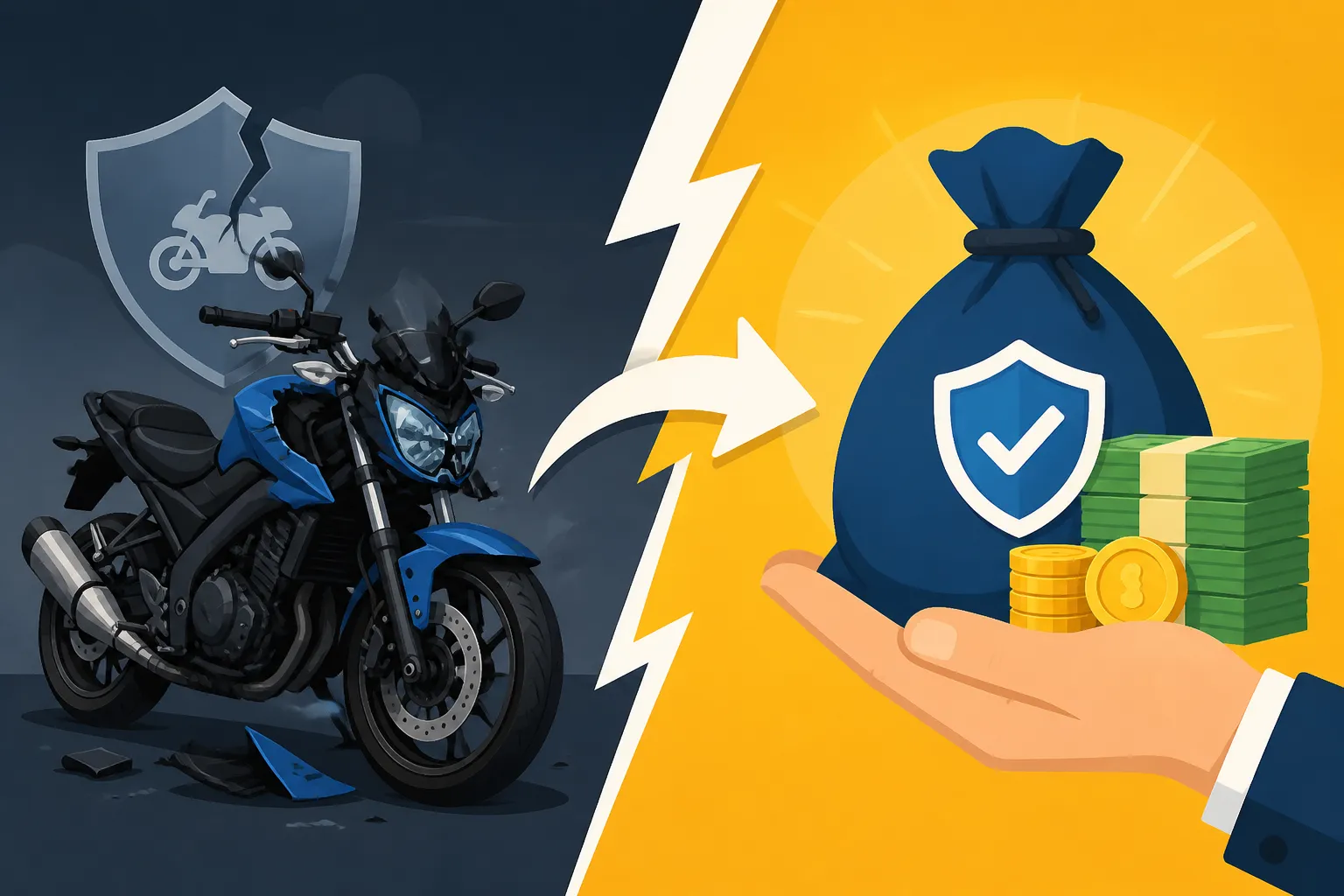
It's a gut-wrenching feeling when you've had an accident on your motorcycle, or it's been stolen, and the initial shock wears off, only to be replaced by the dread of what comes next: dealing with insurance. One of the biggest fears is that your beloved bike might be deemed a "total loss," leaving you wondering how in the world that payout is even calculated and if it will be enough to get you back on two wheels. This guide is here to demystify the process, walking you through exactly how a total loss payout works on a motorcycle so you're prepared for whatever comes your way.
Understanding "Total Loss" in Motorcycle Insurance
The term "total loss" often conjures images of a completely mangled wreck, but in the world of insurance, it's a bit more nuanced than that. It's not always about how bad your bike looks but rather the cold, hard math of repair costs versus its actual value. Getting a grasp on this is your first step to understanding any potential payout.
What Constitutes a Total Loss?
So, what exactly makes a motorcycle a "total loss" in the eyes of an insurance company? It's generally when the cost to repair the damage, plus salvage value (what the insurer could sell the damaged bike for), meets or exceeds a certain percentage of the motorcycle's actual cash value (ACV). This "total loss threshold" varies by state and even by individual insurer. In some states, it might be as high as 100% of the ACV, meaning repairs would literally have to cost as much as the bike was worth. In others, like Texas, it could be a lower threshold, perhaps around 70% or 75%. This is part of the reason why a bike might look repairable to you but is totaled by the insurance company – if the repair estimate hits that threshold, it's considered uneconomical to fix.
For example, imagine your cherished Harley-Davidson Softail, valued at $15,000, is involved in an accident. The mechanic estimates repairs will be $12,000. If your state's total loss threshold is 75%, then 75% of $15,000 is $11,250. Since your repair costs ($12,000) exceed this threshold, your insurer will likely declare it a total loss. They'd rather pay you out and deal with the salvage than invest more in repairs that are close to or over the bike's market value. Understanding these nuances is crucial, and if you want to dive deeper into what this means, you can read more about What Is Total Loss on a Motorcycle?.
Actual Cash Value ACV vs Agreed Value vs Stated Value
This is where the rubber truly meets the road for your payout. How your motorcycle's value is determined is perhaps the most critical factor. There are three primary methods insurers use, and the one applied to your policy will profoundly impact your total loss settlement.
Actual Cash Value (ACV)
Most standard motorcycle insurance policies pay out based on Actual Cash Value (ACV). What does ACV mean? It's the replacement cost of your motorcycle minus depreciation. Think of it like this: your bike might have cost $20,000 new five years ago, but like any vehicle, its value decreases over time due to wear and tear, mileage, and market conditions. So, if your bike is totaled, the insurer will look at what a similar make, model, year, and condition motorcycle would sell for in your local market right before the accident. They factor in depreciation for parts that wear out, like tires and brakes, even if they were new. This can be a huge point of contention for riders who feel their bike was worth more than the insurer's ACV calculation, especially if they've meticulously maintained it or added upgrades.
Agreed Value
For many riders, especially those with classic, vintage, or highly customized motorcycles, Agreed Value coverage is a godsend. With an agreed value policy, you and your insurance company (after an appraisal, photos, and documentation) agree on a specific value for your motorcycle before the policy even starts. If your bike is then deemed a total loss, the insurer pays out that exact agreed-upon amount, minus your deductible, regardless of depreciation. This eliminates the guesswork and potential disputes over ACV, offering peace of mind that your unique investment is truly protected. Companies like Markel often offer this type of coverage, recognizing the unique nature of custom bikes.
Stated Value
Stated Value coverage is often confused with Agreed Value, but they are very different. With stated value, you declare a value for your motorcycle when you get the policy, and the insurer will not pay more than that amount. However, if your bike is totaled, the insurer will still pay out the lesser of either the stated value or the actual cash value at the time of the loss. So, if you state your bike is worth $25,000, but the insurer determines its ACV is only $18,000, you'll only get $18,000. This type of coverage can be misleading and is usually not recommended for expensive or custom bikes where you want genuine protection for their full worth. For a full breakdown of these options, check out Agreed Value vs Stated Value vs Actual Cash Value.
The Total Loss Claim Process: Step-by-Step
Navigating a total loss claim can feel overwhelming, especially when you're still reeling from the incident itself. Knowing the typical steps involved can help you feel more in control and ensure you're providing the necessary information to your insurer.
Initial Reporting and Damage Assessment
The very first thing you need to do after any incident involving your motorcycle is to prioritize your safety and, if possible, move your bike to a safe location. Once that's handled, you need to report the claim to your insurance company as soon as possible. Don't wait. Provide them with all the details you remember, including the date, time, location, and circumstances of the incident. If other vehicles or parties were involved, make sure to share their information too. The sooner you report, the sooner the process begins.
After you file the claim, your insurance company will assign a claims adjuster. This person is your primary contact and will guide you through the process. They'll arrange for your motorcycle to be inspected, either by sending an appraiser to its location or by having it towed to a repair shop for an estimate. During this assessment, the adjuster will meticulously document the damage, take photos, and get an estimate for the cost of repairs. They'll also consider factors like frame damage or structural issues that might make repairs impractical. This initial damage assessment is critical because it will determine if your bike crosses that total loss threshold we discussed earlier. You can learn more about this initial phase by reading How to File a Motorcycle Insurance Claim.
Determining the Payout Amount
Once the adjuster determines your motorcycle is a total loss, their next step is to calculate its value. If your policy is ACV-based, they will typically use a combination of market research and specialized valuation software to find comparable motorcycles recently sold in your geographic area. They'll look at factors like mileage, condition before the accident, any pre-existing damage, and installed accessories. They're essentially trying to determine what a reasonable person would pay for your bike just before the incident occurred.
The payout amount will be the determined value of your motorcycle, minus your deductible. For instance, if your bike's ACV is assessed at $10,000 and you have a $500 deductible, your gross payout would be $9,500. It's important to remember that this deductible is your portion of the loss and will be subtracted before you receive any funds. In some cases, depending on state laws and your policy, the payout might also include an allowance for sales tax and registration fees for a replacement vehicle. For example, if you live in Florida and your insurer values your totaled motorcycle at $12,000, they might include an additional amount to cover Florida's sales tax when you go to purchase a new bike. This can vary, so always confirm with your adjuster. Reputable insurers often aim to make this process as clear as possible, though the final numbers can still be a source of stress for riders.
Receiving Your Settlement
How you receive your settlement largely depends on whether your motorcycle is financed. If you have a loan on your bike, the insurance payout will typically go directly to the lienholder (the bank or financing company) first. The insurer will pay off the remaining balance of your loan. If there's any money left over after the loan is satisfied, that remaining balance will then be paid to you. For example, if your bike is valued at $15,000, and you owe $10,000 on it, the insurer pays $10,000 to your bank, and then sends you a check for the remaining $5,000 (minus your deductible, of course). This process can feel a bit like waiting for an accountant to finish their work, but it's standard procedure to ensure the lienholder's interest is protected.
If you own your motorcycle outright, without any outstanding loans, the settlement check will be sent directly to you. The timeline for receiving funds can vary but usually occurs once all necessary paperwork is completed, the bike's title is transferred to the insurance company (as they now own the salvage), and all parties have agreed on the final payout amount. This entire process, from filing the claim to receiving a check, can take anywhere from a few weeks to a couple of months, depending on the complexity of the claim and the efficiency of your insurer. Throughout this, the totaled motorcycle itself usually becomes the property of the insurance company, which will then sell it for salvage.
Navigating Special Circumstances and Maximizing Your Payout
While the standard process is relatively straightforward, several factors can complicate a total loss claim or significantly impact your final payout. Being aware of these situations and knowing how to navigate them can make a huge difference.
Totaling a Financed Motorcycle
This is one of the most common and distressing situations riders face: your financed motorcycle is totaled, and the insurance payout based on its Actual Cash Value (ACV) isn't enough to cover the outstanding loan balance. This scenario is often referred to as being "upside down" or "underwater" on your loan. For instance, you bought a brand-new sport bike for $18,000, financed it fully, and two years later, it's totaled. The insurer values its ACV at $14,000, but you still owe $16,000 on the loan. That leaves you responsible for the $2,000 difference out of pocket, even though you no longer have the motorcycle.
This is precisely where Do You Need Gap Insurance on a Motorcycle? comes into play. Gap insurance is designed to cover this "gap" between what your motorcycle is worth (its ACV) and the amount you still owe on your loan. If you have gap insurance, in the scenario above, it would kick in to cover that $2,000 shortfall, saving you from a significant financial burden. If you've financed a new or relatively new motorcycle, especially with a small down payment, gap insurance is almost always a wise investment. You can often add it to your existing policy, and comparing quotes, perhaps even through a service like The Zebra, might show you that the extra cost is minimal compared to the protection it offers.
Custom Parts and Accessories Coverage
Many riders invest significant time, money, and passion into customizing their motorcycles, adding aftermarket exhaust systems, custom paint, performance upgrades, saddlebags, or even chrome accents. It's a point of pride, but if your bike is totaled, will your standard policy cover these additions? Often, the answer is "not fully." Standard policies typically include a very limited amount of coverage for custom parts and accessories, sometimes just $1,000 or $3,000. If you've put $8,000 into custom wheels, paint, and a premium audio system, that standard coverage will fall far short.
To properly protect these investments, you almost always need to purchase separate Accessories & Custom Parts Coverage Explained as an endorsement to your policy. This add-on coverage allows you to increase the limit specifically for your customizations, ensuring they're valued properly in the event of a total loss. When you're talking to your insurer about this, be prepared to provide receipts, photos, and a detailed list of all your custom parts. This documentation will be invaluable if you ever need to file a total loss claim, as it helps the adjuster accurately assess the value of your modifications and ensures you get a fair payout for everything you've invested in your bike.
Disputing a Low Settlement Offer
It's a common scenario: your insurer declares your bike a total loss, and they present you with a settlement offer that feels insultingly low. You know your bike was worth more than what they're offering, and this is where you need to be proactive. Don't just accept the first offer if you believe it's unfair.
Your first step is to gather your own evidence. This includes:
- Maintenance records: Proof of diligent upkeep can argue against excessive depreciation.
- Receipts for recent upgrades or new parts: If you replaced the tires last month, that should factor into the value.
- Comparable sales data: Look for motorcycles of the same make, model, year, and similar condition that have recently sold (or are currently listed) in your area. Use reputable sources like dealer websites, NADA Guides, or Kelley Blue Book values for motorcycles.
- Photos of your bike: High-quality photos showing its condition before the accident can be very persuasive.
Once you have your evidence, present it calmly and clearly to your claims adjuster. Be ready to negotiate. Explain why you believe their valuation is low and back it up with your research. Many times, an insurer might adjust their offer, especially if you have compelling data. If you still can't reach an agreement, you might consider getting an independent appraisal. While you'd pay for this yourself, the appraiser's professional valuation can carry weight in a dispute. In more extreme cases, you might even consider consulting with a public adjuster or an attorney, though this is often a last resort. Remember, your goal is a fair settlement that reflects the true value of your motorcycle before it was totaled. Comparing what different companies offer, perhaps even by checking initial quotes on platforms like The Zebra, can also give you a broader sense of market values before an incident.
Total Loss Payout Scenarios Comparison
To better illustrate how different valuation methods and circumstances can impact your total loss payout, let's look at a few hypothetical scenarios. This table highlights how crucial your policy type and coverage choices are.
| Scenario Details | Actual Cash Value (ACV) Policy Payout | Agreed Value Policy Payout | Stated Value Policy Payout |
|---|---|---|---|
| Motorcycle: 3-year-old Harley-Davidson Fat Boy | |||
| Original Price: $20,000 | |||
| Current Market Value (ACV): $16,000 | |||
| Agreed Value (if applicable): $19,000 | |||
| Stated Value (if applicable): $19,000 | |||
| Outstanding Loan: $17,000 | |||
| Custom Parts Value: $3,000 (separate coverage) | |||
| Deductible: $500 | |||
| — Payout Calculation — | |||
| Total Loss Amount: $16,000 (ACV) + $3,000 (Custom) = $19,000 | $19,000 | $19,000 (Agreed) + $3,000 (Custom) = $22,000 | $16,000 (ACV) + $3,000 (Custom) = $19,000 |
| Less Deductible: -$500 | -$500 | -$500 | -$500 |
| Gross Payout: $18,500 | $21,500 | $18,500 | |
| Less Loan Payout: -$17,000 | -$17,000 | -$17,000 | -$17,000 |
| Net Payout to Rider (before Gap if any): $1,500 | $4,500 | $1,500 | |
| Gap Insurance Needed? Yes ($17,000 loan – $16,000 ACV = $1,000 gap for base bike) | No (Loan is covered by Agreed Value) | Yes ($17,000 loan – $16,000 ACV = $1,000 gap for base bike) |
As you can see, the Agreed Value policy offers the highest gross payout, covering the true value you and the insurer agreed upon for the base bike and the customs, leading to a much larger net payout to the rider. The ACV and Stated Value policies, because they're capped at the lower of ACV or stated value for the base bike, leave the rider with the same net payout here, and potentially still "underwater" if the custom parts coverage wasn't enough to make up the difference on the loan. This clearly illustrates the financial security an Agreed Value policy provides, especially when you consider What Happens if You Total a Financed Motorcycle?.
Final Thoughts on Total Loss Payouts
Dealing with a totaled motorcycle is never easy, but understanding the intricacies of total loss payouts can empower you to navigate the process with greater confidence. The key takeaways are to always know your policy inside and out, especially whether it's an ACV, Agreed Value, or Stated Value policy. Make sure your custom parts and accessories are adequately covered with specific endorsements. If your bike is financed, seriously consider gap insurance to protect yourself from being stuck with a loan on a bike you no longer own.
Don't be afraid to ask questions and challenge a settlement offer if you believe it's unfair. Your motorcycle is more than just a vehicle; it's a passion, an investment, and a part of your lifestyle. Being well-informed is your best defense to ensure you get a fair resolution and can get back to riding as soon as possible. And remember, resources like The Zebra can help you compare policies and find the right coverage to prevent these kinds of headaches down the road.
Disclaimer
Please remember that this article provides general information and guidance regarding motorcycle insurance and total loss payouts. Insurance policies and laws vary significantly by state and individual circumstances. It is crucial to consult your specific insurance policy documents or speak directly with a qualified insurance agent or legal professional for advice tailored to your personal situation. This information should not be considered legal or financial advice.