Does Motorcycle Insurance Cover Hail Damage?
There's nothing quite like the feeling of watching a beautiful clear sky turn ominous and then seeing hailstones start pelting down, especially when your beloved motorcycle is caught out in the open. It's a genuine worry for many riders, wondering if their insurance will step up when Mother Nature decides to throw icy rocks. This guide is here to break down exactly whether motorcycle insurance covers hail damage and what you need to know to protect your ride.
Understanding Hail Damage and Your Motorcycle
Hailstorms, even seemingly minor ones, can be surprisingly devastating to a motorcycle. Unlike cars that have a larger, more enclosed body, bikes have numerous exposed components that are susceptible to impact damage. It's a unique vulnerability that every rider eventually thinks about.
The Realities of Hail Damage for Riders
When hail starts falling, it's not just a minor annoyance; it can inflict a range of serious and costly damage. We're talking about things like dents and dings on your fuel tank, fenders, and chrome exhaust pipes. The painted surfaces, especially on a custom job or a classic bike, can get chipped or scratched, which isn't just an aesthetic issue but can lead to rust if not addressed promptly. Fairings, often made of plastic, can crack or shatter under the impact of larger hailstones.
Beyond the bodywork, consider your mirrors, turn signals, and headlights – these glass or plastic components can easily break. And let's not forget the instrument cluster, which is often exposed and can suffer damage that leads to expensive electrical repairs. Even leather seats can get pitted or torn, compromising both comfort and appearance. For a rider, seeing their pride and joy peppered with these kinds of marks is incredibly disheartening, and the repair costs can quickly add up, often running into the thousands, even for relatively minor-looking damage.
Why Hail is Such a Concern
The suddenness of hail is what makes it so unnerving for motorcyclists. You can be out on a beautiful ride, miles from home, and a storm can roll in with little warning, leaving you with nowhere to safely shelter your bike. Pulling over under a flimsy awning or a tree often provides insufficient protection from severe hail. Most riders don't have the luxury of a secure, covered parking spot everywhere they go, making their bikes vulnerable to the elements, especially during unexpected weather events.
This worry isn't just theoretical. Many riders have stories of getting caught unprepared, whether their bike was parked at work, outside a restaurant, or even at home when they weren't expecting a sudden downpour of ice. The sheer randomness of it means you can do everything "right" – check the forecast, plan your route – and still find yourself facing the aftermath of a hailstorm. The economic impact can be significant, potentially leaving you with a damaged bike that's unsafe to ride or has severely diminished resale value.
The Role of Comprehensive Coverage
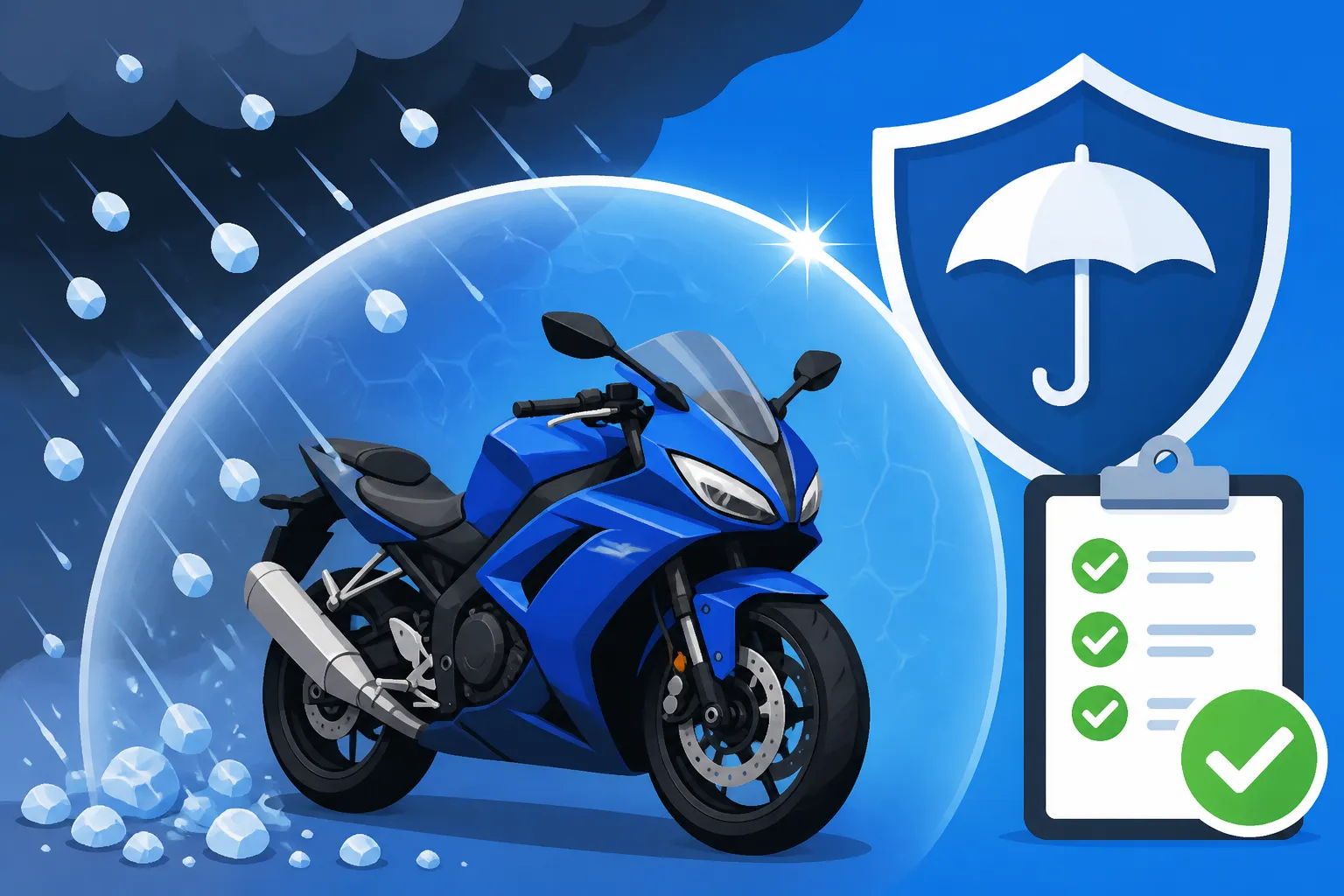
When it comes to protecting your motorcycle from the unpredictable whims of nature, like a hailstorm, there's one specific type of insurance coverage that stands as your shield: comprehensive. This isn't just a fancy add-on; it's often the linchpin for covering non-collision incidents.
What is Comprehensive Coverage?
Comprehensive coverage is designed to protect your motorcycle from damage caused by events other than collisions with other vehicles or objects. Think of it as your "Acts of God" policy, but it also covers more earthly misfortunes. This includes incidents like theft, vandalism, fire, falling objects (which would definitely include hail!), and even hitting an animal. It’s distinctly separate from liability coverage, which primarily focuses on damage or injury you might cause to others. If you're wondering about the full spectrum of options, our detailed guide on Types of Motorcycle Insurance Coverage Explained can give you a deeper dive into the different protections available.
Many riders mistakenly believe "full coverage" automatically includes comprehensive, and while it often does, it's crucial to understand what "full coverage" truly means for your specific policy. Our article, What Does Full Coverage Motorcycle Insurance Mean?, further clarifies this distinction. Comprehensive is about protecting your bike from things largely outside your control. It's not about who's at fault in an accident, but rather ensuring that unexpected, non-driving related damages don't leave you with a hefty repair bill out of pocket.
How Comprehensive Coverage Works for Hail
If your motorcycle has comprehensive coverage and it sustains damage from hail, your insurance company will typically cover the cost of repairs, minus your chosen deductible. A deductible is the amount you agree to pay out of pocket before your insurance coverage kicks in. For example, if you have a $500 deductible and hail causes $2,000 worth of damage to your bike, you would pay the first $500, and your insurance would cover the remaining $1,500.
The process usually involves notifying your insurer, having an adjuster assess the damage, and then getting estimates for repairs. Your insurer will work with you to ensure the repairs are done properly, often allowing you to choose your preferred repair shop. The key here is that the damage must be directly attributable to the hail event. Keep in mind that a comprehensive claim, while often less impactful than a collision claim, could still potentially influence your future insurance rates, depending on your insurer and claims history, a topic explored further in What Happens to My Rate After a Motorcycle Claim?.
Scenarios Where Comprehensive Kicks In
Let's paint a picture with a few real-life scenarios where comprehensive coverage would be your saving grace against hail damage:
- Your Bike is Parked at Home: Imagine you've parked your Harley-Davidson Electra Glide in your driveway after a great weekend ride. A sudden, unforecasted hailstorm rolls through your neighborhood in Phoenix, Arizona, leaving golf-ball-sized dents all over your tank, fairing, and saddlebags. Since this wasn't a collision, your comprehensive coverage would cover the repairs to your bike, minus your deductible.
- Caught in a Storm While on a Trip: You're cruising through the mountains of Colorado on your BMW R 1250 GS, enjoying the scenic views. Out of nowhere, the sky darkens, and hail begins to fall intensely. You manage to pull over safely, but your bike is subjected to a barrage of ice, resulting in a cracked windshield, damaged mirrors, and dings on the bodywork. Even though you were "operating" the bike when the damage occurred, it's considered an "act of nature" and falls under your comprehensive policy.
- Your Bike is Stored, But the Garage Gets Damaged: This is a less common but equally valid scenario. Your prized Triumph Bonneville is tucked away in your garage for the winter in Ohio. A severe hailstorm hits, not only damaging the roof of your garage but also allowing hail to penetrate and cause damage to your motorcycle. In this case, the hail damage to your bike would still be covered by your comprehensive policy, as it's not a collision-related event.
Understanding these examples can help illustrate just how vital What Is Comprehensive Motorcycle Insurance? can be for peace of mind, especially for riders who live in areas prone to sudden and severe weather.
What If You Only Have Liability Coverage?
It’s a common scenario: you’re trying to keep costs down, so you opt for the minimum required motorcycle insurance. Often, that means you're carrying only liability coverage. While this fulfills your legal obligation in most states, it leaves significant gaps in protection, especially when it comes to damages caused by non-collision events like hail.
The Limitations of Liability-Only Policies
Here’s the hard truth: if your motorcycle is only covered by a liability-only policy, you will be entirely on the hook for any hail damage it sustains. Period. Liability insurance is designed to cover damages and injuries you might cause to other people or their property in an accident where you are at fault. It's about protecting them from your actions. It does absolutely nothing to cover damages to your own motorcycle, whether from a collision you caused, theft, vandalism, or, crucially, an act of nature like hail.
So, if that unexpected hailstorm comes through your town in Florida and dents your tank or shatters your headlight, your liability policy won't pay a dime for your bike's repairs. This can be a tough pill to swallow, especially when you're facing potentially thousands of dollars in damage. For a clearer picture of what this coverage entails, check out our guide on What Does Motorcycle Liability Insurance Cover?. It's a fundamental difference that can leave you financially exposed if you don't fully grasp it.
The Risks of Being Underinsured for Weather Events
Relying solely on liability coverage leaves you dangerously underinsured for common, unpredictable events. When hail hits and you don't have comprehensive coverage, every single repair cost comes directly out of your wallet. Imagine this: your vintage Kawasaki KZ is parked outside your apartment in Dallas, Texas, during a summer storm. Hail the size of quarters pummels it, leaving multiple small dents on the chrome, a cracked speedometer cover, and a ruined seat. Without comprehensive, those repair estimates – maybe $1,500 for paintless dent repair, $300 for a new speedometer cover, and $500 for a seat upholstery – become your direct burden.
This financial burden can be a real punch to the gut. It might mean delaying repairs, riding with a damaged bike, or even taking on debt to fix it. Beyond the immediate costs, having a damaged bike that you can't afford to fix can diminish your riding enjoyment and significantly reduce its resale value. It’s a risk that many riders unknowingly take to save a few dollars on their monthly premiums, only to face a much larger, unplanned expense down the line. Comparing insurance options through services like The Zebra can help riders see the full picture of costs and benefits, ensuring they make informed decisions about their coverage before an incident occurs.
The Claims Process for Hail Damage
Finding your motorcycle damaged by hail can be incredibly frustrating, but knowing the right steps to take afterward can make the claims process much smoother. It's about being prepared and methodical.
Documenting the Damage
The moment you discover hail damage, your first priority should be to thoroughly document everything. This means grabbing your phone and taking a comprehensive series of photos and videos. Get wide shots that show the entire motorcycle and its surroundings, then zoom in for close-ups of every single dent, scratch, crack, or broken component caused by the hail. Don't forget to capture different angles and lighting conditions to clearly illustrate the extent of the damage. For instance, sometimes a dent is more visible from a certain angle.
It's also a good idea to note the date and time you discovered the damage, and if possible, obtain local weather reports confirming a hailstorm in your area around that time. This might seem like overkill, but official meteorological data can provide crucial support for your claim, especially if the damage wasn't immediate or widely publicized. Think about whether you or anyone else witnessed the hailstorm and its impact. This documentation creates a clear, undeniable record for your insurer and is a critical first step in How to File a Motorcycle Insurance Claim.
Notifying Your Insurer and Getting an Estimate
Once you've documented the damage, it's time to contact your motorcycle insurance provider. Be ready to provide them with all the details: the date of the incident, a description of the damage, and any supporting documentation you've collected. They will typically assign a claims adjuster to your case. This adjuster's job is to inspect your motorcycle, verify the damage, and confirm it was caused by hail. They'll also review your policy to ensure comprehensive coverage is in force and that the claim is legitimate.
After the adjuster's assessment, you'll need to obtain repair estimates. Your insurer might have a network of preferred shops, or you might have the option to choose your own. It's often wise to get a couple of estimates to ensure you're getting a fair price and that all damage is being addressed. Remember, the goal is to restore your bike to its pre-hail condition. Many riders, when initially searching for a policy, find comparing options through online platforms like The Zebra invaluable for understanding what different insurers offer in terms of claims support and coverage for unexpected events.
Payouts and Repairs
Once the estimates are approved by your insurer and align with the adjuster's assessment, the payout process begins. Generally, the insurance company will issue a payment for the approved repair costs, minus your deductible. This payment might go directly to the repair shop or to you, depending on your agreement with the insurer and the shop. For instance, if the damage is $3,000 and your deductible is $500, your insurer would pay $2,500.
It’s important to understand that while a comprehensive claim might not impact your rates as severely as an at-fault collision, claims history can still be a factor in how your rates are determined moving forward. This is something often discussed in our guide on What Affects Your Motorcycle Insurance Rate?. Repairing your bike promptly is important, not just for aesthetics but also to prevent further issues like rust or electrical problems if components were compromised. If the damage is extensive enough to be considered a "total loss," the insurer will pay out the actual cash value of your bike (or agreed/stated value if you have that specific coverage) minus your deductible, and you would then likely purchase a new motorcycle.
Preventing Hail Damage and Smart Insurance Choices
While you can't control the weather, you can certainly take steps to minimize the risk of hail damage to your beloved motorcycle and ensure you have the right insurance protection in place. Being proactive is key.
Proactive Measures to Protect Your Bike
One of the most effective ways to prevent hail damage is simply to keep your motorcycle covered. If you have a garage or a carport, use it! It seems obvious, but many bikes sit outside unnecessarily. If you don't have access to covered parking at home, consider investing in a high-quality, padded motorcycle cover. While it won't stop grapefruit-sized hail, it can certainly mitigate damage from smaller stones and offer a layer of protection against minor impacts.
When you're out and about, especially during seasons prone to thunderstorms, make it a habit to check the weather forecast before you ride. Many modern weather apps provide real-time radar and severe weather alerts. If a hailstorm is predicted for your route or destination, consider adjusting your plans or finding secure, covered parking as soon as possible. Even ducking under a gas station awning or a solid overpass can offer temporary refuge if you're caught in a sudden downpour of ice. Remember, a few minutes of foresight can save you thousands in repairs.
Evaluating Your Coverage Needs
Choosing the right motorcycle insurance isn't a one-size-fits-all decision. When it comes to hail, the primary consideration is whether you have comprehensive coverage. If you own a brand new, expensive sport bike like a Ducati Panigale, or a highly customized Harley-Davidson, having comprehensive coverage is practically non-negotiable. The cost of repairing bodywork, paint, and intricate components can quickly escalate. For those with a financed motorcycle, comprehensive coverage is typically a mandatory requirement from the lender, ensuring their investment is protected.
On the other hand, if you're riding an older, low-value motorcycle that's seen better days, you might question the value of comprehensive coverage. Our article, Do You Need Comprehensive on an Old Motorcycle?, delves into this dilemma. However, even for older bikes, the cost of an unexpected repair could still be significant relative to the bike's value. It's about weighing the premium cost against your risk tolerance and the potential out-of-pocket expense. This is where resources that help you How to Compare Motorcycle Insurance Quotes become incredibly valuable. Comparing different providers and policy options, perhaps through a service like The Zebra, allows you to find the sweet spot between adequate protection and an affordable premium.
The Value of Peace of Mind
Ultimately, having the correct insurance coverage, particularly comprehensive, for your motorcycle is about peace of mind. Knowing that if an unpredictable event like a hailstorm strikes, you won't be left to bear the full financial burden alone, allows you to enjoy your rides without constant worry. The open road is about freedom, and that freedom shouldn't come with the gnawing anxiety of potential financial catastrophe due to Mother Nature.
Whether your bike is a daily commuter or a weekend warrior, protecting it from unforeseen circumstances like hail, fire, or theft is a crucial part of responsible ownership. Understanding your deductible – What Is the Deductible on Motorcycle Insurance? – is also key, as it directly impacts your out-of-pocket expense during a claim. Investing a little more in comprehensive coverage upfront can save you a significant amount of stress and money in the long run, ensuring your riding experience remains a joyful one.
Hail Damage and Motorcycle Insurance: A Quick Overview
| Coverage Type | Covers Hail Damage to Your Bike? | Deductible Applies? | What it Primarily Covers |
|---|---|---|---|
| Comprehensive | Yes | Yes | Non-collision incidents: theft, fire, vandalism, hail, falling objects, hitting an animal |
| Collision | No | Yes | Damage to your bike from a collision with another vehicle or object, regardless of fault |
| Liability (BI/PD) | No | No | Damages/injuries you cause to others and their property in an at-fault accident |
| Uninsured/Underinsured Motorist | No | Maybe (for injury) | Injuries/damages to you if hit by a driver with no/insufficient insurance |
Disclaimer
Please remember that this information is intended for general guidance only. Insurance policies can vary significantly by provider and state. It is essential to consult your specific policy documents or speak directly with your insurance agent to confirm your coverage details and understand any exclusions or limitations.