How to Handle a Hit-and-Run on a Motorcycle
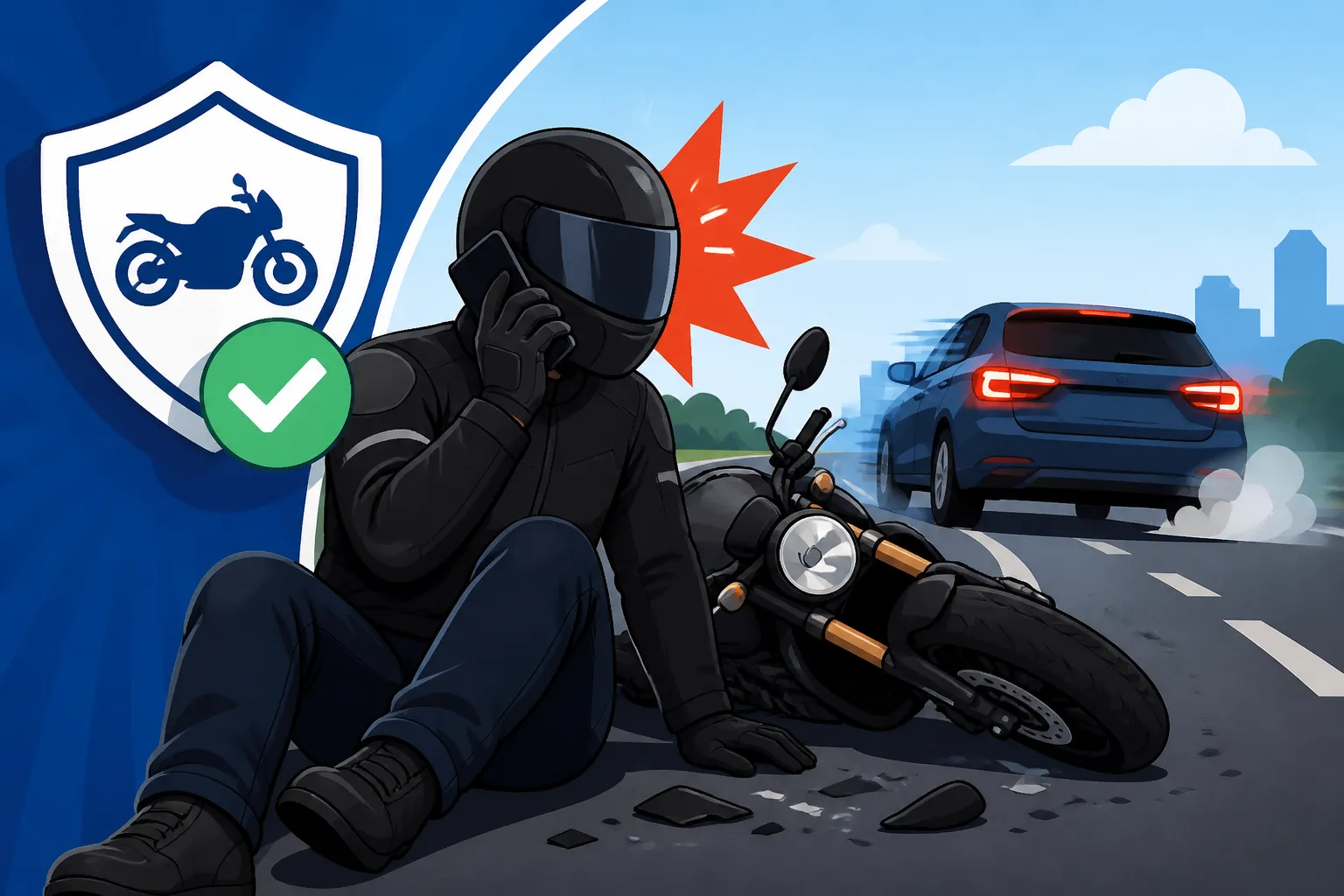
There are few things as frustrating and violating as a hit-and-run accident, and when you're on a motorcycle, the stakes are astronomically higher. That moment of impact, followed by the sickening realization that the other driver isn't stopping, leaves you not only physically vulnerable but emotionally reeling. This guide is here to walk you through the chaos, outlining the critical steps you need to take immediately after a hit-and-run, navigating the complexities of your motorcycle insurance, understanding the legal avenues, and ultimately, protecting yourself financially and physically.
Immediate Steps After a Hit-and-Run Incident
When you've been involved in a hit-and-run on your motorcycle, the immediate aftermath can feel like a blur of adrenaline and confusion. It's tough to think clearly, but what you do in those first few minutes and hours can significantly impact your safety, your insurance claim, and your chances of finding the responsible party. Don't panic; just focus on these crucial steps.
Prioritize Safety and Assess Injuries
Your well-being, and the well-being of any passengers, is always the absolute top priority. Motorcycles offer minimal protection compared to a car, so even a minor impact can have serious consequences.
First and foremost, if you're able, try to move yourself and your bike to a safe location, away from the flow of traffic. The last thing you need is another accident. If you're injured or your bike is too damaged to move, try to get to the shoulder or a median and signal for help. Turn on your hazard lights if possible. Even if you feel "fine," the adrenaline can mask injuries, so take a moment to do a thorough self-assessment. Are you bleeding? Do you have any pain, especially in your head, neck, or back? Any numbness or tingling? If there's any doubt about your condition, or if you can't move safely, call 911 immediately. Don't try to be a hero; let the professionals assess you. Remember, even minor pain can indicate a serious injury that only manifests hours later.
Document the Scene Thoroughly
Once you're safe, and only if it's safe to do so, begin to document everything you possibly can. This might feel overwhelming, but every detail is a piece of the puzzle that could lead to the other driver or strengthen your insurance claim. Think like a detective.
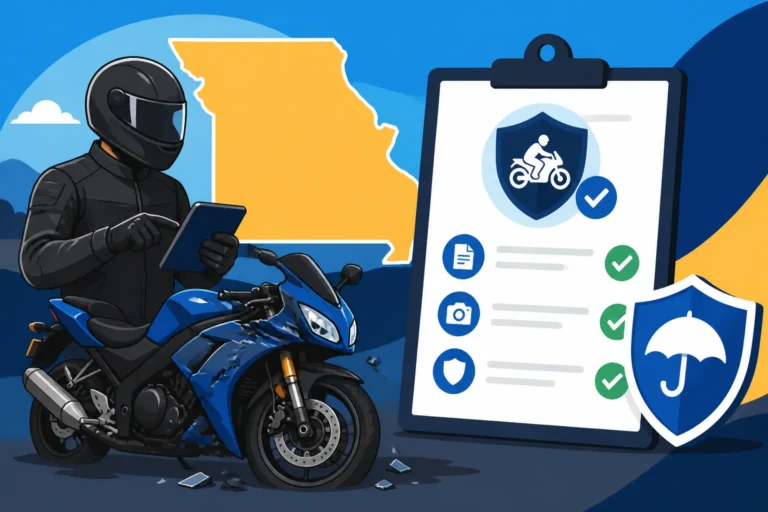
Start by taking photos and videos of everything. Get wide shots of the accident scene, showing the positions of your bike, any debris, skid marks, and surrounding landmarks. Then, zoom in on the damage to your motorcycle. Capture multiple angles, both close-up and medium shots, of every scratch, dent, and broken part. If there are any pieces of the other vehicle left behind, photograph those from various angles as well – paint chips, broken plastic, anything that doesn't belong to your bike. Look for any surveillance cameras on nearby businesses, traffic lights, or even doorbell cameras on houses; these could have captured the incident or the fleeing vehicle. Act quickly, as footage can be deleted. While you're at it, jot down every detail you remember about the other vehicle: make, model, color, license plate (even partial), any distinguishing features like bumper stickers, tinted windows, or damage. Even the direction they were heading is important. Look for witnesses – anyone who stopped, lives nearby, or saw something. Get their contact information, as their testimony can be invaluable.
Report the Incident to the Police
Even if the other driver has fled, and even if you don't think they'll be caught, filing a police report is not optional; it's essential. Most insurance companies require a police report for hit-and-run claims. Without it, your claim might be denied or significantly delayed.
Contact local law enforcement – either by calling 911 if there are serious injuries or immediate danger, or the non-emergency line for less urgent situations. Explain clearly that you were involved in a hit-and-run motorcycle accident. Provide them with all the details you've collected: the exact location, time, a description of the other vehicle, any witness information, and the extent of the damage to your bike. The police will create an official accident report, which serves as an impartial record of the incident. Make sure to get a copy of this report or at least the report number. This official documentation is critical for your insurance company to process your claim. Don't worry if the police aren't able to immediately identify the other driver; the report itself is what's most important for your insurance purposes. Remember, riding across state lines: insurance & helmet rules might differ, but reporting an accident remains a universal best practice.
Understanding Your Insurance Options
After the initial shock and the necessary steps of documenting and reporting, your mind will inevitably turn to the financial implications. Who pays for the damage to your motorcycle? What about your medical bills? This is where your motorcycle insurance policy steps in, but knowing which coverages apply to a hit-and-run situation is crucial. It's often a complex puzzle, and understanding the pieces can save you a lot of headache and heartache.
Uninsured/Underinsured Motorist Coverage (UM/UIM)
This particular type of coverage is arguably your best friend in a hit-and-run scenario, and it's something every rider should seriously consider. Uninsured & Underinsured Motorist Coverage (UM/UIM) is designed specifically for situations where the at-fault driver either has no insurance or, in this case, cannot be identified.
UM/UIM typically has two components: bodily injury and property damage. The bodily injury portion will cover your medical expenses, lost wages, and pain and suffering if the at-fault driver is uninsured or flees the scene. This is incredibly important for motorcyclists, as your injuries are often more severe in an accident. The property damage portion of UM/UIM will help cover the costs to repair or replace your motorcycle. While some states require UM/UIM, others make it optional, but for a motorcyclist, it's practically non-negotiable given the prevalence of hit-and-runs and uninsured drivers. If the other driver is never found, this coverage steps in to act as if they were insured, covering your damages up to your policy limits.
Collision and Comprehensive Coverage
While UM/UIM is fantastic for covering damage when the other driver is unknown, your own collision coverage is another primary avenue for getting your bike repaired or replaced after a hit-and-run.
Collision vs Comprehensive Motorcycle Coverage both play distinct roles. Collision coverage pays for damage to your motorcycle resulting from a collision with another vehicle or object, regardless of who was at fault. This means that even if the other driver sped off, your collision coverage would still kick in to cover the repairs to your bike, minus your deductible. For example, if your deductible is $500, and repairs cost $3,000, your insurance would pay $2,500. Comprehensive coverage, on the other hand, typically covers non-collision incidents like theft, vandalism, fire, or hitting an animal. While a hit-and-run is clearly a collision, you might think comprehensive has no role, but sometimes if the incident involves an unknown object or debris from the fleeing vehicle, there can be crossover in interpretation, although generally, collision is the primary coverage. It's important to discuss the specifics with your adjuster to see how they categorize the event. Keep in mind that having full coverage motorcycle insurance, which usually includes both collision and comprehensive, offers broader protection in various scenarios.
Medical Payments MedPay Coverage
Beyond the damage to your bike, your personal injuries are a major concern after a motorcycle accident. This is where Medical Payments (MedPay) coverage becomes incredibly valuable.
What Is Medical Payments (MedPay) for Riders? provides coverage for your medical expenses, regardless of who was at fault for the accident. This means if you have MedPay, it will pay for your initial medical bills – ambulance rides, emergency room visits, doctor appointments, and even some follow-up care – up to your policy limits, without waiting for fault to be determined. This can be a lifesaver, as medical costs can quickly skyrocket after an accident. Unlike UM/UIM bodily injury, which might also cover lost wages and pain and suffering, MedPay is solely focused on immediate medical costs. It's a "no-fault" coverage, which can be very beneficial in the often-murky waters of a hit-and-run where proving fault or identifying the other party can be difficult. Having this in place means you can focus on recovery without the added stress of mounting medical bills while your larger claim is being processed.
Filing Your Motorcycle Insurance Claim
Okay, you've taken the immediate steps, you know what coverages you might have, and now it's time to actually deal with the insurance company. This part can feel like another uphill battle, especially when you're already stressed from the accident. But approaching it systematically, with all your ducks in a row, will make the process much smoother.
Notifying Your Insurer Promptly
The clock starts ticking the moment the accident happens. One of the most common mistakes riders make is delaying notification to their insurance company. While you're recovering or trying to track down the other driver, precious time can slip by.
It’s crucial to notify your insurer as soon as reasonably possible. Most policies have a clause requiring prompt reporting, and delaying could potentially jeopardize your claim. When you call, be prepared to provide all the details you gathered at the scene: the date, time, and location of the incident, the police report number, any descriptions you have of the other vehicle and driver, and a summary of the damages and injuries. You don't need to have every single detail finalized, but giving them a comprehensive initial report helps them open the claim file accurately. You might start by checking your policy with a company like Progressive or logging into their online portal to file the initial report. They'll assign a claim number and an adjuster to your case. This initial notification is the first formal step in activating your coverage and starting the investigation process. Think of it as sending out the distress signal – the sooner you send it, the sooner help can arrive. Remember that every state has specific Motorcycle Insurance Requirements by State (2026 Guide), and while those are for mandatory coverage, swift reporting is universally important.
Working with Your Insurance Adjuster
Once your claim is filed, an insurance adjuster will be assigned to your case. This person is your primary point of contact and will be responsible for investigating the accident, assessing damages, and ultimately determining your payout. This relationship can be tricky, so it's important to be prepared.
The adjuster will typically want to take your statement, review the police report, and examine photos and repair estimates. Be truthful, but don't volunteer information beyond the facts. Stick to what you know and avoid speculation. If you're unsure about something, it's okay to say "I don't recall" or "I don't know." They might also want to inspect your damaged motorcycle in person. It's a good idea to have your own repair estimates from trusted shops before the adjuster provides theirs, as this gives you a baseline for negotiation. Always communicate in writing when possible (emails are great) to keep a clear record of all conversations and instructions. Be polite but firm, and don't feel pressured to accept the first offer, especially if it feels low. Many riders find it helpful to review resources on How to File a Motorcycle Insurance Claim to understand the full scope of what to expect.
Documenting Damages and Costs
To maximize your claim and ensure you're fully compensated, meticulous documentation of all your losses is absolutely critical. This goes beyond just the initial photos of your bike.
Keep a detailed log of all expenses related to the accident. This includes every single medical bill – from the ambulance ride and emergency room visit to follow-up physical therapy sessions, prescriptions, and specialist appointments. Don't forget any out-of-pocket costs like travel to and from appointments. For your motorcycle, get multiple repair estimates from reputable motorcycle repair shops. If your bike is severely damaged, understanding How to Negotiate a Motorcycle Total Loss Settlement will be essential. If you had any custom parts or accessories, make sure you have receipts or appraisals for those, as their value needs to be included. You can find more information about this with topics like How to Prove Your Bike's Value in a Total Loss Claim. Also, document any lost wages if your injuries prevented you from working. Keep copies of everything in a dedicated file, both physical and digital. The more organized and thorough you are, the stronger your position when negotiating with your insurance company. This comprehensive record ensures that no legitimate cost or damage is overlooked in the settlement process.
Legal Considerations and Seeking Justice
The hope, of course, is that the hit-and-run driver is found and held accountable. But the reality is that many hit-and-run incidents, especially those not involving severe injury or death, often go unsolved. Still, it's important to understand the legal framework and what your options are, whether the culprit is caught or not.
The Role of Law Enforcement in Investigations
After you've filed your police report, law enforcement will typically open an investigation into the hit-and-run. However, the depth of this investigation often depends on the severity of the accident and the resources available to the police.
In cases involving serious injuries or fatalities, police departments will usually dedicate significant resources to finding the fleeing driver. They'll scour the area for surveillance footage, interview witnesses, check local body shops for suspicious repairs, and put out alerts for the vehicle. For less severe property-damage-only hit-and-runs, their efforts might be more limited. They'll still take your report and look for obvious leads, but without clear evidence like a full license plate number or strong witness accounts, the trail can go cold quickly. It's not uncommon for riders to feel frustrated by the perceived lack of action, but police departments have to prioritize cases based on public safety. While the police are investigating, you can always follow up to see if there have been any developments. Understanding the Penalties for Riding Without Insurance might shed some light on why a driver would flee the scene, as they could be facing severe legal consequences if caught.
Pursuing a Civil Case If the Driver is Found
If, by some miracle, the hit-and-run driver is identified and apprehended, your legal options significantly expand. While criminal charges might be filed against them by the state, you also have the right to pursue a civil case to recover damages that your insurance might not fully cover.
This is where a personal injury attorney specializing in motorcycle accidents becomes invaluable. They can help you sue the at-fault driver for damages such as medical expenses (beyond your policy limits or deductible), lost wages, pain and suffering, emotional distress, and even punitive damages in cases of egregious behavior. For instance, if your injuries resulted in a long-term disability or your custom-built Harley-Davidson was totaled and its agreed value wasn't fully met, a civil suit might be your only recourse for full compensation. The lawyer will gather evidence, negotiate with the other driver's insurance company (if they have one), and represent you in court if a settlement can't be reached. Even if the driver was uninsured, your attorney can explore options like their personal assets, though this can be a more challenging path.
What Happens if the Driver is Never Identified
The unfortunate reality for many hit-and-run victims is that the at-fault driver is never found. When this happens, your ability to recover damages is largely limited to your own insurance policy.
This means you'll rely on your Uninsured Motorist (UM) coverage for bodily injury and property damage, and your Collision coverage for damage to your motorcycle. You'll still be responsible for your deductibles, which can be a significant out-of-pocket expense. For example, if your bike suffered $4,000 in damage and you have a $500 collision deductible, you'd pay the first $500. Additionally, filing a claim, even if it's a hit-and-run, can sometimes impact your future insurance rates, leading to an increase in premiums. While this feels unfair when you weren't at fault, insurers see claims as an increased risk profile. It's a bitter pill to swallow, but it highlights the importance of carrying robust coverage, especially UM/UIM and sufficient medical payments coverage, to protect yourself against unforeseen circumstances like an elusive hit-and-run driver. Consider exploring topics like What Happens to My Rate After a Motorcycle Claim? to understand the potential impact.
Preventing Future Hit-and-Run Scenarios
While you can't control another driver's actions, you can certainly take proactive steps to minimize your risk of being involved in a hit-and-run and to better prepare yourself should one occur. Prevention and preparedness are key aspects of motorcycle safety, moving beyond just handling the aftermath to actively creating a safer riding experience.
Enhancing Visibility on the Road
The old adage "loud pipes save lives" might be debated, but "being seen saves lives" is almost universally true for motorcyclists. One of the primary reasons for motorcycle accidents, including hit-and-runs, is that other drivers simply don't see riders.
Invest in high-visibility gear. Brightly colored helmets, jackets, and vests (especially fluorescent yellow, green, or orange) can significantly increase your daytime visibility. For nighttime, reflective tape on your bike and gear bounces light back to other drivers. Consider adding auxiliary lighting to your motorcycle, such as modulating headlights or additional running lights, which can make you stand out more effectively. Always ensure your headlight and taillight are clean and functioning properly. Even during the day, riding with your headlight on is a simple, yet effective, way to increase your presence on the road. Remember, the more visible you are, the less likely a driver is to "not see you" and, consequently, hit you.
Utilizing Technology and Dash Cams
In an era of ubiquitous cameras, technology can be a powerful ally for motorcyclists, especially in hit-and-run situations. A motorcycle dash cam can be your best witness.
Forward-facing and even rear-facing dash cameras specifically designed for motorcycles are becoming increasingly popular. These devices continuously record your ride, capturing crucial evidence like license plates, vehicle descriptions, and the actions of other drivers leading up to and during an accident. If a hit-and-run occurs, this footage can be invaluable to the police in identifying the perpetrator and to your insurance company for processing your claim. Many modern dash cams have features like loop recording, G-sensors that protect footage upon impact, and even Wi-Fi connectivity for easy transfer. Investing in such a device can provide peace of mind and concrete evidence if the worst happens. While you're at it, considering comparing your insurance options with a service like The Zebra to ensure you have the best coverage for all scenarios, including potential hit-and-runs.
Defensive Riding Strategies
Beyond making yourself visible and recording your rides, your riding habits themselves are your strongest defense against accidents, including hit-and-runs. Defensive riding is about anticipating and reacting to potential hazards before they become actual threats.
Always assume other drivers don't see you. This mindset keeps you hyper-aware of your surroundings. Maintain a safe following distance from the vehicle in front of you, giving you more time and space to react to sudden stops or lane changes. Scan the road far ahead, looking for potential dangers like erratic drivers, road debris, or intersections where drivers might turn in front of you. Avoid riding in other vehicles' blind spots; if you can't see their mirrors, they likely can't see you. Practice constant situational awareness, checking your mirrors frequently and knowing your escape routes. By continuously honing your defensive riding skills, you not only reduce your chances of being in an accident but also increase your ability to avoid or mitigate the impact of a careless driver who might otherwise cause a hit-and-run. These skills are even more important when considering the different Types of Motorcycle Insurance Coverage Explained and how they apply to various situations.
Comparative Overview of Coverage Types for Hit-and-Run
Understanding which specific motorcycle insurance coverages apply to a hit-and-run can be complex. Each type of coverage serves a distinct purpose, and knowing their roles will help you navigate the claim process more effectively. This table provides a clear breakdown of how common coverages respond in a hit-and-run scenario.
| Coverage Type | What It Covers in a Hit-and-Run | Deductible Applies? | Impact on Claim if Driver is Unknown | Best For |
|---|---|---|---|---|
| Uninsured Motorist Bodily Injury (UMBI) | Your medical expenses, lost wages, and pain and suffering if the at-fault driver is unknown or uninsured. | Often No (Check Policy) | Essential; acts as the absent driver's liability. | Your personal injuries and related costs. |
| Uninsured Motorist Property Damage (UMPD) | Damage to your motorcycle if the at-fault driver is unknown or uninsured. | Yes (Typically lower than Collision) | Essential; covers bike damage directly. | Repair/replacement of your motorcycle. |
| Collision Coverage | Damage to your motorcycle from colliding with another vehicle or object, regardless of fault. | Yes | Primary coverage for bike damage when UM is insufficient or unavailable. | Repair/replacement of your motorcycle. |
| Medical Payments (MedPay) | Your immediate medical expenses, regardless of who was at fault. | No | Provides immediate funds for medical treatment without waiting for fault. | Rapid payment of medical bills. |
| Comprehensive Coverage | Damage from non-collision incidents (theft, fire, vandalism, natural disasters). | Yes | Generally does NOT apply directly to hit-and-run (collision event). | Protecting against non-accident related damages. |
| Liability Coverage | Damages you cause to others' property or injuries. | No | Does NOT apply to your damages; protects you from being sued. | When you are at fault for an accident. |
As you can see, UM/UIM and Collision coverage are your primary lines of defense for your bike and your body in a hit-and-run. MedPay offers critical support for immediate medical costs. When reviewing your policy or considering new options, paying close attention to these specific coverages and their limits is vital for comprehensive protection.
Disclaimer
This article is for general informational purposes only and does not constitute professional advice. Laws, prices and regulations vary by location and change over time. Consult a qualified professional for guidance on your specific situation.