How to File a Comprehensive Claim for Theft or Vandalism
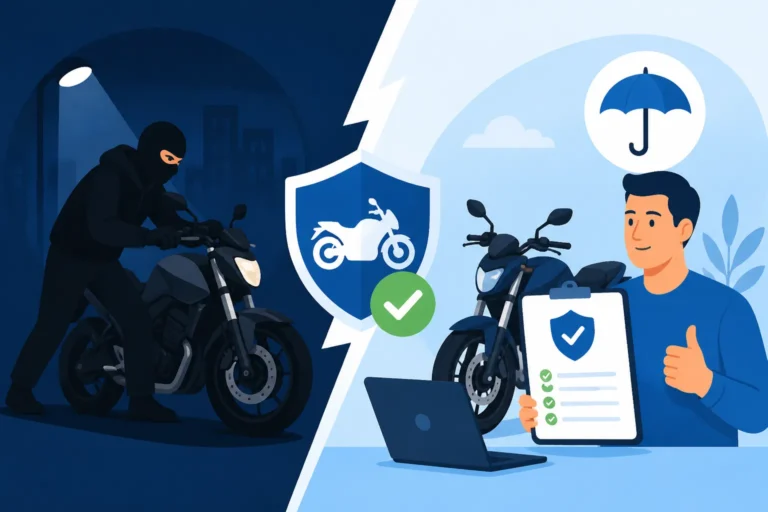
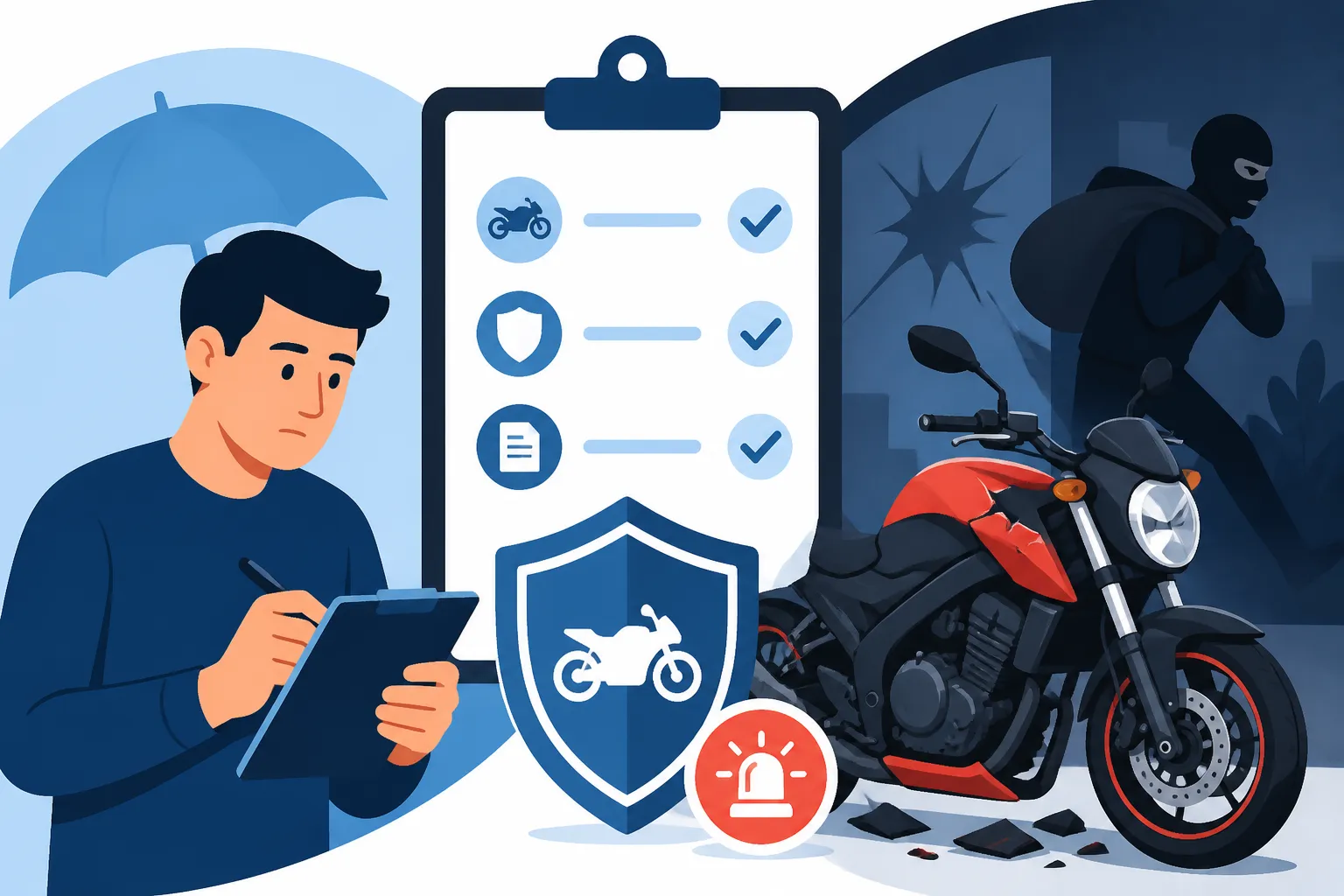
Discovering your beloved motorcycle has been stolen, or worse, finding it vandalized, is a gut-wrenching experience that no rider ever wants to face. Beyond the initial shock and frustration, the immediate thought often turns to, "What now? How do I even begin to deal with this?" It's a confusing, stressful time, and navigating the insurance claims process can feel like an extra burden when you're already reeling. This guide is here to walk you through exactly how to file a comprehensive claim for motorcycle theft or vandalism, providing clear, step-by-step advice to help ease the process and get you back on track.
Understanding Comprehensive Coverage for Your Motorcycle
Before diving into the claims process, it's really important to understand what comprehensive coverage is and what it specifically does for your motorcycle. Many riders might opt for a basic liability policy, thinking it's enough, but theft and vandalism fall squarely outside of that. Comprehensive coverage is your safety net for those "act of God" or non-collision events that are truly outside your control.
What Comprehensive Coverage Actually Covers
Imagine coming out to your garage one morning, ready for a ride, only to find an empty space where your bike used to be. Or perhaps you walk out to the parking lot and discover your shiny new paint job is now scarred with deep scratches, or worse, your mirrors are smashed and tires slashed. These are the nightmare scenarios that comprehensive coverage is designed to protect you from. It typically kicks in for losses that aren't caused by a collision with another vehicle or object.
This includes things like theft, vandalism, fire damage, damage from falling objects (think a tree branch in a storm), hail, floods, windstorms, and even animal strikes. For instance, if you're riding through a rural area and a deer jumps out, causing you to lay the bike down, a collision claim would cover the damage if it hit another vehicle or object. However, if the deer simply ran into your bike causing damage and you didn't hit anything else, that would often fall under comprehensive. It's truly a broad safety net for many unpredictable events that can ruin your ride or, even worse, take it away entirely.
The Difference Between Comprehensive and Other Coverages
It's easy to get lost in the jargon of insurance policies, especially when you're trying to figure out what applies to your specific situation. The key distinction here is that comprehensive coverage is one of the "physical damage" coverages, focusing on protecting your motorcycle itself, much like What Is Comprehensive Motorcycle Insurance?. However, it differs significantly from other common types of coverage. For example, liability insurance, which is often a state requirement, only covers damages and injuries you might cause to other people or their property in an accident where you are at fault. It offers absolutely no protection for your own bike if it's stolen or vandalized.
Then there's collision coverage, another important physical damage coverage. Collision covers damage to your motorcycle when it crashes into another vehicle or object, or even if it rolls over. So, if you accidentally drop your bike while maneuvering it in a parking lot, or you're involved in a fender bender with a car, collision coverage would be the one to pay out for repairs to your motorcycle (after your deductible, of course). Comprehensive, on the other hand, deals with those non-collision events we discussed earlier. You really need both comprehensive and collision if you want full protection for your motorcycle, covering the widest range of potential mishaps. Understanding these differences is crucial for riders, especially when you're trying to determine What Motorcycle Coverage Do You Actually Need?.
Immediate Steps After Motorcycle Theft
The moment you realize your motorcycle has been stolen is surreal. Your heart sinks, your mind races, and you might feel a wave of helplessness. But in that chaotic moment, quick and decisive action can make a huge difference in the outcome of your insurance claim and even your chances of recovery.
Reporting the Theft to Law Enforcement
This is your absolute first priority when you discover your motorcycle missing. Don't delay, don't try to play detective, just call the police immediately. The sooner law enforcement has the details, the better the chances of your bike being recovered. When you call, be prepared to provide as much specific information as possible: the make, model, year, color, VIN (Vehicle Identification Number), license plate number, and any unique identifying features like custom paint, aftermarket parts, or specific decals. The police will file a report, which is absolutely essential for your insurance claim.
Make sure you get a copy of this police report or at least the report number. Your insurance company will require it as proof that a crime occurred. This report also helps law enforcement enter your bike's information into national databases, increasing the chances it's flagged if it turns up anywhere. This critical first step is fully detailed in our guide on Motorcycle Stolen: What to Do Step by Step. Without an official police report, your insurance company won't even consider your theft claim, as it's the primary piece of documentation verifying the incident.
Notifying Your Insurance Company Promptly
Once you've filed the police report, your next call should be to your motorcycle insurance provider. Just like with law enforcement, time is of the essence. Most policies require you to report a theft within a certain timeframe, often immediately or within 24-48 hours. The quicker you get them the information, the smoother the process will likely be. When you call, explain clearly that your motorcycle has been stolen and that you have already filed a police report.
Be ready to provide your policy number, the police report number, and all the details about your motorcycle and the circumstances of the theft. The insurance company will open a claim file and assign a claims adjuster to your case. This adjuster will be your main point of contact throughout the process. They'll guide you on next steps, such as submitting any required documentation. Companies like Progressive or Geico are generally quite efficient with this initial intake process, understanding the urgency and distress involved.
Gathering Essential Information for Your Claim
Filing a comprehensive claim for theft requires a lot of documentation. Beyond the police report, your insurance company will want proof of ownership and details about your motorcycle's value. Start by gathering your motorcycle's title or registration documents, showing you are the legal owner. You'll also want to dig up any receipts for recent maintenance, upgrades, or custom parts you've added. This is especially important because standard comprehensive coverage might only cover the "Actual Cash Value" (ACV) of your bike, which depreciates over time. If you've invested in valuable custom work, you'll need to prove it to get adequate compensation.
High-quality photos of your motorcycle, especially before the theft, are invaluable. These photos can help establish its condition and the presence of any custom additions. A detailed list of all modifications, along with their purchase dates and costs, should be prepared. If you've financed your bike, be ready to provide your loan information, as the insurance company will need to work with your lienholder. The more organized you are with this information upfront, the less back-and-forth you'll have with your adjuster, which can significantly speed up the entire claim process.
What to Do After Discovering Vandalism
Coming back to your motorcycle only to find it maliciously damaged is infuriating. It’s a violation of your personal property and can feel deeply upsetting. Similar to theft, your actions immediately following the discovery of vandalism are critical for a successful insurance claim.
Documenting the Damage Thoroughly
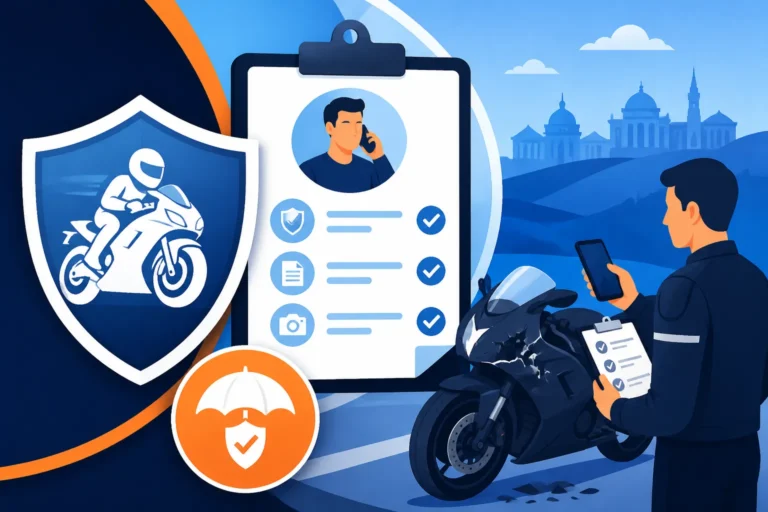
Before you even think about touching or cleaning up the damage, you need to document everything. This is not the time to jump in and try to fix things, no matter how tempting it might be. Grab your phone or a camera and start taking pictures and videos from every conceivable angle. Get close-ups of the specific damage – scratches, broken lights, slashed tires, graffiti, whatever it may be. Then, take wider shots that show the context, like where the bike was parked and the surrounding area. The more evidence you have, the better.
Narrate your video, describing what you see, the date, time, and location. Make notes of any broken glass, scattered debris, or anything else that might have been left behind. This thorough documentation serves two purposes: it provides irrefutable proof of the damage to your insurance company, and it can also be useful for law enforcement if they are investigating the incident. Remember, the goal is to create a complete visual record that leaves no doubt about the extent and nature of the vandalism.
Reporting Vandalism to Police and Insurer
Just like with theft, filing a police report is a non-negotiable step when your motorcycle has been vandalized. Even if the damage seems minor, an official police report legitimizes your claim in the eyes of your insurance company. Call your local non-emergency police line (unless you feel there's an immediate threat) and report the incident. They will likely send an officer to take down the details, or they might ask you to come to the station to file the report.
Once you have a police report number, contact your insurance company immediately. Explain that your motorcycle has been vandalized and that you've filed a police report. They'll need your policy number, the police report number, and all the details you've gathered, including your photos and videos. Your adjuster will review this information and guide you through the next steps, which will usually involve an assessment of the damage by a qualified professional. Companies like The Zebra can often help you quickly compare quotes and coverage options, reminding you how important comprehensive protection is for these kinds of events.
Securing Your Motorcycle from Further Damage
After documenting the damage and reporting the incident, your next priority should be to prevent any further harm to your motorcycle. If the bike is still in a public or unsecured location, try to move it to a safer spot if it's still ridable. If it's not safe to ride due to the vandalism (e.g., flat tires, broken lights, exposed wiring), arrange for it to be towed to your home, a trusted mechanic, or a secure storage facility. Many comprehensive policies include roadside assistance or towing coverage, so check your policy or ask your adjuster if this is an option.
For minor damage, you might be able to temporarily cover it to prevent exposure to weather elements or additional tampering. For example, if a window or fairing is broken, a tarp or plastic sheeting might offer some temporary protection. Do not begin permanent repairs before your insurance adjuster has had a chance to inspect the damage and approve the repair plan. Doing so could jeopardize your claim, as the insurer needs to assess the original damage to determine the appropriate payout. Taking these protective steps not only safeguards your investment but also shows your insurer that you're acting responsibly to mitigate further loss.
The Comprehensive Claim Filing Process Step-by-Step
You've reported the incident, documented everything, and taken steps to secure your motorcycle. Now comes the actual process of getting your claim through the insurance system. It can feel a bit like wading through treacle, but breaking it down into manageable steps makes it a lot less daunting.
Initiating the Claim with Your Insurer
After your initial call to report the theft or vandalism, your insurance company will formally open a comprehensive claim. This is where the real work begins. You'll likely receive a claim number and contact information for your assigned claims adjuster. The adjuster's role is to investigate the incident, assess the damages or loss, and determine the appropriate payout according to your policy terms. They'll ask for all the documentation you've gathered: police report, photos, videos, receipts for custom parts, and any other relevant information.
Be prepared to answer detailed questions about what happened, where your motorcycle was located, and any security measures you had in place (like a disc lock or alarm). Be honest and thorough in your responses. The adjuster may also ask you to fill out specific claim forms or statements. Take your time with these, ensuring all information is accurate. This initial phase is about providing your insurer with everything they need to begin their assessment. Remember, the more transparent and cooperative you are, the smoother this initial stage will typically proceed.
Working with the Claims Adjuster
Your claims adjuster is your primary contact throughout this process. They will investigate your claim by reviewing the police report, your documentation, and potentially conducting their own interviews or inspections. For theft claims, they will often initiate a waiting period, typically 30 days, to see if your motorcycle is recovered. During this time, they'll communicate with law enforcement and keep you updated on any developments. If your bike is recovered within this period, they'll then assess the damage it sustained and move towards repair or total loss. If it's not recovered, they'll proceed with a total loss settlement.
For vandalism claims, the adjuster will arrange for an inspection of your motorcycle, either by themselves or through an authorized repair shop. This inspection will determine the extent of the damage and the estimated cost of repairs. It's really important to get an idea of How Long Does a Motorcycle Insurance Claim Take? as it can vary. If you have custom parts or modifications, make sure they are aware and that these items are properly included in the assessment, especially if you have Accessories & Custom Parts Coverage Explained. Don't hesitate to ask questions if anything is unclear. Maintain clear communication, respond to requests promptly, and keep detailed records of all your interactions, including dates, times, and names of people you speak with.
Understanding Your Payout Options
Once the investigation is complete and the damages or loss have been assessed, your adjuster will inform you of the payout options. For a theft claim where the motorcycle isn't recovered, or for vandalism damage that exceeds a certain percentage of the bike's value (known as the total loss threshold), your motorcycle might be declared a total loss. In such cases, the insurer will offer you a settlement based on your policy's terms. This settlement is usually the Actual Cash Value (ACV) of your motorcycle at the time of the loss, minus your deductible. ACV takes into account depreciation, so it might not be enough to buy a brand new equivalent bike.
However, if you have special coverages like "Agreed Value" or "Stated Value" (which we cover in Agreed Value vs Stated Value vs Actual Cash Value), your payout might be different. Agreed value means you and the insurer agreed on a specific value for your bike when you bought the policy, which can be fantastic for custom or vintage motorcycles. For vandalism where repairs are feasible, the insurer will typically cover the cost of repairs, again, minus your deductible. You usually have the option to take it to a preferred repair shop or one of your choosing, subject to their approval. Always review the settlement offer carefully, and if you believe it's too low, you have the right to negotiate, which is a key part of How to Negotiate a Motorcycle Total Loss Settlement.
Common Challenges and How to Overcome Them
While the claims process sounds straightforward on paper, real life often throws curveballs. Riders frequently encounter frustrating hurdles that can prolong the process or impact their final payout. Knowing what these challenges are and how to approach them can save you a lot of headaches.
Dealing with Low Payout Offers
One of the most common frustrations after a total loss or significant damage is receiving a payout offer that feels unfairly low. You know what your motorcycle was worth to you, especially if you've put a lot of work and money into it, but the insurance company's valuation might tell a different story. Insurers often use databases that track average sales prices for similar makes and models in your area, and these don't always account for unique customizations, pristine condition, or emotional value.
To counter a low offer, you need to be prepared with your own evidence. Gather appraisals from independent motorcycle shops, listings for comparable motorcycles for sale in your region (especially private party sales which often reflect higher values than dealer trade-ins), and detailed receipts for every aftermarket part, upgrade, or custom paint job you've done. Highlight any unique features or exceptional maintenance records. It's a negotiation, and the more tangible evidence you have, the stronger your position. Don't be afraid to politely push back and provide your documentation to your adjuster, explaining why you believe their initial valuation is incorrect.
Delays in Claim Processing
Waiting for your claim to be processed can feel like an eternity, especially when you're without your primary mode of transportation. Delays can happen for a variety of reasons: backlogged adjusters, missing documentation, complex investigations, or even administrative holdups. While some waiting is inevitable, excessive delays can be incredibly frustrating.
If you find your claim is taking too long, don't just sit back and wait. Be proactive. Call your adjuster regularly (but not excessively, every few days is usually sufficient) to check on the status. Politely ask what the holdup is and if there's anything else you can provide to speed things up. Keep a detailed log of every call, including the date, time, who you spoke with, and what was discussed. If you're still not getting answers, ask to speak with a supervisor. Sometimes, escalating the issue can help move things along. Remember, persistence pays off, but always remain polite and professional.
Proving Value for Custom Parts and Accessories
This is a big one for many riders. Standard comprehensive coverage often has limitations on what it will pay out for custom parts and accessories, or it might not cover them at all unless you specifically added extra coverage. Many riders pour thousands into custom paint, upgraded exhausts, saddlebags, premium seats, chrome, or performance modifications. When your bike is stolen or vandalized, you want to be compensated for that investment.
To ensure these items are covered, you should have obtained separate Accessories & Custom Parts Coverage Explained when you first bought your policy. If you have this, you'll need all those receipts, invoices, and even before-and-after photos to prove the existence and value of these additions. If you don't have receipts for everything, try to find bank statements or credit card records that show the purchases. If you had an appraisal done on your bike, ensure it included all custom work. Without proper documentation and the right coverage, the insurer might only pay out the Actual Cash Value of a stock motorcycle, leaving you significantly out of pocket for your beloved customizations.
Protecting Your Investment Beyond Insurance
While comprehensive insurance is a critical safety net, it's also important to remember that prevention is always better than a cure. Taking proactive steps to deter theft and vandalism can significantly reduce your chances of having to file a claim in the first place.
Preventative Measures Against Theft and Vandalism
Think of these measures as your first line of defense. Simple steps can make your motorcycle a much less appealing target for thieves and vandals. Always try to park your motorcycle in well-lit areas, preferably with security cameras nearby, or within a secure garage. Even when it's just stored for the winter, consider Do You Need Insurance to Store a Motorcycle? and implementing extra security. Use multiple layers of security devices: a disc lock on the front wheel, a heavy chain lock securing the frame to an immovable object, and a sensitive alarm system are all excellent deterrents. GPS trackers are also becoming increasingly popular and effective, allowing you to track your bike's location if it is stolen.
Consider engraving your VIN on various parts of your motorcycle, known as "part marking," which makes stolen parts harder to resell. Installing an ignition kill switch or a hidden battery cut-off switch can also make it much harder for a thief to start your bike. When you're out and about, always remove your keys and lock your steering. These actions, combined with comprehensive insurance, create a formidable defense for your two-wheeled investment. These small habits can significantly impact What Affects Your Your Motorcycle Insurance Rate? too, as fewer claims often lead to lower premiums.
Reviewing and Updating Your Coverage Regularly
Your motorcycle and your riding habits evolve over time, and your insurance coverage should too. It's not a "set it and forget it" kind of thing. Regularly review your policy, ideally once a year or whenever you make significant changes to your bike or lifestyle. Did you add that new custom exhaust, a fancy fairing, or upgrade your navigation system? Make sure your accessories coverage is updated to reflect that increased value. Did you move to a new neighborhood, perhaps one with a higher crime rate? That might impact your risk and prompt you to bolster your theft protection.
If you've been riding for a while and have accumulated a good driving record, you might qualify for new discounts or better rates. Don't assume your current insurer is still giving you the best deal; it pays to shop around periodically, maybe through platforms like The Zebra, to compare quotes from different providers like Progressive. This ensures you're not overpaying and that your coverage still accurately reflects the value of your bike and your specific needs. Staying on top of your policy means you're always adequately protected, without any unpleasant surprises if you ever do need to file a comprehensive claim.
Motorcycle Comprehensive Claims at a Glance
| Incident Type | First Step | Key Documentation | Typical Coverage | Payout Basis | Common Challenges |
|---|---|---|---|---|---|
| Theft | Call Police (Get Report) | Police report, Title/Registration, VIN, Photos, Custom part receipts | Comprehensive | Actual Cash Value (ACV) or Agreed Value | Recovery wait periods, Low ACV offers, Proving custom part value |
| Vandalism | Document Damage (Photos/Video) | Police report, Photos/Video of damage, Custom part receipts, Repair estimates | Comprehensive | Repair Cost or ACV (if total loss) | Adjuster's damage assessment, Repair shop delays, Ensuring custom parts are covered |
| Fire | Call Fire Dept (if active) & Police | Fire report, Photos of damage, Title/Registration, VIN | Comprehensive | ACV | Determining cause of fire, Damage assessment |
| Animal Strike | Check for Injuries/Secure Area | Photos of damage, Police report (if major), Witness info | Comprehensive (typically) | Repair Cost or ACV | Proving it wasn't a collision with object |
| Falling Object | Document Damage, Assess Safety | Photos of damage, Witness info, Police report (if major) | Comprehensive | Repair Cost or ACV | Determining cause and validity of event |
Disclaimer
The information provided in this guide is intended for general informational purposes only and does not constitute professional financial, insurance, or legal advice. Motorcycle insurance policies and requirements can vary significantly by state, insurer, and individual circumstances. Always consult directly with a qualified insurance professional or legal advisor to discuss your specific needs and to obtain current, accurate information pertaining to your situation.