How to Handle a Motorcycle Insurance Claim in Virginia
Getting into a motorcycle accident is one of the most jarring and stressful experiences a rider can face. Beyond the immediate physical and emotional toll, navigating the aftermath, especially filing an insurance claim, can feel like a daunting maze, particularly when you're dealing with the specific regulations of a state like Virginia. This comprehensive guide is here to walk you through the process of handling a motorcycle insurance claim in the Old Dominion, helping you understand what to expect and how to protect your rights every step of the way.
Understanding Virginia's Unique Insurance Landscape for Riders
Virginia operates under an "at-fault" system for vehicle accidents, which means that the party determined to be responsible for causing the crash is generally liable for the damages and injuries that result. This is a crucial distinction that heavily influences how your motorcycle insurance claim will proceed.
Virginia's At-Fault System and Its Impact
In Virginia, if you're involved in a motorcycle accident, your insurance company, or the other driver's insurer, will investigate to determine who was at fault. This investigation typically involves reviewing police reports, witness statements, accident reconstruction, and any available evidence like photos or video. If you are found to be 100% at fault, your liability insurance would pay for damages to the other party, and you'd use your own collision coverage (if you have it) for your motorcycle repairs. However, if the other driver is at fault, their liability insurance should cover your medical bills, lost wages, and property damage.
The challenging part in Virginia is the doctrine of "contributory negligence." This means if you are found even 1% at fault for the accident, you could be barred from recovering any damages from the other party. This is a much stricter rule than in many other states, which often use a "comparative negligence" system that allows for partial recovery. For example, if you were T-boned by a car running a red light on Broad Street in Richmond, but the investigation found you were slightly speeding, the other driver's insurer might argue contributory negligence to deny your claim entirely. This makes gathering thorough evidence at the scene absolutely critical for any rider in Virginia.
Minimum Coverage Requirements in Virginia
While Virginia used to be the only state where carrying auto insurance wasn't technically mandatory (if you paid an uninsured motor vehicle fee), that changed as of January 1, 2022. Now, motorcycle insurance is required for all riders. Every rider on Virginia roads must carry at least the minimum liability coverage. For a deeper dive, you can explore our full guide on Motorcycle Insurance Requirements by State (2026 Guide).
The current minimum liability coverage limits in Virginia are typically expressed as 30/60/20:
- $30,000 for bodily injury per person: This is the maximum amount your insurance will pay for injuries to one person in an accident where you are at fault.
- $60,000 for total bodily injury per accident: This is the maximum amount your insurance will pay for all injuries in an accident where you are at fault, regardless of how many people are injured.
- $20,000 for property damage per accident: This is the maximum amount your insurance will pay for damage to another person's property (like their car, fence, or house) in an accident where you are at fault.
These are just the bare minimums, and many experienced riders find these limits woefully inadequate if a serious accident occurs. Imagine a significant crash on I-64 near Virginia Beach that totals another vehicle and sends someone to the emergency room; $20,000 in property damage evaporates quickly, and major medical bills can easily exceed $30,000. Understanding these numbers is crucial, and our article on Minimum Liability Insurance Explained (The Three Numbers) breaks them down even further.
Step-by-Step Guide to Filing a Motorcycle Insurance Claim in Virginia
When you've been in a motorcycle accident in Virginia, the moments immediately following the crash and the steps you take in the days after can profoundly impact your claim's success. Staying calm and methodical is key.
Immediate Actions at the Scene of an Accident
First and foremost, your safety and the safety of others are paramount. If possible, move yourself and your motorcycle to a safe location away from traffic. Turn on your hazard lights. Check for injuries—yours and anyone else involved. If anyone is injured, or if there's significant property damage, you must call 911 immediately. Virginia law requires reporting accidents to the police if there are injuries, fatalities, or property damage exceeding $1,500.
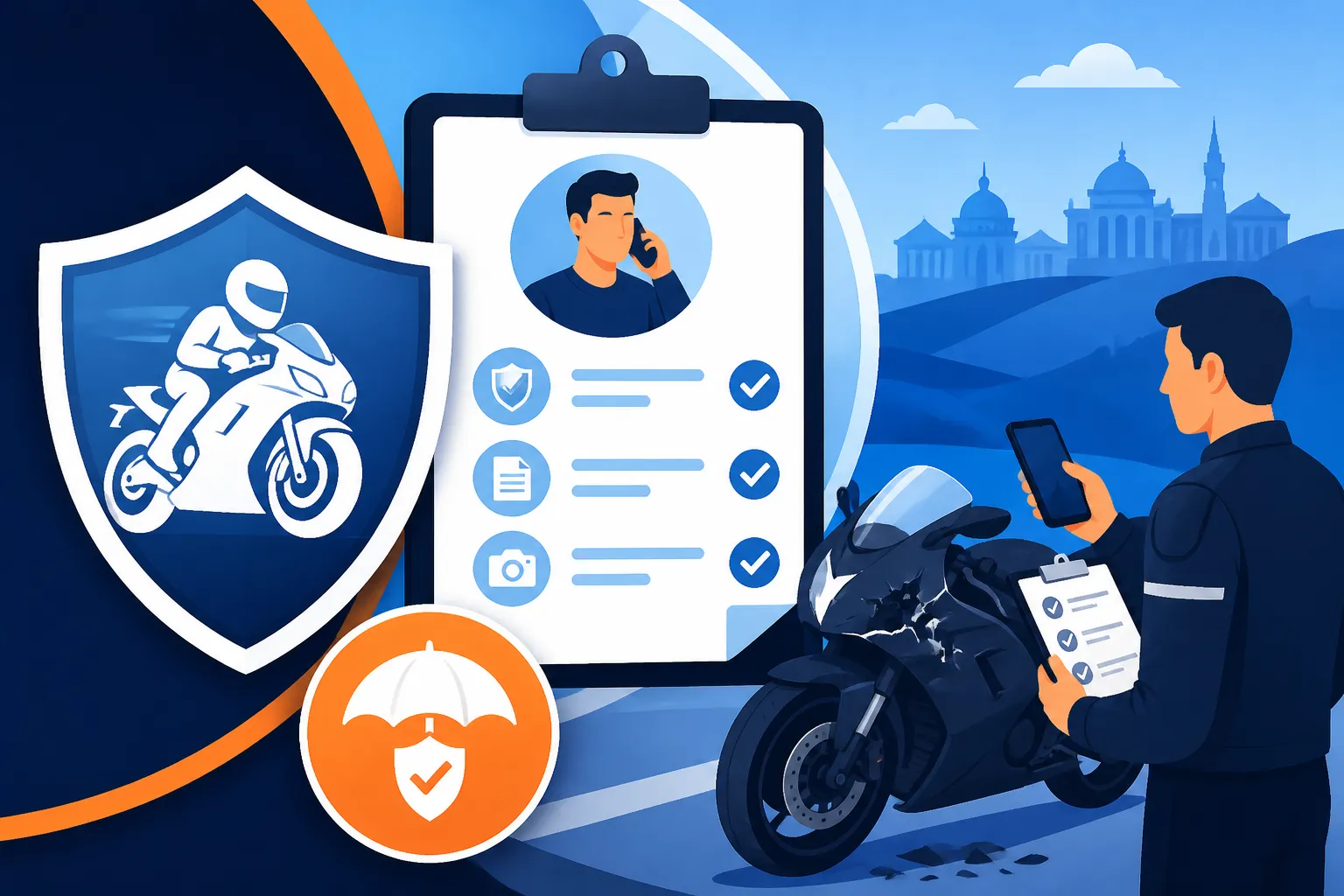
Once emergency services are en route or on the scene, start gathering information. Get the other driver's name, address, phone number, insurance company, and policy number. Also, collect their driver's license number and vehicle license plate number. Don't forget to take plenty of photos and videos of the accident scene, including your motorcycle, the other vehicles involved, road conditions, traffic signs, and any visible injuries. Look for potential witnesses and get their contact information; their unbiased account can be invaluable, especially with Virginia's strict contributory negligence rule. Do not admit fault or get into arguments about who caused the accident. Stick to the facts.
Notifying Your Insurance Company and Gathering Documentation
After addressing immediate safety and police involvement, contact your insurance provider as soon as you are able, ideally within 24 hours. Even if you believe the other driver is at fault, it’s wise to notify your own insurer. They can guide you through the process and potentially initiate a claim on your behalf, especially if you have collision or comprehensive coverage. Companies like Progressive are known for their user-friendly claims processes, often allowing you to file online or through an app. Be honest and factual when speaking with them, but avoid speculating about fault.
Once the claim is initiated, start compiling all relevant documentation. This includes:
- The police report number (and a copy once it's available).
- All contact information gathered at the scene.
- Medical records and bills related to your injuries.
- Repair estimates for your motorcycle.
- Proof of lost wages if you missed work.
- Photos and videos from the scene.
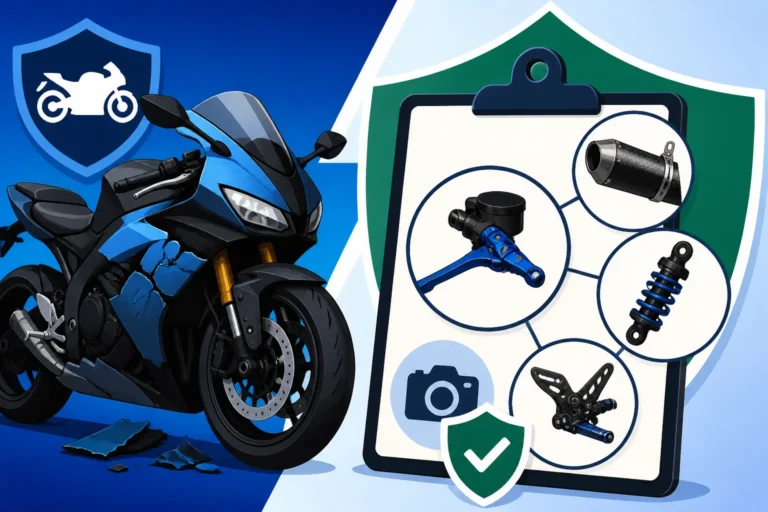
- Any receipts for custom parts or accessories on your bike, as these may require special coverage. Our guide on Accessories & Custom Parts Coverage Explained delves into this.
Keep a detailed log of all communications with insurance companies, including dates, times, names of representatives, and summaries of conversations. This paper trail can be incredibly helpful if disputes arise later on.
Working with the Adjuster and Assessing Damages
An insurance adjuster will be assigned to your claim. Their job is to investigate the accident, determine fault, and evaluate the damages. They will likely want to inspect your motorcycle and may request access to your medical records if you've claimed injuries. Be cooperative, but also be cautious. Remember, the adjuster works for the insurance company, and their goal is to settle the claim for the lowest possible amount.
When your motorcycle is assessed for damage, make sure you're aware of the repair shop's recommendations. If your bike has custom parts or modifications, ensure the adjuster accounts for these. For instance, if you've got a custom paint job or aftermarket exhaust on your Harley-Davidson, make sure those values are considered in the estimate. If the repair costs exceed a certain percentage of your motorcycle's actual cash value (ACV), usually around 70-75% in Virginia, your bike might be declared a "total loss." Our article on What Happens When Your Motorcycle Is Totaled? explains this in detail. If this happens, you'll enter a negotiation phase for the payout.
Common Challenges and Specific Scenarios in Virginia Claims
Navigating a motorcycle insurance claim in Virginia isn't always straightforward. You might encounter specific hurdles that require careful handling.
Dealing with Uninsured/Underinsured Motorists
Despite insurance being mandatory now, there are still drivers on Virginia roads who illegally operate without insurance. Also, some drivers carry only the minimum coverage, which can quickly be exhausted in a serious accident. If you're hit by an uninsured or underinsured motorist, you might find yourself in a bind, especially with Virginia's contributory negligence rules. This is where your own Uninsured & Underinsured Motorist Coverage (UM/UIM) becomes your financial lifeline.
If the at-fault driver has no insurance, your UM coverage would step in to cover your bodily injuries and property damage up to your policy limits. If they have some insurance but not enough to cover all your damages, your UIM coverage would kick in after their limits are exhausted. It's an absolute no-brainer to carry adequate UM/UIM coverage in Virginia. Without it, you could be left footing massive bills out of pocket, even if you weren't at fault. Many riders use comparison sites like The Zebra to compare different insurers and ensure they have robust UM/UIM options.
Totaled Motorcycles and Payouts
When your motorcycle is deemed a total loss, the insurance company will offer you a settlement based on its actual cash value (ACV) just before the accident. This is where many riders feel frustrated, as the ACV might not reflect what you believe your bike is truly worth, especially if you've invested heavily in upgrades or it holds sentimental value. Remember, ACV accounts for depreciation.
If you have a loan on your totaled bike, this can complicate matters further. You might owe more on the loan than the insurance payout, leaving you in "negative equity." In such cases, Do You Need Gap Insurance on a Motorcycle? can be a savior, covering the difference between your payout and your loan balance. If you're not satisfied with the initial total loss offer, you have the right to negotiate. Present evidence of your bike's condition, recent sales of similar motorcycles, and documentation of any custom parts or modifications that increased its value. Our guide on How to Negotiate a Motorcycle Total Loss Settlement provides excellent strategies for this.
Appeals and Legal Assistance
If your claim is denied, or if you believe the settlement offer is unfair, you have options. First, understand the exact reason for the denial. It could be due to a dispute over fault (contributory negligence is a big one in Virginia), questions about the extent of damages, or issues with policy coverage. You can appeal the decision with the insurance company, often providing additional documentation or arguments.
However, if you hit a wall, it might be time to consult with a personal injury attorney experienced in motorcycle accidents in Virginia. Given the state's harsh contributory negligence law, legal expertise can be crucial. An attorney can help you understand your rights, gather expert witnesses, negotiate with the insurance company, and, if necessary, file a lawsuit. They understand the nuances of Virginia law and can protect you from aggressive insurance tactics.
Key Considerations for Virginia Riders to Protect Their Claim
Being proactive about your insurance coverage and understanding how your choices impact a potential claim can save you a lot of heartache and money down the road.
Importance of Adequate Coverage
While Virginia mandates minimum liability insurance, these amounts are rarely enough to fully protect you in a serious accident. Beyond liability, consider these coverages:
- Collision Coverage: Pays for damage to your motorcycle if you hit another vehicle or object, regardless of fault. Essential for protecting your investment.
- Comprehensive Coverage: Covers non-collision incidents like theft, vandalism, fire, and hitting an animal (a common concern on Virginia's rural roads). If you want to know What Does Full Coverage Motorcycle Insurance Mean?, it typically refers to having both collision and comprehensive.
- Medical Payments (MedPay): Pays for your medical expenses and those of your passenger, regardless of fault. This is invaluable given how vulnerable riders are.
- Roadside Assistance: Can be a lifesaver if your bike breaks down or is disabled after an accident, especially on remote stretches of the Blue Ridge Parkway.
Shopping for the right coverage means looking beyond just the cheapest premium. Use tools like The Zebra to compare quotes from various providers, including giants like Progressive, to find a balance between cost and comprehensive protection. This ensures you're adequately covered for Virginia's specific risks.
Documenting Modifications and Accessories
Many riders love to customize their motorcycles, whether it's adding aftermarket exhaust systems, custom paint, saddlebags, or enhanced navigation. However, if these aren't properly documented and covered by your insurance policy, they may not be included in a claim payout after an accident or theft.
When you purchase custom parts or make modifications, keep all receipts and take photos of the upgrades. Notify your insurance company and discuss adding "accessories and custom parts coverage" to your policy. Most standard policies only cover factory-installed parts. If your custom chrome wheels and performance exhaust weren't on your policy, you could be out of luck if your bike is totaled after a crash in Chesapeake. Insurers like Markel often specialize in policies that are very friendly to custom and vintage bikes, so it's worth exploring options beyond the mainstream if your bike is heavily modified.
Motorcycle Insurance Claim Process in Virginia: Quick Reference
| Step | Description | Key Virginia Specifics |
|---|---|---|
| 1. Immediate Post-Accident | Secure the scene, check for injuries, call 911 (if necessary), exchange information. | Police report required for injuries, fatalities, or property damage >$1,500. Do NOT admit fault due to contributory negligence. Gather all witness info. |
| 2. Notify Insurer | Report the accident to your insurance company as soon as possible. | Notify your own insurer, even if the other party is at fault. Be factual, avoid speculation. |
| 3. Gather Documentation | Collect police report, photos, witness statements, medical records, repair estimates, proof of lost wages, custom parts receipts. | Essential for combating potential contributory negligence claims. Detailed documentation of modifications needed for accurate appraisal. |
| 4. Work with Adjuster | Cooperate with the insurance adjuster, allow inspection of your bike, provide requested information. | Adjuster will determine fault, which is critical in Virginia's at-fault system. Be prepared to discuss property damage and injuries comprehensively. |
| 5. Review Settlement Offer | Evaluate the offer for repairs or total loss. Negotiate if the offer is inadequate. | If totaled, ensure ACV is fair and includes custom parts. Be aware of the impact of contributory negligence on recovery. Check if UM/UIM is needed for uninsured drivers. |
| 6. Seek Legal Counsel (If Needed) | If claims are denied, settlement is too low, or fault is disputed, consult an attorney specializing in VA motorcycle accidents. | Virginia's contributory negligence rule makes legal counsel highly valuable in disputed claims to protect your right to recovery. |
Disclaimer
Please remember that this article provides general information and guidance regarding motorcycle insurance claims in Virginia. Insurance laws and regulations can be complex and may change. It is always recommended to consult with a qualified insurance professional or legal expert for advice tailored to your specific situation.