What Is the Cheapest Way to Insure a Motorcycle Legally?
You finally saved up enough for that sleek cruiser or the nimble sport bike you have been eyeing for months, but then you get your first insurance quote and the sticker shock hits like a cold wind on a November ride. Many riders find themselves stuck between wanting to ride legally and struggling with high monthly premiums. This guide explores the most effective, realistic strategies to find the absolute cheapest way to insure your motorcycle without breaking the law.
Understanding the Legal Minimum Coverage Strategy
The absolute cheapest way to stay legal on the road is to purchase a "Liability-Only" policy that meets your specific state's requirements. Every state, with a few notable exceptions, mandates that you carry a certain amount of coverage to pay for injuries or property damage you cause to others in an accident. While this is the most budget-friendly route, it is important to understand exactly what you are buying—and what you are leaving unprotected.
Navigating State Minimums and Liability Limits
When you look at a quote, you will often see three numbers, such as 25/50/25. This is what we call Minimum Liability Insurance Explained (The Three Numbers). These figures represent the maximum amount, in thousands of dollars, that the insurance company will pay for bodily injury per person, total bodily injury per accident, and property damage. If you live in a state with low requirements, your premium will naturally be lower because the insurance company is taking on less risk.
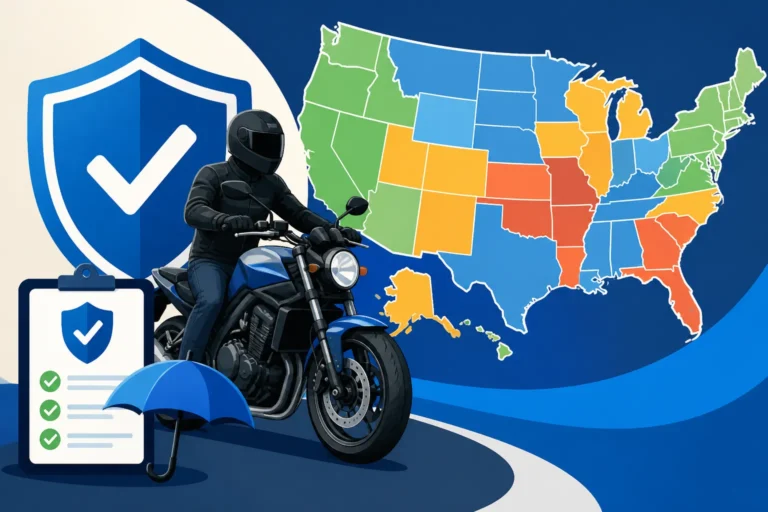
However, "cheap" can become "expensive" very quickly if you cause a multi-car pileup or hit a high-end luxury vehicle. If your state only requires $10,000 in property damage and you total a brand-new electric SUV, you are personally on the hook for the remaining balance. To keep things legal but cheap, you should research the Motorcycle Insurance Requirements by State (2026 Guide) to ensure you aren't paying for more than the law demands, but always weigh that against your personal assets. Many riders find that a platform like The Zebra is incredibly helpful here, as it allows you to toggle these limits and see the real-time price difference between the bare legal minimum and slightly safer "middle-ground" options.
The Trade-off of Liability-Only Policies
The reason a liability-only policy is so inexpensive is that it provides zero coverage for your own motorcycle. If you slide on some gravel, hit a deer, or walk out of your apartment to find your bike was stolen overnight, a liability-only policy will not pay you a single cent. For many riders on older, used bikes that they bought with cash, this is a calculated risk. If the bike is only worth $2,000, paying $800 a year for full coverage doesn't make much financial sense.
However, if you are still making payments on your bike, you usually don't have the luxury of choosing the cheapest option. Lenders almost always require "Full Coverage," which includes collision and comprehensive protection. If you are looking for the lowest price possible, you have to look at the bike itself before you even buy it. Understanding How to Get Cheap Motorcycle Insurance often starts at the dealership or on the used market, rather than at the insurance agent's office.
Strategic Bike Selection and Its Impact on Your Wallet
One of the biggest mistakes new riders make is buying the bike first and checking the insurance second. If you want the cheapest insurance possible, the type of machine you swing a leg over matters more than almost any other factor. Insurance companies use massive amounts of data to determine which bikes are most likely to be involved in high-speed accidents or targeted by thieves.
Why Engine Size and Bike Category Dictate Rates
It shouldn't come as a surprise that a 1000cc supersport bike costs significantly more to insure than a 250cc commuter bike. When asking Does Engine Size (CC) Affect Insurance Cost?, the answer is a resounding yes. But it isn't just about the power; it’s about the "class" of the motorcycle. Cruisers and touring bikes generally enjoy much lower rates because the people who ride them are statistically more experienced and less likely to engage in "stunt" riding or excessive speeding.
Consider a rider in Austin, Texas. If they buy a brand-new Yamaha R6, their insurance could easily be triple what they would pay for a Honda Rebel 500, even if the purchase price of the bikes were similar. The insurance company sees the R6 as a high-risk "crotch rocket" and prices the policy accordingly. If your goal is the cheapest legal insurance, stick to sub-500cc engines or classic cruiser styles. You can use tools like The Zebra to compare different bike models before you sign the bill of sale, which can save you hundreds of dollars in "buyer's remorse" premiums later on.
The Advantage of Older and Paid-Off Motorcycles
Buying a used motorcycle is perhaps the most effective "hack" for low insurance. Not only is the bike's actual cash value lower—meaning the insurance company's potential payout is smaller—but it also allows you to opt-out of collision and comprehensive coverage if you own the title outright.
Furthermore, older bikes often lack the expensive fairings and high-tech components that make modern bikes so expensive to repair. A minor tip-over on a fully-faired sport bike can result in thousands of dollars in plastic damage, whereas a "naked" bike or a classic standard motorcycle might only suffer a scratched engine guard. Insurance companies know this and price their policies to reflect the lower cost of claims for older, simpler machines.
Maximizing Discounts and Adjusting Policy Details
Once you have the right bike and you know your state's minimums, the next step in finding the cheapest way to insure a motorcycle is to go on a "discount hunt." Most riders leave money on the table because they don't realize how many small factors can shave a percentage off their premium.
| Discount Type | Average Savings | Requirement |
|---|---|---|
| Safety Course | 10% – 15% | Complete an MSF or equivalent course |
| Bundling | 5% – 20% | Combine motorcycle with auto or home insurance |
| Multi-Bike | 10% – 25% | Insure more than one bike on the same policy |
| Anti-Theft | 5% | Install a GPS tracker or disc lock |
| Mature Rider | Varies | Usually applies to riders over age 50 |
Education and Experience as Financial Leverage
If you are a new rider, you are automatically in the highest-risk category. This is where How Much Is Motorcycle Insurance for a Beginner? can become a depressing topic. However, you can offset this by taking a certified Motorcycle Safety Foundation (MSF) course. Not only does this often waive the riding portion of your DMV test, but almost every major insurer will give you a discount for at least three years after you complete it. It’s a one-time investment in your skills that pays for itself in insurance savings.
Additionally, keeping your record clean is vital. A single speeding ticket or a "minor" at-fault accident can cause your rates to spike for years. If you are struggling with a less-than-perfect record, using a comparison tool like The Zebra can help you find companies that are more "forgiving" of past mistakes, as some insurers specialize in high-risk riders while others cater strictly to those with pristine records.
Strategic Policy Customization
Another way to lower your costs is to look at What Affects Your Motorcycle Insurance Rate? and tweak the variables you can control. If you have decided that you absolutely must have collision or comprehensive coverage, try raising your deductible. Moving from a $250 deductible to a $1,000 deductible can significantly lower your monthly payment. You are essentially telling the insurance company that you will handle the "small stuff" yourself, and they only need to step in for a major loss.
You should also look into Bundling Motorcycle and Auto Insurance: Worth It?. If you already have a car, adding your motorcycle to that existing policy is almost always cheaper than starting a separate one with a different company. Most insurers offer a "multi-policy" discount that applies to both your car and your bike, creating a win-win scenario for your monthly budget.
Managing Seasonal Usage and Coverage Gaps
If you live in a state like Michigan or New York, you probably aren't riding your motorcycle through the snow in January. Why pay for full road coverage when the bike is sitting in a garage under a cover? Managing your policy based on the calendar is a pro-level move for saving money.
Utilizing Lay-Up Periods and Seasonal Adjustments
Many insurance companies offer what is known as a "lay-up" policy or seasonal storage coverage. You can ask Is Motorcycle Insurance Cheaper if You Only Ride Seasonally? and find that some insurers automatically bake this into their pricing if they know your zip code is in a cold climate.
During the off-season, you can drop your liability and collision coverage but keep your "Comprehensive" coverage active. This protects you if the garage catches fire or if someone breaks in and steals the bike, but you aren't paying for the risk of a road accident while the bike is on a battery tender. Just be extremely careful: you must remember to reinstate your full coverage before that first warm day in March. Riding even one block without liability coverage is a serious legal risk.
The Danger of Letting Coverage Lapse
While it might be tempting to cancel your insurance entirely during the winter to save every possible penny, this often backfires. When you go to sign up again in the spring, the insurance company will see a "gap" in your coverage history. In the eyes of an actuary, a rider who lets their insurance lapse is a higher risk than one who maintains continuous coverage.
You should always check What Happens if My Motorcycle Insurance Lapses? before making this move. Often, the "re-entry" price you pay in the spring will be higher than what you would have paid to just keep a basic storage policy active through the winter. Furthermore, you need that continuous proof to maintain your registration in many states. If the DMV sees that your insurance has been canceled, they may suspend your motorcycle's registration, leading to hefty fines when you try to get back on the road. Always ensure you can provide Proof of Insurance & Registration for Motorcycles if you are ever pulled over, as the "cheapest" insurance is always cheaper than a $500 ticket and an impound fee.
Final Thoughts on Finding the Best Deal
Finding the cheapest way to insure a motorcycle legally is a game of strategy. It starts with choosing a bike that doesn't scare the insurance adjusters, continues with keeping your riding record spotless, and concludes with shopping around relentlessly. Companies change their rates and "appetites" for risk every year. The company that was the cheapest for you in 2024 might be the most expensive by 2026.
I always recommend checking your rates at least once a year. Using a service like The Zebra makes this process take minutes instead of hours, allowing you to see if a different provider has introduced a new discount or a lower base rate for your specific demographic. By being proactive, staying educated on your state's minimums, and treating insurance as a variable cost you can control, you can keep your bike on the road and your bank account in the black.
Disclaimer
This guide is provided for informational purposes only and does not constitute legal or financial advice. Insurance laws and requirements vary significantly by state and are subject to change. Always consult with a licensed insurance agent or your state's Department of Motor Vehicles to ensure you are in compliance with all local regulations before operating a motorcycle.