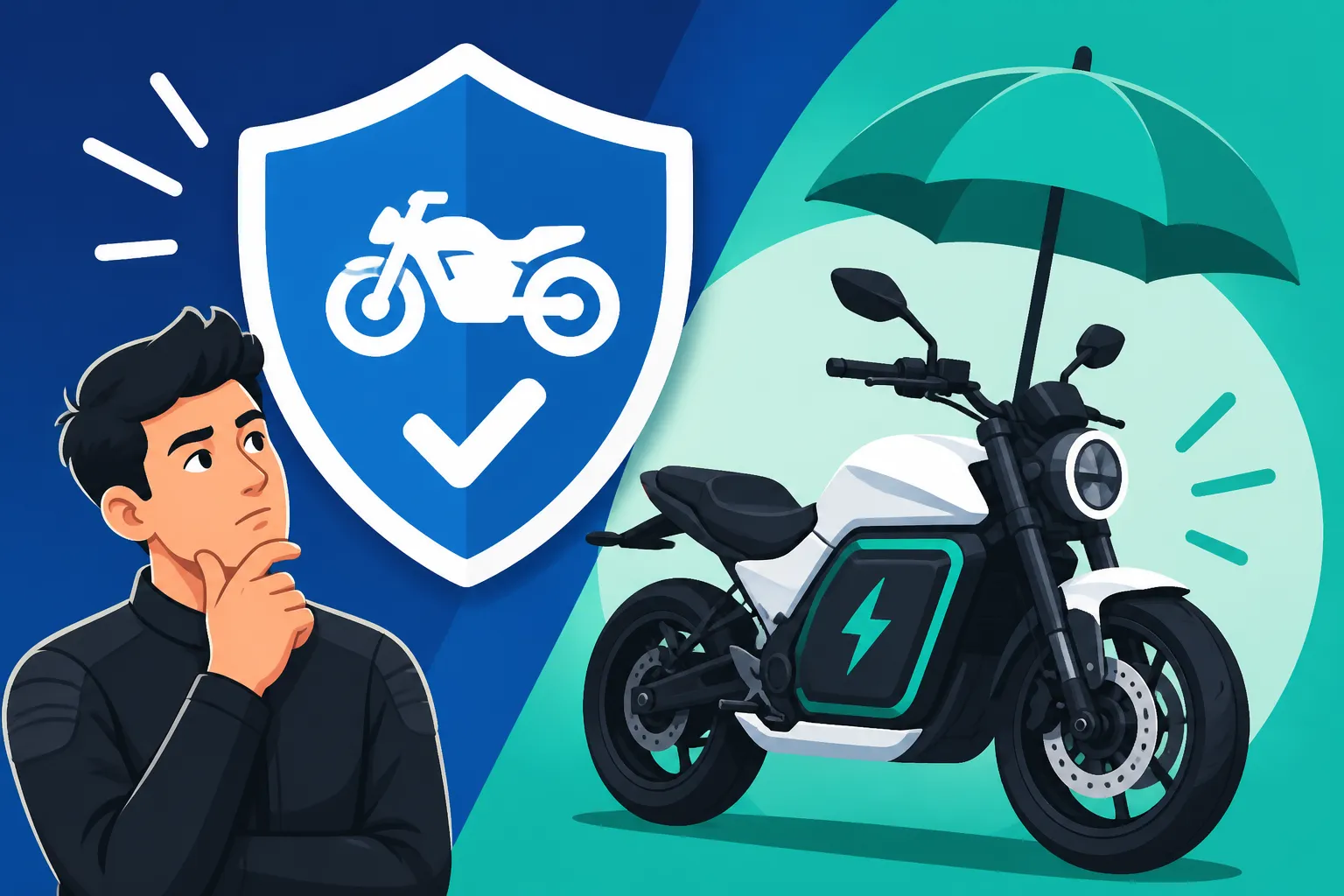
Do You Need Insurance for an Electric Motorcycle?
Switching from a traditional gas-guzzling bike to an electric motorcycle is an exciting leap into the future, but it often comes with a massive headache regarding legal compliance. Many riders find themselves stuck in a confusing gray area, wondering if their whisper-quiet machine is legally a bicycle or a high-performance vehicle. This guide breaks down exactly when you need coverage, how states classify these bikes, and how to protect your investment.
Understanding the Legal Classification of Electric Motorcycles
One of the most common frustrations for new electric riders is the sheer lack of clarity at the local DMV. You might buy a sleek electric bike thinking it’s a simple commuter, only to find out that your state views it no differently than a 1000cc superbike. The distinction usually boils down to power output and top speed. If your vehicle can exceed 20 to 30 miles per hour under its own power without you pedaling, it almost certainly crosses the line from an "electric bicycle" to a "motor vehicle."
In the eyes of the law, once a vehicle is classified as a motor vehicle, the Motorcycle Insurance Requirements by State (2026 Guide) apply immediately. Brands like Zero, LiveWire, and Energica produce machines that can hit 100 mph with ease. These aren't toys, and because they share the road with semi-trucks and SUVs, the state demands that you carry financial responsibility. Even if you aren't worried about your own bike, you have to consider the damage you could do to others.
Is it a Motorcycle, a Moped, or an E-bike?
The confusion often stems from "grey market" bikes or high-powered off-roaders that people try to bring onto the street. An electric bicycle (e-bike) typically has pedals and a motor capped at 750 watts, with a top assisted speed of 20 or 28 mph depending on the class. These rarely require insurance or registration. However, if you step up to an electric moped or a full-scale electric motorcycle, you are entering a different world of regulation.
When you are looking at Moped & Scooter Insurance Requirements by State, you’ll notice that even low-speed electric scooters often need some form of coverage. If your bike has a VIN (Vehicle Identification Number) and a title, it is a motor vehicle. At that point, you aren't just looking for a "bicycle policy"; you need a legitimate motorcycle policy. Finding the right rate can be tricky for these new technologies, which is why using a comparison tool like The Zebra can help you see which carriers are actually comfortable insuring high-voltage machines.
How Motor Size and Power Ratings Affect Your Policy
In the gas world, we talk about CCs (cubic centimeters). In the electric world, it’s all about kilowatts (kW). Insurance companies are still catching up on how to rate a motor that delivers 100% of its torque at 0 RPM. From a risk perspective, a high-torque electric motor can be just as dangerous as a high-displacement gas engine in the hands of an inexperienced rider.
This power rating directly influences whether you need a motorcycle endorsement on your license. If your state determines that your electric bike is a "motorcycle" based on its kW output, you must follow all the standard Motorcycle License, Endorsement & Insurance rules. Failing to do this doesn't just risk a ticket; it can lead to a total denial of insurance claims if you’re involved in an accident while riding out of class.
State-Specific Insurance Mandates for Electric Riders
Just because you aren't burning gas doesn't mean you can skip the insurance office. Almost every state that requires insurance for a Harley or a Honda requires it for a Zero or a Cake. There are very few exceptions, and even in States That Don't Require Motorcycle Insurance, there are usually "financial responsibility" laws that require you to prove you can pay for damages if you cause a wreck.
For example, if you are riding in California or New York, the state doesn't care that your motor is powered by lithium-ion batteries. They care that you have Minimum Liability Insurance Explained (The Three Numbers) to cover bodily injury and property damage. Without a valid insurance card—digital or paper—you won't be able to register the bike or get a license plate, effectively making your expensive new purchase a very heavy paperweight in your garage.
Registration and Titling Requirements
The first step in staying legal is getting your bike registered. When you take your bill of sale to the DMV, they will look for the Federal Safety Certification Label. If your electric motorcycle is street-legal, it will have this. Once the DMV recognizes it as a street-legal vehicle, you will be prompted for Proof of Insurance & Registration for Motorcycles.
If you bought a bike online that was marketed as a "high-powered e-bike" but it lacks pedals and goes 45 mph, you might run into a wall. Many riders find themselves in a bind when they realize they can't get insurance because the bike doesn't have a valid 17-digit VIN, yet they can't ride it on the street without insurance. Always verify the titling status before you buy. If you find yourself in this situation, checking a platform like The Zebra can sometimes help you find specialty insurers who deal with unique or custom electric builds.
Penalties for Uninsured Electric Riding
The novelty of electric bikes sometimes makes riders feel like they are "off the grid," but police departments are becoming much more savvy about these vehicles. If you are caught riding an electric motorcycle without the proper coverage, the Penalties for Riding Without Insurance are identical to those for gas bikes. This can include heavy fines, the impounding of your motorcycle, and the suspension of your driver’s license.
In some states, the consequences are even steeper. You might be required to file an SR-22 for Motorcycles: When It's Required, which can triple your insurance rates for several years. It is simply not worth the risk of "flying under the radar." If your bike is fast enough to keep up with city traffic, it is fast enough to get noticed by a patrol car.
| Vehicle Type | Top Speed | Pedals Required? | Insurance Required? | License Required? |
|---|---|---|---|---|
| Class 1 E-bike | 20 mph | Yes | No | No |
| Class 3 E-bike | 28 mph | Yes | No | No |
| Electric Moped | 30 mph | No/Optional | Yes (Most States) | Yes (Class M) |
| Electric Motorcycle | 30+ mph | No | Yes (Always) | Yes (Class M) |
Coverage Types You Actually Need for an EV Bike
When you finally sit down to buy a policy, don't just settle for the bare minimum. While Liability Coverage for Motorcycles Explained is the legal requirement, it only protects other people. If you drop your $20,000 electric motorcycle or someone tips it over in a parking lot, liability won't pay a dime.
Electric motorcycles are famously expensive to repair. The fairings are often custom-molded, and the battery pack itself can account for 50% of the bike’s total value. This is why Collision vs Comprehensive Motorcycle Coverage is so critical for electric owners. Comprehensive coverage is especially important because it covers theft—and electric bikes are high-value targets for thieves who know how expensive those components are.
Protecting the Battery and Charging Equipment
One of the unique aspects of owning an electric bike is the charging infrastructure. What happens if a power surge fries your bike’s onboard charger while it’s plugged in at home? Or what if someone steals your expensive portable Level 2 charging cable while you’re grabbed a coffee? Standard policies might not automatically cover these accessories.
You should specifically look into Accessories & Custom Parts Coverage Explained to ensure your charging gear and any aftermarket mods are protected. Some insurers are beginning to offer specific "EV riders" that cover the battery specifically, even against internal degradation or electrical faults, though this is still an emerging part of the market. Using a comparison site like The Zebra can help you filter for companies that actually understand these nuances rather than just giving you a generic scooter policy.
The Importance of Uninsured Motorist Coverage
As a rider, you are inherently more vulnerable than someone in a car. This risk doesn't change just because your bike is silent. In fact, some argue that the silence of electric bikes makes them more dangerous because pedestrians and other drivers don't hear you coming. If a driver hits you and flees the scene or doesn't have insurance, you could be stuck with massive medical bills.
Adding Uninsured & Underinsured Motorist Coverage (UM/UIM) is perhaps the most important decision you can make. This coverage ensures that your own insurance company steps in to pay for your medical expenses and bike repairs when the at-fault party can't. Given that many drivers are currently struggling with rising costs and letting their own policies lapse, this is a safety net you cannot afford to skip.
The Cost of Insuring Electric vs. Gas Motorcycles
You might expect that "going green" would save you money on insurance, but that isn't always the case. Currently, How Much Is Insurance for an Electric Motorcycle? can be slightly higher than for a comparable gas bike. This is primarily because electric motorcycles are newer, parts are harder to source, and there is less data for insurance companies to use when calculating risk.
Insurance companies look at "repairability." If a gas bike leaks oil after a drop, it's a simple fix. If an electric bike has a dented battery casing, many manufacturers recommend a full battery replacement for safety reasons, which can cost $8,000 to $12,000. This high "total loss" potential is baked into your premium. However, as these bikes become more common, prices are starting to stabilize.
Why Your Rates Might Be Higher (or Lower)
Several factors influence your rate beyond just the "electric" tag. Your age, riding history, and where you live play huge roles. If you are a new rider, you should check out How Much Is Motorcycle Insurance for a Beginner? to get a baseline. You might find that some carriers view electric bikes as "safer" because they don't have hot exhaust pipes or flammable gasoline, while others view them as "riskier" because of their instant torque.
To get the best deal, you have to shop around. Don't just call the company that insures your car. Use a platform like The Zebra to compare multiple quotes at once. They can pull data from various carriers to see who is currently offering "green vehicle" discounts or lower rates for commuters. Often, companies like Progressive or Markel have more experience with electric motorcycles than smaller, local insurers.
Tips for Lowering Your Electric Bike Premium
Even with the high tech involved, you can still find ways to save. One of the best methods is to complete a certified safety course. Many insurers will offer a significant discount if you have a certificate from the Motorcycle Safety Foundation (MSF). Not only does this save you money, but it also helps you handle that instant electric power more safely.
- Bundle your policies: If you already have car insurance, adding your electric bike to the same company can trigger a multi-policy discount.
- Opt for a higher deductible: If you have an emergency fund, raising your deductible from $500 to $1,000 can drop your monthly premium significantly.
- Install a GPS tracker: Many electric bikes have these built-in. If yours does, tell your insurer; it reduces the risk of permanent theft loss.
- Check for seasonal rates: If you live in a cold climate, ask about Seasonal Lay-Up & Winter Storage Insurance to lower your costs during the months you aren't riding.
By staying informed and using tools like The Zebra to navigate the shifting landscape of motorcycle insurance, you can enjoy the silence and speed of your electric motorcycle without the looming fear of a legal or financial disaster.
Disclaimer
This guide is provided for informational purposes only and does not constitute legal or financial advice. Insurance requirements and state laws regarding electric motorcycles are subject to change; always verify current regulations with your local DMV and a licensed insurance professional before riding.