Is Motorcycle Insurance Cheaper if You Only Ride Seasonally?
The frustration of watching a monthly insurance premium disappear from your bank account while your motorcycle sits under a heavy cover in a freezing garage is a rite of passage for northern riders. You aren't burning fuel or risking a highway slide, yet the bill remains the same. This guide breaks down whether seasonal riding actually leads to lower costs and how to navigate the insurance trap of the off-season.
The Reality of Annual Premiums and the Seasonal Myth
When you first start riding in a place like Wisconsin or Maine, it is easy to assume that you can simply buy insurance for the six months the sun is out and turn it off when the first snowflake hits the ground. Unfortunately, the insurance industry does not quite work like a Netflix subscription. Most major carriers write motorcycle policies as 12-month contracts. They know that in states with harsh winters, you aren't out on the road in January, and they have already baked that "off-time" into your total annual price.
If you look at the Average Motorcycle Insurance Cost by State for northern regions, you might notice that the monthly breakdown seems surprisingly reasonable compared to year-round riding states like Florida. This is because the actuaries have already calculated that your risk of a collision claim is near zero for five months of the year. However, just because the bike isn't moving doesn't mean the risks are gone. Fire, garage collapses, and theft are year-round threats. If you try to circumvent the annual policy by canceling your coverage every October, you might find yourself facing a massive "re-entry" price hike in the spring.
Insurance companies view a gap in coverage as a red flag. When you go to reinstate your policy in April, you are often classified as a high-risk rider simply because you weren't "continuously insured." This can lead to a situation where your new six-month premium is actually more expensive than the 12-month policy you walked away from. Using a comparison tool like The Zebra can help you see how different companies handle these annual rates, but the core lesson remains: the "cheaper" seasonal route often has hidden costs.
The Seasonal Lay-Up Policy Explained
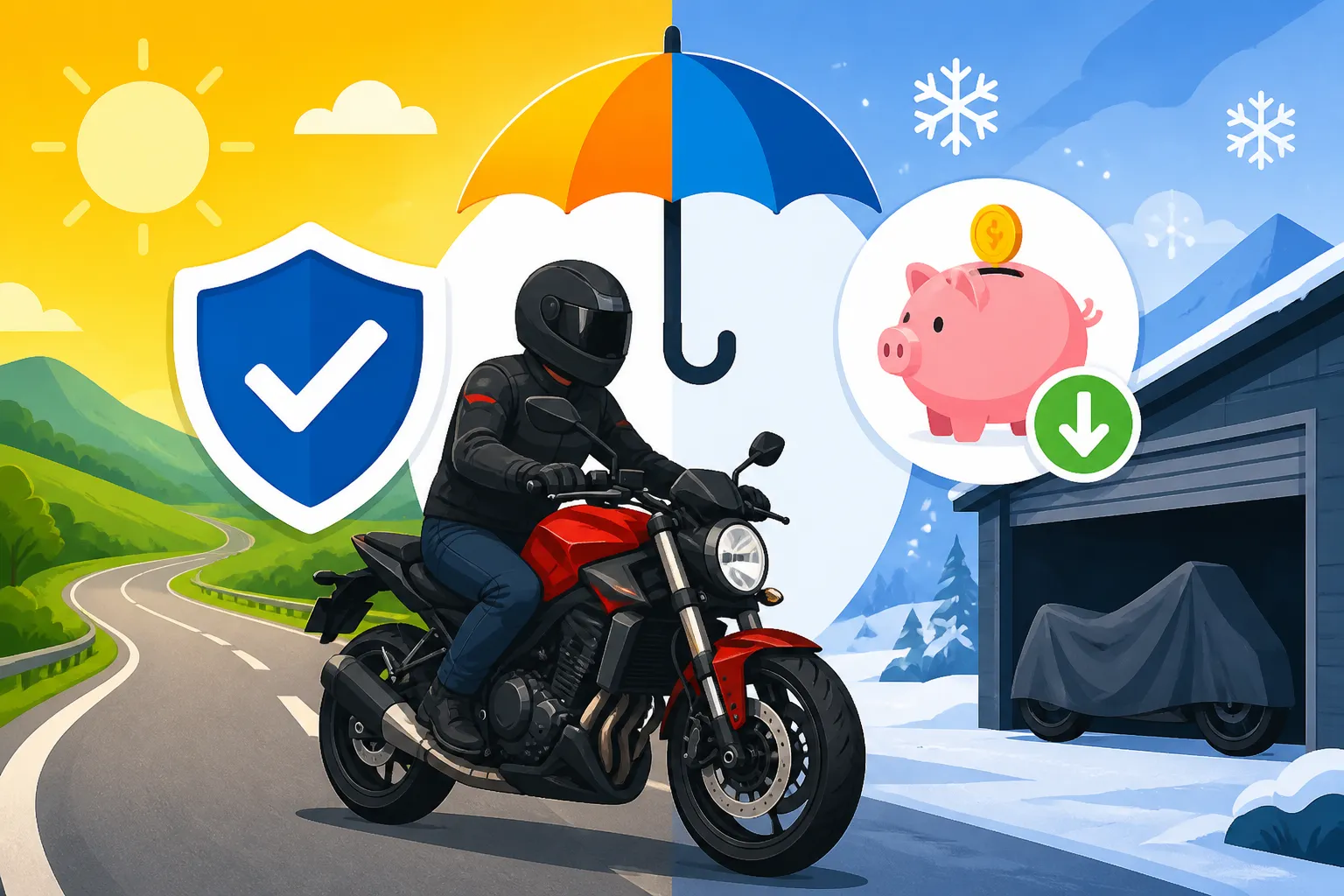
For riders who want a legitimate way to save money during the winter months without triggering a coverage gap, the "lay-up" policy is the golden middle ground. A lay-up policy is essentially a seasonal adjustment to your existing coverage. You keep your comprehensive insurance active—which protects the bike from theft, fire, and falling objects—but you "lay up" or suspend the liability and collision portions of the plan.
Because liability and collision represent the bulk of your premium, suspending them can result in significant savings. However, there is a catch. Most companies that offer Seasonal Lay-Up & Winter Storage Insurance have strict date requirements. For example, the lay-up period might be fixed from November 1st to April 1st. If a freak 65-degree day hits in late February and you decide to take a quick spin around the block, you are riding completely uninsured for liability. If you hit a car or cause an injury during that "suspended" period, you are personally responsible for every cent of the damage.
Before you commit to this, check Is Motorcycle Insurance Required in Wisconsin? or your specific state’s laws. Some states require a certain level of liability coverage just to keep your registration valid. If you drop your liability to zero during the winter, the insurance company may notify the DMV, which could lead to a suspended registration or a requirement to turn in your plates. It is a bureaucratic headache that often outweighs the $40 you might save over the winter.
Why You Should Never Fully Cancel Your Coverage
It is tempting to look at a bike that won't start for three months and think, "Why am I paying for this?" But total cancellation is almost always a financial mistake in the long run. Aside from the "continuous insurance" discount mentioned earlier, you are leaving your asset completely vulnerable. I have seen riders lose beautiful bikes to garage fires or even simple rodent damage that chewed through an entire wiring harness. Without comprehensive coverage, that is a total loss out of pocket.
If you are struggling with the cost, it is better to look at How to Lower Your Motorcycle Insurance Premium through other means. You could increase your deductible during the winter months to lower the monthly bill, or check for "mature rider" and "safety course" discounts that apply year-round. Using The Zebra to shop around every two years is also a smart move, as some insurers are more "winter-friendly" than others.
Furthermore, if your bike is financed, your lender will absolutely require you to maintain full coverage 365 days a year. They don't care if there is six feet of snow outside; they want their collateral protected. If they catch wind that you canceled your policy, they may "force-place" insurance on your behalf, which is significantly more expensive than any policy you could find on your own. You can read more about these requirements in our guide on Motorcycle Insurance Requirements for Financed Bikes.
Comparing the Costs: Seasonal vs. Year-Round
To give you a better idea of how the numbers actually shake out, let's look at a hypothetical scenario for a rider in a seasonal state like Ohio versus a year-round state like Georgia. In seasonal states, the insurance companies have already front-loaded the cost into the riding months.
| Coverage Strategy | Estimated Annual Cost | Pros | Cons |
|---|---|---|---|
| Standard 12-Month Policy | $500 | Continuous coverage, easy, no DMV issues | Paying full price during winter |
| Lay-Up Policy (Nov-March) | $380 | Savings on liability/collision | No legal riding on "warm" winter days |
| Comprehensive Only (Storage) | $150 | Dirt cheap protection | Risk of registration suspension; no riding |
| Cancel & Re-buy (April) | $750+ | $0 paid during winter | Massive "gap" penalties; no theft protection |
As the table illustrates, the "savings" from canceling your policy often vanish when you see the new quote in the spring. The What's the Penalty for Letting Motorcycle Insurance Lapse? is not just a legal one; it’s a financial one enforced by the insurance carriers themselves. The Zebra often highlights that the most consistent way to keep rates low is to maintain a clean, continuous history.
The Pay-Per-Mile and Storage-Only Alternatives
If you truly only ride 500 miles a year during the peak of summer, you might want to look into modern "usage-based" insurance. While more common for cars, some specialty motorcycle insurers are starting to offer pay-per-mile options. In this scenario, you pay a low base rate to cover the bike while it’s parked (comprehensive) and then a few cents for every mile you actually ride. This is the ultimate "seasonal" hack because it automatically scales with your usage without you needing to call an agent to switch things on and off.
If your state allows it, you can also look into Do You Need Insurance to Store a Motorcycle?. Some riders choose to drop everything except comprehensive coverage. This is slightly different from a lay-up policy because it isn't an automated seasonal switch; you are manually changing your policy limits. This is a viable option for someone who is perhaps working overseas for a year or knows for a fact the bike won't move. Just remember to call and add liability back on before you pull the bike out of the garage in the spring.
Final Advice for Seasonal Riders
Is motorcycle insurance cheaper if you only ride seasonally? The short answer is yes, but usually because the insurance company has already lowered the annual price to reflect your location’s climate. Trying to "game" the system by canceling and restarting often backfires.
If you are determined to shave every possible dollar off your bill, I recommend these steps:
- Use The Zebra to find a carrier that specializes in your specific type of bike, as cruisers and sportbikes are rated differently for seasonal risks.
- Ask about a formal lay-up provision if you live in the Northeast or Midwest.
- Check Do You Need Motorcycle Insurance in Winter if Not Riding? to understand the registration implications in your specific state.
- Focus on long-term savings by maintaining continuous coverage, which unlocks the best tiered pricing after 3 to 5 years of loyalty.
Riding is about freedom, but that freedom feels a lot better when you aren't stressed about a surprise bill or a lapse in coverage. Keep the rubber side down and the policy active.
Disclaimer
This guide is provided for informational purposes only and does not constitute legal or financial advice. Insurance laws and state requirements, including those discussed in the Motorcycle Insurance Requirements by State (2026 Guide), are subject to change. Always consult with a licensed insurance agent or your state's Department of Motor Vehicles to verify specific coverage requirements and penalties in your jurisdiction. Final premium costs and policy availability depend on individual rider history, location, and specific insurance carrier underwriting guidelines.