Maryland Motorcycle Helmet Law
You’re cruising down the I-95 or taking the scenic route through the Catoctin Mountains, and the last thing you want is a flashing red light in your mirror because of your gear. In Maryland, the rules aren't a suggestion—they are strictly enforced. This guide breaks down the Maryland Motorcycle Helmet Law so you can stay legal, avoid heavy fines, and protect your right to ride safely.
Decoding the Maryland Universal Helmet Mandate
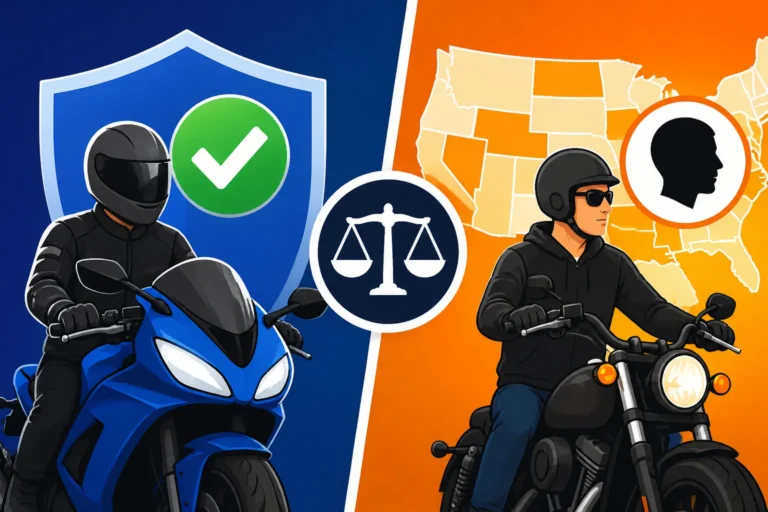
Maryland is what we in the industry call a universal helmet law state. Unlike some of our neighbors who allow certain riders to choose whether or not to wear a lid based on age or insurance coverage, Maryland leaves no room for debate. If you are on a motorcycle, you are wearing a helmet. This applies to everyone: the driver, the passenger, the seasoned veteran with forty years of riding under their belt, and the teenager on their first 250cc bike.
The specific law, Maryland Transportation Code § 21-1306, is very clear about the requirement for protective headgear. It states that an individual may not operate or ride on a motorcycle unless they are wearing protective headgear that is approved by the Administrator. In practical terms, the "Administrator" refers to the Motor Vehicle Administration (MVA), which aligns its standards with federal safety regulations. This isn't just about avoiding a ticket; it's about the state’s stance on public safety and reducing the severity of head injuries on Maryland roads.
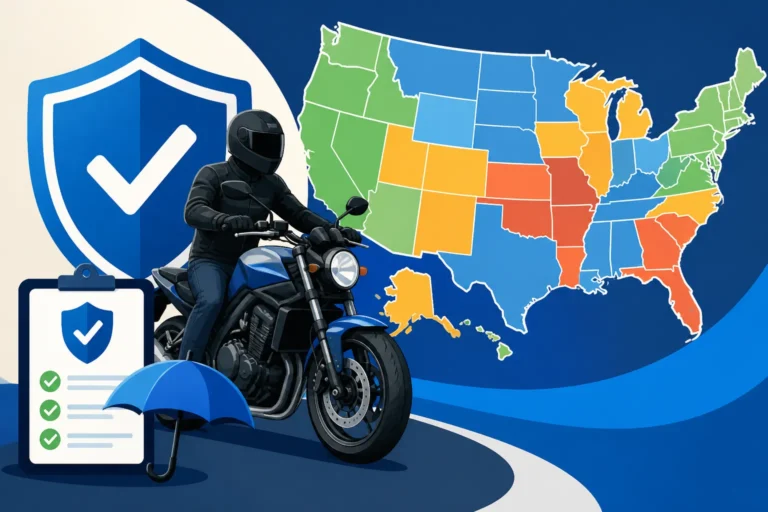
When you compare this to other regions, you’ll see that Motorcycle Helmet Laws by State vary wildly. For example, if you are riding south into Virginia, you'll find similar universal laws. However, if you head north into Pennsylvania, riders over 21 with two years of experience or who have completed a safety course can legally ride without a helmet. This is why Riding Across State Lines: Insurance & Helmet Rules is such a critical topic for Mid-Atlantic riders. You could be perfectly legal one minute and a lawbreaker the second you cross the Mason-Dixon line.
Defining a Legal Helmet and DOT Standards
Not all helmets are created equal in the eyes of Maryland law. To be legal, your helmet must meet the standards set by the Federal Motor Vehicle Safety Standard (FMVSS) 218. You probably know this better as the DOT (Department of Transportation) certification. A legal helmet must have a permanent sticker on the back that says "DOT."
But don't be fooled—the sticker alone isn't always enough. Maryland law enforcement is trained to look for the physical characteristics of a real helmet. A legitimate DOT-approved helmet typically has a thick inner liner (usually about an inch of firm polystyrene foam) that doesn't easily compress. It will have a sturdy chin strap with solid rivets and will usually weigh about three pounds. If you are wearing a "brain bucket" that is thin, lightweight, and lacks that internal padding, you are likely in violation of the law, even if you slapped a fake DOT sticker on the back.
The Novelty Helmet Trap
We often see riders trying to skirt the law by wearing "novelty helmets." These are the thin, chrome, or leather-wrapped shells that look cool but offer about as much protection as a baseball cap. In Maryland, wearing one of these is legally equivalent to wearing no helmet at all. If you are pulled over in a place like Annapolis or Baltimore, the officer can and often will inspect the thickness of your helmet's lining.
The frustration for many riders is the loss of the "wind in the hair" feeling, but the legal reality is that Helmet Laws: Universal vs Partial States determine your liability in a crash. If you are caught in a novelty helmet, you are looking at a moving violation. More importantly, if you are in an accident, wearing a non-compliant helmet can be used against you in court.
Helmet Requirements for Passengers
In Maryland, the operator of the motorcycle is legally responsible for ensuring that their passenger is also wearing a compliant helmet. This is a point of contention for many who pick up a friend for a quick ride around the harbor. If your passenger isn't geared up, you are the one who will likely receive the citation. This is why many Maryland riders keep a "spare" DOT-approved ¾ or full-face helmet in their garage.
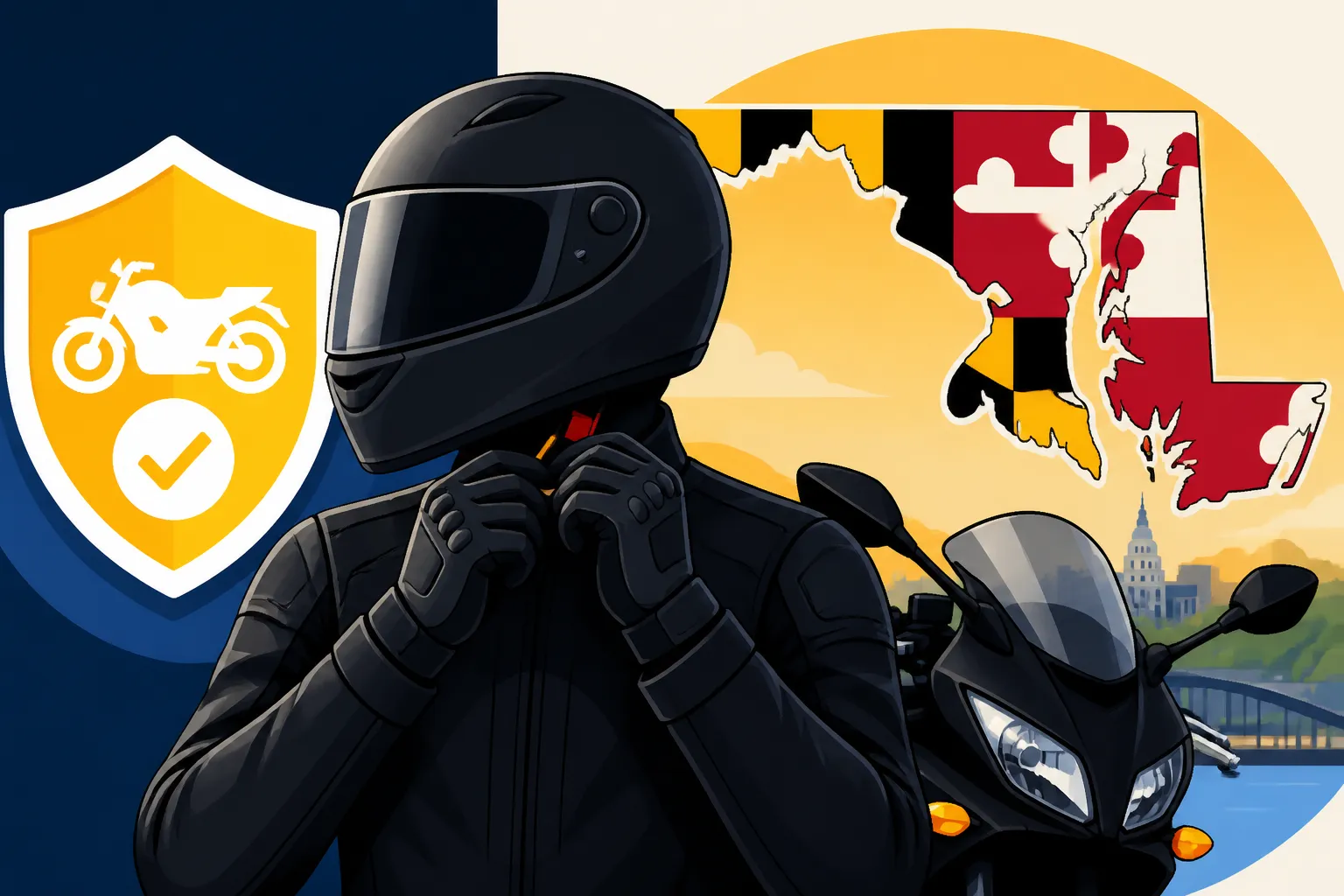
It is also worth noting that the helmet must be properly secured. A helmet that is perched on top of your head with the chin strap dangling is not "worn" according to the letter of the law. To meet the legal requirement, the strap must be buckled and tightened so that the helmet stays on your head in the event of an impact.
Eye Protection and Visibility Requirements in Maryland
While the helmet is the centerpiece of the law, Maryland also mandates eye protection. You cannot simply ride with your eyes exposed to the wind, debris, and insects common on rural Maryland backroads. According to the state code, if your motorcycle is not equipped with a windscreen that is of sufficient height to protect the rider, you must wear an approved eye-protective device.
This requirement is often overlooked by new riders who assume a helmet is enough. However, if you are wearing a motocross-style helmet or an open-face helmet without a built-in shield, you must wear goggles or safety glasses. These must be made of shatterproof material. Regular prescription glasses are generally acceptable, but they don't offer the same level of wrap-around protection that dedicated riding glasses or a helmet shield provide.
Windshields vs Goggles: The Legal Fine Print
The law is somewhat vague on what constitutes a "windscreen of sufficient height." Generally, the rule of thumb used by Maryland State Police is that the windscreen should reach the eye level of the rider when seated in a normal position. If you have a low-profile "fly screen" on a naked bike or a sportbike, it likely won't count as adequate eye protection.
In these cases, you’ll need to ensure your helmet has a face shield or that you have a pair of goggles. Even if you have a massive fairing on a touring bike, many veteran riders still suggest wearing glasses. A stray pebble or a large June bug can easily find its way around a windshield at 65 mph. Legally, having that backup eye protection ensures you never have to argue with an officer about whether your windshield is "tall enough."
Handlebar Height and Mirror Regulations
Beyond the gear you wear on your body, Maryland has specific rules about how your bike is geared. For instance, handlebars cannot be more than 15 inches above the seat. This is aimed at "ape hanger" style bars that can impede a rider's ability to maneuver quickly in an emergency.
Additionally, every motorcycle in Maryland must be equipped with at least one rearview mirror that provides a view of the highway for at least 200 feet to the rear. While many custom builders like the look of a clean handlebar without mirrors, Maryland law is strict on this. If you are going for a custom look, you should at least utilize under-mount mirrors to stay within the legal requirements. Staying compliant with these equipment rules is part of the broader Motorcycle Insurance Requirements by State (2026 Guide) that every rider should review.
Mandatory Turn Signals and Fenders
Maryland also requires that motorcycles manufactured after 1973 be equipped with turn signals. While some states allow hand signals, Maryland insists on functional electric signals. Furthermore, your bike must have rear fenders or "mudguards" that are wide enough to cover the tread of the tires. This is designed to prevent your tires from throwing rocks or water into the faces of other motorists or your own passenger. These small equipment details can be the difference between a pleasant weekend ride and an expensive afternoon at the side of the road.
The Financial and Legal Stakes of Compliance
Failing to follow the Maryland motorcycle helmet law isn't just a minor "fix-it" ticket. It is a moving violation that carries both immediate and long-term financial consequences. A typical fine for a helmet violation in Maryland is approximately $110, but that is only the beginning. Because it is a moving violation, it can lead to points on your driving record.
In Maryland, points lead to higher insurance premiums and, if you accumulate enough of them, a suspended license. When you consider How Much Is Motorcycle Insurance in Maryland?, you have to factor in your driving record. A single helmet violation might not double your rate, but it signals to insurers that you are a higher-risk rider. If you are a new rider, this is even more critical, as How Much Is Motorcycle Insurance for a Beginner? is already higher than average. Adding a gear violation to the mix only makes it worse.
Traffic Stop Scenarios and Fines
If you are pulled over for a helmet violation, the officer has the discretion to cite you for the helmet and any other equipment failures they find. It is common for a helmet stop to turn into a full inspection of your mirrors, turn signals, and even your Proof of Insurance & Registration for Motorcycles. If you cannot provide proof of insurance or if your bike has illegal modifications, that $110 fine can quickly spiral into several hundred dollars and a possible impound of your motorcycle.
Maryland officers are particularly vigilant during major events like the Delmarva Bike Week or events in the Baltimore area. They know that out-of-state riders may not be familiar with the universal law, and they use these opportunities to enforce compliance. It’s always better to have your gear in order before you hit the road.
The Contributory Negligence Hammer in Maryland
This is the most critical part of the guide. Maryland is one of the few remaining states that follows the "Contributory Negligence" rule. In most states, if you are in an accident that was 90% the other person's fault, you can still collect 90% of the damages. Not in Maryland.
In Maryland, if you are even 1% at fault for your own injuries, you can be completely barred from recovering any compensation from the other driver. Insurance companies are well aware of this. If you are in an accident and you weren't wearing a DOT-approved helmet, the other driver's insurance company will argue that you "contributed" to your head injuries by failing to follow the law. If a judge or jury agrees that your lack of a helmet made your injuries worse, you could walk away with zero dollars—even if the other driver was clearly the one who caused the crash. This is why Helmet Law & Insurance: Does Not Wearing One Affect Claims? is such a terrifyingly important topic for Maryland residents.
Impact on Injury Claims and Settlements
The legal battle over a "helmet defense" can drag out a claim for years. Even if you eventually win, the stress and legal fees can be overwhelming. Wearing a helmet isn't just about safety; it's about protecting your legal right to be made whole after an accident. Without that helmet, you are essentially handing the insurance company a "get out of jail free" card.
When you look at your Minimum Liability Insurance Explained (The Three Numbers), remember that those numbers only protect you from others. They don't help you if your own claim is denied because of a helmet violation. This is why many riders in the state opt for What Is Medical Payments Coverage on a Motorcycle? as a backup, though even that can be complicated if you were breaking the law at the time of the incident.
How Helmet Laws Intersect with Motorcycle Insurance in Maryland
Your choice of gear and your compliance with state law are inextricably linked to your insurance profile. In Maryland, insurers look at the state's universal helmet law as a baseline for risk. When you apply for a policy, the insurer assumes you will be riding with a DOT-approved helmet because it is the law.
If you have a history of gear-related violations, you may find yourself pushed into a "high-risk" category. This is especially true if you are looking for Is Motorcycle Insurance Required in Maryland? and realize that while the state mandates liability, it doesn't protect you from the consequences of your own choices. Riders who consistently follow the law and take safety courses often qualify for discounts that can significantly lower their annual costs.
| Requirement Type | Maryland Specification | Legal Source |
|---|---|---|
| Helmet Mandate | Universal (All Riders/Passengers) | MD Transp. Code § 21-1306 |
| Certification | DOT (FMVSS 218) | MVA Regulations |
| Eye Protection | Mandatory (Unless Windscreen Present) | MD Transp. Code § 21-1306(b) |
| Handlebar Height | Max 15 inches above seat | MD Transp. Code § 21-1305 |
| Rearview Mirrors | At least one (200ft visibility) | MD Transp. Code § 22-403 |
Liability and Personal Injury Protection
Maryland requires all motorcycle policies to offer Personal Injury Protection (PIP), though riders are often allowed to waive it for themselves to save money. However, if you are riding without a helmet and you've waived your PIP, you are putting yourself in a massive financial hole if a crash occurs. PIP is designed to cover medical bills regardless of fault, but it usually has low limits (often $2,500). If you have a traumatic brain injury because you weren't wearing a helmet, $2,500 won't even cover the ambulance ride and the first ten minutes in the ER.
Because of the contributory negligence rules mentioned earlier, relying on the other driver’s insurance is a gamble you don’t want to take. Ensuring you have robust Medical Payments Coverage on a Motorcycle can provide an extra layer of protection, but the best insurance is the one you wear on your head.
How Helmet Use Affects Your Premiums
Insurers don't just look at your tickets; they look at the statistics. In states with universal helmet laws like Maryland, the average cost of an injury claim is lower because helmets prevent the most expensive types of injuries—permanent brain damage. This actually helps keep the overall How Much Is Motorcycle Insurance in Maryland? lower than it might be in a state with no helmet laws and higher medical costs.
By wearing your helmet, you are participating in a system that keeps rates relatively stable. If the state were to ever repeal the law, many experts predict that insurance premiums would spike across the board to account for the increased risk of catastrophic injury claims.
Choosing the Right Coverage for the Maryland Rider
Given the legal landscape in the Old Line State, simply having the "legal minimum" insurance is often a mistake. You want a policy that accounts for the fact that you are sharing the road with distracted drivers on the Beltway. Beyond liability, you should strongly consider Uninsured Motorist coverage. If someone hits you and they don't have insurance, and you were following all the rules—including the helmet law—your own insurance will step in to cover your damages.
Being a responsible rider in Maryland means more than just knowing how to handle your bike; it means understanding the web of laws that protect you. From the DOT sticker on your helmet to the limits on your policy, every choice you make impacts your safety and your financial security. Don't let a simple gear choice ruin your ability to enjoy the ride.
Disclaimer
The information provided in this guide is for informational purposes only and does not constitute legal or professional insurance advice. Laws regarding motorcycle equipment and insurance are subject to change. Always consult with the Maryland Motor Vehicle Administration or a qualified legal professional for the most current regulations.