Is Motorcycle Insurance Required in Louisiana?
Riding a motorcycle in the Pelican State is an experience unlike any other, from cruising through the French Quarter to winding along the scenic routes of Acadiana. But amidst all that freedom and joy, there's often a nagging question that pops into riders' minds: "Is motorcycle insurance required in Louisiana?" It’s a common point of confusion and, frankly, a source of stress for many, especially with state laws often feeling like a maze. This comprehensive guide is here to clear up all that uncertainty, walking you through Louisiana’s specific motorcycle insurance laws so you can ride legally and confidently.
Louisiana Motorcycle Insurance Requirements: The Lowdown
Let’s cut right to the chase because nobody wants to be left guessing when it comes to legalities. Understanding what's mandated by law is the first step toward responsible riding, and Louisiana has its own set of rules that every rider needs to know inside and out.
Is It Mandatory to Carry Motorcycle Insurance in Louisiana?
Absolutely, yes. Just like with cars, if you're planning on hitting the open road on two wheels in Louisiana, you must carry motorcycle insurance. It’s not an option; it's a legal obligation designed to protect not just you, but also other motorists and pedestrians in case of an accident. The state's Motor Vehicle Financial Responsibility Law extends to motorcycles, meaning you need to prove you can cover potential damages if you're at fault in a collision. There’s no getting around this, so don’t even try to register your bike without it, as you’ll quickly find out that’s a non-starter in most cases.
Think about it this way: imagine you're riding through Shreveport or Baton Rouge, and an unexpected fender bender happens, or worse, a serious collision. Without insurance, the financial burden of injuries and property damage falls squarely on your shoulders. Louisiana law recognizes this potential for catastrophe and mandates insurance precisely to prevent such devastating financial outcomes. It’s a safety net, not just a hoop to jump through. If you're wondering, "Do You Legally Need Motorcycle Insurance?", the answer in Louisiana is a resounding yes.
Understanding Louisiana's Minimum Liability Coverage
Okay, so you know you need insurance. But what kind of insurance, and how much? This is where the numbers come into play, and they’re pretty standard across many states. In Louisiana, you’re required to carry minimum liability coverage, often expressed as three numbers: 15/30/25. Let’s break down what each of these means in plain English, because honestly, these terms can feel like a foreign language if you're new to the insurance game or just haven't looked closely at your policy in a while.
- $15,000 for bodily injury liability per person: This is the maximum amount your insurance company will pay for medical expenses, lost wages, and pain and suffering for one person injured in an accident where you are deemed at fault. So, if you hit another rider or a pedestrian, and they incur $20,000 in medical bills, your insurance will cover $15,000 of that, and you're personally responsible for the remaining $5,000. It's a critical number to be aware of because medical costs can skyrocket quickly.
- $30,000 for bodily injury liability per accident: This is the maximum amount your insurance will pay for all injuries in a single accident where you are at fault, regardless of how many people were hurt. For example, if you cause an accident that injures three people, and their combined medical bills come to $45,000, your policy will only pay out $30,000. Again, you would be on the hook for the remaining $15,000 out of your own pocket. As you can see, even a minor multi-person incident can quickly exceed these limits.
- $25,000 for property damage liability per accident: This is the maximum amount your insurance will pay for damages to another person's property (like their vehicle, a fence, or even a building) that you cause in an at-fault accident. If you crash into someone’s new Harley-Davidson and total it, and it was valued at $35,000, your insurance would cover $25,000, leaving you to pay the additional $10,000. Given the cost of vehicles today, this limit can be quite low.
These "Minimum Liability Insurance Explained (The Three Numbers)" are the bare minimum, the absolute floor for what you need to carry to legally operate your motorcycle in Louisiana. Many riders, once they understand the potential costs of an accident, choose to carry higher limits to better protect their personal assets. It’s something worth seriously considering, especially if you have savings, a home, or other assets you want to shield from potential lawsuits.
Beyond the Basics: What Happens If You Don't Comply?
Now that we've covered the requirement and the minimums, let's talk about what happens if you decide to play fast and loose with the law. While it might seem tempting to save a few bucks by skipping insurance, the consequences in Louisiana are far more expensive and inconvenient than any premium you’d pay.
Penalties for Riding Without Insurance in Louisiana
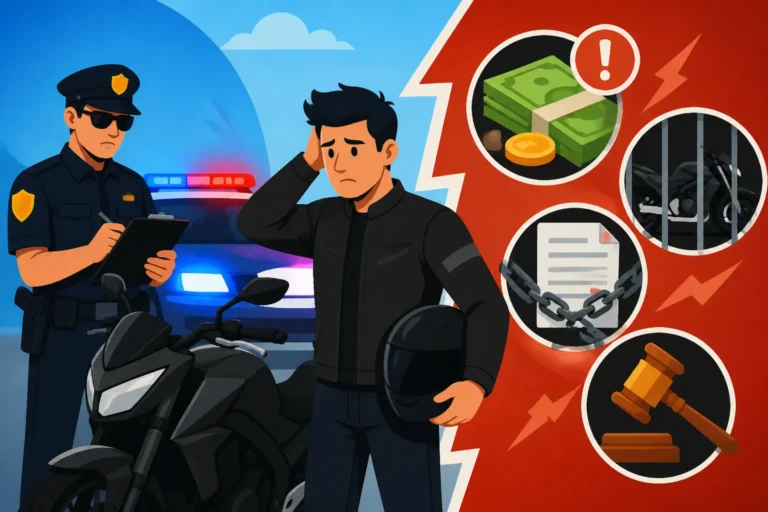
Louisiana takes its financial responsibility laws seriously, and riding without valid motorcycle insurance is not just frowned upon; it carries some pretty hefty penalties. If you get caught, either during a routine traffic stop or, heaven forbid, after an accident, prepare for a world of trouble.
First off, you’re looking at significant fines. The exact amount can vary depending on whether it's your first offense or a repeat, but they can easily run into the hundreds of dollars, potentially even a thousand or more. Imagine that perfectly good money you saved on premiums now going straight to the state as a penalty. Doesn’t feel like much of a saving, does it?
Beyond the financial hit, your license can be suspended and your vehicle registration canceled. This means you can't legally ride any motorcycle, and your current bike can't be legally on the road. Getting your license and registration reinstated often involves paying additional fees, proving you now have insurance (which might be more expensive given your history), and sometimes even needing an SR-22 filing, which designates you as a high-risk driver and will certainly drive up your future premiums. If you're thinking about "Penalties for Riding Without Insurance", know that it's a cascade of problems.
In some severe cases, especially repeat offenses or if you’re involved in an accident, your motorcycle could even be impounded. This adds towing fees, storage fees, and more headaches to an already difficult situation. Imagine having your prized bike locked away in an impound lot, all because you tried to skirt the rules. It's a real buzzkill.
The Financial Risks of Being Uninsured
The state penalties are just the beginning. The truly devastating consequences of riding without insurance in Louisiana come into play if you're involved in an accident where you are at fault. This is where the financial responsibility aspect truly bites.
If you cause an accident and don't have insurance, you are personally liable for all damages and injuries. This isn't just a theoretical threat; it's a very real scenario that can lead to financial ruin. We're talking about:
- Medical bills: Even a minor injury can result in thousands of dollars in medical costs. A serious one, especially involving hospitalization, surgeries, or long-term care, can easily run into hundreds of thousands, if not millions. If you're found at fault and uninsured, every penny of that is your responsibility.
- Property damage: Replacing a totaled vehicle, repairing a damaged building, or fixing other property can be incredibly expensive. Again, it’s all on you.
- Lawsuits: The injured parties and their insurance companies will come after you to recover their losses. This can lead to civil lawsuits, wage garnishments, liens on your property, and even bankruptcy. A lawsuit can drag on for years, creating immense stress and costing you even more in legal fees.
This is precisely why states have Financial Responsibility Laws for Riders. They're designed to ensure that if someone causes harm, there's a mechanism in place to compensate the victims without pushing the at-fault party into irreversible financial despair. Choosing to ride without insurance is essentially gambling with your entire financial future every time you turn the key.
Important Considerations for Louisiana Riders
Beyond just having the minimum, there are practical aspects of motorcycle insurance in Louisiana that every rider should be aware of. Knowing these details can save you trouble down the road and ensure you’re always prepared.
Proof of Insurance and Registration
So you’ve got your insurance policy – fantastic! But having it isn’t enough; you also need to be able to prove you have it when required. In Louisiana, you’re required to carry proof of insurance whenever you’re operating your motorcycle. This isn't just good practice; it's the law.
Traditionally, this meant carrying a physical insurance card or a copy of your policy declarations page. However, with technology advancing, many states, including Louisiana, now accept digital proof of insurance. This means you can often show your insurance card on your smartphone or tablet during a traffic stop. This is super convenient because who wants to dig through their saddlebags for a paper card while a state trooper is looking on? Just make sure your phone is charged! Still, some riders prefer to carry a physical copy as a backup, especially if they ride in areas with spotty cell service. This topic is well covered in "Proof of Insurance: Digital vs Paper for Riders".
In addition to proof of insurance, you'll also need to carry your motorcycle registration and your driver's license with a motorcycle endorsement. Ensure all these documents are current and easily accessible. Getting pulled over for a minor infraction can quickly escalate if you can't produce the necessary paperwork.
Additional Coverage Options Beyond the Minimum
While Louisiana law only mandates liability insurance, savvy riders know that the minimum isn't always enough to truly protect themselves. Thinking that minimum liability means "full coverage" is a common misconception that can lead to serious regret. There are several other types of coverage that, while optional, are highly recommended for comprehensive protection, especially given the unique risks associated with riding a motorcycle.
Consider these important additions:
- Collision Coverage: This pays for damages to your motorcycle if you hit another vehicle or object, or if your bike rolls over, regardless of who is at fault. Without it, if you total your own bike in an accident you caused, you’re out of luck and out of a motorcycle. For many riders, especially those with newer or more expensive bikes, "Collision vs Comprehensive Motorcycle Coverage" is a crucial decision point.
- Comprehensive Coverage: This is your protection against non-collision incidents. Think theft, vandalism, fire, natural disasters, or hitting an animal (a very real concern on Louisiana's rural roads). If your motorcycle is stolen from your garage or gets damaged in a hurricane, comprehensive coverage steps in.
- Uninsured/Underinsured Motorist (UM/UIM) Coverage: This is incredibly important. Despite strict laws, there are still far too many drivers (and riders) on the road without adequate insurance. If you're hit by one of them and they can't pay for your injuries or bike damage, your UM/UIM coverage will kick in. This could literally save you from financial devastation. You can learn more about "Uninsured & Underinsured Motorist Coverage (UM/UIM)".
- Medical Payments (MedPay) Coverage: This covers medical expenses for you and any passengers, regardless of fault, up to a certain limit. It’s a great way to quickly cover immediate medical bills or fill gaps in your health insurance.
- Accessories and Custom Parts Coverage: If you’ve invested in custom paint, chrome, upgraded exhaust, or other aftermarket parts, standard policies might not cover their full value. This add-on ensures your pride and joy is fully protected. Many Harley-Davidson and custom bike owners find "Accessories & Custom Parts Coverage Explained" to be indispensable.
- Roadside Assistance & Towing: Let's be honest, breakdowns happen. Having coverage that will tow your bike to the nearest repair shop can be a lifesaver, especially if you're far from home or riding in a remote area.
While these coverages will increase your premium, the peace of mind and financial protection they offer far outweigh the extra cost for most riders. Think about your riding style, the value of your bike, and your personal financial situation when deciding what additional coverage makes sense for you. It's often better to be over-prepared than under-protected when you're out on two wheels.
Ultimately, carrying motorcycle insurance in Louisiana isn't just a legal requirement; it's a fundamental part of responsible riding. It ensures that you, your passengers, and others on the road are protected from the unforeseen costs of an accident. By understanding the state's minimum requirements and considering additional coverages, you can hit the road with confidence, knowing you're fully covered for whatever adventures await.
Disclaimer
This article is for general informational purposes only and does not constitute professional advice. Laws, prices and regulations vary by location and change over time. Consult a qualified professional for guidance on your specific situation.