Is Motorcycle Insurance Required in Virginia?
Figuring out the exact motorcycle insurance rules can feel like trying to solve a puzzle, especially when states have unique twists on what's "required." Many riders in Virginia often wonder if they absolutely need to carry an insurance policy or if there's another path, and what happens if they don't. This guide is here to clear up that confusion, diving deep into Virginia's specific motorcycle insurance laws so you can ride legally and, more importantly, with peace of mind.
Is Motorcycle Insurance Required in Virginia?
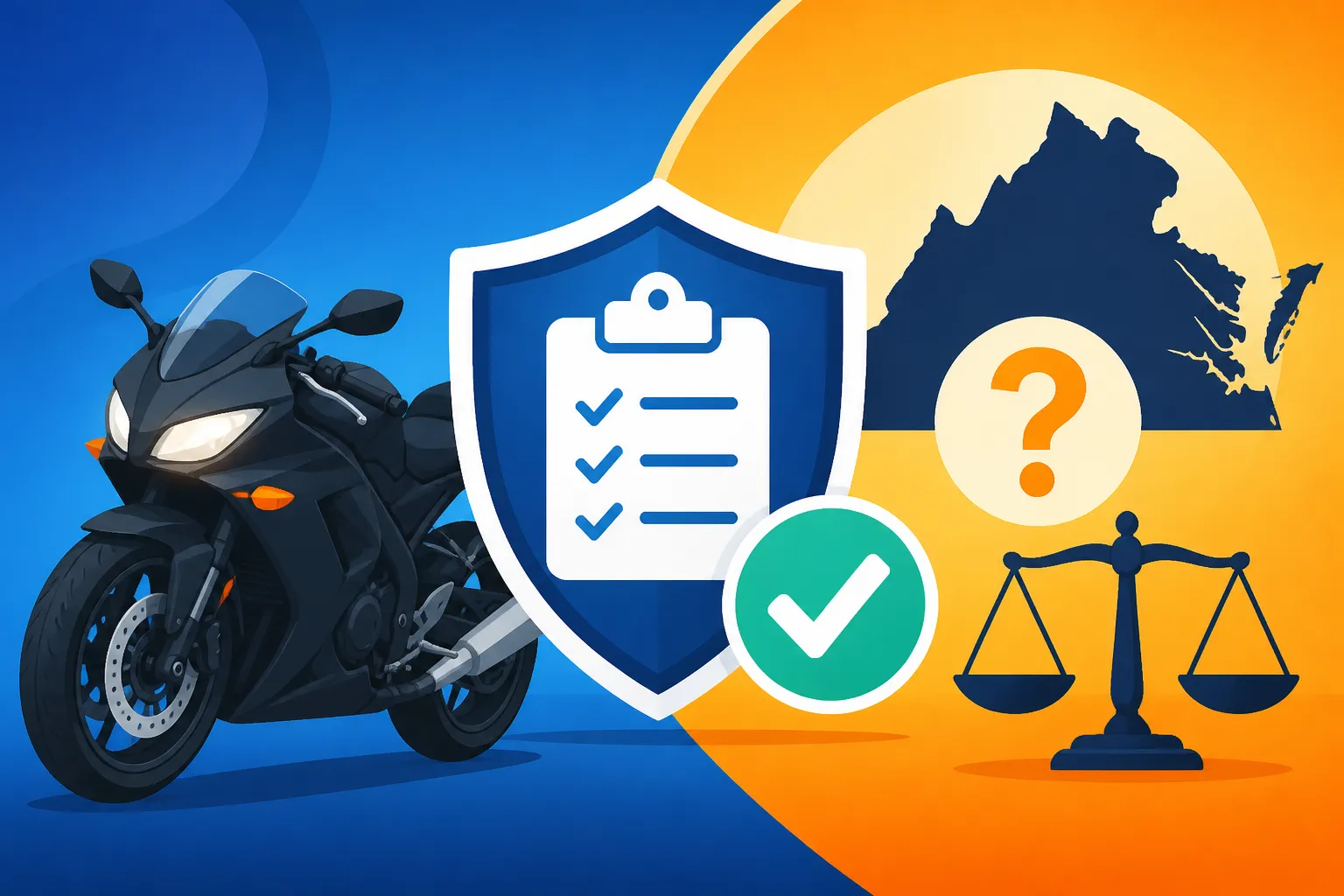
It's a common question, and the answer in Virginia isn't a simple "yes" or "no" like in many other states. While Virginia does have a financial responsibility law that every rider must meet, it offers a specific alternative to purchasing a traditional insurance policy. This can be a point of confusion for many, as most states strictly mandate insurance. However, understanding this distinction is crucial to ensure you're compliant with Virginia's Department of Motor Vehicles (DMV) regulations.
Understanding Virginia’s Financial Responsibility Law
Virginia operates under what's known as a "financial responsibility" law. This means that every driver and rider on public roads must be able to prove they can cover the costs if they cause an accident that results in injury or property damage to someone else. The most common, and frankly, the most recommended way to satisfy this requirement is by purchasing a liability motorcycle insurance policy. This policy acts as a safety net, paying out up to your chosen limits if you're found at fault in a crash. Without this proof of financial responsibility, you could face severe penalties, which we'll discuss in detail later. Many states share similar requirements; you can read more about what happens if you crash without insurance.
This financial responsibility isn't just a suggestion; it's a legal obligation that Virginia takes seriously. It's designed to protect all parties on the road, ensuring that victims of accidents caused by others aren have a way to be compensated for their medical bills, lost wages, and property damage. For motorcyclists, this means having at least the minimum liability coverage in place before you even think about hitting the scenic routes of the Blue Ridge Mountains or cruising through Virginia Beach.
The Uninsured Motorist Fee Option (and why it’s risky)
Now, here's where Virginia sets itself apart from almost every other state in the country. Instead of buying a motorcycle insurance policy, you can choose to pay an uninsured motorist fee directly to the Virginia Department of Motor Vehicles (DMV) when you register your motorcycle. For 2026, this fee is $500 annually. On the surface, this might sound like an easier or cheaper option, especially for riders who are just trying to avoid the monthly premium hassle.
However, and this is a HUGE however, paying this fee does not provide any insurance coverage for you. Let me repeat that: it does not protect you or your motorcycle in any way, shape, or form. All it does is allow you to legally operate your motorcycle without purchasing a traditional insurance policy. If you cause an accident, you are still personally responsible for all damages and injuries you inflict on others, and that $500 fee won't pay a single cent towards those costs. This means you could be on the hook for tens of thousands, or even hundreds of thousands, of dollars out of your own pocket. Imagine hitting a luxury car, or worse, causing severe injuries to another person; your entire financial future could be in jeopardy. It's a gamble that very few seasoned riders or financial advisors would ever recommend.
Virginia’s Minimum Motorcycle Insurance Requirements
If you decide to go the smart route and purchase actual motorcycle insurance – which, again, is what almost everyone should do – you'll need to meet Virginia's minimum coverage requirements. These aren't just arbitrary numbers; they represent the absolute lowest amount your insurance company will pay out in the event of an at-fault accident. It's crucial to understand what these numbers mean, as they are often presented in a shorthand format.
Breaking Down the Coverage Numbers
Virginia's minimum liability insurance requirements are typically expressed as three numbers: for example, 30/60/20. Let's break down what each of these figures represents:
- $30,000 for Bodily Injury Liability per Person: This is the maximum amount your insurance company will pay for medical expenses, lost wages, and pain and suffering for one individual injured in an accident where you are at fault. If you injure multiple people, this limit applies to each person.
- $60,000 for Total Bodily Injury Liability per Accident: This is the absolute maximum your insurance company will pay for all bodily injuries combined in a single accident where you are at fault, regardless of how many people were hurt. So, if three people are injured and their total medical bills exceed $60,000, you could be personally responsible for the rest.
- $20,000 for Property Damage Liability per Accident: This is the maximum amount your insurance will pay to repair or replace property you damage in an at-fault accident. This could be another vehicle, a fence, a mailbox, or even a building. Given the cost of vehicle repairs today, $20,000 can be quickly exhausted by even a moderately severe collision.
It's important to note that as of January 1, 2025, Virginia's minimum liability limits are set to increase. The new minimums will be $30,000 for bodily injury per person, $60,000 for bodily injury per accident, and $20,000 for property damage per accident (often written as 30/60/20). Before that, they were 25/50/20. Always check the most current regulations with the Virginia DMV or your insurance provider, as these figures can change. For a deeper dive into these numbers, you might find our guide on Minimum Liability Insurance Explained (The Three Numbers) helpful.
Beyond the Minimum: Why More Coverage is Smart
While meeting the state's minimum requirements is legally sufficient, it's rarely enough to truly protect you financially. Think about it: a single emergency room visit can easily cost thousands of dollars, let alone a prolonged hospital stay, surgery, or rehabilitation. If you're involved in a serious accident and only carry the minimum, you could quickly find yourself facing a lawsuit for the difference between your coverage limits and the actual damages. This means your personal assets – your savings, your home, your future earnings – could be at risk.
Most experienced riders and insurance professionals strongly recommend carrying significantly higher liability limits, often $100,000/$300,000/$50,000 or even higher. The difference in premium between minimum coverage and higher limits is often surprisingly small compared to the massive financial protection it provides. Beyond liability, consider these additional coverages:
- Uninsured/Underinsured Motorist (UM/UIM) Coverage: This is incredibly important in Virginia. Even though Virginia has the uninsured motorist fee option, there are still many uninsured drivers on the road. UM/UIM protects you if you're hit by someone who doesn't have insurance or doesn't have enough insurance to cover your damages. Given the number of vehicles on the road without proper coverage, this can be a lifesaver. You can find more information on this type of protection in our article on Uninsured & Underinsured Motorist Coverage (UM/UIM).
- Collision Coverage: This pays for damages to your own motorcycle if you hit another vehicle or object, or if your bike rolls over. Essential if you want to protect your investment.
- Comprehensive Coverage: This covers non-collision events like theft, vandalism, fire, natural disasters (hail, floods), or hitting an animal. If you care about your bike when it's not in an accident, this is a must-have. Our piece on Collision vs Comprehensive Motorcycle Coverage provides a clear comparison.
- Medical Payments (MedPay): This covers medical expenses for you and any passengers, regardless of who is at fault. A great addition since your health insurance might have deductibles or co-pays that MedPay can help cover.
Investing in more comprehensive coverage is about protecting your financial future and ensuring that a single moment of bad luck on the road doesn't derail your life.
Consequences of Riding Without Proper Insurance in Virginia
Choosing to ride without meeting Virginia's financial responsibility requirements, whether by foregoing insurance or neglecting the uninsured motorist fee, carries substantial risks and severe legal and financial penalties. It's not just a slap on the wrist; it can profoundly impact your driving privileges and your wallet.
Penalties for Non-Compliance
Virginia takes the issue of uninsured motorists very seriously. If you're caught riding without either a valid insurance policy or having paid the annual uninsured motorist fee, you could face a series of unpleasant consequences:
- Significant Fines: You could be subject to fines upwards of $600 for operating an uninsured motor vehicle. These fines can add up quickly, especially if it's not your first offense. Imagine getting pulled over for a minor traffic infraction, only for the officer to discover you lack the proper financial responsibility. That minor stop just turned into a major headache.
- Driver's License and Registration Suspension: The Virginia DMV can suspend your driver's license and vehicle registration. This means you wouldn't be able to legally ride any motorcycle or drive any car. Reinstatement often involves paying hefty fees, filing an SR-22 form, and proving future financial responsibility. An SR-22 is a certificate of financial responsibility that your insurance company files with the state on your behalf, indicating that you have the minimum liability coverage. You can learn more about SR-22 for Motorcycles: When It's Required if you find yourself in this situation.
- Impoundment of Your Motorcycle: In some cases, your motorcycle could be impounded, leading to towing fees and daily storage costs that quickly accumulate. Getting your bike back would involve proving financial responsibility and paying all associated fees.
- Court Appearances and Legal Troubles: Riding uninsured is a serious traffic offense in Virginia and will likely require a court appearance. This means time off work, legal fees if you choose to hire an attorney, and the stress of navigating the judicial system.
These penalties are designed to deter riders from taking the risk, and for good reason. The state wants to ensure that if an accident occurs, innocent victims have a path to recovery. You can also explore our article, What Happens If You Ride Without Insurance?, for a broader perspective on nationwide penalties.
Financial Ramifications of an Accident
Beyond the legal penalties, the financial consequences of being involved in an at-fault accident without insurance or without having paid the uninsured motorist fee are catastrophic. This is the biggest risk you take by not having proper coverage:
- Personal Liability for Damages: If you're at fault in an accident, you are personally liable for all damages. This includes the other party's medical bills, lost wages, property damage (vehicle repairs or replacement), and potentially pain and suffering. These costs can easily run into the tens, if not hundreds, of thousands of dollars.
- Lawsuits and Asset Seizure: The injured party can sue you directly to recover their losses. A judgment against you could lead to wage garnishment, seizure of your bank accounts, or even a lien against your property, like your home. Your entire financial future could be ruined.
- No Coverage for Your Own Injuries or Bike: Remember, the uninsured motorist fee or lack of insurance provides no protection for you or your motorcycle. If you are injured, you'll be paying your own medical bills. If your bike is damaged, you'll be paying for repairs or replacement out of pocket.
- SR-22 Requirement: After an accident or being caught uninsured, the Virginia DMV will likely require you to file an SR-22. This typically means higher insurance premiums for several years because you're now considered a "high-risk" driver.
It's clear that the short-term "savings" of avoiding insurance or paying the uninsured motorist fee are completely dwarfed by the potential long-term financial devastation that a single accident could cause. It's simply not worth the risk.
How to Ensure You’re Legally Covered in Virginia
Navigating the world of motorcycle insurance doesn't have to be intimidating. Getting yourself legally covered in Virginia means understanding the straightforward steps to secure a policy and knowing what documentation to keep on hand. It's all about being prepared so you can hit the road without any worries about compliance.
Getting Your Policy in Place
The best and safest way to meet Virginia’s financial responsibility requirements is by purchasing a comprehensive motorcycle insurance policy. Here's how you can go about it:
- Shop Around for Quotes: Don't settle for the first quote you get! Different insurance companies offer varying rates and coverage options. It's smart to get quotes from several providers like Progressive, Geico, Dairyland, and Markel. Each company might weigh factors like your age, riding experience, bike type, and location differently, leading to significant price differences. Our guide on How to Compare Motorcycle Insurance Quotes can walk you through the process.
- Understand Your Coverage Needs: While Virginia has minimums, consider what coverage truly protects you and your assets. Think about your bike's value, your financial situation, and how much risk you're comfortable taking. Most agents will be happy to explain the different types of coverage, from liability to comprehensive, collision, and add-ons like roadside assistance. You can also read our comprehensive article, What Motorcycle Coverage Do You Actually Need?, for more insights.
- Provide Accurate Information: Be honest and thorough when providing details about yourself and your motorcycle. This includes your riding history, any safety courses you've completed, and specific details about your bike (make, model, year, VIN, any custom modifications). Misinformation can lead to issues down the line if you need to file a claim.
- Purchase Your Policy: Once you've compared quotes, chosen your coverage, and selected an insurer, you can purchase your policy. Most companies allow you to do this online, over the phone, or through an agent. Make sure your policy effective date is before you plan to ride.
- Get Proof of Insurance: As soon as you purchase your policy, your insurer will provide you with proof of insurance. This usually comes in the form of an insurance card or a declaration page. Keep this handy, as you'll need it when registering your bike and if you're ever pulled over.
Proof of Insurance for Virginia Riders
Having an active insurance policy is one thing; being able to prove it when asked is another. In Virginia, as in most states, you're required to carry proof of insurance whenever you're operating your motorcycle.
- Physical Insurance Card: Most insurers still provide a physical card that you can keep in your wallet or with your registration documents. This is a universally accepted form of proof.
- Digital Proof of Insurance: Good news for modern riders! Virginia, like many other states, generally accepts digital proof of insurance displayed on your smartphone or other electronic device. This means you can keep an electronic copy of your insurance card on your phone and present it to law enforcement if requested. However, always ensure your phone is charged! You can learn more about this in Proof of Insurance: Digital vs Paper for Riders.
- Vehicle Registration: When you register your motorcycle with the Virginia DMV, you'll need to provide proof of insurance (or show that you've paid the uninsured motorist fee). The DMV will record this information.
- Renewal: Remember to keep your insurance current. Your policy will need to be renewed periodically (usually every six months or annually). Your insurer will send you reminders, but it’s ultimately your responsibility to ensure there’s no lapse in coverage. Lapses can lead to fines and suspensions, even if you weren't actively riding during that time.
By following these steps, you can confidently ride your motorcycle throughout Virginia, knowing you're fully compliant with state law and protected against unexpected financial burdens.
Here's a quick reference table summarizing Virginia's requirements:
| Requirement | Details (as of 2026, check for updates) | Important Considerations |
|---|---|---|
| Financial Responsibility | Required | Can be met by insurance or Uninsured Motorist Fee. |
| Minimum Liability Insurance Limits | $30,000 Bodily Injury per person | This is the legal minimum, but often insufficient. |
| $60,000 Bodily Injury per accident | Consider higher limits for better financial protection. | |
| $20,000 Property Damage per accident | ||
| Uninsured Motorist Fee | $500 annually | Does NOT provide any coverage. Rider is personally responsible for all damages. |
| Proof of Insurance | Required to carry | Physical or digital proof is acceptable. |
| Penalties for Non-Compliance | Fines, license/registration suspension | Could also include motorcycle impoundment, court appearances, and an SR-22 requirement. |
Disclaimer
Please note that this article provides general information about motorcycle insurance requirements in Virginia and is not intended as legal advice. Insurance laws can change, and individual circumstances vary. Always consult with the Virginia Department of Motor Vehicles or a qualified insurance professional to confirm the most current regulations and to discuss your specific coverage needs.