Do I Need Uninsured Motorist Coverage on a Motorcycle?
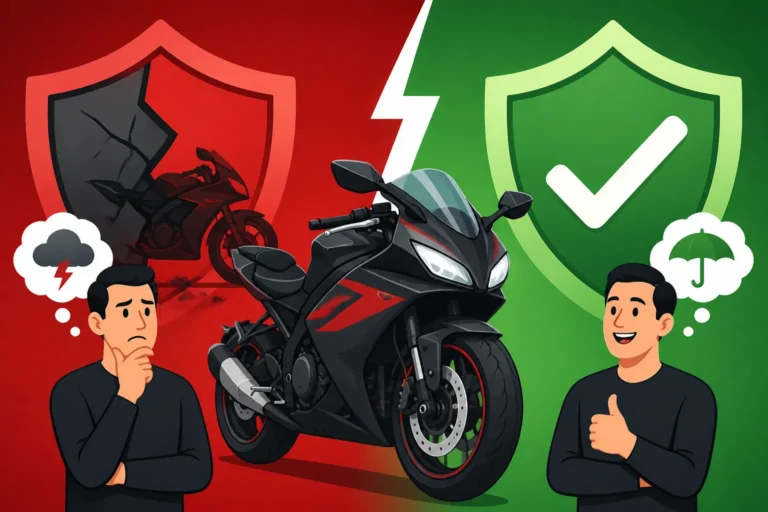
Riding a motorcycle comes with an incredible sense of freedom and exhilaration, but let's be real – it also comes with unique risks. One of the biggest fears for many riders isn't just an accident, but an accident caused by someone who doesn't carry insurance, leaving you high and dry with massive medical bills and a totaled bike. This comprehensive guide will delve into uninsured motorist coverage, explaining what it is, why it's so vital for motorcyclists, and how it acts as a crucial safety net in an unpredictable world.
The Alarming Reality of Uninsured Drivers and the Risks to Riders
It's a frustrating truth: despite laws requiring it, a significant number of drivers on our roads choose to operate without any auto insurance. This isn't just a minor technicality; it's a huge financial gamble for everyone else, especially for those of us on two wheels. You might be the most cautious rider out there, always looking twice and anticipating every move, but you can't control what other people do, or whether they've bothered to protect themselves and others financially.
The Ever-Present Threat of Uninsured Motorists
Imagine this: you're cruising down a scenic highway in, say, Florida, a state known for its beautiful rides but also, unfortunately, for its higher-than-average rates of uninsured drivers. Suddenly, a car swerves into your lane, clips your front wheel, and sends you sprawling. You're hurt, your bike is mangled, and as the dust settles, you find out the other driver has no insurance whatsoever. No liability coverage to pay for your medical expenses, your lost wages, or the extensive repairs your beloved machine desperately needs. This isn't a hypothetical scare tactic; it's a harsh reality that riders face every single day across the country.
Statistics vary by state, but nationally, about one in eight drivers on the road is uninsured. In some states, that number can climb even higher, reaching over 20% in places like Mississippi, New Mexico, and the aforementioned Florida. That means, on any given ride, you have a 1 in 5 chance, or more, of encountering a driver who simply can't pay for the damage they cause. For a motorcyclist, where injuries are often more severe and property damage more costly, this risk becomes astronomically high. It's a sobering thought, and it's precisely why this type of protection isn't just an "extra" but often a necessity. You might also want to look into your state's specific Motorcycle Insurance Requirements by State (2026 Guide) to understand the baseline.
Why Motorcyclists are Uniquely Vulnerable to Uninsured Drivers
As riders, we're acutely aware of our physical vulnerability compared to someone encased in a steel cage. A minor fender bender for a car can be a life-altering event for a motorcyclist. This inherent difference makes the threat of an uninsured driver even more terrifying. When a car driver without insurance causes an accident, their victim, if they're in another car, might have damages covered by their own collision insurance, and their personal injury protection (PIP) or health insurance can step in for medical costs. But for motorcyclists, the stakes are significantly higher.
Your bike might sustain extensive damage, from bent forks to a completely totaled frame, often costing thousands of dollars to repair or replace. Your body, being unprotected by airbags and a metal chassis, is susceptible to severe injuries, from broken bones to traumatic brain injuries, leading to astronomical medical bills, long recovery times, and lost income. Without uninsured motorist coverage, you would be left to pay for all of this out of pocket, pursue a costly and often futile lawsuit against an individual who likely has no assets, or rely solely on your health insurance, which won't cover your bike or lost wages. It’s a financial nightmare that can derail your life for years.
What is Uninsured Motorist Coverage and How It Protects You
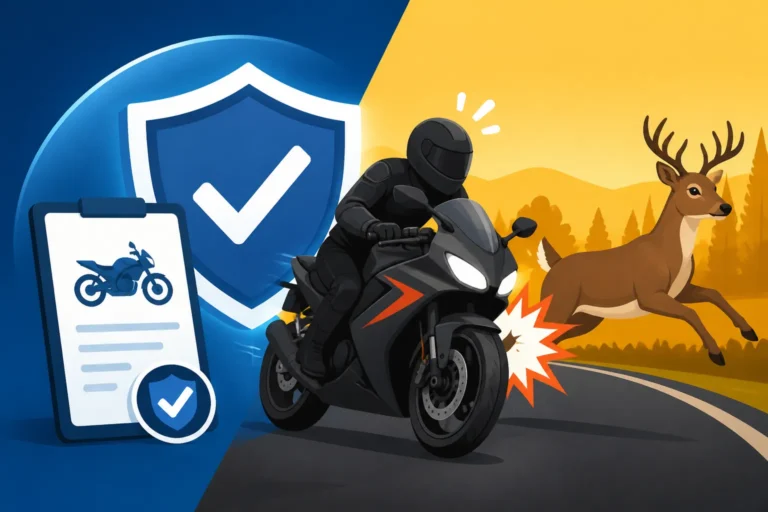
So, what exactly is this vital coverage that so many riders need to protect themselves? Uninsured Motorist (UM) coverage is designed to protect you, the policyholder, if you're involved in an accident with a driver who doesn't have insurance or is a hit-and-run driver and cannot be identified. It acts as a stand-in for the at-fault driver's missing liability insurance, paying for damages that would otherwise be your responsibility. It's truly your own personal safety net, ensuring that you're not left in a devastating financial hole simply because someone else broke the law.
Breaking Down Uninsured Motorist Bodily Injury UMBI
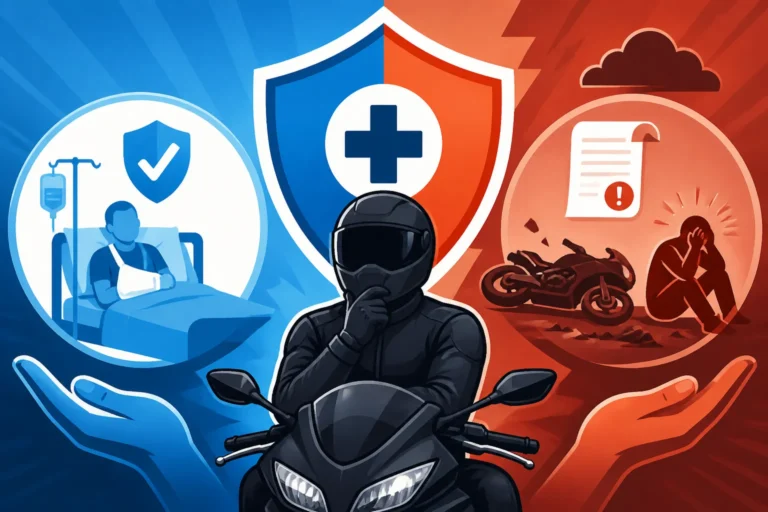
Uninsured Motorist Bodily Injury, often shortened to UMBI, is the part of your policy that steps up to cover the costs associated with injuries to you and your passengers if an uninsured driver is at fault. This includes a wide range of expenses that can quickly add up after a motorcycle accident. Think about it: immediate emergency room visits, ambulance rides, surgery, ongoing physical therapy, rehabilitation, prescription medications, and even future medical care. UMBI will cover these costs up to your policy limits.
Beyond direct medical bills, UMBI also accounts for other significant financial losses. If your injuries are severe enough to keep you off work, UMBI can compensate you for lost wages, helping to keep your household afloat during recovery. It can also cover "pain and suffering," a non-economic damage that acknowledges the physical discomfort, emotional distress, and reduced quality of life you experience due to the accident. For instance, if you break your leg in a crash caused by an uninsured driver, UMBI would cover your initial hospital stay, reconstructive surgery, weeks of physical therapy, and the income you lost from not being able to work during your recovery. It also covers the compensation for the pain endured. This coverage is absolutely paramount for any rider, as our bodies are far more exposed than someone in a car. This is also where understanding concepts like Minimum Liability Insurance Explained (The Three Numbers) becomes relevant, as it shows what basic coverage might not cover.
Understanding Uninsured Motorist Property Damage UMPD
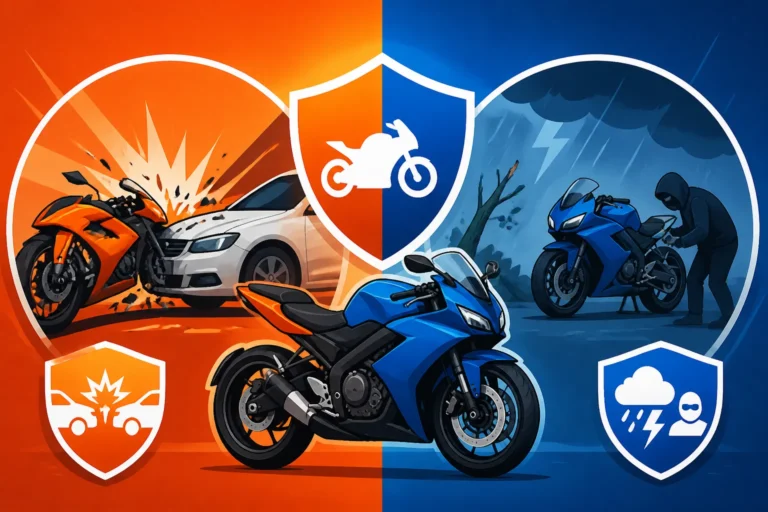
While UMBI takes care of your body, Uninsured Motorist Property Damage (UMPD) is there for your beloved motorcycle. This coverage pays for the damage to your bike if you're hit by an uninsured driver. Just like UMBI, it steps in where the at-fault driver's nonexistent liability insurance would normally pay. This means repairs to your frame, engine, fairings, wheels – essentially, anything that's damaged on your motorcycle. If your bike is declared a total loss, UMPD will also cover its actual cash value, or the agreed-upon value if you have that specific endorsement, up to your policy limits.
A common question often arises: "Doesn't my collision coverage already do that?" And you're right, collision coverage would pay for the damage to your bike regardless of fault. However, if you have collision, you'd pay your deductible, and it could count as an at-fault claim on your record, potentially raising your rates. UMPD, on the other hand, usually has a much lower deductible, or sometimes no deductible at all, and doesn't affect your rates as an at-fault claim because the other driver was the one without insurance. It's often the more financially advantageous route when available. Imagine getting T-boned by a driver who blows a stop sign in a beat-up sedan, and when the police arrive, they discover the driver has no insurance. Your UMPD coverage would step in to pay for the extensive damage to your Harley-Davidson, less your relatively small UMPD deductible, saving you from a much larger collision deductible. It can be a real lifesaver, especially if you have a custom or expensive bike.
The Critical Distinction: Uninsured vs. Underinsured Motorist Coverage
It's easy to lump Uninsured and Underinsured Motorist coverage together, and often they're offered as a combined package. However, there's a crucial difference between the two, and understanding it can save you from a world of financial pain. While both protect you from other drivers who can't fully cover the costs of an accident, they kick in under different circumstances.
When Uninsured Coverage Saves the Day
Uninsured Motorist (UM) coverage, as we've discussed, is your primary defense when the other driver has absolutely no liability insurance. This is the clear-cut scenario: they hit you, they're at fault, and they have no policy to draw from. In this instance, your UMBI and UMPD will pay out up to your chosen limits for your injuries and property damage. This also extends to hit-and-run situations where the at-fault driver flees the scene and is never identified. Since there's no way to hold them accountable or access their insurance (because it's unknown or nonexistent), your UM coverage steps in. This is a terrifying but common occurrence on our roads, and UM coverage ensures you're not left to shoulder the entire burden yourself.
For example, you might be at a stoplight in downtown Atlanta, and a careless driver behind you rear-ends your motorcycle, then panics and speeds off. You manage to get their car's make and model, but the license plate is a blur, and they're never found. Without UM, you’d be paying for your broken tail light, scraped fender, and sore back entirely out of your own pocket. But with UMBI and UMPD, your own insurance becomes the responsible party, ensuring you can get treated and your bike repaired. It's a layer of protection against the truly irresponsible and anonymous drivers out there. Check out How to File a Claim When Hit by an Uninsured Driver for more specific steps.
The Importance of Underinsured Motorist UIM Protection
Now, let's talk about Underinsured Motorist (UIM) coverage. This is often where things get a bit more nuanced. UIM coverage protects you when the at-fault driver does have liability insurance, but their policy limits aren't high enough to cover all your damages. Think about it: many drivers carry only the bare minimum liability coverage required by their state. These minimums, like 25/50/25 (meaning $25,000 for bodily injury per person, $50,000 per accident, and $25,000 for property damage), might seem like a lot on paper, but after a serious motorcycle accident, those figures can be woefully inadequate.
Consider this scenario: a driver carrying the minimum $25,000 bodily injury liability policy runs a red light and hits you on your motorcycle. You suffer a broken leg, a concussion, and road rash, leading to $60,000 in medical bills and $10,000 in lost wages. The other driver's insurance will only pay out their maximum of $25,000 for your injuries. That leaves you with $45,000 in medical bills and lost wages that are still uncovered. This is where your UIMBI coverage would kick in. It would pay the remaining $45,000 (assuming your UIM limits are high enough) that the other driver's policy couldn't cover. This makes UIM coverage almost as crucial as UM, because minimum liability limits are very common, and motorcycle accident costs can easily exceed them. It closes the gap, preventing you from facing overwhelming out-of-pocket expenses when the other driver simply doesn't have enough coverage.
Deciding If Uninsured Motorist Coverage Is Right for You
After hearing all this, you might be thinking, "Do I really need this?" For most motorcyclists, the answer is a resounding yes. While it's generally an optional coverage (though a few states do require it, or require insurers to offer it and for you to decline in writing), the peace of mind and financial protection it offers are invaluable, especially given the inherent risks of riding. You work hard for your money and your motorcycle; don't let someone else's irresponsibility wipe it all away.
Weighing the Costs Against the Risks
When it comes to the cost, uninsured and underinsured motorist coverage is typically one of the more affordable additions to your motorcycle insurance policy. Compared to comprehensive or collision coverage, which can be quite pricey, UM/UIM usually adds a relatively small amount to your annual premium. However, that small investment can shield you from potentially catastrophic financial losses. Without it, a severe accident could easily lead to tens, if not hundreds, of thousands of dollars in out-of-pocket medical expenses, lost income, and bike repair or replacement costs. You could find yourself having to sell assets, drain your savings, or even declare bankruptcy, all because an uninsured driver crashed into you.
Think about the states with a higher percentage of uninsured drivers, such as Florida, Michigan, or New Mexico. If you live or frequently ride in one of these areas, carrying robust UM/UIM coverage becomes even more critical. The likelihood of encountering an uninsured driver dramatically increases, as does your risk. It’s important to shop around and compare quotes from various providers to see just how affordable this protection can be. A platform like The Zebra can be incredibly useful for comparing different policies and seeing how UM/UIM impacts your overall premium from various carriers, helping you find the right balance of cost and protection without breaking the bank. Many riders also explore options for How to Get Cheap Motorcycle Insurance, and this coverage is a sensible, inexpensive addition.
How to Determine Adequate Coverage Limits
Choosing the right coverage limits for your UM/UIM policy is just as important as deciding to get it in the first place. A good rule of thumb is to match your UM/UIM limits to your own bodily injury liability limits. For example, if you carry 100/300 ($100,000 per person/$300,000 per accident) for liability, aim for 100/300 for your UMBI and UIMBI coverage as well. This ensures that you have the same level of protection for yourself and your passengers as you provide for others in an at-fault accident.
When considering your limits, factor in your own financial situation:
- Your assets: Do you own a home, have significant savings, or other investments? You'll want enough coverage to protect these assets from medical liens or overwhelming debt.
- Your potential medical costs: Given the nature of motorcycle accidents, injuries can be severe. Consider the high cost of emergency medical care, surgeries, and long-term rehabilitation. Even with good health insurance, there can be high deductibles, co-pays, and uncovered services.
- Your motorcycle's value: For UMPD, consider the replacement cost of your bike, especially if it's a newer model or has extensive custom modifications. You may also want to explore Types of Motorcycle Insurance Coverage Explained to understand other related protections like collision coverage that also protect your bike.
By carefully considering these factors and opting for limits that adequately cover your potential losses, you can ensure that uninsured and underinsured motorist coverage truly provides the robust safety net you need as a motorcyclist. You can also compare What Does Full Coverage Motorcycle Insurance Mean? to see how UM/UIM fits into a broader protective package.
Uninsured/Underinsured Motorist Coverage Scenarios
Let’s visualize how these coverages come into play with a few common scenarios.
| Scenario | At-Fault Driver Status | Your Injuries ($) | Your Bike Damage ($) | Coverage That Applies | Notes |
|---|---|---|---|---|---|
| Rear-ended at a red light | No insurance | 50,000 | 15,000 | UMBI, UMPD | Your UMBI covers your medical/lost wages. Your UMPD covers bike repairs/replacement. |
| T-boned by minimum coverage driver | Has $25k liability | 60,000 | 5,000 | Other driver's liability ($25k), UIMBI | Other driver pays $25k, your UIMBI covers remaining $35k medical/lost wages. UMPD not applicable here. |
| Hit-and-run, driver unknown | Unknown / Presumed no insurance | 30,000 | 10,000 | UMBI, UMPD | Your UMBI covers injuries, UMPD covers bike. Crucial when no other party can be found. |
| Hit-and-run, driver unknown (minor) | Unknown / Presumed no insurance | 5,000 | 1,000 | UMBI, UMPD | Even for minor incidents, UM/UIM protects your deductible and prevents out-of-pocket costs. |
| Driver with $50k liability totals bike | Has $50k liability | 0 | 75,000 | Other driver's liability ($50k) | Other driver's property damage liability pays $50k. Your UMPD could cover the remaining $25k if limits are adequate. |
This table clearly illustrates why having both UMBI and UMPD, and particularly UIMBI, offers a robust layer of financial defense against the unpredictability of other drivers on the road. It also helps clarify that while your collision coverage can repair your bike, UMPD might be the better financial option in an uninsured incident due to differing deductibles and claim impact. Getting an idea of How Much Is Motorcycle Insurance? 2026 Cost Guide can also help you budget for these important coverages.
Disclaimer
This article is for general informational purposes only and does not constitute professional advice. Laws, prices and regulations vary by location and change over time. Consult a qualified professional for guidance on your specific situation.