What Is New Bike Replacement Coverage?
It's a gut-wrenching feeling: you've just ridden your brand-new motorcycle off the lot, the paint still gleaming, the engine purring like a dream. You spent weeks, maybe months, saving and choosing the perfect ride. Then, disaster strikes. Your beautiful bike is totaled in an accident, and your insurance company offers you a payout that feels like a slap in the face – far less than what you paid for it. This frustrating reality, fueled by rapid depreciation, is exactly why understanding new bike replacement coverage is so crucial for any new motorcycle owner, and this guide is here to walk you through every detail.
Understanding the Fear: Why New Bike Value Depreciation Hits Hard
There's nothing quite like the excitement of a new motorcycle. That fresh smell, the untouched chrome, the promise of countless adventures on the open road. But lurking in the shadows of that new-bike glow is a cold, hard truth: depreciation. It's a reality that can turn the dream of owning a brand-new bike into a financial nightmare if you're not properly prepared, especially when an unexpected accident or theft occurs.
The Immediate Drop in Value
The moment those tires hit the pavement outside the dealership, your motorcycle's value takes a significant dip. It's not just a little slide; it's often a hefty drop, sometimes 10-20% or more, just for becoming "used." Think about it: once it's titled in your name, it's no longer a "new" bike in the eyes of the market, even if it has only a few miles on it. This initial plunge is incredibly disheartening, particularly if you're financing the bike. You might find yourself "upside down" on your loan, meaning you owe more than the bike is worth, almost immediately. This isn't just a theoretical problem; it's a very real financial vulnerability that many new riders face, and it's a primary reason why standard insurance payouts can leave you feeling shortchanged.
The Financial Hit After an Accident
Let's imagine the worst happens. You're cruising down a scenic highway near the Blue Ridge Mountains, enjoying the ride, when an unfortunate incident occurs. Your beautiful, new Kawasaki Ninja, with only 500 miles on the odometer, is involved in a severe collision and deemed a total loss by your insurer. Your standard collision and comprehensive coverage policies, while essential, typically base their payouts on the actual cash value (ACV) of the motorcycle at the time of the loss. This means they factor in depreciation, wear and tear, and market value. So, that bike you paid $15,000 for just a few months ago might only be valued at $12,000 by the insurer due to depreciation, leaving you with a $3,000 gap, plus your deductible, to contend with. This financial shortfall can be devastating, especially if you had plans to replace your bike or if you still have a loan balance far exceeding that payout. It's a frustrating situation that many riders have experienced firsthand.
The Emotional Toll of a Totaled New Ride
Beyond the financial implications, there's a significant emotional impact when a new motorcycle is totaled. For many, a motorcycle isn't just transportation; it's a passion, a lifestyle, a carefully chosen extension of themselves. Losing a bike, especially one you just acquired, can feel like losing a part of yourself. To then receive an insurance payout that doesn't even allow you to replace it with a comparable new model adds insult to injury. You're left not only grieving the loss of your ride but also grappling with the inability to easily jump back into the saddle on a new, equivalent machine. This combination of financial stress and emotional disappointment is a profound frustration that standard policies often fail to address adequately, highlighting the need for specialized coverage.
What Exactly Is New Bike Replacement Coverage?
When you invest in a brand-new motorcycle, the last thing you want to worry about is its value plummeting the moment it leaves the dealership. Standard insurance policies often leave new owners in a lurch if their bike is totaled, offering only the depreciated market value. That's where new bike replacement coverage steps in, acting as a crucial safety net. It's a specific type of add-on coverage designed to protect your investment and give you true peace of mind.
Beyond Actual Cash Value (ACV)
Most standard motorcycle insurance policies provide coverage based on the Actual Cash Value (ACV) of your bike. As we've discussed, ACV considers the motorcycle's original purchase price and then subtracts depreciation for age, mileage, and wear and tear. This means that if your nearly-new bike is totaled, you'll only receive a payout for what it was worth at the exact moment of the loss, not what you paid for it, and certainly not enough to buy a brand-new replacement. For a rider in, say, New York City who just bought a shiny new Harley-Davidson, this can be a huge difference.
New bike replacement coverage fundamentally alters this dynamic. Instead of paying out the depreciated ACV, this specialized coverage ensures that if your motorcycle is declared a total loss within a specified timeframe and mileage limit (often the first 1-3 years and under 15,000-24,000 miles, though this varies by insurer and policy), the insurance company will replace it with a brand-new model of the same make and model, or a comparable one if the exact model isn't available. This means you're made whole, able to replace your lost bike with another fresh-off-the-line machine, without having to dig deep into your own pockets to cover the depreciation gap. It’s an invaluable addition that goes above and beyond the typical payout for many riders.
The "New for Old" Promise
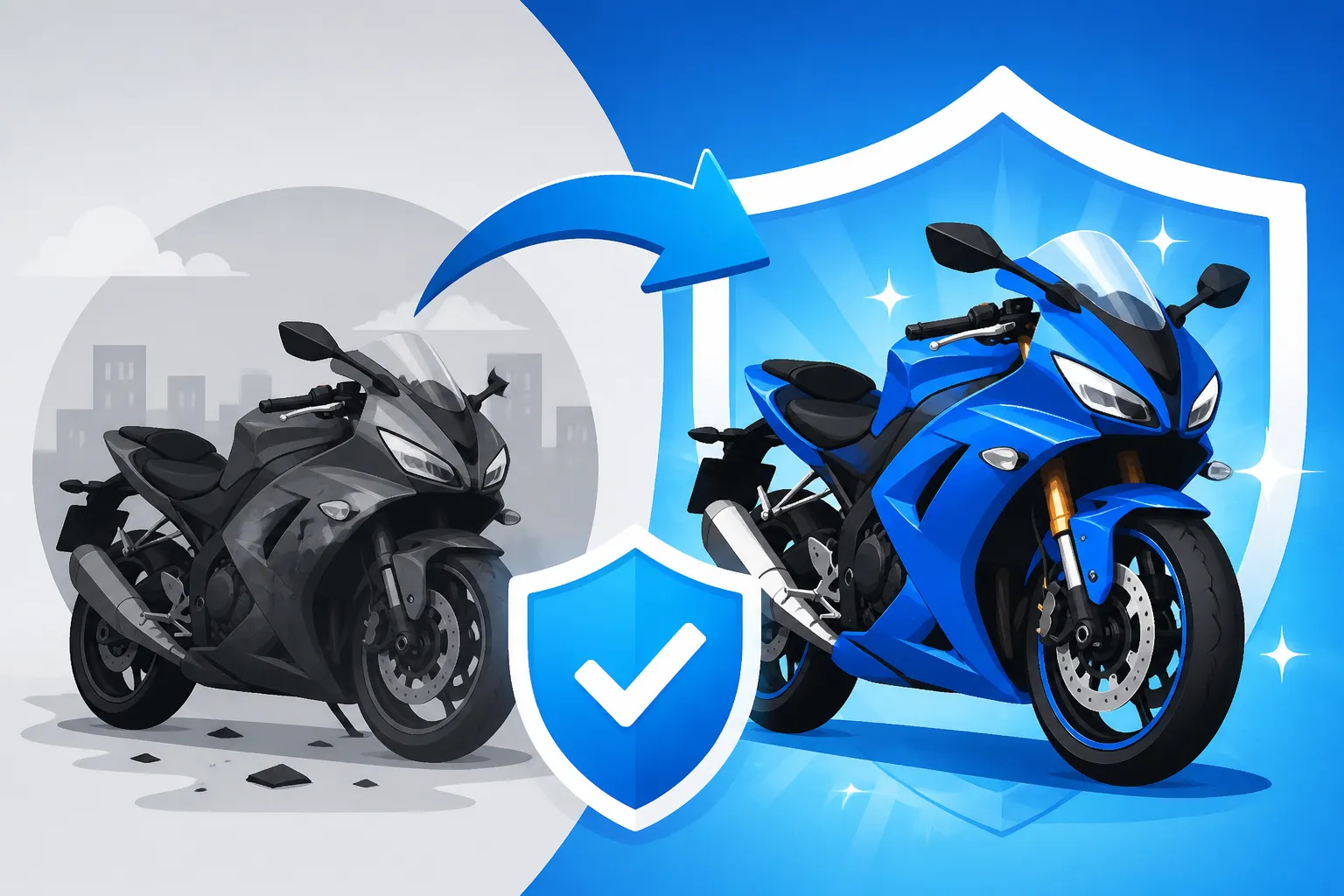
The core principle of new bike replacement coverage is simple: "new for old." It's a promise that if your new motorcycle is totaled, you won't be stuck with a check that barely covers a down payment on a used bike. Instead, the insurer will essentially buy you a brand-new, equivalent motorcycle. This often includes paying for sales tax and registration fees for the new bike, ensuring that your financial burden is minimized and your ability to get back on two wheels is expedited.
For example, if you purchased a new Honda Rebel 500 for $7,500 and it's totaled six months later when its ACV might only be $6,000, new bike replacement coverage would pay out the full $7,500 (or the cost of a new 2026 Honda Rebel 500, whichever is less, depending on policy specifics) to replace it. This is a significant difference compared to standard policies that would only give you the $6,000, leaving you to cover the remaining $1,500 plus your deductible. It really transforms the experience from a financially painful loss to a seamless replacement.
Key Differences from Stated Value or Agreed Value
It's easy to confuse new bike replacement coverage with other specialized valuation coverages like Agreed Value vs Stated Value vs Actual Cash Value. However, they serve different purposes and have distinct characteristics:
- Actual Cash Value (ACV): The default for most policies, paying out the depreciated market value at the time of loss.
- Stated Value: You "state" a value for your bike, but the insurer still reserves the right to pay out the ACV or the stated value, whichever is less, if your bike is totaled. This is often used for custom or older bikes but doesn't guarantee your stated amount.
- Agreed Value: Here, you and the insurer agree on a specific value for your motorcycle before the policy is issued. If the bike is totaled, that agreed-upon amount is what you receive, regardless of ACV. This is great for classic, custom, or rare bikes whose market value might be difficult to assess or fluctuate wildly.
New bike replacement coverage is unique because it specifically addresses the depreciation of a new motorcycle. It doesn't rely on a pre-determined value (like Agreed Value) or a potentially misleading stated value. Instead, it promises the cost of a new replacement within its eligibility period. This is its distinct advantage for riders of new motorcycles, ensuring they aren't penalized by immediate depreciation. While each of these coverages has its place, new bike replacement is singularly focused on that "new for old" promise for recently purchased bikes.
Here's a quick comparison:
| Coverage Type | Payout Method | Best For | Key Consideration |
|---|---|---|---|
| New Bike Replacement | Cost of a brand-new, identical (or comparable) model | Brand-new motorcycles (within 1-3 years/mileage) | Protects against immediate depreciation; "new for old" |
| Actual Cash Value (ACV) | Original price minus depreciation | Standard for most policies; older bikes | Payout decreases over time; you bear depreciation risk |
| Stated Value | Lesser of stated value or ACV | Custom, older, or unique bikes | Stated value is a ceiling, not a guarantee |
| Agreed Value | Pre-determined value agreed by insurer and owner | Classic, custom, high-value, or rare bikes | Value is locked in; protects against market fluctuations |
| Gap Insurance | Covers loan balance exceeding ACV payout | Financed motorcycles (new or used) | Focuses only on loan gap, not on replacing the bike with a new one |
How New Bike Replacement Coverage Works in Practice
Understanding the concept of new bike replacement coverage is one thing, but knowing how it actually functions when you need it most is another. This specialized coverage isn't a blanket solution that applies indefinitely; it comes with specific parameters designed to protect both you and the insurer from endless liability. Let's delve into the practicalities, from eligibility timelines to how a total loss scenario plays out.
Eligibility Timeline and Mileage Caps
The "new for old" promise of new bike replacement coverage isn't open-ended. Insurers typically set clear boundaries around how long your motorcycle qualifies for this benefit. The most common eligibility window is often the first one to three years of the motorcycle's life from its original purchase date. Some policies might extend this to four or five years, but these are less common.
Crucially, these policies also almost always include mileage caps. For example, an insurer might offer this coverage for bikes with less than 15,000 or 24,000 miles on the odometer. So, even if your bike is only two years old, but you've managed to rack up 30,000 miles commuting across Texas, it might no longer qualify for new bike replacement. These limits are in place because, beyond a certain age and mileage, even a very well-maintained bike experiences significant depreciation, making it less truly "new" in the eyes of the insurer. It's vital to check these specifics in your policy documents, or when you're getting How to Compare Motorcycle Insurance Quotes from providers like The Zebra, to ensure your bike actually falls within the protective window.
The Total Loss Scenario
When does new bike replacement coverage kick in? It's activated specifically when your motorcycle is declared a total loss. This means the cost to repair the damage (including parts, labor, and often salvage value) exceeds a certain percentage of the bike's actual cash value, or simply that the damage is so severe it's deemed irreparable. For instance, if your two-year-old Ducati Monster, with only 8,000 miles, is involved in a collision and the repair estimate is $10,000, but the bike's ACV is only $9,000, your insurer might declare it a total loss.
Under a standard policy, you'd receive that $9,000 (minus your deductible), which might not even cover the remaining loan balance, let alone a new bike. However, with new bike replacement coverage, the insurer would then offer to replace your Ducati Monster with a brand-new 2026 Ducati Monster (or the newest equivalent model available), covering the full purchase price, including sales tax. This means you get a fresh start without the financial burden of depreciation. It's a game-changer when you consider What Happens When Your Motorcycle Is Totaled? under different coverage types.
Your Payout Options
When your motorcycle is declared a total loss and you have new bike replacement coverage, you generally have a few payout options, depending on your insurer and policy terms:
- Direct Replacement: This is the most straightforward option. The insurer works with a dealership to replace your totaled motorcycle with a brand-new model of the same make, model, and year (or the closest available current year model). They handle the payment directly to the dealership, and you essentially pick up your new bike. This is the ideal scenario for most riders, as it seamlessly gets them back on a new machine.
- Cash Payout (Equal to New Bike Value): Some policies might offer you a cash payout equivalent to the cost of purchasing a brand-new, comparable motorcycle. This gives you more flexibility if you decide you want a different make or model, or if you simply prefer to use the funds for other purposes (though remember, the intent of this coverage is replacement). However, be aware that you'll still be responsible for sales tax and registration on your new purchase if you choose to buy another bike with this cash. Always read your policy's fine print carefully to understand if a cash payout for the new value is an option, and what conditions apply.
- Repair (if not a total loss but substantial damage): While the primary focus is on total loss, if the bike is not totaled but sustains significant damage, some policies might factor in "new for old" principles for parts replacement, ensuring new parts are used in the repair, especially if your bike is very new. However, this is less common for "replacement" coverage and more often falls under standard collision/comprehensive with OEM parts endorsements. Always clarify this with your agent.
The key takeaway is that new bike replacement coverage aims to eliminate the financial sting of depreciation on a new motorcycle, allowing you to move forward without a significant financial setback after a total loss.
Eligibility Requirements and Limitations for Riders
While new bike replacement coverage offers incredible peace of mind for owners of new motorcycles, it's not universally available and comes with specific strings attached. Insurers need to manage their risk, so they establish clear criteria to determine who qualifies for this premium benefit. It's never a "set it and forget it" kind of coverage, and understanding these rules upfront is critical.
Age of Your Motorcycle Matters
The single most important factor for new bike replacement coverage is the age of your motorcycle. As we mentioned, this coverage is almost exclusively for truly new bikes. Most policies will specify a maximum age, typically between one and three years from the original purchase date. Some companies might stretch it to four or five years, but those are outliers.
For example, if you bought your Suzuki GSX-R in January 2024, a policy might cover it under new bike replacement until January 2027. If you total it in February 2027, even if it has low mileage and is in pristine condition, it would likely revert to an ACV payout. This means that as your bike ages, you'll eventually "age out" of this particular coverage. It's not a permanent feature of your policy. This is also where you might consider alternative coverages as your bike gets older, perhaps focusing more on Agreed Value vs Stated Value vs Actual Cash Value for unique older bikes, or simply standard collision/comprehensive.
Primary Driver and Riding History Considerations
Insurers also look closely at who is riding the motorcycle and their driving history. New bike replacement coverage is often tied to the primary policyholder, and some insurers might have stricter requirements for drivers with a history of accidents or violations. After all, if a rider is deemed high-risk, the likelihood of a total loss increases, making "new for old" replacement a much larger liability for the insurer.
For instance, a new rider in California, especially a young one, might find it harder to qualify for this coverage, or it might come at a significantly higher premium, compared to an experienced rider with a clean record. Insurers want to ensure that they are offering this valuable perk to responsible riders. Your riding experience, claims history, and even your credit score (in some states) can all play a role in whether you're offered this coverage and at what price. This is part of the broader discussion of What Affects Your Motorcycle Insurance Rate? and something you'll want to review carefully with an agent or when comparing quotes online, perhaps through platforms like The Zebra.
Exclusions and Specific Policy Fine Print
Like all insurance policies, new bike replacement coverage comes with exclusions and fine print you absolutely must understand. It's not a magic bullet for every scenario. Common exclusions might include:
- Non-Accident Total Losses: While many policies will cover theft or fire under comprehensive, ensure new bike replacement specifically applies to these scenarios and isn't limited to collision.
- Modifications and Custom Parts: Standard new bike replacement usually covers the stock motorcycle. If you've poured thousands into custom paint, performance upgrades, or aftermarket parts, these additions might not be covered under the "new bike" value unless you've purchased separate Accessories & Custom Parts Coverage Explained. This is a critical point for riders who personalize their bikes.
- Illegal Activities: As expected, if the total loss occurs while you're engaged in illegal activities or street racing, the coverage will be void.
- Deductibles: Even with new bike replacement, your deductible will still apply. So if your new bike is replaced at $10,000 and you have a $500 deductible, you'll still be out that $500.
Always, always read your specific policy documents. Don't assume. A quick call to your insurance provider to clarify these details can save you a world of trouble and disappointment later on. Understanding these limitations helps you make an informed decision about whether this coverage truly aligns with your needs and expectations for your new ride.
Comparing New Bike Replacement with Other Coverage Types
Navigating the world of motorcycle insurance can feel like deciphering a complex code, especially when you're trying to figure out which add-ons genuinely protect your specific investment. New bike replacement coverage is undeniably valuable for certain riders, but it's important to understand how it stands apart from, or complements, other common types of coverage you'll encounter. It's not a standalone policy but rather an enhancement to your core protection.
New Bike Replacement vs. Collision/Comprehensive
At its heart, new bike replacement coverage works hand-in-hand with your collision and comprehensive coverages. Think of collision and comprehensive as the foundational layers of protection for your motorcycle, covering damage from accidents (collision) and non-collision incidents like theft, fire, or vandalism (comprehensive). Without these, new bike replacement wouldn't even have a scenario to activate in.
The key difference lies in the payout method. If you only have standard collision and comprehensive, and your new bike is totaled, the payout will be based on its Actual Cash Value (ACV) – meaning, its value after depreciation. This is where the frustration sets in for many new bike owners. New bike replacement coverage, however, acts as an enhancement to these primary coverages. When collision or comprehensive determines your new bike is a total loss, the new bike replacement rider ensures that instead of getting the depreciated ACV, you receive the funds necessary to buy a brand-new, equivalent model. It transforms the financial outcome, but it doesn't replace the need for the underlying collision and comprehensive policies. So, you can't have new bike replacement without first having comprehensive and collision coverage on your policy. They truly work in tandem.
New Bike Replacement vs. Gap Insurance
This is where things can get a little confusing, as both new bike replacement and Do You Need Gap Insurance on a Motorcycle? address financial shortfalls related to depreciation, but they do so in different ways.
- Gap Insurance (Guaranteed Asset Protection): This coverage specifically addresses the "gap" between what you owe on your motorcycle loan and what your standard collision/comprehensive policy pays out in the event of a total loss. As we discussed, new motorcycles depreciate quickly, and it's very common to owe more on your loan than the bike is worth for the first few years. If your bike is totaled, ACV might be less than your outstanding loan balance. Gap insurance steps in to pay that difference directly to your lender, preventing you from being stuck with loan payments on a bike you no longer own.
- New Bike Replacement Coverage: This coverage focuses on replacing your actual motorcycle with a new one. It ensures you get the funds to purchase a brand-new, equivalent bike, regardless of your loan status.
Here's a scenario: You buy a bike for $20,000, finance $18,000, and it's totaled a year later when its ACV is $16,000.
- Without either: You get $16,000 from your insurer, still owe $2,000 on your loan, and have no bike.
- With Gap Insurance only: You get $16,000 from your insurer, and Gap insurance pays your lender the remaining $2,000. You owe nothing on the loan, but you still have no bike and only $16,000 (if you paid cash) or nothing (if financed) to show for it.
- With New Bike Replacement only: You get $20,000 (the cost of a new bike) from your insurer. You pay off your $18,000 loan and have $2,000 left over to put towards a new bike (or keep).
- With Both Gap and New Bike Replacement: You get $20,000 (new bike value) from your insurer, pay off your $18,000 loan, and have $2,000 left. Gap insurance effectively wouldn't be needed in this scenario because new bike replacement already covers more than the loan balance.
So, while both protect against the financial impact of depreciation, Gap insurance is for your loan, and new bike replacement is for your bike. If your goal is to be able to replace your totaled new bike with another new one, new bike replacement is the target. If you're simply worried about paying off your loan, Gap insurance is specifically designed for that. For maximum protection on a new, financed motorcycle, some riders might choose both, but often, new bike replacement implicitly covers the loan gap because its payout is higher than the ACV.
New Bike Replacement vs. Actual Cash Value (ACV)
This comparison is fairly straightforward but fundamental to understanding the value of new bike replacement coverage.
-
Actual Cash Value (ACV): This is the default payout method for most motorcycle insurance policies when a bike is declared a total loss. ACV takes the original purchase price (or replacement cost of a new item) and subtracts depreciation for factors like age, mileage, wear and tear, and market conditions. For example, if you bought a motorcycle for $10,000 and total it a year later, its ACV might be $8,000. This is the amount you'd receive from a standard policy (minus your deductible). The problem for new bike owners is that motorcycles, like cars, depreciate significantly in their first few years, sometimes losing 20-30% of their value in the first year alone. This means an ACV payout often isn't enough to buy an equivalent replacement, leaving the rider feeling financially vulnerable.
-
New Bike Replacement Coverage: This coverage directly counters the effects of ACV depreciation for new motorcycles. Instead of an ACV payout, it promises to cover the cost of a brand-new motorcycle of the same make and model (or a comparable one) if your bike is totaled within its eligibility period. This means that $10,000 bike, even after a year, would be replaced with another $10,000 (or current market price for a new model) bike. The difference is substantial, ensuring you aren't financially penalized by the rapid depreciation inherent in owning a new vehicle. It’s about getting you back to where you started, not just covering what the market thinks your used bike was worth.
In essence, new bike replacement coverage is designed to shield you from the harsh realities of ACV when your motorcycle is fresh off the dealership floor, offering a much more favorable outcome if the unthinkable happens.
Is New Bike Replacement Coverage Right for Your Ride?
Deciding whether to add new bike replacement coverage to your policy is a personal financial decision, but it's one worth considering seriously, especially if you've recently purchased a brand-new motorcycle. It's about weighing the cost of the added premium against the potential financial relief and peace of mind it offers.
Assessing Your Risk and Investment
The first step in determining if this coverage is right for you is to realistically assess your risk and your financial investment in your new ride.
- How new is your bike? If you literally just bought it this year, the depreciation hit will be most severe in the initial months and years. This is precisely when new bike replacement coverage offers its greatest value. As your bike approaches the 3-5 year mark or racks up significant mileage, the benefit diminishes, as it will soon age out of eligibility.
- How much did you pay, and is it financed? If you made a substantial down payment or paid cash, a standard ACV payout might leave you short on buying a new replacement, but it won't leave you with debt. If your bike is financed, especially with little money down, the risk of being upside down on your loan is very high. While gap insurance addresses the loan aspect, new bike replacement addresses the replacement aspect, often exceeding the loan amount. For those with a financed bike, it's worth exploring if this coverage makes more sense than, or in addition to, traditional gap coverage.
- What are your riding habits? While no one plans for an accident, consider your exposure. Do you primarily ride on quiet country roads, or are you navigating busy city streets like those in Los Angeles or Miami daily? More exposure generally means higher risk.
- How would a total loss impact you financially? If losing your new bike and only receiving its depreciated value would create a significant financial hardship – making it difficult to buy another new motorcycle or pay off a loan – then this coverage becomes much more attractive.
By considering these factors, you can get a clearer picture of your potential vulnerability and whether the added protection aligns with your personal risk tolerance.
The Peace of Mind Factor
Beyond the purely financial calculations, there's an undeniable "peace of mind" factor that comes with new bike replacement coverage. For many riders, their motorcycle is a significant investment and a source of immense joy. The thought of losing it and being unable to replace it with an equivalent new model can be a constant worry.
Knowing that if your new pride and joy is totaled, your insurer will step up and help you get another brand-new one, can alleviate a lot of that stress. It means you don't have to scramble for extra cash, deal with the heartache of settling for a lesser, used bike, or battle depreciation arguments. It allows you to focus on the healing process after an incident, rather than financial recovery. This emotional security, the confidence that your investment is truly protected, is often as valuable as the financial protection itself for many dedicated motorcyclists. It's about preserving the joy of riding a new machine.
Cost-Benefit Analysis for Premium Riders
Like any insurance add-on, new bike replacement coverage comes with an increased premium. It's important to weigh this additional cost against the potential benefits.
- The Cost: The exact cost will vary based on your bike's value, your riding record, your location, and the insurer. However, you can expect an increase over a basic collision and comprehensive policy. When you're comparing policies, sites like The Zebra can be incredibly helpful for seeing what different insurers offer and at what price, allowing you to easily compare quotes from multiple providers.
- The Benefit: The benefit is avoiding the financial hit of depreciation and being able to replace your totaled new motorcycle with another brand-new one. Calculate the potential depreciation of your bike in the first year or two. If your $15,000 bike might depreciate by $3,000 in its first year, is an extra $100-$200 (or whatever the actual premium increase is) per year for the coverage worth ensuring you don't lose that $3,000? For many, especially those with expensive new sport bikes or touring machines, the answer is a resounding yes.
Ultimately, the decision boils down to your personal financial situation, your comfort with risk, and how much value you place on replacing your new motorcycle with another new one. If you've just made a significant investment in a new ride and want to safeguard that investment against the inevitable depreciation that comes with a total loss, new bike replacement coverage is a strong contender for your consideration. It's a proactive step to protect your passion.
How to Get New Bike Replacement Coverage
So, you've weighed the pros and cons, and you've decided that new bike replacement coverage is the right move for your new motorcycle. Great decision! Now, how do you go about actually getting it? It's not always an automatically included feature, so a little proactive work is usually required.
Shopping for Insurers Offering This Perk
Not every insurance company offers new bike replacement coverage, or they might offer it under different names with varying terms. It's considered a specialized endorsement, so you'll need to do some research and ask specific questions.
Many major motorcycle insurers, such as Progressive, Geico, Dairyland, and Markel, often have some form of this coverage available, but the exact eligibility (age of bike, mileage limits) and payout specifics can differ significantly. For example, one insurer might offer it for the first year, while another extends it to three years. Some might provide a cash payout, while others insist on direct replacement. This is where a comparison tool, like those offered by The Zebra, can be invaluable. You can input your motorcycle's details and your desired coverages, then see which companies offer similar options and at what price points. This allows you to easily compare not just premiums but also the nuances of their replacement coverage, ensuring you find a policy that truly fits your needs. Don't be afraid to explicitly ask agents, "Do you offer new bike replacement coverage, and what are its exact terms and limitations?" when discussing your options for Types of Motorcycle Insurance Coverage Explained.
Gathering Your Documentation
When you're ready to apply for or add new bike replacement coverage, be prepared with the necessary documentation. Since this coverage is so tied to the "newness" of your motorcycle, insurers will want to verify its status. You'll likely need:
- Proof of purchase: This includes your bill of sale or purchase agreement, clearly showing the date you bought the motorcycle and the original purchase price. This is crucial for verifying the bike's age and initial value.
- Odometer reading: Be ready to provide an accurate current odometer reading. This helps confirm that your bike is within any specified mileage limits for the coverage.
- Vehicle Identification Number (VIN): Standard for any insurance policy, your VIN allows the insurer to correctly identify your specific motorcycle, including its make, model, and year.
- Financing details (if applicable): If your bike is financed, having these details on hand can be useful, especially if you're also comparing or considering gap insurance.
Having these documents ready will streamline the quoting and application process, making it much smoother for both you and the insurance provider.
Understanding the Quote Process
Getting a quote for motorcycle insurance, particularly with add-ons like new bike replacement, involves more than just plugging in your basic info. Here's what to expect:
- Initial Information: You'll start by providing details about yourself (age, driving record, location), your motorcycle (make, model, year, VIN), and how you'll use it.
- Choosing Core Coverages: You'll select your liability limits, and decide on collision and comprehensive coverage, which are prerequisites for new bike replacement. Think about your desired deductibles too – higher deductibles generally mean lower premiums but more out-of-pocket if you file a claim.
- Adding Endorsements: This is where you specifically ask for or add "new bike replacement coverage" (or whatever equivalent name the insurer uses). The insurer will then verify your eligibility based on your bike's age and mileage.
- Reviewing the Quote: Carefully examine the quote. It should break down the cost of each coverage component, including the premium for new bike replacement. Make sure the terms for the replacement coverage are clearly stated (e.g., "new bike replacement for motorcycles under 3 years/20,000 miles").
- Asking Questions: Don't hesitate to ask your agent or the online platform's support any questions you have. Clarify what happens if your exact model isn't available, whether custom parts are covered, or any other concerns. This is also a good time to consider other valuable add-ons like Roadside Assistance & Towing for Motorcycles or Accessories & Custom Parts Coverage Explained, especially if you're customizing your new ride.
Taking the time to understand each component of your policy, especially specialized coverages, ensures you have the protection you genuinely need and aren't caught off guard later.
Disclaimer
Please remember that insurance policies, coverage terms, and state regulations can change. The information provided in this article is intended for general informational purposes only and does not constitute professional insurance advice. You should always consult with a licensed insurance agent or review your specific policy documents to understand your coverage fully and ensure it meets your individual needs.