Does Motorcycle Insurance Cover Track Days?
Riders often dream of hitting the track, pushing their machines to the limit in a controlled environment, free from traffic and speed limits. But a big question looms: will your everyday motorcycle insurance policy actually cover you if you take your beloved bike to a track day? This can be a huge source of anxiety, and for good reason—the rules are murky, the risks are real, and nobody wants to be on the hook for a totaled bike and medical bills after an exhilarating, but unfortunate, track incident. This guide is here to untangle the complexities of motorcycle insurance and track days, helping you understand what's covered, what isn't, and how to protect yourself when you decide to go full throttle.
The Basics of Motorcycle Insurance and Track Day Realities
When you think about motorcycle insurance, most of us picture coverage for daily commuting, weekend joyrides, or perhaps a long-distance tour. We assume it's there to protect us from the unexpected bumps and scrapes of public roads. However, a racetrack is a completely different beast, and standard insurance policies are usually quick to draw a very firm line between the street and the circuit.
Standard Policy Limitations
Your typical motorcycle insurance policy, whether it's liability-only or comprehensive, is designed to cover risks associated with street-legal riding on public roads. This means if you get into an accident on your daily commute to work, or even a leisurely Sunday ride through the countryside, your policy is generally going to kick in as per its terms. This often includes things like property damage, bodily injury liability, collision, and comprehensive coverage for events like theft or vandalism. These are the workhorses of motorcycle insurance, built for predictable, albeit sometimes risky, everyday scenarios.
However, a track day operates under a different set of assumptions. You're not commuting; you're intentionally pushing your machine and yourself to higher performance limits, often in close proximity to other high-performance vehicles. The environment is closed-course, often requiring waivers, and governed by specific event rules that differ greatly from the rules of the road. Because of this inherent increase in risk and the specialized environment, most standard policies have specific exclusions that prevent them from covering incidents that occur during track use, even if it's just a non-competitive "open track" day. It’s a common frustration for riders who want to enjoy both street and track, finding their single policy won't stretch to cover both worlds.
The "Racing Exclusion" Clause
This is perhaps the most critical clause to understand when considering track days: the "racing exclusion." Nearly every standard motorcycle insurance policy in the United States contains language that explicitly excludes coverage for events that involve racing, competitive driving, speed contests, or even practice for such events. The wording can vary slightly from insurer to insurer, but the intent is usually the same: if you're engaging in activities where the primary goal is speed, competition, or performance testing, your policy will likely not cover any damages or injuries.
The tricky part here is the interpretation of "racing" or "competitive events." Many riders attend "track days" which are explicitly non-competitive, with no timing, no awards, and strict rules against passing in certain zones. They're designed for skill development and enjoying the bike's capabilities, not winning. Yet, many insurance companies will still interpret these as falling under the racing exclusion because of the inherent focus on speed and performance in a closed-course environment. From their perspective, even if you're not officially racing another rider, you're still pushing your bike and yourself in a manner that vastly increases the risk of an incident compared to cruising down the highway. It’s this broad interpretation that catches many riders off guard, leaving them vulnerable if they assume "non-competitive" means "covered." Always review your policy documents thoroughly or speak directly with your agent about specific track day scenarios.
Why Standard Policies Shy Away from Track Days
It's natural to feel a bit put out when your comprehensive insurance, which costs a pretty penny, won't cover your pride and joy on a track day. But there are very concrete reasons why insurance companies view track riding with such apprehension. It all boils down to risk and liability.
Heightened Risk Profile
Let's be brutally honest: track days are inherently riskier than street riding. On public roads, you contend with traffic lights, distracted drivers, potholes, and unexpected wildlife. But on a track, you're dealing with a different set of variables, all dialed up to eleven. Riders are pushing their motorcycles to higher speeds, braking harder, leaning further, and generally exploring the limits of their machine's performance. The entire point is to ride more aggressively than you would (or should) on public streets.
Consider the potential for damage: a low-speed tip-over in a parking lot might scratch a fairing; a low-side at 80 mph on a track will likely total your bike. The energy involved in a crash at track speeds is exponentially higher, leading to more severe damage to the motorcycle and potentially more serious injuries to the rider. Furthermore, track environments, while controlled, often involve multiple riders in close proximity, all operating at high speeds. This increases the chance of multi-bike incidents, which can quickly become very expensive for an insurer. Standard policies just aren't priced to absorb this level of risk, which is why they specifically exclude it. It's not about being unfair; it's about actuarial science and managing financial exposure.
Different Liability Scenarios
Liability on a racetrack operates under a vastly different paradigm than on public roads. When you drive on a public street, you are generally liable for any damage or injury you cause to others if you are deemed at fault. Your liability insurance steps in to cover these costs up to your policy limits. This is a fundamental aspect of standard Motorcycle Insurance Requirements by State (2026 Guide).
On a racetrack, the situation is often completely different. Most track day organizations require participants to sign extensive waivers that absolve the track, the organizers, and often other participants, of liability for injuries or damages, except in cases of gross negligence. This means if you crash and damage your bike, or even injure yourself, you're typically responsible for your own costs. If you cause another rider to crash, their waiver might prevent them from suing you directly, but the situation can still be complex, and some specialized track day policies might offer limited liability coverage for causing damage to another rider's bike or their person. However, even this is not standard. The primary focus of track day insurance, when available, is usually your own motorcycle and your own medical expenses, rather than third-party liability. This fundamental shift in who bears the risk is another major reason why traditional insurers stay away.
Dedicated Track Day Insurance: Your Best Bet
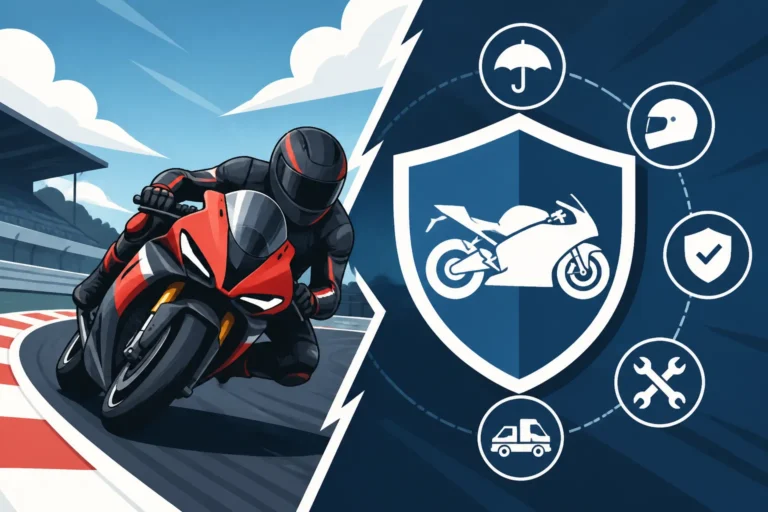
Given the clear limitations of standard motorcycle policies, if you're serious about taking your bike to the track, you need to look beyond your everyday coverage. Specialized track day insurance exists specifically to bridge this gap, offering peace of mind where standard policies fall short.
Understanding Specialized Coverage
Track day insurance is a niche product designed from the ground up to cover the unique risks of riding on a closed course. Unlike your regular policy, it's explicitly structured to cover physical damage to your motorcycle while on the track during an event. This is crucial because it's precisely what the "racing exclusion" in your standard policy avoids. The coverage typically kicks in if you crash, drop your bike, or have another type of incident that damages your motorcycle during a track day.
These policies can vary significantly in what they cover. Some might offer "damage only" policies, focusing solely on the repair or replacement cost of your bike. Others might include limited medical payments coverage for the rider, understanding the heightened risk of injury. Some even offer a very limited form of liability for damage you might cause to another person's bike or track property, though this is less common and often has very specific stipulations. It's never "full coverage" in the same sense as street insurance, but it provides the essential protection against the most common and costly outcome of a track incident: a damaged motorcycle. When you're looking for What Does Full Coverage Motorcycle Insurance Mean?, know that the definition changes dramatically for track use.
Short-Term vs. Annual Policies
When it comes to track day insurance, you generally have two main options:
- Single-Event Policies: These are designed for riders who only attend a few track days a year. You purchase coverage for a specific event on a specific date at a specific track. The coverage is active only for that short period, typically from the moment you enter the track premises until you leave. The primary advantage is cost-effectiveness; if you only go to one or two track days annually, paying for individual policies can be much cheaper than an annual option. However, it requires remembering to buy a new policy for each event, and if you suddenly decide to go to more track days, the costs can add up quickly.
- Annual Track Policies: For the more dedicated track rider, some specialized insurers offer annual policies that cover all track days you participate in throughout a year, often with a set maximum number of events or total coverage limit. This provides a more consistent, often more economical, solution if you're a regular at the track. It eliminates the hassle of purchasing individual policies and ensures continuous coverage. The downside is the upfront cost, which is higher than a single-event policy, making it less suitable for riders who only occasionally dabble in track riding. The choice between these two often comes down to how frequently you plan to hit the circuit and your personal budget for the hobby.
Key Providers and What to Look For
While major insurers like Progressive or Geico handle your street riding needs, you'll typically need to turn to niche providers for track day insurance. Companies like RiderSurance and WERA offer policies specifically tailored for track use. Other providers like Markel and Dairyland sometimes have limited options or partner with specialists, but it's important to verify if their standard policies indeed extend to track environments—which is rare. Always clarify.
When looking for a policy, here's what to consider:
- Coverage Limits: How much will the policy pay out if your bike is totaled? Make sure it's enough to cover the replacement cost of your specific motorcycle, especially if it's a high-value sportbike or has expensive aftermarket parts.
- Deductible: Like standard insurance, track day policies have deductibles. This is the amount you pay out-of-pocket before the insurance kicks in. Higher deductibles mean lower premiums, but a larger initial expense if you crash.
- Types of Events Covered: Does the policy cover organized track days, racing, practice sessions, or all of the above? Some policies are very specific.
- "Hot Lap" or "Timed Events" Inclusion: Some track days allow riders to get lap times. Confirm if this voids coverage under a "racing" exclusion, even if it's not a competitive race.
- Gear Coverage: Will it cover your expensive helmet, leathers, or boots if they're damaged in a crash? This is an add-on many riders overlook.
- Eligibility: Are there restrictions based on your rider experience, the type of motorcycle you ride, or modifications?
It's paramount to get direct clarification on these points before committing to a policy. Don't assume anything; ask detailed questions. A site like The Zebra can be a good starting point for understanding how different types of coverage work, even if they don't directly offer specialized track day insurance, it can help you get a baseline for understanding the language of insurance before diving into specialty markets.
Costs and Considerations for Track Day Insurance
Understanding that standard policies won't cover your track adventures is the first step. The next is grasping the financial implications of getting specialized coverage. Track day insurance comes with its own price tag, and it's essential to weigh those costs against the potential risks.
Factors Influencing Premiums
Just like regular motorcycle insurance, the cost of track day insurance isn't a one-size-fits-all number. Several factors play a significant role in determining how much you'll pay:
- Motorcycle Type and Value: This is huge. A high-performance sportbike like a Ducati Panigale or a Yamaha R1 is inherently more expensive to repair or replace than a smaller, less powerful machine. If your bike has extensive custom modifications or race-specific parts, these will also drive up the insured value and, consequently, the premium. The cost difference can be substantial between insuring a track-prepped liter bike and a modest 600cc sport-tourer.
- Track Location and Event Type: The specific track you're riding at can influence the premium. Some tracks are known for being faster or having more challenging sections, which might be factored into the risk assessment. Similarly, whether it's an open track day, a novice school, or an advanced riding clinic could affect the rate.
- Coverage Limits and Deductible Choices: The more coverage you opt for, the higher your premium will be. If you choose a policy that covers a higher replacement value for your bike, you'll pay more. Conversely, selecting a higher deductible can lower your premium, but you'll be responsible for a larger chunk of the repair costs if an incident occurs. This is similar to How to Lower Your Motorcycle Insurance Premium strategies for street policies, where higher deductibles are a common way to save.
- Rider Experience: While not always a direct factor in the premium calculation for every track day insurer, some policies or providers might offer better rates or require certain certifications for advanced groups. However, generally, track day insurance focuses more on the physical asset (the bike) and the event's inherent risk rather than the individual rider's skill level. That said, a safer, more experienced rider is less likely to make a claim, which benefits them in the long run.
The Financial Trade-Off
So, is track day insurance truly worth the cost? This is the million-dollar question for many riders. Let's look at a hypothetical scenario:
Imagine you own a beautiful 2023 Honda CBR1000RR-R Fireblade SP, valued at $30,000. You decide to attend a track day, opting to skip the specialized insurance because "I'm a safe rider, I won't crash." Mid-session, you misjudge a corner, hit some gravel, and low-side. The bike slides into the wall. The fairings are shattered, the forks are bent, the radiator is crushed, and the engine casing is cracked. An estimate comes back at $20,000 in damages, pushing it close to a total loss. Without track day insurance, every single dollar of that $20,000 comes directly out of your pocket. This is where knowing What Happens When Your Motorcycle Is Totaled? on a track day without specific coverage can be a very painful lesson.
Now, imagine you paid $300 for a single-event track day policy with a $2,000 deductible. In the same scenario, you'd pay your $2,000 deductible, and the insurance company would cover the remaining $18,000. The $300 premium suddenly looks like a very wise investment.
The financial trade-off is clear: you're paying a relatively small amount to protect against a potentially catastrophic financial loss. While no one plans to crash, the reality of track riding is that incidents happen, often through no fault of your own (e.g., another rider's mistake, unexpected track conditions). The peace of mind alone, knowing that your significant investment is protected, allows you to focus on improving your riding skills and enjoying the track experience, rather than constantly worrying about the financial fallout of a mistake. For many, this peace of mind is invaluable, making the cost of track day insurance a necessary and worthwhile expense for their passion.
Common Misconceptions and Important Nuances
The world of motorcycle insurance can be a maze, and when you throw track days into the mix, it only gets more convoluted. It’s easy to fall prey to common misconceptions that can leave you dangerously exposed. Let’s clear up some of those misunderstandings.
"My Policy Covers Me Off-Road, So Track Days Too, Right?"
This is a frequently heard assumption that can lead to major disappointment. Many riders, especially those with dual-sport or adventure bikes, have policies that explicitly state they cover "off-road use." This can create the impression that any riding not on a paved public road falls under this umbrella, including a racetrack. However, the distinction insurance companies make between general off-road riding and track riding is usually significant and strictly enforced.
"Off-road use" in a standard policy typically refers to riding on trails, dirt roads, or open fields—environments that, while not public streets, are still considered recreational and generally not high-speed, competitive environments. Think riding your dirt bike through state trails or taking your ADV bike on some gravel roads. A racetrack, even an unpaved one, is a purpose-built facility for performance and speed. It has specific rules, designated start/finish lines, and often highly trained medical staff on standby. The regulatory framework and the inherent intent of the riding activity are completely different. Therefore, even if your policy boasts "off-road coverage," it's highly unlikely to extend to a track day event, which will almost certainly be excluded under the "racing or speed contest" clause mentioned earlier. Always read the fine print and seek explicit clarification regarding Off-Road & Dirt Bike Insurance Requirements vs. track day specific coverage.
"What if I Just Don't Tell My Insurer?"
This particular thought process is a recipe for disaster and can have severe, long-lasting consequences far beyond simply having a claim denied. Deliberately withholding information from your insurance company, or misrepresenting the circumstances of an incident, constitutes insurance fraud.
Let's say you go to a track day, don't buy specialized insurance, crash your bike, and then try to tell your standard insurer that the damage occurred "on a backroad" or "in a parking lot." Insurance companies are not oblivious. They have investigators and adjusters who are trained to spot inconsistencies. They will look for tell-tale signs: track marks on your tires, specific types of damage consistent with high-speed crashes (like "track rash" on fairings or specific handlebar damage), damage to expensive racing slicks, or even just photos from the event posted on social media. Many track day organizations also require emergency contact information and details about the incident, which could easily contradict your false claim.
If discovered, the consequences are severe:
- Claim Denial: Your claim will be immediately denied, and you'll be solely responsible for all repair costs, medical bills, and any third-party damages.
- Policy Cancellation: Your standard motorcycle insurance policy will likely be canceled, making it incredibly difficult and expensive to get new insurance in the future. You might be labeled a high-risk driver, requiring an SR-22 filing and facing exorbitant premiums for years. This also affects your ability to get Motorcycle Insurance for SR-22/High-Risk riders.
- Legal Action: Insurance fraud is a crime. You could face criminal charges, hefty fines, and even jail time, depending on the severity and jurisdiction.
- Damage to Your Financial Record: A history of insurance fraud can negatively impact your credit score and financial standing, affecting everything from future loans to employment opportunities.
Transparency is not just ethical; it's a legal and financial safeguard. If you plan to ride on the track, get proper track day coverage. Don't risk your financial future, your freedom, and your ability to get insured by attempting to deceive your insurer. It's simply not worth it.
Practical Steps for the Track-Minded Rider
So, you've decided the thrill of the track is worth the extra insurance step. That's fantastic! But before you load up your bike and head out, there are some practical steps you should take to ensure you're fully prepared, both on the tarmac and with your paperwork.
Researching Track Day Specifics
Before you even think about insurance, immerse yourself in the specifics of the track day event you plan to attend. Not all track days are created equal, and understanding the nuances can help you choose the right coverage and prepare accordingly.
- Event Organizer Rules: Every track day organizer (e.g., California Superbike School, Sportbike Track Time, your local track's open session) will have its own set of rules and regulations. These often include noise limits for your exhaust, technical inspection requirements for your bike's safety, and specific gear requirements for riders (DOT/Snell-approved helmet, leathers, gloves, boots). Understanding these rules is crucial not only for safety but also because violating them could potentially impact any specialized track day insurance claim. For example, if you crash and weren't wearing the required full leathers, your claim could be contested.
- Track-Specific Protocols: Familiarize yourself with the track layout, corner names, and any unique safety protocols. Many tracks have specific flag rules, pit lane procedures, and entry/exit points that you need to know cold. Some track day organizations offer a beginner's briefing or even a dedicated novice group with instructors; if this is your first time, take full advantage of it. This isn't directly insurance-related, but preparedness and safety on the track significantly reduce the likelihood of an incident, which is the best form of "insurance" you can have.
- Insurance Requirements of the Track: Some tracks or event organizers may require participants to show proof of their own medical insurance or even minimum liability coverage (though the latter is less common for "rider-caused" incidents due to waivers). Always check with the organizer. While they likely won't require motorcycle damage insurance, they might have other requirements you need to meet. It’s a good idea to bring your standard health insurance card just in case.
Getting Quotes and Making Informed Decisions
Once you've done your homework on the track day itself, it's time to tackle the insurance. This is where you put all your newfound knowledge into action to protect your investment.
- Seek Out Specialized Providers: As we've discussed, your everyday insurance carrier like Progressive or Geico likely won't cut it. You need to contact companies that specialize in motorsports insurance. These include names like RiderSurance, WERA, and sometimes specialty divisions of larger insurers or brokers that focus on competitive or track-day coverage. Don't be afraid to cast a wide net; a broker specializing in powersports insurance might be able to find you competitive rates across different carriers.
- Compare Multiple Quotes: Never settle for the first quote you receive. Just like shopping for How to Compare Motorcycle Insurance Quotes for your street bike, it pays to get several quotes for track day insurance. Prices can vary significantly between providers for the exact same level of coverage. Provide accurate information about your bike, the track, and the event dates to ensure the quotes are comparable and precise.
- Understand the Fine Print: This cannot be stressed enough. When you receive quotes, don't just look at the price. Read the policy documents carefully.
- What exactly is covered (e.g., bike damage only, medical payments, limited liability)?
- What are the exclusions (e.g., racing, timed events, specific modifications)?
- What is the deductible?
- What is the process for filing a claim? Understanding How to File a Motorcycle Insurance Claim for track damage can be different from a street claim.
- Consider Your Risk Tolerance and Budget: Track day insurance isn't cheap, especially for high-value bikes or multiple events. You need to honestly assess your own risk tolerance. Can you afford to replace your bike out of pocket if it's totaled without insurance? If the answer is no, then the insurance cost is a necessary expense. If you're only riding an older, less valuable bike that you could easily replace, you might decide to self-insure (accept the risk yourself). But for most riders with a significant investment in their motorcycle, the peace of mind offered by specialized coverage is well worth the premium. Think about it in terms of the total cost of your hobby – track fees, tires, fuel, and now, insurance. It’s all part of the experience.
Remember, a resource like The Zebra can help you understand general insurance principles, but for specialized track day coverage, you'll need to go directly to niche providers. They are the experts in this specific, high-risk area of coverage.
Comparing Standard vs. Specialized Track Day Insurance
To give you a clearer picture, let's put the two types of insurance side-by-side.
| Feature | Standard Motorcycle Insurance (Street Use) | Specialized Track Day Insurance (Closed Course) |
|---|---|---|
| Primary Coverage Area | Public roads, daily commuting, recreational street riding. | Closed-course racetracks, organized track days, practice sessions. |
| Core Inclusions | Liability (BI/PD), Collision, Comprehensive, UM/UIM, MedPay. | Physical damage to your motorcycle on the track. Some MedPay/Liability. |
| Key Exclusions | Racing, speed contests, competitive events, intentional acts. | Highly specific; usually focuses on types of events or non-compliance. |
| Claim Trigger | Accidents, theft, vandalism, weather damage on public access areas. | Crashes, tip-overs, specific incidents during approved track events. |
| Policy Duration | Typically 6-12 months. | Single event (1-3 days) or annual for multiple events. |
| Pricing Factors | Rider age, experience, location, bike type, credit score, driving record. | Bike value/type, coverage limits, deductible, event type. |
| Providers | Progressive, Geico, State Farm, Allstate, Dairyland, Markel, etc. | RiderSurance, WERA, specific motorsports brokers/underwriters. |
| Liability for Others | Generally covers damage/injury you cause to others if at fault. | Very limited or excluded due to waivers; focus on your own bike/injury. |
| Cost Implications | Variable, typically annual or monthly premiums for ongoing coverage. | Generally higher premiums per day/event due to high-risk nature. |
Disclaimer
The information provided in this article is for general informational purposes only and does not constitute insurance advice. Motorcycle insurance laws and coverages can vary significantly by state and specific policy terms. Always consult with a qualified insurance professional and review your individual policy documents to understand your coverage. Specific brand mentions are for illustrative purposes and do not imply endorsement or guarantee of coverage. We do not provide financial, legal, or medical advice.