New York Motorcycle Insurance Requirements
Riding a motorcycle in New York State offers some of the most breathtaking routes, from the scenic Adirondacks to the urban jungle of NYC. But before you hit the open road, understanding the state's motorcycle insurance requirements can feel like navigating a maze, especially with the unique blend of minimum coverages and no-fault rules. It’s frustrating trying to figure out what’s legally required versus what’s genuinely smart to have, and how it all impacts your peace of mind. This guide is here to untangle it all, helping you confidently choose the right coverage for your New York adventures.
The Absolute Must-Haves: Minimum Requirements in New York
New York State isn't messing around when it comes to insurance. Unlike some states that might be a bit more lenient, New York has specific minimum requirements for motorcycle insurance that every rider needs to meet to legally operate their bike. These aren't just suggestions; they're the law, and failing to adhere to them can lead to serious consequences. Think of these as your foundational safety net, designed to protect others on the road if you're deemed at fault in an accident.
Bodily Injury Liability Explained
This is perhaps the most critical piece of your mandatory coverage. Bodily injury liability insurance is there to cover the costs associated with injuries sustained by another person if you're responsible for an accident. We're talking medical bills, lost wages, and even pain and suffering. In New York, the minimum coverage for bodily injury liability is split. You'll often hear these numbers as "25/50/10." The "25" means $25,000 for bodily injury sustained by one person in an accident. The "50" means $50,000 for bodily injury sustained by all persons in a single accident.
Imagine you're cruising down the Taconic State Parkway, and an unexpected maneuver on your part causes a minor collision with another driver. If that driver sustains an injury, your bodily injury liability coverage will kick in up to $25,000 to cover their medical expenses. If there were a driver and a passenger in the other vehicle, and both were injured, your policy would cover up to $50,000 in total for their injuries, with no more than $25,000 going to any single individual. While these are the minimums, any seasoned rider will tell you that medical costs can skyrocket, so many choose to carry much higher limits for their own protection.
Property Damage Liability Explained
That third number in the "25/50/10" sequence? That's your property damage liability, which means $10,000 for property damage. This part of your policy is designed to cover the costs if you damage someone else's property in an accident where you are at fault. Most commonly, this means damage to another vehicle, but it could also extend to things like fences, mailboxes, or even buildings.
Picture this: you're trying to park your bike in a tight spot in Saratoga Springs and accidentally scrape against the side of a parked car. Your property damage liability would cover the repairs to that vehicle, up to $10,000. Considering the cost of repairing modern vehicles, especially luxury cars, you can quickly see how $10,000 might not be enough. Just like with bodily injury, many riders opt for higher property damage limits to avoid being on the hook for out-of-pocket expenses if an accident causes significant damage. Understanding your Minimum Liability Insurance Explained (The Three Numbers) is crucial, as these three figures form the bedrock of legal coverage across many states.
Uninsured Motorist Bodily Injury Coverage
It's a scary thought, but not every driver (or rider) on the road carries adequate insurance, or any insurance at all. This is where uninsured motorist (UM) bodily injury coverage becomes your best friend. In New York, this coverage is mandatory and aligns with your bodily injury liability limits, meaning it’s typically 25/50. This protection steps in to cover your medical expenses and your passengers' medical expenses if you are involved in an accident with an uninsured driver who is at fault.
Think of an instance where you're riding through Queens, and an erratic driver with no insurance suddenly cuts you off, causing you to lay down your bike and suffer some injuries. Without UM coverage, you'd be stuck paying for your own medical care out of pocket. With UM bodily injury coverage, your own insurance company would step in to cover those costs, up to your policy limits. It’s a vital safeguard against the irresponsibility of others, ensuring that you’re not left financially vulnerable due to someone else’s negligence. For a deeper dive into this specific protection, you might want to read more about Uninsured & Underinsured Motorist Coverage (UM/UIM).
Beyond the Basics: Recommended Additional Coverages for New York Riders
While New York's minimum requirements are a good starting point, they are just that—minimums. Any experienced rider will tell you that relying solely on the bare minimum is a risky gamble. There's a whole world of additional coverages designed to provide more comprehensive protection, not just for others, but for you, your passenger, and your beloved motorcycle itself. These aren't legally mandated, but they are highly recommended for peace of mind and financial security.
Personal Injury Protection (PIP) and Medical Payments (MedPay)
This is where New York’s unique no-fault system often causes confusion for motorcyclists. In many instances, New York is a no-fault state for car insurance, meaning your own insurance pays for your medical expenses regardless of who caused the accident. However, motorcycles are generally excluded from the no-fault provisions in New York State. This means if you're injured in a motorcycle accident, you typically don't rely on PIP (Personal Injury Protection) from your own motorcycle policy like car drivers would. Instead, for motorcycle accidents, the at-fault party's liability insurance or your own MedPay/UM coverage would typically kick in.
Because of this exclusion, carrying robust Medical Payments (MedPay) coverage is incredibly important for New York motorcyclists. MedPay covers medical expenses for you and your passenger, regardless of who is at fault in the accident. It's a quick way to get medical bills paid without waiting for fault to be determined, covering things like ambulance fees, hospital stays, and follow-up treatments. Even if another driver is at fault, their insurance company might take time to process a claim, and you don't want to be caught in limbo. Think of it as an immediate emergency fund for your health. For those wondering about the nuances, understanding What Is Medical Payments (MedPay) for Riders? can really help clarify its role.
Collision and Comprehensive Coverage
If you’ve ever owned a financed vehicle, you know these two are non-negotiable. But even if your bike is paid off, they’re incredibly valuable. Collision coverage pays for damage to your own motorcycle if you hit another vehicle or object, or if your bike overturns, regardless of who is at fault. If you accidentally hit a deer on a scenic ride through the Catskills, your collision coverage would help repair your bike.
Comprehensive coverage, on the other hand, covers damage to your motorcycle from non-collision events. This includes theft, vandalism, fire, natural disasters like floods or hail, and even hitting an animal. Living in New York, where vehicle theft can be a concern, or where winter weather can sometimes bring unexpected damage, comprehensive coverage is a smart investment. Imagine coming out to find your bike stolen from outside your Brooklyn apartment – comprehensive coverage is what would help you replace it. These two coverages, when combined with liability, are often what people refer to as What Does Full Coverage Motorcycle Insurance Mean?.
Underinsured Motorist (UIM) Coverage
Just as some drivers are uninsured, others are underinsured. This means they carry the minimum liability coverage, which might not be enough to cover the full extent of your injuries or damages if they cause a serious accident. Underinsured Motorist (UIM) coverage acts as an extension of your UM coverage, stepping in when the at-fault driver’s insurance isn’t enough.
For example, if you're in a severe accident on the Long Island Expressway caused by another driver, and your medical bills total $100,000, but their liability limits are only $25,000, your UIM coverage would help cover the remaining $75,000, up to your policy limits. It’s another layer of protection that acknowledges the financial realities of serious accidents and the limitations of minimum liability policies. This kind of protection is crucial, especially in high-traffic areas, and is often paired with Uninsured & Underinsured Motorist Coverage (UM/UIM).
Accessories and Custom Parts Coverage
For many riders, their motorcycle is more than just a machine; it's a personalized work of art, a reflection of their passion. Custom paint jobs, aftermarket exhaust systems, upgraded seats, chrome accessories – these can add significant value to your bike. Standard motorcycle insurance policies usually only cover the factory parts and features. If you've invested heavily in customizing your ride, you need specific coverage for those modifications.
Accessories and custom parts coverage is an add-on that protects these investments. If your custom Harley-Davidson Road King, complete with custom handlebars and an upgraded infotainment system, is damaged in an accident or stolen, this coverage ensures those added values are accounted for in a claim. Without it, you could be left with a standard payout for the stock bike, leaving a huge hole in your wallet for all your hard work and cherished upgrades. If this sounds like you, exploring Accessories & Custom Parts Coverage Explained is a must-do.
Penalties for Riding Uninsured in the Empire State
Seriously, don't even think about it. Riding a motorcycle without the required insurance in New York isn't just a minor infraction; it carries significant legal and financial consequences. The state takes its insurance laws very seriously, and the penalties are designed to deter anyone from taking such a risk. It's not worth the gamble, not when your freedom to ride and your financial well-being are on the line.
Immediate Consequences and Fines
If you’re pulled over by a New York State Trooper or a local police officer and cannot provide valid proof of insurance, the immediate repercussions can be severe. First off, you're likely looking at a hefty fine. Fines for operating an uninsured motorcycle in New York can range from $150 to $1,500 for a first offense, plus a surcharge. Your motorcycle registration can be suspended, and your driver's license can also be suspended for a period of time.
Beyond the fines and suspensions, your motorcycle could even be impounded. Imagine being stranded on the side of the road, facing fines, and having your bike towed away – all because you tried to save a few bucks on insurance. It’s a truly miserable experience that can derail your entire day, or week, and cost you far more in the long run than any premium ever would. The state also imposes a civil penalty of $750 to restore your license and registration after a suspension for an uninsured lapse. It’s clear that New York means business when it comes to compliance. For a comprehensive overview, checking out What Happens If You Ride Without Insurance? is highly recommended.
Long-Term Repercussions
The immediate pain of fines and suspensions is just the tip of the iceberg. Riding uninsured can have lasting consequences that haunt you for years. A conviction for operating an uninsured vehicle will go on your driving record, which can significantly impact your future insurance rates. When you eventually try to get coverage, insurers will see you as a high-risk driver, leading to sky-high premiums or even difficulty finding a company willing to insure you at all. Some riders may even be required to file an SR-22 form, which certifies to the state that you have the required liability insurance. This form is often required for several years and will also cause your rates to spike.
Furthermore, if you cause an accident while uninsured, you are personally liable for all damages and injuries. This means medical bills, property repairs, and legal fees could come directly out of your pocket. A serious accident could lead to financial ruin, wage garnishments, and even bankruptcy. The thought of losing everything you've worked for because of one lapse in judgment is truly frightening. Understanding the Penalties for Riding Without Insurance is vital to avoid such pitfalls.
Proving Your Coverage: New York’s Proof of Insurance Rules
Having insurance is one thing; proving you have it is another. New York State has clear rules about what constitutes valid proof of insurance for motorcyclists. It’s not just about having a policy; it's about having the right documentation readily available whenever you’re on the road.
Acceptable Forms of Proof
When a law enforcement officer asks for proof of insurance, you need to be able to present it. The most common and widely accepted form is your insurance identification card, often referred to as an "ID card." This card should clearly display your policy number, the effective and expiration dates of your coverage, and the name of your insurance company. Make sure the information matches your motorcycle and your name exactly.
While a physical paper card has been the standard for years, many states, including New York, now accept digital proof of insurance on your smartphone or other electronic device. However, always ensure your device is charged and the digital card is easily accessible without having to scroll through personal photos or messages. Some riders still prefer to carry a physical copy in their wallet or saddlebag, just in case their phone dies or they encounter an officer unfamiliar with digital proof. For more specifics, you might find our guide on Proof of Insurance: Digital vs Paper for Riders quite helpful.
What to Do During a Stop
Getting pulled over can be a bit nerve-wracking, but staying calm and cooperative is key. When an officer requests your license, registration, and proof of insurance, present them promptly. If you’re using digital proof, politely inform the officer and hand them your phone, being prepared to zoom in or show the necessary details clearly. Avoid fumbling around or taking too long, as this can sometimes lead to further scrutiny.
Ensure that the details on your insurance card, like your vehicle information and policy dates, are current. If your policy has lapsed or if the information is incorrect, you could still face penalties, even if you technically have some insurance. Always keep your insurance up to date, especially if you've recently renewed or switched providers. A quick check of your documents before every ride can save you a lot of hassle and potential fines.
Unique Considerations for New York Motorcyclists
New York State has some unique aspects to its vehicle laws that riders need to be aware of. What applies to cars doesn't always apply to motorcycles, and understanding these distinctions is crucial for staying legal and protected.
The No-Fault Rule and How it Applies to Bikes
We touched on this earlier, but it bears repeating because it's a common point of confusion. New York is a "no-fault" state for car accidents, which means your car insurance typically pays for your medical expenses and lost wages regardless of who caused the accident. This is handled through Personal Injury Protection (PIP) coverage. However, motorcycles are specifically excluded from New York's no-fault law.
What does this mean for you? It means that if you're involved in a motorcycle accident, you cannot claim PIP benefits from your own motorcycle insurance policy. Instead, you would seek compensation for your injuries from the at-fault driver's bodily injury liability insurance. This makes your own Medical Payments (MedPay) and Uninsured/Underinsured Motorist (UM/UIM) coverages even more critical, as they provide direct benefits for your injuries regardless of fault (MedPay) or when the other driver is uninsured/underinsured (UM/UIM). It's a significant difference from car insurance and highlights why motorcycle policies often require a more tailored approach to protection.
Registering Your Motorcycle in New York
Before you can even think about insurance, your motorcycle needs to be properly registered with the New York Department of Motor Vehicles (DMV). To register your bike, you'll generally need proof of ownership (title or bill of sale), a New York State Driver's License or Learner's Permit, and crucially, proof of insurance. You cannot register a motorcycle in New York without demonstrating that you have the state's minimum liability coverage.
This means you’ll typically need to secure an insurance policy before heading to the DMV for registration. The DMV will verify your insurance electronically, or you'll need to present your insurance ID card. This process ensures that every registered motorcycle on New York roads is covered by at least the basic required insurance. Trying to navigate Motorcycle Registration Without Insurance: Possible? will usually lead to a dead end in New York.
Helmet Laws and Insurance Implications
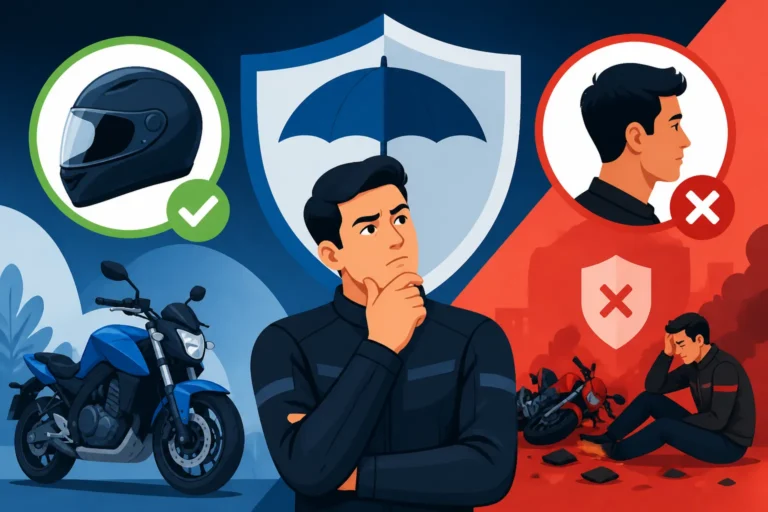
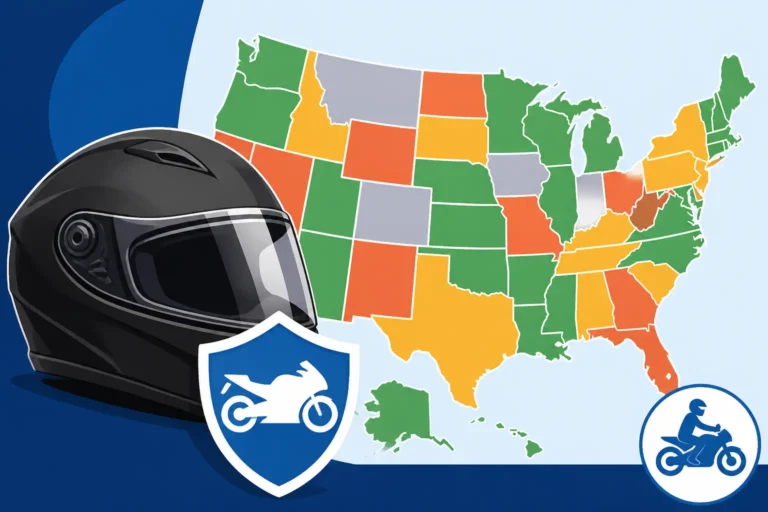
New York is one of the states with a universal helmet law, meaning all riders and passengers must wear a DOT-approved motorcycle helmet, regardless of age. This isn't just a safety recommendation; it's a legal requirement. Beyond the obvious safety benefits, helmet use can also have implications for your insurance.
While your insurance policy won't be invalidated solely because you weren't wearing a helmet, if you're involved in an accident and sustain head injuries, an insurance company or a court could argue that your injuries would have been less severe had you been wearing a helmet. This could potentially reduce the amount of compensation you receive for your medical expenses, even if another party was at fault. It's another compelling reason, aside from the legal mandate and your personal safety, to always strap on a quality helmet. For more information on this, check out Motorcycle Helmet Laws by State.
Here's a quick look at New York's motorcycle insurance requirements and some smart additions:
| Coverage Type | New York Minimum Requirement (25/50/10) | What it Covers | Recommended Additional Coverage |
|---|---|---|---|
| Bodily Injury Liability | $25,000 per person / $50,000 per accident | Injuries to others if you're at fault. | Higher limits (e.g., 100/300) |
| Property Damage Liability | $10,000 per accident | Damage to others' property if you're at fault. | Higher limits (e.g., $25,000+) |
| Uninsured Motorist Bodily Injury | $25,000 per person / $50,000 per accident | Your injuries if hit by an uninsured driver. | Underinsured Motorist (UIM) |
| Medical Payments (MedPay) | Not Required | Your medical bills and passenger's, regardless of fault (crucial as NY is no-fault except for motorcycles). | Highly Recommended |
| Collision | Not Required | Damage to your own bike from collision, regardless of fault. | Recommended (especially for financed/new bikes) |
| Comprehensive | Not Required | Damage to your own bike from non-collision events (theft, fire, vandalism, animal strikes, weather). | Recommended (especially for financed/new bikes) |
| Accessories/Custom Parts | Not Required | Damage or theft of aftermarket parts and customizations. | Recommended if you have custom parts |
Navigating New York’s motorcycle insurance landscape doesn’t have to be a headache. By understanding the mandatory requirements and wisely considering additional coverages, you can ensure you’re fully protected and ready to enjoy all the incredible riding experiences the Empire State has to offer. Ride safe out there!
Disclaimer
Please note that insurance laws and regulations can change. While this guide provides comprehensive information, it is always best to consult with a qualified insurance professional or the New York Department of Financial Services for the most current and personalized advice regarding your specific motorcycle insurance needs. This content is for informational purposes only and does not constitute legal or financial advice.