Does Motorcycle Insurance Cover Hitting an Animal?
Riding a motorcycle offers unparalleled freedom and a connection to the open road that cars just can’t replicate. But that intimate connection also means you’re more exposed to the unexpected, and few things are as terrifying or as damaging as hitting an animal. Many riders wonder if their motorcycle insurance policy will actually step up when a deer suddenly decides to cross their path. This comprehensive guide will deeply explore whether your motorcycle insurance covers hitting an animal, what specific coverages are crucial, and the steps you need to take if this nightmare scenario ever becomes a reality.
The Gut-Wrenching Reality of Animal Collisions on Two Wheels
When you’re out on your bike, feeling the wind, the last thing on your mind is a four-legged projectile. But the truth is, animal collisions are a significant, often devastating, risk for motorcyclists. It's not just about the damage to your cherished machine; it's about your personal safety, which is far more vulnerable on two wheels than in a steel cage.
More Common and Dangerous Than You Think
You might think hitting a deer or another animal is a rare occurrence, but ask any seasoned rider, and they'll likely have a story – or know someone who does. Wildlife populations, urban sprawl, and even just the time of day can dramatically increase your chances of an encounter. Deer are notorious for their unpredictable movements, especially at dawn and dusk. But it’s not just deer; anything from a stray dog in a suburban neighborhood to a wild hog on a rural highway can cause catastrophic damage and personal injury. On a motorcycle, even a small animal can lead to a loss of control, a sudden swerve, or a direct impact that throws you from your bike. It’s a terrifying thought, and the reality can be even worse.
The Immediate Aftermath: Shock and Damage
Imagine this: one moment you’re cruising, enjoying the ride, the next, there’s a thud, a lurch, and you’re fighting to keep your bike upright. If you manage to stay on, you’re often left shaken, potentially injured, and staring at a crumpled fender, a shattered fairing, or worse. The emotional toll alone can be immense, but the physical damage to your motorcycle and yourself can be extensive and expensive. Repairs often involve custom parts, specialized labor, and sometimes even a total loss of the vehicle. This is where your insurance policy needs to be your safety net, catching you when the unexpected strikes. Without the right coverage, you could be facing astronomical repair bills or even medical expenses out of your own pocket.
Deciphering Your Policy: Which Coverages Step Up?
This is where the rubber meets the road, so to speak. Not all motorcycle insurance policies are created equal, and understanding the nuances of your coverage is paramount, especially when it comes to unforeseen events like an animal collision. Many riders assume standard liability will cover everything, but for something like an animal strike, you need specific types of protection.
Comprehensive Coverage: Your Primary Shield Against Wildlife
When we talk about hitting an animal, comprehensive motorcycle coverage is usually the hero of the story. Unlike collision coverage, which typically covers damage from accidents with other vehicles or stationary objects, comprehensive steps in for events that are not collisions with other cars. Think of it as your "acts of nature" and "non-collision mayhem" protector. This includes things like theft, vandalism, fire, falling objects, and yes, impacts with animals.
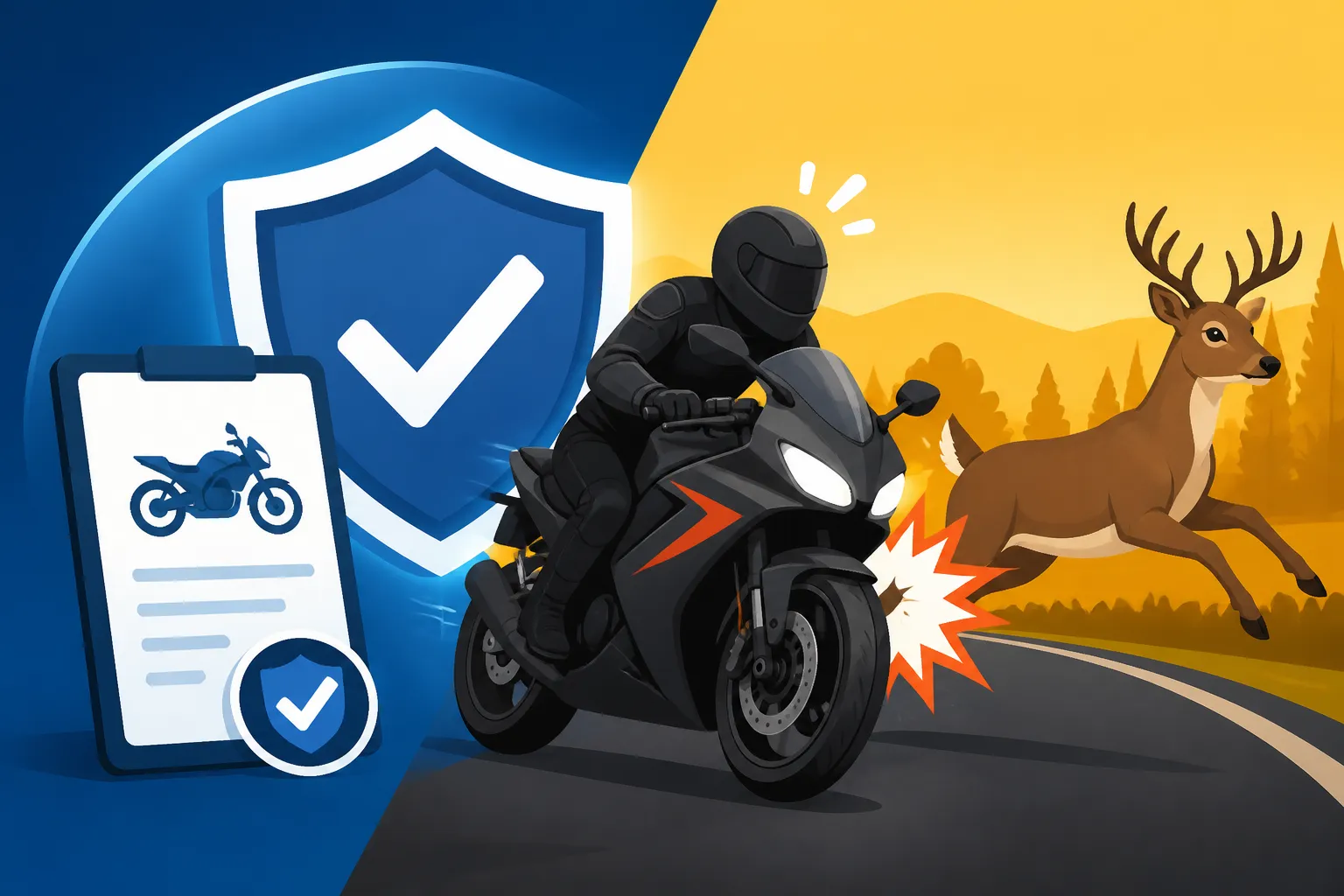
Let's say you're riding through rural Pennsylvania and a deer leaps out of the treeline. You hit it square on, and your front end is completely mangled. Your comprehensive coverage would typically pay for the repairs to your motorcycle, minus your deductible. This is incredibly important because, without it, an unexpected deer encounter could easily set you back thousands of dollars for repairs or a replacement bike. Many riders initially shy away from comprehensive because it adds to the premium, but when you consider the cost of replacing even a mid-range motorcycle, it often proves to be an invaluable investment. It truly provides the broadest protection for your bike itself, outside of a traffic accident.
Collision Coverage: When an Animal Leads to Another Incident
While comprehensive coverage handles the direct impact with an animal, what happens if that impact causes a chain reaction? For example, if you swerve to avoid a deer, lose control, and hit a guardrail or another vehicle, then collision coverage would likely come into play. Collision insurance is designed to cover damage to your motorcycle resulting from a collision with another vehicle or object, regardless of who is at fault.
In the deer scenario, if the direct impact from the deer is minimal, but your swerve into a ditch causes more significant damage, the insurance claim might be more complex. The primary cause, the animal, would point to comprehensive. But the secondary impact with the ditch or guardrail could fall under collision. It's not uncommon for these coverages to overlap or be triggered sequentially in such an incident. This is why having both comprehensive and collision is often referred to as "full coverage" and offers the most robust financial protection for your motorcycle. Without collision coverage, you'd be on the hook for any damage if your evasion attempt goes wrong and you hit something else. Understanding Collision vs Comprehensive Motorcycle Coverage is critical here.
Medical Payments MedPay and Personal Injury Protection PIP: Protecting Yourself
Beyond the damage to your bike, the human element is paramount. Hitting an animal on a motorcycle, especially a larger one like a deer, can result in severe injuries to the rider. This is where Medical Payments (MedPay) or Personal Injury Protection (PIP) coverage becomes absolutely essential.
MedPay typically covers medical expenses for you and any passengers, regardless of who is at fault in an accident. It can help with things like ambulance rides, hospital stays, doctor visits, and even funeral expenses, up to your policy limits. It’s a no-fault coverage, meaning it kicks in quickly without needing to determine responsibility. This can be a lifesaver, covering deductibles and co-pays that your health insurance might not, or providing coverage if you don't have health insurance.
PIP, on the other hand, is more extensive and is required in "no-fault" states like Michigan. It covers medical expenses, lost wages, and other related costs for you and your passengers, again, regardless of fault. While both aim to protect your well-being, their availability and specifics vary by state. If you get into an accident due to an animal collision and sustain injuries, having MedPay or PIP means you won't have to worry about immediate medical bills piling up while you're trying to recover. Many riders overlook these coverages, focusing solely on bike damage, but your personal health should always be a top priority. Learn more about What Is Medical Payments MedPay for Riders to see if it's right for you.
Here's a quick look at how different coverages generally apply to animal collisions:
| Coverage Type | What It Primarily Covers | Relevance to Animal Collision |
|---|---|---|
| Comprehensive | Non-collision damage (theft, vandalism, fire, natural disasters, falling objects) | Direct impact with an animal (e.g., deer, dog). This is your primary coverage. |
| Collision | Damage to your bike from an accident with another vehicle or object (e.g., pole, guardrail) | If hitting the animal causes you to swerve and then hit a stationary object or another vehicle. |
| Liability (Bodily Injury) | Injuries to other people if you're at fault | Not relevant for damage from your bike hitting an animal unless you cause another person injury. |
| Liability (Property Damage) | Damage to other people's property if you're at fault | Not relevant for damage from your bike hitting an animal unless you damage another person's property. |
| Uninsured/Underinsured Motorist | Damage/injury if hit by a driver with no/insufficient insurance | Not relevant for animal collision itself, as an animal doesn't carry insurance. |
| Medical Payments (MedPay)/PIP | Medical expenses for you and your passengers, regardless of fault | Crucial for your own injuries sustained in an animal collision. |
| Custom Parts/Accessories | Aftermarket parts and modifications | If your custom parts (e.g., fairings, exhaust) are damaged in the collision. |
| Roadside Assistance | Towing, flat tires, battery jumpstarts | Useful for towing your damaged bike from the scene of the animal collision. |
Understanding the Claims Process After an Animal Encounter
So, the worst has happened. You’ve had an unfortunate run-in with wildlife. Now what? The process of filing an insurance claim can feel daunting, especially when you’re rattled and possibly injured. But knowing the steps can make a world of difference in ensuring your claim goes smoothly and you get the compensation you deserve.
Documenting the Scene: Your Evidence is Key
First things first: ensure your safety and the safety of others. If you're able, move yourself and your bike to a safe location off the road. Call emergency services if there are injuries or if the animal is a significant hazard. Once safe, begin documenting everything. This isn't just a suggestion; it's a critical step that can significantly impact your claim.
- Take Photos and Videos: Get wide shots of the scene, showing the road, surrounding area, and any visible hazards. Then, take close-ups of the damage to your motorcycle from multiple angles. Don't forget photos of the animal if it's still present and you can do so safely. These visual records serve as irrefutable evidence for your insurer.
- Note Down Details: Jot down the exact location (cross-streets, mile markers), the time of day, weather conditions, and anything notable about the animal (e.g., type, size, how it appeared). The more specific you are, the better.
- Witness Information: If anyone stopped to help or saw the incident, get their contact information. A third-party account can be incredibly valuable.
- Police Report: Even if no other vehicle is involved, file a police report. Some states require it for animal collisions, especially with larger animals like deer, and it provides an official record of the incident. This can streamline your claim process immensely. For more on this, check out How to File a Motorcycle Insurance Claim.
Notifying Your Insurer: Timelines and First Steps
Once you're safe and have documented the scene, the next critical step is to contact your insurance company. Do this as soon as reasonably possible. Most policies have a clause requiring timely notification of an incident. Delays can sometimes complicate a claim, or even lead to its denial, although this is rare for genuine emergencies.
- Call Your Provider: Have your policy number handy. Explain what happened clearly and concisely. They will open a claim and assign an adjuster.
- Be Prepared to Answer Questions: The adjuster will ask for all the details you’ve collected – date, time, location, description of the incident, and extent of damage. Be honest and thorough.
- Roadside Assistance: If your bike is unrideable, your comprehensive policy (or an add-on like roadside assistance) might cover towing it to a repair shop. Make sure to ask about this during your initial call. Companies like The Zebra can help you understand what different providers offer in terms of roadside assistance as part of their comprehensive packages.
What to Expect During the Assessment
After you've filed your claim, an insurance adjuster will be assigned to review your case. Their job is to assess the damage, confirm the circumstances of the incident, and determine the payout.
- Vehicle Inspection: The adjuster will likely want to inspect your motorcycle at the repair shop. They’ll assess the damage, determine if it’s repairable or a total loss, and estimate the cost of repairs. For extensive damage, this can be a detailed process.
- Evidence Review: They'll review your photos, videos, police report, and any witness statements you provided. This evidence helps them corroborate your account of the incident.
- Settlement Offer: Based on their assessment, the adjuster will present a settlement offer. This will reflect the cost of repairs or the actual cash value (ACV) of your motorcycle if it's totaled, minus your comprehensive deductible. If you have special Accessories and Custom Parts Coverage Explained, make sure those are included in the estimate.
- Negotiation: Don't be afraid to ask questions or even negotiate if you feel the offer is too low or doesn't cover all damages. Provide documentation like repair estimates from multiple reputable shops.
Factors Influencing Your Claim and Future Rates
Navigating an insurance claim is one thing, but understanding how it might affect your finances and future premiums is another. Several elements come into play when an insurance company processes your claim for an animal collision.
Your Deductible and Coverage Limits
When you file a comprehensive claim for hitting an animal, your deductible will be a key factor. Your deductible is the amount you agree to pay out-of-pocket before your insurance coverage kicks in. For example, if you have a $500 comprehensive deductible and the repairs to your motorcycle cost $3,000, you would pay $500, and your insurance company would cover the remaining $2,500.
It's important to remember that higher deductibles usually mean lower monthly premiums, but also a larger out-of-pocket expense if you need to file a claim. Conversely, a lower deductible means higher premiums but less upfront cost during an incident. When you initially set up your policy, or review your current one, consider your financial comfort level for this exact scenario. Also, be aware of your coverage limits. While comprehensive coverage is usually quite robust, if you have an extremely valuable or heavily customized motorcycle, ensure your limits are high enough to cover its full value. If your custom paint job alone costs more than your comprehensive limit, you’re in for a nasty surprise. This is often where options like Agreed Value vs Stated Value vs Actual Cash Value come into play, especially for unique bikes.
Impact on Your Premiums: A Mixed Bag
Will filing a claim for hitting an animal cause your insurance rates to skyrocket? This is a common concern, and the answer isn't always straightforward. Generally, comprehensive claims – especially those for "acts of nature" like animal collisions – are viewed differently than "at-fault" collision claims where you were responsible for an accident with another vehicle.
Many insurance companies consider animal collisions to be "no-fault" incidents. Since you generally can't predict or prevent an animal from darting out, these claims are often less likely to significantly increase your premiums compared to an accident where you were deemed at fault. However, it's not a guarantee. Some insurers might still adjust your rates, especially if you've filed multiple claims in a short period, regardless of fault. It also depends on your specific insurer and your claims history. Companies like The Zebra can help you compare different policies and understand how various insurers handle these types of claims. It’s always a good idea to discuss this directly with your insurance agent or review your policy's terms regarding comprehensive claims and rate adjustments. Your premium could also be influenced by What Affects Your Motorcycle Insurance Rate.
Reporting Animal Collisions vs. Other Accidents
There’s a subtle but important distinction between reporting an animal collision and reporting a typical vehicle accident. With an animal collision, the focus is often on the comprehensive aspect of your policy, which covers damage to your bike from a specific type of unforeseen event. In contrast, an accident involving another vehicle or object typically falls under collision (for your bike's damage) and liability (for damage/injuries to others).
This distinction is crucial because it influences how your insurer processes the claim and its potential impact on your rates. Because an animal collision is usually considered an "unavoidable" event, it generally doesn't reflect negatively on your driving record in the same way an at-fault collision with another vehicle would. However, you still need to follow the proper procedures, including reporting it to authorities if required by your state, and providing all necessary documentation to your insurer. The more clearly you can establish that the damage was due to an animal, the smoother your comprehensive claim process will be.
Preventative Measures and Smart Riding in Wildlife Zones
While we've established that the right insurance can save your bacon (or your bike) after an animal collision, the best scenario is to avoid the incident altogether. As riders, we're constantly scanning the road, anticipating, and reacting, but when it comes to wildlife, an extra layer of caution is always warranted.
Situational Awareness: Scanning the Road Ahead
One of the most effective ways to prevent an animal collision is constant vigilance, especially when riding through areas known for wildlife activity.
- Know Your Habitat: If you're riding in an area with dense woods, agricultural fields, or near water sources, assume animals are present. Deer are most active during dawn and dusk, so be extra cautious during these times. Road signs indicating "Deer Crossing" aren't just suggestions; they're warnings based on historical data.
- Scan, Don't Stare: Your eyes should be constantly moving, scanning the road ahead, the shoulders, and even the tree line. Don't fixate on one spot. Peripheral vision is crucial for spotting movement that might indicate an animal is about to enter the road. If you see one deer, assume there are others nearby; they rarely travel alone.
- Slow Down: This is perhaps the simplest yet most effective preventative measure. Lower speeds give you more time to react, to brake, or to swerve safely (if necessary). When you're traveling at higher speeds, your reaction time shrinks dramatically, and the impact force in a collision increases exponentially.
- Use Your High Beams (When Appropriate): At night, high beams can illuminate the road shoulders and further down the road, potentially giving you an earlier warning. However, be mindful of oncoming traffic and dim them accordingly.
- Look for Eye Shine: At night, the reflection of your headlights in an animal's eyes can be the first indication of their presence near the road.
Protective Gear and Rider Training: Minimizing Personal Risk
Even with the most diligent riding, accidents can happen. This is why having the right protective gear and continuous rider training are non-negotiable for motorcyclists, especially when considering the devastating impact an animal collision can have on the rider.
- All the Gear, All the Time (ATGATT): This isn't just a catchy acronym; it's a philosophy that can save your life. A full-face helmet, armored jacket, riding pants, gloves, and sturdy boots are your only real protection against asphalt, debris, and, yes, animal impacts. Even a low-speed fall after hitting a small animal can result in severe road rash or broken bones if you're not properly geared up. Think of your gear as your personal crumple zone; it's designed to absorb impact and abrasion, keeping your skin and bones intact. For example, if you hit a deer and go down, your helmet could be the difference between a minor concussion and a life-altering traumatic brain injury. Don't skimp on safety. Many states also have varying Motorcycle Helmet Laws by State, but regardless of the law, wearing one is always wise.
- Advanced Rider Training: Basic licensing courses are a great start, but advanced rider training can significantly enhance your skills, particularly in emergency braking and hazard avoidance. Courses like those offered by the Motorcycle Safety Foundation (MSF) focus on techniques that can help you react safely to unexpected obstacles like a sudden animal in your path. Knowing how to perform a quick stop or a controlled swerve without losing traction could be the difference between a close call and a serious accident. These skills can also potentially lower your insurance premiums, as many insurers offer discounts for completing approved safety courses. This demonstrates to your insurer that you're a proactive, safer rider.
The Bottom Line: Why Comprehensive Coverage Isn't Just an Option
When you weigh the thrill of the ride against the potential risks, it becomes clear that comprehensive motorcycle insurance is not merely an optional add-on; it's a fundamental pillar of responsible motorcycle ownership. Especially when considering the unpredictable nature of animal collisions, this specific coverage becomes indispensable.
Peace of Mind Beyond the Pavement
Think about it: most of us ride for the sheer joy and freedom it brings. The last thing you want clouding that experience is the nagging worry of "what if?" Comprehensive coverage offers that peace of mind. It allows you to focus on the road, the scenery, and the ride itself, rather than constantly fretting over potential financial ruin from an event entirely out of your control, like a deer leaping into your path.
Without comprehensive coverage, an animal collision, theft, or even a tree falling on your parked bike could translate into thousands of dollars of damage that you'd have to pay entirely out-of-pocket. For many riders, that kind of unexpected expense could mean their beloved motorcycle sits in disrepair for months, or worse, is written off entirely. Investing in comprehensive coverage means you're protecting your financial future and ensuring that if the worst happens, you have a clear path to getting your bike repaired or replaced. It’s an investment in continued enjoyment of your passion, free from the most common non-collision worries. Understanding Types of Motorcycle Insurance Coverage Explained can help solidify this understanding.
Shopping Smart for the Right Protection
Finding the right comprehensive coverage doesn't have to be a headache. It's about being informed and comparing your options. Different insurance providers offer varying rates, deductibles, and additional perks for comprehensive coverage.
When you're shopping for motorcycle insurance, specifically ask about comprehensive coverage and its exclusions. Inquire about the deductible options and how they impact your premium. Don't just settle for the first quote you get. Websites like The Zebra are excellent resources for comparing multiple quotes from different carriers side-by-side. They can help you see what companies like Progressive, Dairyland, or Markel offer, allowing you to tailor a policy that fits your budget and provides robust protection against those pesky animal encounters. Remember, the cheapest policy isn't always the best; value lies in the balance between cost and adequate coverage. Always aim for a policy that gives you the confidence to ride, knowing you're protected against the unpredictable. This is also key when looking at What Motorcycle Coverage Do You Actually Need.
Disclaimer
Please remember that insurance policies can vary significantly based on your state, provider, specific policy terms, and individual circumstances. This guide provides general information and recommendations. Always consult directly with a licensed insurance professional or your insurance provider to understand the specifics of your coverage and to ensure it meets your individual needs. Policy language and laws are subject to change.