Does Comprehensive Cover Motorcycle Vandalism?
Finding your beloved motorcycle scratched, dented, or otherwise defaced is one of the most disheartening things a rider can experience. It's a violation, not just of your property, but of the passion and freedom your bike represents. When this gut-wrenching moment happens, your first thought is often, "Will my insurance even cover this?" This comprehensive guide is here to walk you through exactly how your motorcycle insurance, specifically comprehensive coverage, comes into play when vandalism rears its ugly head.
Understanding Comprehensive Motorcycle Insurance Coverage
Let's start with the basics, because sometimes the jargon insurance companies use can feel like a foreign language. Comprehensive coverage is one of the pillars of a robust motorcycle insurance policy, designed to protect your bike from a whole host of incidents that aren't related to a collision with another vehicle or object while riding. Think of it as your bike's bodyguard against the unexpected and uncontrollable forces of the world. It’s what you add when you want more than just the bare minimum liability protection that covers other people’s property or injuries in an accident you cause.
Beyond the Basics: What Comprehensive Truly Covers
Unlike liability insurance, which is all about other people and their property, comprehensive coverage is about your motorcycle. It steps in for events like theft, fire, natural disasters such as floods or hail, falling objects like tree branches, and yes, vandalism. Imagine you’ve got your pristine Harley-Davidson parked on a busy street in downtown Austin, only to return and find someone keyed the tank or slashed your custom seat. That sinking feeling in your stomach is exactly what comprehensive coverage aims to alleviate, offering a financial safety net to get your bike repaired. It’s important to note that this isn't just about significant damage; even minor acts of malicious mischief can often fall under its umbrella. For a deeper dive into the broader scope of protection, you might want to read our article on Types of Motorcycle Insurance Coverage Explained.
Many riders make the mistake of thinking "full coverage" means everything is covered, but that's not always the case. "Full coverage" is often just a colloquial term that combines comprehensive and collision coverage. While collision handles accidents where your bike hits something (or something hits your bike while in motion), comprehensive handles those "other" unforeseen circumstances. For example, if a rogue shopping cart rolls into your parked bike, that's typically comprehensive. If you accidentally scrape your bike against a curb, that's collision. Knowing the difference is key to understanding your policy.
Understanding What "Not Collision" Means
The easiest way to wrap your head around comprehensive coverage is to remember it’s for damages that are "not collision" and "not liability." This distinction is crucial because the causes of damage determine which part of your policy kicks in. If you're cruising down a country road and swerve to avoid a deer, crashing into a fence, that's a collision claim. But if that deer jumps into your parked bike, or if your bike is struck by lightning, these are comprehensive claims. The distinction means that your deductible and the impact on your rates might be different depending on how the damage occurred.
This also means that if your motorcycle is simply knocked over while parked by, say, a strong gust of wind, that's generally a comprehensive claim, as no other vehicle or object was involved in a "collision" in the traditional sense. It's about protecting against the unexpected, from forces of nature to criminal acts. When you're trying to figure out what your policy truly means by "full coverage," remember to look for the explicit details of both comprehensive and collision—it’s never a one-size-fits-all term. If you're still wondering about the difference, our guide on Collision vs Comprehensive Motorcycle Coverage breaks it down even further.
Vandalism: The Specifics of What Happens
Vandalism is, unfortunately, a reality for many motorcycle owners. Whether it's a random act of malice or targeted damage, it leaves you feeling violated and often at a loss. The good news is that comprehensive motorcycle insurance is specifically designed to cover such incidents. It’s important to understand what falls under "vandalism" in an insurance context and how your coverage then comes into play.
Examples of Motorcycle Vandalism
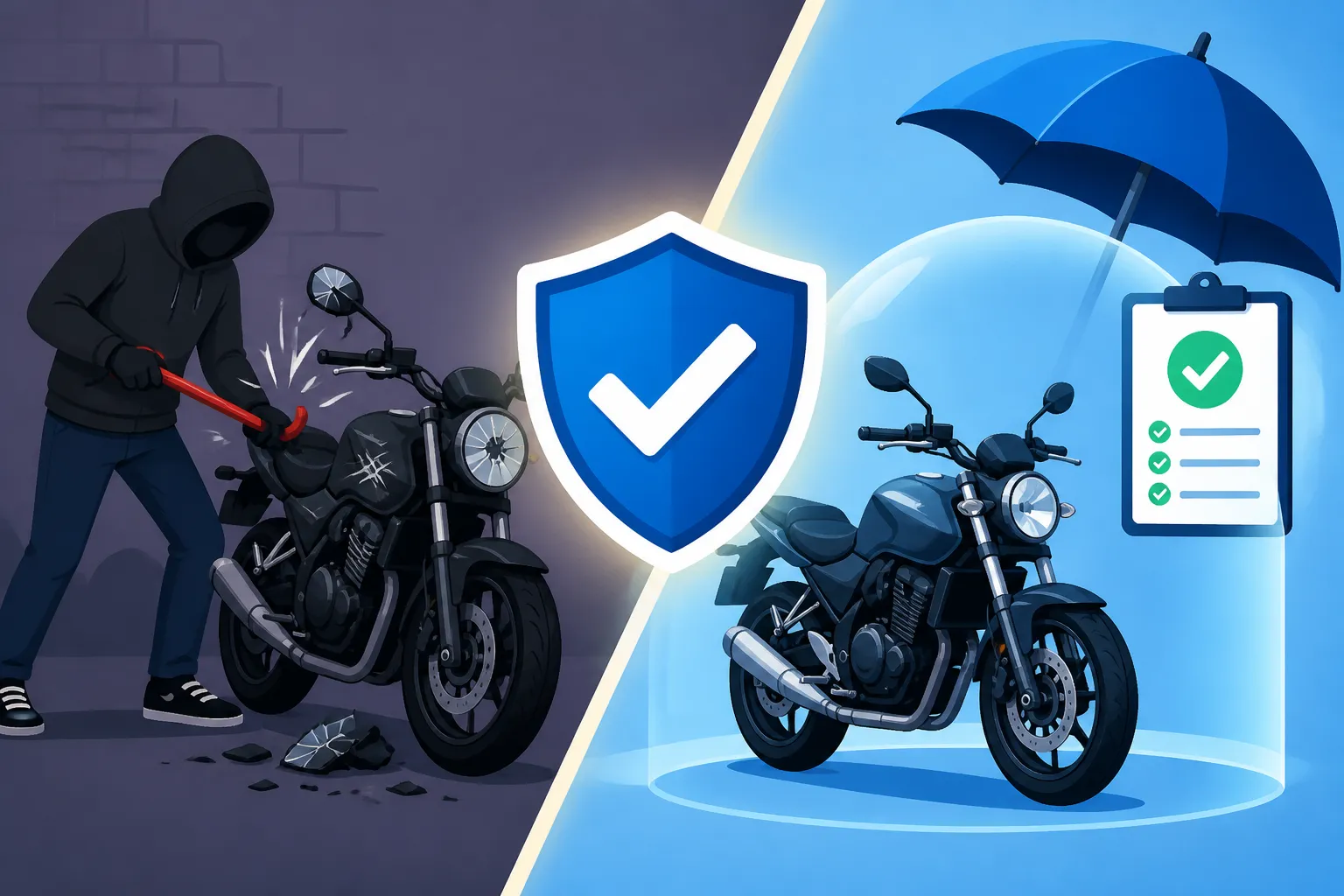
Vandalism can manifest in many frustrating ways. It’s not just about spray paint; it can be anything from a malicious scratch down your tank with a key, a slashed tire, a broken headlight, or even sugar poured into your gas tank (though proving that as vandalism can be tricky without evidence of malicious intent). We've all heard horror stories of bikes having their mirrors snapped off, seats slashed, or even custom paint jobs ruined. Imagine finding your carefully chosen custom exhaust pipes bent or your unique fairings smashed. These are all prime examples of what would typically be considered vandalism.
Consider a scenario in a busy urban area like Los Angeles. You park your sport bike, a Kawasaki Ninja, in what you think is a safe spot. You come back to find a deeply scratched fairing and a broken signal light. This isn't damage from an accident, nor is it a natural disaster. It's clearly a malicious act, fitting squarely into the definition of vandalism. Similarly, if your vintage Indian Chief, parked securely in your driveway, has its chrome trim intentionally bent or its classic leather seat slashed by an unknown perpetrator, comprehensive coverage would be your go-to. These scenarios, though infuriating, are exactly why comprehensive coverage exists, stepping in to cover the costs that you certainly didn't anticipate.
How Comprehensive Coverage Steps In
When vandalism occurs, your comprehensive coverage typically pays for the repair or replacement of the damaged parts of your motorcycle, up to the actual cash value (ACV) of the bike or the stated/agreed value, depending on your policy. This means if your custom paint job is ruined, or your expensive aftermarket exhaust is destroyed, the policy helps cover the cost to fix or replace these items, minus your deductible. It's a relief to know that you won't have to bear the entire financial burden yourself. However, remember that if you have special custom parts, you might need specific Accessories & Custom Parts Coverage Explained to ensure they are fully protected.
Let's say a local gang decides to "tag" your Ducati Panigale with graffiti while it's parked overnight in your apartment complex's garage. The cost to repaint the affected parts or remove the graffiti can be significant. Your comprehensive policy, after you pay your deductible, would cover these expenses. If the damage is extensive enough that the repair costs exceed a certain percentage of your bike's value, your insurer might even declare it a total loss. In such a case, they would pay you out the ACV (or stated/agreed value) of your bike, allowing you to replace it. This coverage is a crucial layer of protection, especially for riders who own valuable or highly customized motorcycles that would be expensive to repair out-of-pocket. When shopping for policies, tools like The Zebra can help you compare comprehensive options from different providers, ensuring you get the right level of protection for your bike.
When Comprehensive Might Not Cover Vandalism
While comprehensive coverage is a powerful shield against vandalism, it’s not an ironclad guarantee for every single scenario. There are specific situations and exclusions where your policy might not kick in, leaving you to cover the costs. Understanding these nuances is vital to avoid unwelcome surprises if you ever have to file a claim.
Intentional Damage or Negligence
One of the biggest caveats is intentional damage caused by you or someone you authorize. If you, for example, get frustrated with your bike and decide to kick in a headlight, that’s clearly not vandalism in the insurance sense. It’s self-inflicted damage and your comprehensive policy won't cover it. Similarly, if you lend your bike to a friend, and they intentionally damage it, that usually falls outside the scope of comprehensive coverage because the damage was done by a known party with your permission to use the vehicle. Insurance policies are designed for unforeseen, accidental, or malicious acts by unaffiliated third parties.
Negligence can also be a tricky area. While comprehensive covers theft, if you leave your keys in the ignition and the bike running in a high-crime area, and it gets stolen, an insurer could argue gross negligence. While most comprehensive policies are pretty robust about theft regardless of negligence, it's a good reminder that consistently careless behavior might complicate a claim for theft or, in some extreme cases, even vandalism if your actions contributed significantly to the opportunity for damage. For instance, if you left expensive, easily removable parts unsecured and they were stolen (which often falls under comprehensive as a form of theft/vandalism), an insurer might scrutinize the level of security you provided.
Specific Policy Exclusions to Watch For
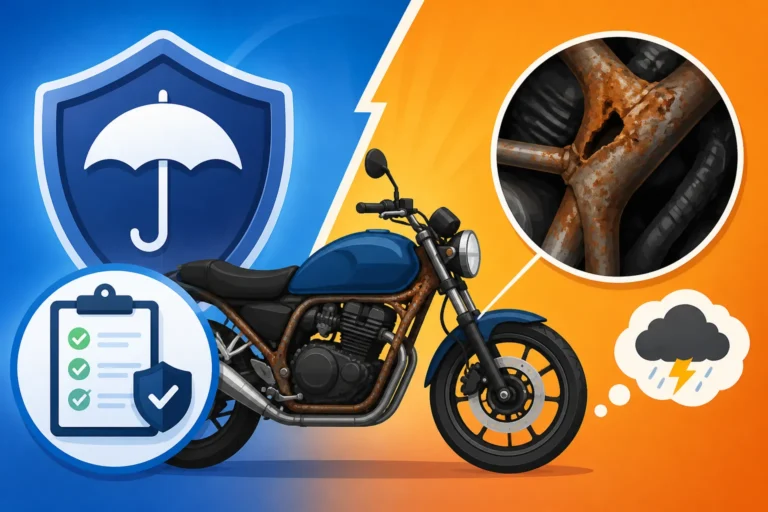
Every insurance policy has its exclusions, and comprehensive motorcycle coverage is no different. While general vandalism is almost always covered, there might be very specific circumstances or types of damage that are not. For example, damage that results from wear and tear, mechanical breakdown, or rust is never considered vandalism. If your bike's paint begins to chip due to age and exposure, that's not vandalism; it's just the natural degradation of the bike.
Another potential exclusion relates to illegal activities. If your motorcycle is vandalized while being used in the commission of a crime, or if the vandalism is directly related to such activities, your insurer may deny the claim. For instance, if your bike is used in a street race and then vandalized by an opposing group, the claim could be denied due to its involvement in an illegal activity. It's always crucial to read the fine print of your policy document, often referred to as the "declarations page" and "policy jacket." If you're uncertain about any specific exclusions, don't hesitate to reach out to your insurance agent or use comparison sites like The Zebra to review policy details before committing. Understanding these boundaries ensures you have realistic expectations about your coverage.
The Claim Process for Vandalism Damage
Dealing with the aftermath of vandalism is stressful enough without having to navigate a complicated insurance claim process blind. Knowing the steps to take can make a huge difference in how smoothly your claim proceeds and how quickly you can get your motorcycle back in shape. It's not just about calling your insurer; there's a clear sequence of actions that will help your case.
Immediate Steps After Discovering Vandalism
The moment you discover your motorcycle has been vandalized, your priority should be safety and documentation. First, assess the situation. If you believe the perpetrators are still nearby or it's a dangerous environment, prioritize your safety and call the police if necessary. Once safe, do not move or alter anything if possible. The scene itself can be crucial evidence. Immediately take clear, well-lit photographs and videos from multiple angles, capturing the overall damage, specific points of impact, and the surrounding area. Note down the exact date and time you discovered the damage, and the location.
Next, you need to report the incident to the authorities. Contact your local police department and file a police report. This step is absolutely critical for an insurance claim involving vandalism or theft. The police report provides an official, third-party record of the incident, which your insurance company will almost certainly require. Be as detailed as possible with the police about what you observed. Get a copy of the police report or at least the report number; you'll need this when you file your claim. This is a standard procedure, just like when you need to know What to Do After a Motorcycle Accident Insurance Steps.
Documenting Damage and Filing Your Claim
Once you've secured the scene and filed a police report, it's time to gather all your documentation. This includes your photographs and videos, the police report number, and any receipts for custom parts or modifications that were damaged. The more evidence you have to support the extent and value of the damage, the better. If you have an expensive custom paint job that was ruined, for example, having the original invoice for that work will be invaluable in proving its value.
Next, contact your insurance provider as soon as possible. Most insurers have a dedicated claims line or an online portal where you can initiate the process. Be prepared to provide them with all the information you've gathered: your policy number, the date and location of the incident, a description of the damage, and the police report number. An adjuster will likely be assigned to your case. They will review your documentation, possibly inspect your motorcycle themselves, and may request estimates for repairs. Be honest and thorough in your communication with the adjuster. This is the stage where having detailed records of your bike's value, including any Agreed Value vs Stated Value vs Actual Cash Value provisions, truly pays off. Remember, the goal is to demonstrate the damage clearly and fairly so your claim can be processed efficiently. Our guide on How to File a Motorcycle Insurance Claim offers even more comprehensive advice.
Factors Affecting Your Payout and Premiums
After a vandalism incident, you're not just thinking about repairs; you're also wondering about the financial implications. How much will you actually get? Will your rates skyrocket? These are legitimate concerns, and understanding the factors at play can help you navigate the process with more clarity.
Deductibles and Actual Cash Value
When it comes to your payout for a vandalism claim, two major factors are your deductible and the valuation method your policy uses. Your deductible is the amount you've agreed to pay out-of-pocket before your insurance coverage kicks in. So, if your comprehensive deductible is $500 and the vandalism repair costs $1,500, you'll pay the first $500, and your insurer will cover the remaining $1,000. Choosing a higher deductible can lower your premiums, but it also means you pay more upfront in the event of a claim. It's a balance many riders weigh when setting up their policy, and understanding What Is the Deductible on Motorcycle Insurance? is fundamental.
The other critical factor is how your insurer values your motorcycle. Most standard policies use Actual Cash Value (ACV), meaning they'll pay you the value of your bike minus depreciation at the time of the incident. So, that custom paint job you got five years ago? It won't be valued at its original price. For riders with custom bikes or vintage models, this can be a real sticking point. This is where options like "agreed value" or "stated value" policies become incredibly important, as they can provide better protection for the unique worth of your motorcycle. It's a key consideration, especially if your bike is a significant investment or highly customized.
Impact on Future Premiums and Claims History
It's natural to worry about how filing a claim will affect your insurance premiums. The truth is, filing a comprehensive claim can sometimes lead to an increase in your rates, although it's often less impactful than an at-fault collision claim. Insurance companies evaluate your risk profile, and any claim on your record contributes to that. However, comprehensive claims are often considered "no-fault" since they're typically for incidents beyond your control (like vandalism, theft, or natural disasters). Because you weren't "at fault," the rate increase might be minimal or, in some cases, non-existent, especially if it's your first claim in a long time.
Many factors influence your motorcycle insurance rates, and a single comprehensive claim might not be the sole determinant of a significant increase. Your driving record, age, location, and even the type of motorcycle you ride all play a part. Some insurers offer "accident forgiveness" or "claim forgiveness" programs, which could mitigate the impact. It's always a good idea to discuss this with your agent or check your policy details. If your rates do go up, remember that you always have the option to How to Compare Motorcycle Insurance Quotes from other providers like Progressive, Geico, or Dairyland to find a more competitive rate. Don't be afraid to shop around and leverage tools like The Zebra to see if another company can offer you a better deal, even with a recent claim on your record.
Beyond Vandalism: Other Comprehensive Perks
While we're focusing on vandalism, it’s worth remembering that comprehensive coverage is a broad safety net that protects your motorcycle from a variety of non-collision related incidents. It's not just a one-trick pony; it’s designed to cover many of the unpredictable events that can damage or destroy your ride when you're not actively crashing it.
Theft, Fire, and Natural Disasters
One of the most significant protections comprehensive coverage offers is against theft. Imagine waking up to find your garage door ajar and your pride and joy, perhaps a beloved Honda Gold Wing, simply gone. That sick feeling in your stomach is universal among riders. Comprehensive coverage is what steps in to help you recover the financial loss if your motorcycle is stolen and not recovered. Without it, you'd be out of luck, leaving you to bear the entire cost of replacing your bike. Our guide on Motorcycle Theft Claim How It Works provides more details if you ever find yourself in this terrible situation.
Beyond theft, comprehensive also typically covers damage from fire, whether it’s a garage fire that spreads to your bike or an electrical issue within the bike itself that causes a blaze. Natural disasters are another big one. Think about the havoc a hurricane can wreak in Florida, with floodwaters submerging vehicles, or a severe hailstorm pounding down on your parked motorcycle. Comprehensive coverage helps pay for the repairs from these "Acts of God," ensuring you're not left with a total loss and no recourse. This coverage is especially crucial if you live in an area prone to severe weather events.
Animal Collisions and Falling Objects
It’s happened to almost every rider: that heart-stopping moment when an animal darts out into the road. While hitting an animal while riding often falls under collision coverage, comprehensive coverage usually kicks in if an animal (like a deer, racoon, or even a rogue bird) causes damage to your parked motorcycle, or if it runs into your moving bike and you don't actually collide with the animal but swerve and cause damage to your bike as a result of the encounter. It's a nuanced distinction that can save you a lot of headache and money.
Similarly, damage from falling objects is a common comprehensive claim. This could be anything from a tree branch falling on your bike during a storm, debris blown by high winds, or even a rock falling off a truck in front of you that chips your paint or cracks a fairing (if you didn't collide with the truck itself). These are all unpredictable events that are outside your control, and comprehensive coverage provides the financial safety net to get your bike repaired. It really underscores why this coverage is so valuable for safeguarding your investment against the sheer unpredictability of life.
Navigating the Costs of Comprehensive Coverage
It's all well and good to talk about the benefits of comprehensive coverage, but let's be realistic: it adds to your premium. For many riders, especially those on a budget or those with older bikes, the cost is a significant consideration. However, understanding what influences these costs can help you make informed decisions and potentially find ways to save.
Factors Influencing Comprehensive Premiums
Just like with any other type of motorcycle insurance, several factors play into how much you'll pay for comprehensive coverage. The type of motorcycle you ride is a huge one. A high-performance sport bike like a Yamaha R1 or a Kawasaki Ninja will almost certainly have higher comprehensive premiums than a cruiser or a touring bike, primarily because sport bikes are more expensive to repair or replace and are statistically more likely to be stolen. For a full breakdown, our article on Motorcycle Insurance Cost by Bike Type is a great resource.
Your location also matters. If you live in a bustling urban area with higher rates of theft or vandalism, your comprehensive premium will likely be higher than if you reside in a quiet rural community. Your riding history, age, and even your credit score can also influence rates. For instance, a younger rider with a limited riding history might pay more than an experienced rider over 50 with a clean record. This is why when you're getting quotes, whether directly from an insurer or through a comparison site like The Zebra, they ask for a lot of personal details.
Is Comprehensive Coverage Worth the Investment?
This is the million-dollar question for many riders. Is the added cost of comprehensive coverage truly worth it? The answer largely depends on your specific circumstances, your risk tolerance, and the value of your motorcycle. For a brand new, expensive, or highly customized bike, comprehensive coverage is almost always a smart investment. The peace of mind alone, knowing that a theft, vandalism act, or natural disaster won't result in a total financial loss, can be invaluable. If your bike is financed, your lender will almost certainly require comprehensive (along with collision) coverage to protect their investment. For further reading, check out Motorcycle Insurance Requirements for Financed Bikes.
However, if you own an older, low-value motorcycle that you could easily replace out-of-pocket, or if you only ride occasionally and store your bike in a very secure location, you might decide to forgo comprehensive coverage to save on premiums. It’s a personal financial decision. To help make that decision, consider the potential cost of replacing your bike versus the annual cost of the comprehensive premium. For example, if your annual comprehensive premium is $150 and your bike is worth $2,000, that’s a different calculation than if your premium is $300 and your bike is worth $15,000. It’s about weighing the risk and the potential financial burden.
| Coverage Type | What It Primarily Covers | Common Scenarios | Is Vandalism Covered? |
|---|---|---|---|
| Liability | Damage/injuries you cause to others (property damage, bodily injury). | You accidentally hit another car, injure a pedestrian. | No |
| Collision | Damage to your motorcycle from an accident where you hit another object or vehicle. | You hit a tree, another car, or your bike falls over while riding. | No |
| Comprehensive | Damage to your motorcycle from non-collision incidents (theft, fire, natural disaster). | Your bike is stolen, catches fire, is damaged by hail, flood, a falling tree branch, or hit by a deer while parked. | Yes |
| Uninsured/Underinsured Motorist | Damage/injuries to you if hit by a driver with no/insufficient insurance. | An uninsured driver hits you and damages your bike and injures you. | No (unless related to an incident with a UIM/UM driver) |
Ultimately, comprehensive coverage provides an essential layer of protection against a wide range of misfortunes, including the frustrating reality of vandalism. While it adds to your cost, the peace of mind and financial security it offers, especially for valuable bikes, often makes it a worthwhile investment for riders who want to be fully prepared for the road ahead—and for when their bike is simply parked.
Disclaimer
This article is for general informational purposes only and does not constitute professional advice. Laws, prices and regulations vary by location and change over time. Consult a qualified professional for guidance on your specific situation.