What to Do After Motorcycle a Tip-Over at a Light for Insurance
Riding a motorcycle comes with an incredible sense of freedom, but it also means facing unique challenges – and sometimes, those challenges arrive in the most unexpected and frankly, a bit embarrassing, ways. If you've ever had your bike tip over at a stop light or in a parking lot, you know that immediate flush of panic and frustration. Beyond the immediate scramble to pick up your ride, the big question looms: "What do I do about insurance?" This guide will walk you through the essential steps to take after a low-speed tip-over, focusing on how to handle the situation with your insurance company effectively.
That Awkward Moment: What Happens During a Tip-Over at a Light
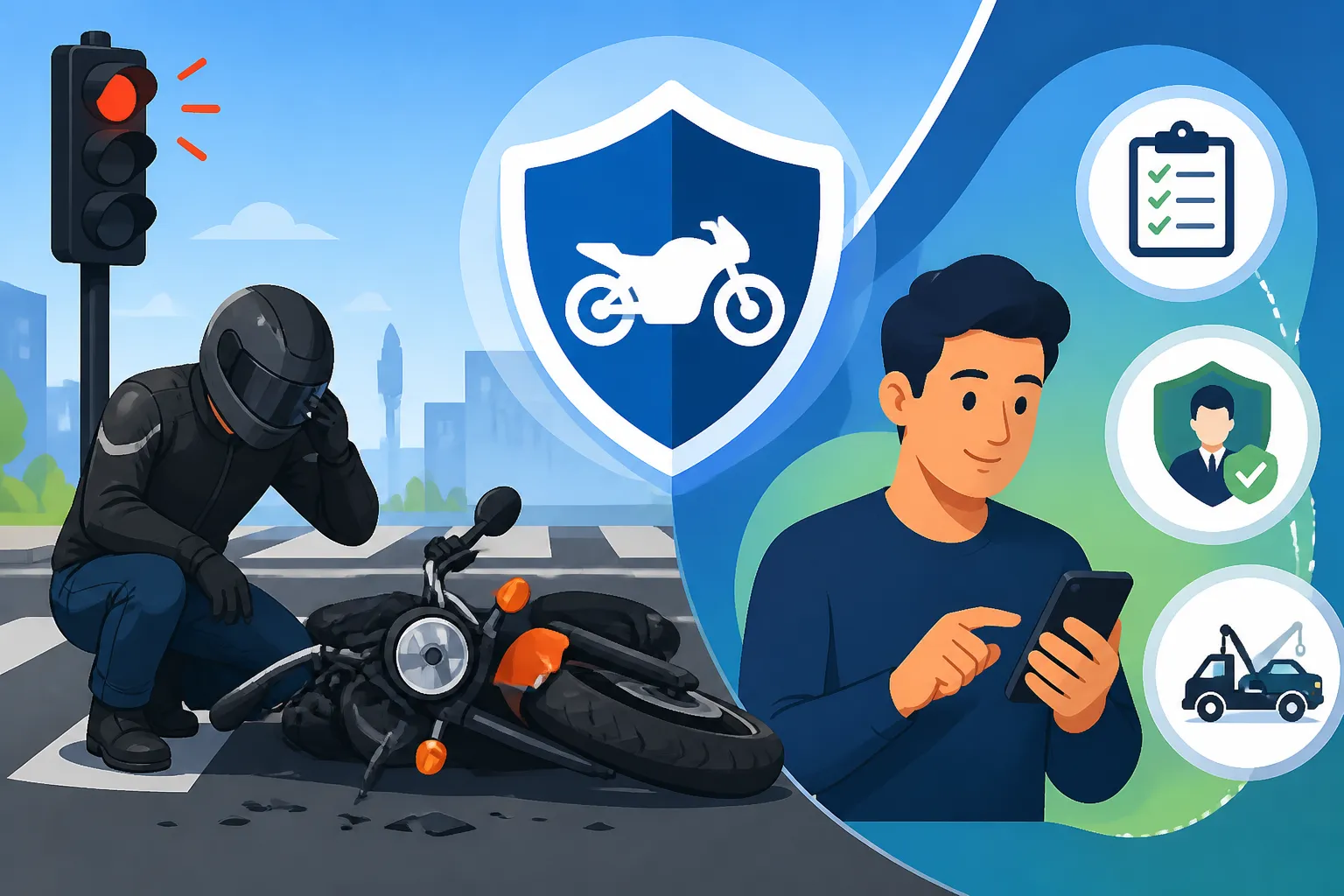
It happens to the best of us, often when we least expect it. You're stopped at a light, perhaps on an uneven surface, or you shift your weight just a hair too much, and before you know it, your bike is slowly, or not so slowly, leaning past the point of no return. That thud and scrape can feel like a punch to the gut, and the first instinct is often to get it upright as quickly as possible and pretend it never happened. But pausing and taking a breath is crucial, both for your safety and for any potential insurance claim.
The Immediate Aftermath and Your Safety
Your absolute first priority after a tip-over is to ensure you're okay. Even a low-speed drop can result in scrapes, bruises, or a twisted ankle, especially if your leg got caught under the bike. Take a moment to check yourself for any injuries. If you're hurt, even if it seems minor, it's wise to consider seeking medical attention, and certainly mention it if you end up filing a claim. Your policy's Medical Payments (MedPay) for Riders could come into play here.
Once you've confirmed you're safe, look around your immediate environment. Is there any fuel leaking? Are there any other vehicles or pedestrians involved? If you're still in traffic, activate your hazard lights if possible and move your motorcycle to a safer spot out of the flow of traffic, if you can do so without further injury or damage. The goal is to prevent any secondary accidents. It’s a moment where adrenaline is high, but clear thinking can save a lot of headaches later. If the tip-over was purely a solo incident with no other property damaged and no one else involved, a police report might not be necessary, but if there's any ambiguity, a quick call to the non-emergency line can clarify if they need to send an officer.
Initial Assessment of Your Motorcycle's Condition
With your safety addressed and the immediate area secure, it's time to take a deep breath and look at your bike. Even a seemingly "soft" drop can cause surprisingly significant damage. Start by surveying the obvious contact points. These often include:
- Handlebars and Levers: Are they bent or broken? Check brake and clutch levers carefully.
- Mirrors: Are they intact and still firmly attached?
- Fairings and Bodywork: Look for cracks, deep scratches, or shattered plastic.
- Engine Casing/Covers: Scratches here can be superficial, but a crack could indicate a more serious issue like an oil leak.
- Footpegs and Shifter/Brake Pedals: These can bend or break, affecting rideability.
- Exhaust: Scratches or dents are common.
- Turn Signals and Lights: Check for cracks or snapped stems.
Don't just eyeball it. Get down low and really inspect every inch, especially on the side that made contact. Often, what looks like a minor scuff can hide a deeper structural issue or a bent component that will impact handling. If you have frame sliders, they might have done their job, but inspect them for damage as well, as they are designed to absorb impact. Make a mental note, or better yet, start taking photos immediately.
Deciding on the Insurance Path: To File or Not to File?
This is where many riders get stuck. A low-speed tip-over feels minor, but the repair costs can quickly add up. The big question is whether it's worth involving your insurance company. There's no one-size-fits-all answer, as it depends on your specific policy, your deductible, and the extent of the damage.
Understanding Your Coverage: Collision vs. Comprehensive
First, you need to know what kind of coverage you have. For a tip-over at a stop light where no other vehicle is involved, the coverage that typically kicks in is your collision coverage on a motorcycle. This covers damage to your own bike from an accident, regardless of who is at fault (or if no one else is involved, as in a solo tip-over). It’s designed for situations where your bike hits something, or in this case, hits the ground.
On the other hand, Comprehensive Coverage on a Motorcycle usually handles incidents that are "not collisions" – think theft, vandalism, fire, or hitting an animal. While both are crucial for "full coverage," it's collision coverage that would respond to a tip-over. If you only carry basic liability insurance, which covers damage you cause to others, then your own bike won't be covered for a tip-over, and you'll be on the hook for all repairs out of pocket. Many riders opt for liability-only on older, less valuable bikes, but for anything newer or more expensive, full coverage is often a wise investment.
Weighing the Costs: Deductibles vs. Repair Bills
Before you call your insurer, do a quick calculation. What's your deductible? This is the amount you'll have to pay out of pocket before your insurance company starts paying for repairs. Deductibles commonly range from $250 to $1,000 or even higher.
Let's say your deductible is $500. Now, estimate the repair costs. A broken lever might be $50-100, but a cracked fairing could be $300-$500, and a bent handlebar or damaged engine casing can easily run into hundreds, even thousands, of dollars. For instance, if you tip over a Harley-Davidson and scrape the chrome exhaust and primary cover, those parts alone can be expensive, not to mention labor.
Consider these scenarios:
- Scenario A: Minor Scratches, Low Repair Cost. Your mirror is scuffed, and you have a small scratch on your engine cover. Total repair cost: $200. If your deductible is $500, it makes no sense to file a claim. You'd pay the full $200 yourself, and filing a claim could potentially affect your future rates.
- Scenario B: Moderate Damage, Close to Deductible. You've got a cracked fairing ($400), a bent brake lever ($75), and a scratched turn signal ($50). Total repair cost: $525. If your deductible is $500, your insurance would only pay $25. Again, you might decide it's not worth the potential rate increase for such a small payout.
- Scenario C: Significant Damage, High Repair Cost. A major crack in your fairing, bent handlebars, a damaged exhaust, and a busted turn signal. Estimated total: $1,500. With a $500 deductible, your insurance would pay $1,000. In this case, filing a claim is likely the smart move.
Remember that a claim, even for a minor incident, can sometimes lead to a rate increase when your policy renews. Some riders prefer to absorb smaller repair costs to keep their claims history clean. It's a personal judgment call, but understanding the financial implications is key. Services like The Zebra can help you quickly compare different insurance options and see how various coverage types and deductibles might impact your premiums.
The Nitty-Gritty: Documenting Your Claim Meticulously
If you decide to move forward with an insurance claim, thorough documentation is your best friend. The more information you provide, the smoother the process will likely be. Don't assume anything is too minor to record.
Gathering Crucial Evidence
After a tip-over, especially if you're considering a claim, you need to collect as much information as possible. Think of yourself as a detective.
- Photographs and Videos: This is paramount.
- Take photos from multiple angles of your motorcycle as it lies on the ground (if you haven't moved it yet).
- Document all visible damage up close. Get wide shots to show context and close-ups to show detail. Don't forget to photograph any accessories or custom parts that were damaged.
- Take pictures of the location: the specific intersection, the road surface, any contributing factors like potholes or uneven pavement.
- If any other property (like a curb or signpost) was scuffed, photograph that too.
- Consider a short video narrating the damage as you pan around the bike.
- Notes: Jot down everything you remember about the incident.
- Date, time, and exact location.
- Weather conditions (was it wet, windy?).
- What you were doing (stopped, just started moving).
- How the tip-over occurred (foot slipped, lost balance).
- A detailed list of all damage you observe.
- Any pain or injuries you sustained, no matter how minor.
- Witness Information: If anyone saw the incident, get their contact information (name, phone, email). Even if they just saw you pick up the bike, their statement can corroborate your account.
- Police Report (if applicable): As mentioned, for a solo, low-speed tip-over with no other property damage or severe injury, a police report might not be issued. However, if there was any question of public property damage or if you felt unsafe, having one can be beneficial. Always ask the police if they will generate a report number.
A comprehensive log of evidence will support your claim and help your insurance adjuster understand the circumstances and extent of the damage. This diligence can make a difference in how your claim is processed.
Informing Your Insurer and Starting the Process
Once you've decided to file a claim and gathered your evidence, it's time to contact your insurance company. You typically want to do this as soon as reasonably possible after the incident. Most insurers have a claims hotline or an online portal where you can initiate the process. Be prepared to provide:
- Your policy number.
- The date, time, and location of the tip-over.
- A detailed description of what happened.
- A list of the damage you've observed.
- Information about any injuries sustained.
- Details about any witnesses or police involvement.
The first person you speak with will likely be a customer service representative who will open a claim file. Soon after, an insurance adjuster will be assigned to your case. This adjuster is the person who will investigate the incident, review your documentation, and ultimately determine the payout. Be honest and clear in your communication. Don't exaggerate the damage, but don't downplay it either. Remember, you can refer to our detailed guide on How to File a Motorcycle Insurance Claim for a step-by-step breakdown.
Some insurers, like Progressive, offer convenient apps and online tools that can streamline the claims process, allowing you to upload photos and descriptions directly from your phone. This can be especially helpful when you're dealing with the stress of an incident.
Navigating Repairs and Finalizing Your Claim
Once your claim is filed, the real work of getting your bike fixed begins. This phase involves working closely with your insurance company and repair shops to ensure your motorcycle is restored correctly.
Getting Estimates and Working with Adjusters
After your adjuster is assigned, they will want to inspect the damage to your motorcycle. They might ask you to take it to a specific repair shop in their network, or they might send a field adjuster to your location to examine the bike. It's often a good idea to get at least two estimates from reputable motorcycle repair shops, even if your insurer recommends one. This helps ensure you're getting a fair assessment of the repair costs. Make sure the estimates detail all parts and labor, including any hidden damage that might not have been immediately obvious.
Here’s a breakdown of common damage and typical repair considerations:
| Damaged Component | Typical Repair Actions | Cost Considerations |
|---|---|---|
| Levers (Brake/Clutch) | Replacement | Varies by bike model; aftermarket might be cheaper but check quality. |
| Mirrors | Replacement | OEM vs. aftermarket; sometimes just the glass can be replaced. |
| Fairings/Bodywork | Repair (fiberglass/plastic weld) or Replacement, Paint | Extensive labor for repair and paint matching; often cheaper to replace if damage is severe. |
| Handlebars | Replacement | Labor for controls transfer; could involve new grips, bar ends. |
| Engine Covers/Casing | Repair (welding, sanding) or Replacement | Replacement often includes gaskets and oil changes. |
| Exhaust | Repair (dent removal, polishing) or Replacement | Can be very expensive for full system replacement; slip-ons are less. |
| Turn Signals/Lights | Replacement | Often simple bolt-on replacements. |
| Frame Sliders/Crash Bars | Replacement | Designed to be sacrificial, inspect mounting points for frame damage. |
| Footpegs/Shifter/Brake | Replacement | May involve bending or breaking; crucial for safe riding. |
The adjuster will compare the repair estimates with their own assessment and your policy's terms. They may challenge certain costs, which is where your detailed documentation comes in handy. Don't be afraid to How to Negotiate With an Insurance Adjuster if you believe their offer is too low or doesn't cover all necessary repairs. If your bike has custom parts or aftermarket accessories, make sure you have specific coverage for them, as standard policies often have limits. Otherwise, you might find yourself out of pocket for those special modifications.
The Impact on Your Future Motorcycle Insurance
One of the most common concerns after filing a claim, even for a minor tip-over, is how it will affect your insurance rates. It’s a valid worry. While a single, minor, not-at-fault comprehensive claim (e.g., hitting a deer) might not significantly impact your rates, an at-fault collision claim (like a solo tip-over) can sometimes lead to an increase.
The exact impact depends on several factors:
- Your Claims History: If this is your first claim in many years, the impact might be minimal. If you've had multiple claims recently, the increase could be more substantial.
- The Severity of the Claim: A small payout might have less impact than a large one.
- Your Insurer's Policy: Different insurance companies have different underwriting rules. Some might be more forgiving for a first-time incident.
- State Regulations: Insurance laws vary by state, which can also play a role.
- Your Driving Record: A clean riding record otherwise can help mitigate rate increases.
It's a good idea to understand What Happens to My Rate After a Motorcycle Claim? before you decide to file. If you do see an increase at renewal, it might be worth shopping around and comparing quotes from different insurers to see if you can find a better rate. Tools like those offered by The Zebra or directly comparing quotes from major providers like Progressive can help you find competitive pricing even after a claim. Remember, you always have the option to switch providers if you find a more favorable rate elsewhere, as long as you maintain continuous coverage.
Disclaimer
Please note that this article provides general information and guidance. Motorcycle insurance policies and state laws vary widely. It is crucial to consult your specific insurance policy documents and speak directly with your insurance provider or a qualified legal professional for advice tailored to your individual situation. The information herein does not constitute legal or financial advice.