Is Motorcycle Insurance Required in Nevada?
It's easy to get lost in the excitement of hitting the open road on your motorcycle, feeling the wind in your face and the rumble of the engine beneath you. But amidst all that freedom, there's a big, often confusing question that many riders grapple with: "Is motorcycle insurance required in Nevada?" This isn't just about ticking a box; it's about understanding your legal obligations and protecting yourself. This guide will cut through the confusion, clearly outlining Nevada's motorcycle insurance requirements, the coverage you'll need, and the serious consequences of riding uninsured.
Is Motorcycle Insurance Really Required in Nevada?
Let's get straight to it because there's often a lot of guesswork and misinformation out there. Some states have different rules, and it can be tough to keep track. But when it comes to riding legally in the Silver State, there's no way around it.
The Straight Answer: Yes, It Is
Unlike a handful of other states that might have laxer rules or even no requirement at all for motorcycle insurance, Nevada is not one of them. If you're planning to ride your motorcycle on any public road in Nevada, you absolutely must carry current and valid motorcycle insurance. This isn't just a recommendation; it's a legal mandate. The state of Nevada views motorcycle operation with the same gravity as car operation when it comes to financial responsibility. Skipping this crucial step doesn't just put you at financial risk; it puts you squarely on the wrong side of the law, with consequences that can quickly derail your riding enjoyment and your finances. We've all seen riders pulled over for what seems like a minor infraction only to have it escalate when proof of insurance can't be provided. It's a frustrating situation that's entirely avoidable.
Understanding Nevada's Financial Responsibility Laws
Nevada operates under what's called a "financial responsibility" law. What exactly does that mean for you as a motorcyclist? Essentially, it means that if you're involved in an accident where you are at fault, you must be able to prove you have the means to pay for the damages and injuries you cause to other people or their property. For the vast majority of riders, and by far the most practical method, this financial responsibility is met by carrying a motorcycle insurance policy. While, theoretically, you could post a cash bond with the Department of Motor Vehicles or hold a certificate of self-insurance if you own a massive fleet, these options are simply not realistic for the average rider. Insurance is designed to shoulder that financial burden for you, acting as a buffer against potentially crippling costs. It’s important to familiarize yourself with how your state handles these mandates, and if you're curious about the broader landscape, you can learn more about specific regulations in our comprehensive guide on Motorcycle Insurance Requirements by State (2026 Guide).
Nevada's Minimum Motorcycle Insurance Requirements
So, now we know insurance is required, but what kind of insurance are we talking about? It's not just any policy; it needs to meet specific minimum thresholds set by the state of Nevada. These minimums are often expressed in a series of numbers that can look a bit like a secret code if you're not familiar with them.
The "25/50/20" Rule Explained
In Nevada, the minimum liability coverage required for motorcycles, just like cars, is often referred to as "25/50/20." Let's break down what each of these numbers means, because understanding this is crucial for every rider:
- $25,000 for bodily injury liability per person: This is the maximum amount your insurance company will pay for medical expenses, lost wages, and pain and suffering for each individual injured in an accident where you are found to be at fault.
- $50,000 for bodily injury liability per accident: This is the total maximum amount your insurance will pay for all bodily injuries in a single accident you cause, regardless of how many people are injured. So, even if four people are hurt, the total payout for their injuries won't exceed $50,000.
- $20,000 for property damage liability per accident: This is the maximum amount your insurance will pay for damage you cause to another person's property (like their vehicle, a fence, or a building) in an accident where you are at fault.
Imagine you're riding through Reno and, through no fault of your own, you misjudge a turn and clip the back of a luxury SUV, sending it into a guardrail. Two occupants in the SUV suffer whiplash and broken bones, incurring $35,000 in medical bills each. The SUV itself needs $25,000 in repairs. Your 25/50/20 policy would pay $25,000 for each injured person, totaling $50,000 for bodily injuries. However, the SUV's repairs would only be covered up to $20,000. This means you would personally be responsible for the extra $10,000 in medical costs and $5,000 in property damage. Suddenly, those minimums don't look so robust, do they? This is why understanding Minimum Liability Insurance Explained (The Three Numbers) is so vital.
Beyond the Basics: Why More Coverage Might Be Smart
While the 25/50/20 minimums will keep you legal in Nevada, they often fall woefully short of protecting you from the true financial fallout of a serious accident. Healthcare costs are astronomical, and vehicle repair bills can quickly add up, especially if you damage a newer car. Relying solely on minimum liability is a gamble that most riders, especially those who cherish their bikes and their financial well-being, shouldn't take.
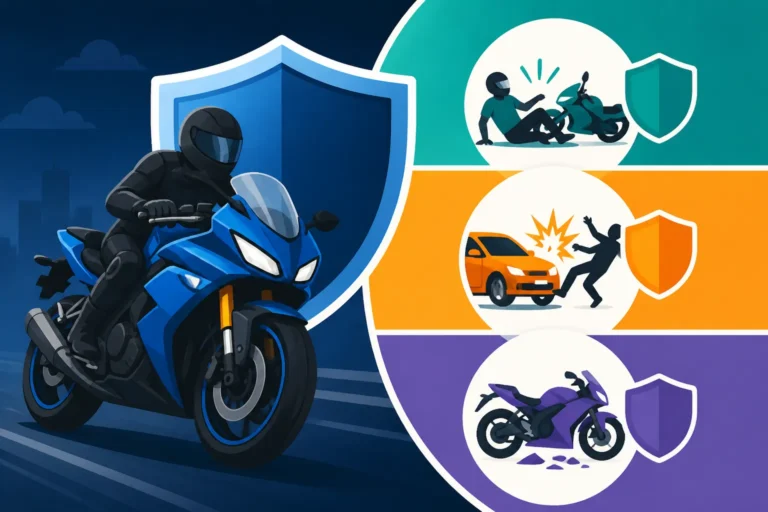
Many riders opt for significantly higher liability limits, perhaps 100/300/50, or even more, to provide a much greater cushion. But beyond increasing your liability, there are several other types of motorcycle insurance coverage that are incredibly valuable, even if not required by law in Nevada:
- Uninsured/Underinsured Motorist (UM/UIM) Coverage: This is a lifesaver. What happens if another rider or driver hits you, and they don't have enough insurance (or any at all) to cover your medical bills or bike damage? UM/UIM steps in to protect you in that scenario. Given the number of uninsured drivers on the road, this coverage is almost as important as your own liability. You can delve deeper into this crucial protection with our guide on Uninsured & Underinsured Motorist Coverage (UM/UIM).
- Medical Payments (MedPay) or Personal Injury Protection (PIP): While Nevada is an at-fault state, MedPay can cover your medical expenses and those of your passenger, regardless of who caused the accident. This can be incredibly helpful for immediate medical costs, co-pays, and deductibles before other health insurance kicks in.
- Collision Coverage: This pays for damages to your own motorcycle if you hit another vehicle, an object (like a guardrail), or if your bike rolls over. It’s often essential, especially for newer or financed bikes.
- Comprehensive Coverage: This covers damage to your motorcycle from incidents other than collisions. Think theft, vandalism, fire, natural disasters, or hitting an animal. If you're wondering, "Does Motorcycle Insurance Cover Theft?", comprehensive coverage is your answer.
Choosing to carry only the minimum coverage can leave you vulnerable. While it might save you a few bucks on your premium, the potential out-of-pocket costs after an accident far outweigh those savings. Consider what it truly means to have What Does Full Coverage Motorcycle Insurance Mean? for your peace of mind and financial security.
Consequences of Riding Without Insurance in Nevada
Ignoring Nevada's motorcycle insurance requirements isn't just a minor oversight; it's a serious offense with cascading penalties that can turn a fun ride into a legal and financial nightmare. No rider wants to deal with the stress and expense of getting caught without proper coverage.
Penalties You Don't Want to Face
Nevada takes uninsured motorists very seriously, and the penalties for riding without motorcycle insurance are steep and accumulate quickly. It's not just a slap on the wrist; these can genuinely impact your life.
- Fines: For a first offense, you could face fines ranging from $250 to $1,000. Subsequent offenses can see these fines increase dramatically.
- License and Registration Suspension: The Nevada Department of Motor Vehicles (DMV) can suspend your driver's license and vehicle registration. This means no more legal riding until you comply, pay reinstatement fees, and often provide proof of high-risk (SR-22) insurance for a set period. Imagine having your license suspended simply because you didn't have proof of insurance during a routine traffic stop in Henderson. It can happen.
- Vehicle Impoundment: Law enforcement has the authority to impound your motorcycle on the spot if you cannot provide proof of insurance. Getting your bike out of impound comes with towing fees, daily storage fees, and administrative charges, all before you even address the fines and insurance issues. These costs can quickly skyrocket, making the initial savings from not buying insurance look absolutely insignificant.
- SR-22 Requirement: If you're caught riding uninsured, Nevada will likely require you to obtain an SR-22 filing, which is a certificate of financial responsibility that your insurance company files with the state. This proves you have purchased at least the minimum required liability insurance. An SR-22 isn't insurance itself, but it’s a form your insurer provides to the DMV. The downside? Not all insurance companies offer SR-22 filings, and those that do will almost certainly charge you significantly higher premiums because you're now considered a high-risk driver.
The immediate hit to your wallet and your freedom to ride can be devastating. For a detailed look at what happens when you don't have coverage, check out our article on Penalties for Riding Without Insurance.
The Financial Fallout After an Accident
The legal penalties for riding uninsured are bad enough, but they pale in comparison to the financial catastrophe you could face if you're involved in an at-fault accident without insurance.
- Out-of-Pocket Costs: If you cause an accident and don't have insurance, you are personally liable for all damages and injuries. This means paying for the other driver's vehicle repairs, their medical bills, lost wages, and potentially pain and suffering, directly from your own bank account. A totaled car can easily be $30,000, and serious injuries can exceed six figures. Do you have that kind of cash readily available? Most people don't.
- Lawsuits: Expect to be sued. The injured parties, or their insurance companies seeking reimbursement, will come after you for every penny. Wage garnishment, liens on your property, and severe credit score damage are all real possibilities. Even if you don't have significant assets, these judgments can follow you for years, making it incredibly difficult to get loans, buy a home, or even rent an apartment.
- Your Own Bike and Injuries: If your motorcycle is damaged or you're injured in an accident you caused, and you don't have collision or MedPay coverage, you're entirely on your own for those costs as well. There's no insurance company to help you repair your bike or pay your hospital bills.
The long-term financial and legal stress can be immense. It’s not just about what happens if you get caught, but what happens if the worst-case scenario unfolds. Riding without insurance is a gamble that could cost you everything. If you're ever thinking about the implications, our guide on What Happens If You Ride Without Insurance? provides even more essential details.
Getting and Maintaining Your Nevada Motorcycle Insurance
Navigating the world of motorcycle insurance can feel a bit overwhelming, but it doesn't have to be. Finding the right policy and keeping it current are key steps to ensuring you're always riding legally and safely in Nevada.
Finding the Right Policy for Your Ride
Shopping for motorcycle insurance is much like shopping for any other big purchase: you want to compare options, understand what you're getting, and find the best value. Start by gathering quotes from several reputable insurance providers. Companies like Progressive, Geico, Dairyland, and Markel are well-known for offering motorcycle policies and can provide a good starting point for comparison. Don't just look at the price; dig into the coverage details to ensure you're getting what you truly need.
When you're getting quotes, several factors will influence your premium:
- Your Rider History: A clean driving record with no accidents or tickets will usually result in lower rates.
- Your Age and Experience: Generally, older, more experienced riders pay less than younger, newer riders. If you're a new rider, taking a motorcycle safety course can often lead to significant discounts.
- Your Motorcycle Type: Sport bikes, with their higher speeds and associated risks, often cost more to insure than cruisers or touring bikes.
- Where You Live: Urban areas with higher traffic density and theft rates typically have higher premiums than rural areas.
- Coverage Limits and Deductibles: Higher liability limits and more comprehensive coverage types will increase your premium, but they also provide greater protection. Choosing a higher deductible (the amount you pay out-of-pocket before insurance kicks in) can lower your premium, but make sure it's an amount you can comfortably afford in an emergency.
Always ask about available discounts! Many insurers offer discounts for multi-policy bundles (combining motorcycle with car or home insurance), having a motorcycle endorsement on your license, completing a rider safety course, being a seasoned rider, or even for having anti-theft devices on your bike. Don't be shy about asking every question you have; getting How to Get Cheap Motorcycle Insurance is all about knowing what to ask for.
Keeping Your Coverage Current and Compliant
Once you've secured your policy, the job isn't over. Maintaining continuous coverage is paramount in Nevada. Letting your policy lapse, even for a short period, can trigger penalties and leave you exposed. Insurance companies automatically report lapses in coverage to the Nevada DMV, so they'll know if you're not compliant.
Here's how to stay on top of your insurance:
- Proof of Insurance: Always carry proof of insurance when you ride. This can be a physical insurance card or, increasingly common and accepted, a digital copy on your smartphone. Make sure you understand the rules around Proof of Insurance & Registration for Motorcycles in Nevada.
- Update Your Policy: If you move, get a new motorcycle, add modifications to your existing bike, or have another rider use your motorcycle regularly, you need to update your policy. These changes can affect your coverage needs and rates. For instance, if you add a passenger, you'll want to ensure you have adequate Motorcycle Insurance Requirements for Passengers.
- Review Annually: It's a good habit to review your policy at least once a year, or whenever it's up for renewal. Your riding habits might have changed, your bike might have depreciated, or new discounts might be available. This is also a good time to shop around and compare quotes again to ensure you're still getting the best deal.
Staying informed and proactive about your motorcycle insurance ensures that you can enjoy the fantastic riding opportunities Nevada offers without the lingering worry of legal repercussions or financial distress.
Summary of Nevada Motorcycle Insurance Requirements
To make things easy to digest, here's a quick rundown of Nevada's minimum requirements and some common additional coverages.
| Coverage Type | Nevada Minimum Requirement | What It Covers | Why You Might Want More |
|---|---|---|---|
| Bodily Injury Per Person | $25,000 | Injuries to one person you injure in an at-fault accident | Medical costs can quickly exceed this |
| Bodily Injury Per Accident | $50,000 | Total injuries to all people you injure in an at-fault accident | Multiple injured parties |
| Property Damage Per Accident | $20,000 | Damage to property you cause in an at-fault accident | Vehicle repairs can be very high |
| Uninsured/Underinsured Motorist | Not Required, but highly recommended | Your injuries/damages if an uninsured/underinsured driver hits you | Protects against other irresponsible drivers |
| Collision | Not Required, often for financed bikes | Damage to your own motorcycle from an accident | Pays for your bike's repairs |
| Comprehensive | Not Required | Damage to your bike from theft, vandalism, fire, weather, etc. | Covers non-accident damage |
Disclaimer
This article is for general informational purposes only and does not constitute professional advice. Laws, prices and regulations vary by location and change over time. Consult a qualified professional for guidance on your specific situation.