How to Get SR-22 Filing for a Motorcycle
Getting slapped with an SR-22 requirement can feel like a real kick in the gut for any motorcycle rider. It's confusing, it often means higher costs, and it comes with the daunting task of figuring out exactly how to get this "certificate" filed with your state's Department of Motor Vehicles (DMV) or equivalent agency. This guide is here to cut through the confusion, walking you through every step of securing an SR-22 filing for your motorcycle insurance, explaining what it means for your riding life and your wallet.
What Exactly is an SR-22, Anyway?
First things first, let's clear up what an SR-22 actually is, because there's a lot of misunderstanding out there. It's not a type of insurance policy itself, and it's certainly not a physical card you carry in your wallet like your insurance ID. Instead, an SR-22 is a certificate of financial responsibility. It's a document that your insurance company files with your state to prove that you are carrying the minimum required liability insurance coverage for your motorcycle.
Think of it as a guarantee to the state that you, as a rider who's had some troubles, are now financially responsible enough to cover potential damages if you cause an accident. The state mandates this filing to ensure that high-risk drivers and riders are properly insured, protecting other motorists on the road. Without this filing, your driving privileges, including your motorcycle endorsement, might be suspended or revoked, making it impossible to legally ride. It's a serious requirement, and navigating it correctly is crucial for getting back on two wheels legally and safely.
More Than Just "High-Risk" Insurance
While an SR-22 is almost exclusively required for drivers and riders deemed "high-risk" by their state, it's important to differentiate it from simply "high-risk insurance." High-risk insurance is a category of policies with higher premiums, designed for individuals with a history of accidents, DUIs, or other serious violations. An SR-22 is a component of that high-risk situation, the official proof that you have secured the necessary liability coverage within that high-risk framework.
When an insurer issues an SR-22, they are essentially telling the state, "Yes, we are insuring this individual, and we promise to notify you if their policy lapses or is canceled." This commitment from the insurer is what makes the SR-22 such a critical document. It provides continuous oversight, ensuring that riders with past issues don't just get insurance once and then drop it. If your coverage lapses, the insurance company is legally obligated to inform the state, which can trigger further penalties, license suspension, or extended SR-22 requirements.
The States That Mandate SR-22
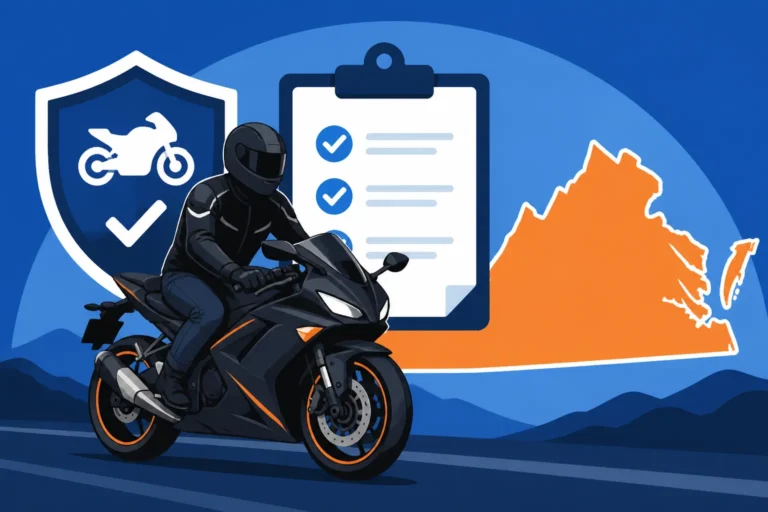
It's easy to assume an SR-22 is a universal requirement, but that's not quite true. Most states in the U.S. utilize the SR-22 system for financial responsibility. However, there are a few exceptions and variations you need to be aware of. For instance, New Hampshire doesn't require insurance at all, so an SR-22 isn't applicable there. Florida and Virginia, on the other hand, use a different form of financial responsibility certificate called an FR-44, specifically for very serious offenses like DUI/DWI. The FR-44 often requires higher liability limits than a standard SR-22.
It's vital to check your specific state's Department of Motor Vehicles or equivalent agency to confirm their requirements. What applies to a rider in California might be completely different from someone in Texas or New York. Knowing your state's specific laws is the first step in understanding what you need to do. You can learn more about specific requirements by checking our detailed guide on Motorcycle Insurance Requirements by State (2026 Guide).
When and Why You Might Need an SR-22 for Your Motorcycle
The need for an SR-22 doesn't just pop up out of nowhere. It's typically a direct consequence of specific driving or riding violations that demonstrate a lack of financial responsibility or a disregard for traffic laws. These aren't minor parking tickets; we're talking about serious infractions that lead the state to consider you a higher risk on the road. Understanding these triggers is key to recognizing why you've been mandated to get an SR-22 filing.
DUI/DWI Convictions
This is arguably the most common and serious reason a motorcyclist would need an SR-22. A conviction for driving under the influence (DUI) or driving while intoxicated (DWI) immediately flags you as a high-risk individual. States view these offenses with extreme severity due to the immense danger they pose to public safety. As a result, not only will your license likely be suspended, but you'll almost certainly be required to carry an SR-22 for a significant period, often three to five years, once your driving privileges are eligible for reinstatement.
The financial fallout from a DUI/DWI is substantial. Beyond the legal fees, fines, and potential ignition interlock device costs, your motorcycle insurance premiums will skyrocket. The SR-22 filing adds another layer of cost and oversight, ensuring that you maintain continuous coverage. This particular scenario also often leads to the requirement for higher liability limits, especially if your state uses an FR-44 filing instead, as is the case in Virginia and Florida for DUI/DWI convictions. You can get more details on Motorcycle Insurance Cost With a DUI in our comprehensive guide.
Multiple Traffic Violations or Accidents
While a single speeding ticket usually won't trigger an SR-22, accumulating multiple serious traffic violations within a short period, or being found at fault in several accidents, often will. States monitor your driving record closely, and a pattern of reckless behavior or repeated infractions, such as multiple speeding tickets, reckless driving charges, or failure to yield violations, can lead to your license being suspended. Before you can get your license back, the state may demand an SR-22 to ensure you're insured.
This isn't about punishment; it's about mitigating future risk. If you've demonstrated a consistent inability to adhere to traffic laws or operate your motorcycle safely, the state wants assurances that if you do get into another accident, there's insurance coverage to protect the other parties involved. It’s a wake-up call to take your responsibilities as a rider seriously and re-evaluate your riding habits.
Driving Without Insurance
Perhaps ironically, being caught riding your motorcycle without the legally required insurance is a primary trigger for an SR-22. Most states have financial responsibility laws in place, and failing to comply can lead to severe penalties. If you're pulled over and can't provide Proof of Insurance & Registration for Motorcycles, or if you're involved in an accident without coverage, you'll face fines, potential license suspension, and almost certainly an SR-22 mandate.
The purpose here is straightforward: the state wants to prevent you from repeating the offense. By requiring an SR-22, they're ensuring that for a set period, your insurance company will directly notify them if your coverage ever lapses. This helps protect other drivers and riders from the financial burden of an accident caused by an uninsured motorist, which is a major problem on roads across the country. Understanding the Penalties for Riding Without Insurance is crucial for any rider.
License Suspension or Revocation
Beyond the specific violations, any scenario that leads to the suspension or revocation of your motorcycle license can result in an SR-22 requirement for reinstatement. This could include failure to pay child support, unsatisfied judgments from previous accidents, or even certain criminal offenses not directly related to driving. The common thread is that the state sees you as a risk and wants proof of financial responsibility before allowing you back on the road.
The key message here is that the state isn't just looking at your ability to ride a motorcycle; they're looking at your overall reliability as a citizen and your commitment to legal and financial obligations. An SR-22 requirement is a clear signal that you need to take steps to re-establish trust with the Department of Motor Vehicles and your insurance providers.
The Process: How to Get an SR-22 Filing for Your Motorcycle
So, you've been informed that you need an SR-22. Don't panic. While it's a hassle, the process itself is fairly structured. It primarily involves working with your insurance provider to ensure the correct forms are filed with the state on your behalf. Here's a step-by-step breakdown of how to get it done for your motorcycle.
Finding an Insurer That Offers SR-22
The very first hurdle is finding an insurance company willing to take on an SR-22 filing for you. Not all insurers offer SR-22 filings, or some may choose not to insure riders with certain high-risk offenses. Many major carriers like Progressive and Dairyland, which specialize in motorcycle insurance, are usually equipped to handle SR-22 filings. However, smaller or more niche insurers might not.
This is where it pays to shop around. You'll want to get quotes from several companies. Be completely honest about your driving record and the reason you need the SR-22. Trying to hide information will only lead to problems down the road, potentially invalidating your policy or leading to further legal issues. Online comparison tools, like those offered by The Zebra, can be a lifesaver here, allowing you to quickly compare rates from multiple providers who cater to high-risk drivers and riders. Look for companies that explicitly state they handle SR-22 filings or specialize in "high-risk" insurance. This initial legwork is crucial because if an insurer can't or won't file the SR-22, their policy won't satisfy your state's requirements.
Purchasing or Updating Your Policy
Once you've found an insurer, you'll need to either purchase a new motorcycle insurance policy or update your existing one. The core requirement for an SR-22 is that you carry at least your state's minimum liability coverage. This means bodily injury liability and property damage liability, often expressed in a series of numbers like 25/50/25. You can find out more about what these numbers mean in our article on Minimum Liability Insurance Explained (The Three Numbers).
The insurer will then issue you a policy that meets these requirements. Due to your high-risk status, expect your premiums to be significantly higher than before. This is the reality of needing an SR-22 – it comes with a financial penalty because you represent a greater risk to the insurance company. Discuss with your agent whether you need any additional coverages beyond the minimum, but remember that the SR-22 only mandates liability. However, for a financed motorcycle, your lender will likely require full coverage, including comprehensive and collision, which will add to your costs.
The SR-22 Filing Itself
After you've purchased your policy, the insurance company will electronically file the SR-22 certificate directly with your state's DMV or equivalent agency. This is usually done very quickly, often within 24 to 72 hours. You won't receive a physical SR-22 document to carry with you; the filing is an internal communication between your insurer and the state.
Your insurance company will usually send you a confirmation or a copy of the SR-22 filing for your records. This confirmation is important proof that the filing has been made. Once the state receives and processes the SR-22 filing, they will be able to reinstate your license or permit you to apply for it, depending on your specific situation. Always confirm with the DMV that they have received the filing before attempting to ride or take any further steps to reinstate your license. A delay in filing or processing could lead to you unknowingly riding without proper documentation, which could land you in further trouble.
Maintaining Your SR-22 Status
Getting the SR-22 filed is only the first step; maintaining it is equally critical. You'll need to keep your motorcycle insurance policy continuously active for the entire period the state requires the SR-22. This period typically ranges from three to five years, but it can vary based on the offense and your state's laws. During this time, your insurance company is obligated to notify the state if your policy lapses for any reason – non-payment, cancellation, etc.
If your SR-22 coverage lapses, the state will be immediately notified, and your license will likely be suspended again. This can restart your SR-22 requirement period from scratch, making it an even longer and more expensive ordeal. It's crucial to ensure your payments are always on time and that you communicate with your insurer if you foresee any issues. This commitment to continuous coverage is a non-negotiable part of the SR-22 mandate.
Costs and Impact of an SR-22 on Your Motorcycle Insurance
Let's be blunt: needing an SR-22 for your motorcycle is going to hit your wallet. There's no way around it. The state considers you a higher risk, and insurance companies adjust their pricing accordingly. Understanding these costs and their implications is vital for managing your finances during this period.
Increased Premiums and Why
The most significant financial impact of an SR-22 is the substantial increase in your motorcycle insurance premiums. On average, riders with an SR-22 requirement can expect their insurance costs to jump by anywhere from 50% to 200%, or even more, compared to a rider with a clean record. This isn't just a punitive measure; it's a reflection of statistical risk. Insurance companies use actuarial data, and individuals who require an SR-22 have a statistically higher likelihood of filing claims in the future.
The "why" is simple: you've demonstrated behavior that indicates a higher probability of future incidents. Whether it was a DUI, multiple accidents, or driving without insurance, these actions tell insurers that you're a bigger gamble. To offset that increased risk, they charge more. The actual percentage increase will vary based on the severity of your offense, your specific state, your age, your riding history, and even the type of motorcycle you ride. A sport bike, for example, is already more expensive to insure, and adding an SR-22 will amplify that cost. For a deeper dive into the numbers, check out How Much Does SR-22 Increase Motorcycle Insurance?.
Understanding the SR-22 Filing Fee
Beyond the hike in premiums, there's a separate, smaller fee associated with the SR-22 filing itself. This is a one-time administrative fee that your insurance company charges to process and submit the SR-22 form to your state's DMV. This fee is typically modest, ranging from about $15 to $50, but it's important to be aware of it as an additional cost.
This filing fee is separate from your policy premium and is usually paid directly to your insurer when they initiate the SR-22 filing. It covers the administrative work involved in ensuring the state has continuous proof of your financial responsibility. While small in comparison to the premium increase, it's still an item to factor into your overall costs.
Long-Term Financial Planning
An SR-22 requirement isn't a short-term problem; it's a multi-year commitment that requires careful financial planning. The increased premiums will be a recurring expense for the entire duration of your mandate, which, as mentioned, can be three to five years. This can put a significant strain on your budget, especially if you're already dealing with other fines, legal fees, or the financial fallout from the incident that led to the SR-22.
Here's a table comparing average liability-only motorcycle insurance costs with and without an SR-22 filing for illustrative purposes (actual costs vary widely by state, age, bike, and driving history):
| Factor | Average Annual Cost (Clean Record) | Average Annual Cost (With SR-22) | Percentage Increase (Estimate) |
|---|---|---|---|
| Liability Only | $300 – $800 | $750 – $2,400 | 150% – 200%+ |
| Full Coverage | $700 – $1,500 | $1,750 – $4,500 | 150% – 200%+ |
| SR-22 Filing Fee | N/A | $15 – $50 (one-time) | N/A |
Note: These are illustrative averages. Your actual costs could be higher or lower depending on many individual factors, including the severity of your violation and the state you reside in.
It's a smart idea to budget carefully for these increased costs. Look for any available discounts, such as completing a motorcycle safety course, maintaining a good payment history, or bundling your motorcycle insurance with other policies (if available to you with an SR-22). The goal is to minimize the financial impact while ensuring you remain compliant with state requirements.
Navigating the SR-22 Period and What Comes Next
Living with an SR-22 requirement means you need to be extra diligent about your motorcycle insurance and your driving behavior. It’s not just about paying higher premiums; it’s about proving to the state that you’ve learned from past mistakes and can be a responsible rider.
Staying Compliant and Avoiding Lapses
The most critical aspect of the SR-22 period is maintaining continuous insurance coverage. As we discussed, any lapse in your policy will trigger an immediate notification to the state from your insurance company, leading to further penalties, including license re-suspension and potentially a restart of your SR-22 requirement period. This means consistently paying your premiums on time, every time.
If you foresee financial difficulties, communicate with your insurance provider immediately. They might have payment plan options or other solutions to help you avoid a lapse. Never let your policy simply cancel for non-payment. Proactive communication is always better than facing the harsh consequences of a lapse. Remember, the state is watching, and compliance is paramount to regaining your full riding privileges. Read up on What Happens if You Let Coverage Lapse Then Restart? to fully grasp the consequences.
When Your SR-22 Requirement Ends
There is light at the end of the tunnel! The SR-22 requirement is not forever. Typically, the mandate lasts for three to five years, though the exact duration is determined by your state's laws and the specific nature of your offense. For example, in many states, a first-time DUI might lead to a three-year SR-22, while repeat offenses could extend it to five years or even longer.
Your state's DMV or the court will specify the exact end date of your SR-22 requirement. It's crucial to mark this date down and keep track of it. Once that period is successfully completed, your insurance company will send a Form SR-26 (Cancellation of SR-22) to the state, informing them that you no longer need the special filing. At this point, you can typically switch back to a standard motorcycle insurance policy, and your premiums should start to decrease, though it may take some time to fully return to pre-SR-22 rates. It's wise to contact your DMV a few weeks before your anticipated end date to confirm the process and ensure everything is in order. You can learn more about how this process works in our article titled How to Cancel SR-22 When It's No Longer Required?.
Reinstating Your Full Riding Privileges
Once your SR-22 period is over and all requirements are met, you can move towards fully reinstating your unrestricted motorcycle license. This might involve an additional fee to the DMV, but it means you're no longer under the strict oversight of the SR-22 mandate. It's a significant milestone, representing a return to a more normal insurance and riding life.
At this point, it's an excellent opportunity to shop for new insurance quotes. With your SR-22 requirement lifted, you'll likely find more competitive rates from a wider range of insurers. You are no longer considered a "high-risk" rider in the eyes of the state, though your past violations may still influence your premiums for a few more years. This is also a good time to reassess your coverage needs; if you previously only had the bare minimum liability due to SR-22 costs, you might now consider adding comprehensive, collision, or other protections without the prohibitive price tag. Many companies, including Progressive, offer competitive rates for riders with improving records, and services like The Zebra can help you compare options to find the Best Motorcycle Insurance for SR-22/High-Risk riders and those transitioning out of that category.
Disclaimer
This article is for general informational purposes only and does not constitute professional advice. Laws, prices and regulations vary by location and change over time. Consult a qualified professional for guidance on your specific situation.