How Much Is Motorcycle Insurance With a Clean Record?
It's incredibly frustrating when you've been a responsible rider for years, avoiding accidents and keeping a spotless driving record, only to find your motorcycle insurance premiums still feel inexplicably high. You’d think a clean record would guarantee rock-bottom rates, but that's not always the case. This comprehensive guide will peel back the layers on how insurers truly view a "clean record" and reveal the many other factors influencing your motorcycle insurance costs, helping you understand your quotes and find ways to save.
Unpacking What a "Clean Record" Actually Means for Motorcycle Insurance
Many riders assume a "clean record" means having no tickets or accidents, and while that's a big part of it, insurers look at things a bit more granularly. It's not just a pass/fail; there are nuances, and even if your record looks pristine to you, other elements are always at play.
Defining Your Driving History Scorecard
When an insurance company talks about your "clean record," they're primarily looking at your motor vehicle report (MVR) for the past three to five years, sometimes even longer for severe infractions. This scorecard includes a few key elements:
- Accidents: This is the big one. Any at-fault accidents, even minor fender-benders, will instantly raise a red flag. Insurers want to see a history of safe riding without claims. Even not-at-fault accidents can sometimes have a minor impact, though usually far less severe than an at-fault incident. If you've laid your bike down yourself without involving another vehicle, this might not show up on your MVR but could still be part of a claim history with a previous insurer.
- Moving Violations: Speeding tickets, reckless driving, running red lights, or any infraction that suggests unsafe riding behavior will impact your rates. More serious violations, like a DUI or DWA, can severely escalate premiums, sometimes requiring special filings like an SR-22 for Motorcycles: When It's Required. Even minor infractions accumulate points on your license, which insurers track.
- Non-Moving Violations: Parking tickets usually don't directly affect your insurance rates because they don't indicate a risk on the road. However, accumulating too many could potentially hint at a general disregard for rules, though this is less common to factor into motorcycle insurance.
It’s important to remember that some things, like taking a motorcycle safety course, can actively improve your record in the insurer's eyes, not just the absence of negatives. These courses demonstrate a commitment to safety and skill improvement, often leading to discounts.
What a "Clean Record" Doesn't Necessarily Cover
While a spotless MVR is fantastic and absolutely the foundation for lower premiums, it's not the only piece of the puzzle. It won't, for instance, magically erase the impact of other personal and vehicle-related factors.
- Your Personal Profile: Your age, where you live, and your riding experience still significantly influence rates. A 20-year-old rider with a clean record might still pay more than a 40-year-old with the same record simply due to actuarial data showing higher risk among younger riders. Even your marital status can play a minor role. For instance, living in a dense urban area like Los Angeles, even with a clean record, will likely cost more than living in a rural part of Montana due to higher theft rates and accident probabilities.
- The Motorcycle Itself: The type of bike you ride is a massive factor. A brand-new Ducati Panigale, even for a seasoned rider with a perfect record, will almost certainly cost more to insure than a used Honda Rebel. This is because of the cost of parts, repair complexity, and the higher likelihood of theft or high-speed incidents associated with certain bike types. You can dive deeper into how Motorcycle Insurance Cost by Bike Type varies.
- Chosen Coverages: Your decision to opt for minimum Liability Coverage for Motorcycles Explained versus comprehensive What Does Full Coverage Motorcycle Insurance Mean? will naturally lead to vastly different premiums, regardless of your driving history. A clean record helps reduce the cost of any coverage level, but it doesn't make full coverage as cheap as liability-only.
So, while you might have a perfect score on your driving behavior, the overall picture the insurer sees includes many more elements. Understanding these helps manage expectations and strategize for better rates.
Beyond Your Driving History: The Other Factors Influencing Your Rates
It’s easy to focus solely on your driving record, but insurance companies are masters of risk assessment, and they look at a wide array of data points to calculate your premium. Even with a clean record, these elements can significantly sway the number you see on your quote.
Rider Demographics, Experience, and Location
Let's be honest, your personal details matter, and not always in ways that feel fair. Insurers use statistics to predict risk, and certain demographics are unfortunately flagged as higher risk, regardless of individual driving habits.
- Age and Riding Experience: This is a huge differentiator. Young riders, typically under 25, statistically have more accidents, and as such, face higher premiums. Even with a perfectly clean MVR, a beginner rider will almost always pay more than someone with decades of experience under their belt. This is why you often see riders eager for their 25th birthday when rates typically start to drop. Your years of continuous riding experience, especially with a license or endorsement, are highly valued. Insurers often have data on how Motorcycle Insurance Cost by Age changes over time.
- Geographic Location: Where you park your bike at night, where you commute, and even the general zip code you live in can dramatically impact your insurance rates. Areas with high population density, high theft rates, or more frequent accidents (think busy urban centers like Miami, Florida, or Austin, Texas) will almost always have higher premiums. Conversely, living in a quiet, rural town usually means lower rates. The risk of theft, vandalism, and collisions simply goes up in certain locations. Insurers also consider local weather patterns; for instance, areas prone to hurricanes or severe storms might see higher comprehensive coverage costs.
- Gender and Marital Status: While less impactful than age or location, these can sometimes play a small role. Statistically, some insurers might see married individuals or certain genders as slightly lower risk, though these factors are often weighted less heavily than your driving record or bike type.
Your Motorcycle's Characteristics and Chosen Coverage
The bike itself and the type of protection you select are colossal determinants of your premium. You can have the cleanest record in the world, but if you ride a high-performance machine with extensive coverage, expect a higher price tag.
- Type, Make, and Model of Motorcycle: This might be the single biggest non-driving factor. Sport bikes, with their higher horsepower and performance capabilities, often have the highest insurance rates. Cruisers, touring bikes, and standard models tend to be cheaper to insure. The cost of parts, the likelihood of theft, and the performance profile of your bike are all scrutinized. A brand new, high-value motorcycle will always cost more to insure for comprehensive and collision coverage because its replacement value is higher. Even the engine size (CC) of your motorcycle has a direct correlation to cost, as smaller engines often equate to lower risk.
- Coverage Levels and Deductibles: This is where you have direct control. Choosing only the minimum state-mandated Minimum Liability Insurance Explained The Three Numbers will be significantly cheaper than opting for full coverage that includes collision, comprehensive, uninsured/underinsured motorist, and any add-ons like Accessories & Custom Parts Coverage Explained. The higher your deductible (the amount you pay out-of-pocket before insurance kicks in), the lower your premium. However, be realistic about what you can afford if you need to make a claim. For comprehensive advice on what to consider, check out our guide on Types of Motorcycle Insurance Coverage Explained.
- Optional Endorsements: Adding coverages like roadside assistance, trip interruption, or OEM parts replacement will increase your premium. While valuable, they add to the overall cost, so assess what you truly need. If you've invested in chrome, custom paint, or performance upgrades, specific accessories coverage is a must, but it will come at an additional cost.
Credit Score and Continuous Coverage History
These two factors might seem unrelated to your riding habits, but insurers use them as indicators of overall financial responsibility and risk.
- Credit-Based Insurance Score: In most states, your credit score plays a role in determining your insurance premium. Insurers correlate higher credit scores with lower claim frequencies. A good credit score can lead to significant savings, even with a clean driving record. Conversely, a poor credit score can negate some of the benefits of a spotless MVR. However, it's worth noting that states like California, Massachusetts, and Hawaii prohibit the use of credit scores for setting insurance rates.
- Prior Insurance History: Insurers want to see that you've maintained continuous motorcycle insurance coverage without any lapses. Gaps in your coverage history, even if you weren't riding, can signal a higher risk and lead to higher rates. This is because continuous coverage suggests a responsible approach to financial protection and less likelihood of being uninsured in the event of an incident. Always strive to avoid letting your What's the Penalty for Letting Motorcycle Insurance Lapse? or renewing your policy.
It's a lot to consider, but understanding these interconnected factors is key to navigating the world of motorcycle insurance rates.
Understanding Average Costs and How to Reduce Them
So, what kind of rates can you expect with a clean record, and more importantly, how can you actively work to bring those numbers down? The good news is that a clean record is your strongest asset when it comes to affordability, but strategic choices are still paramount.
What Are Typical Clean Record Rates?
Pinpointing an exact average for motorcycle insurance with a clean record is tricky because, as we've seen, so many variables come into play. However, we can look at general trends and provide some context. For a rider with a clean record, generally speaking, you're already in a good position to get some of the most competitive rates available.
Across the United States, the average cost for motorcycle insurance can range widely, often from a few hundred dollars a year for basic liability on an older, less powerful bike, to several thousand dollars for full coverage on a new sport bike or touring motorcycle, even with a perfect driving history.
Here's a simplified look at how location and age might influence what you see, assuming a clean record:
| Rider Profile (Clean Record) | Motorcycle Type | Annual Premium Range (Estimated) | Factors Influencing Range |
|---|---|---|---|
| Experienced Rider (30s-50s) | Cruiser/Standard | $400 – $800 | Rural vs. urban, coverage limits, credit score, discounts |
| Experienced Rider (30s-50s) | Sport Bike/Tourer | $800 – $1,800+ | Bike value, engine size, chosen add-ons, location, theft rates |
| Younger Rider (Under 25) | Cruiser/Standard | $800 – $1,500+ | Lack of experience, higher perceived risk, location, discounts |
| Younger Rider (Under 25) | Sport Bike | $1,500 – $3,000+ | High-performance bike, age, location, coverage limits |
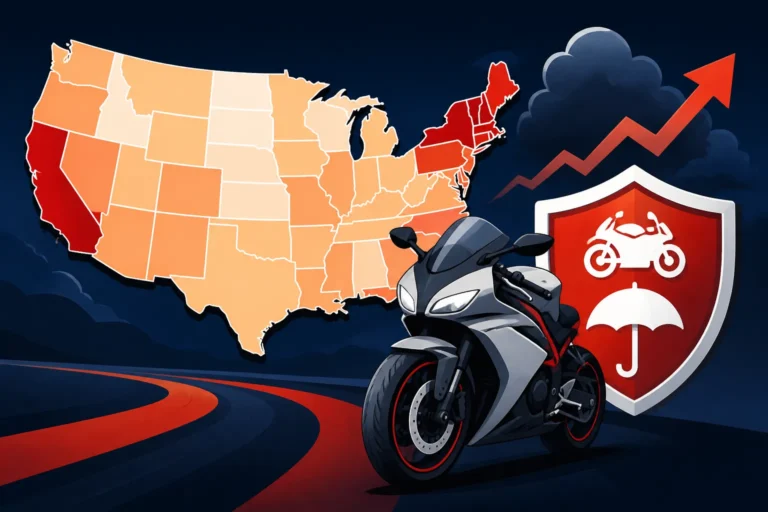
These numbers are purely illustrative and can vary wildly. States like California, Texas, and Florida, known for their large riding populations and often higher traffic density, might see averages on the higher end, even for riders with clean records, compared to states with lower population densities and fewer registered motorcycles. For example, while the national average might hover around $700-$1200 per year for a standard policy, a clean-record rider in Jacksonville, Florida, might still pay more due to higher local accident rates and theft. Conversely, a rider in Boise, Idaho, could see significantly lower premiums for comparable coverage.
Actionable Strategies for Scoring Lower Premiums
A clean record is a fantastic foundation, but you don't want to stop there. There are numerous proactive steps you can take to make sure you're getting the absolute best rates.
- Maximize Discounts: This is low-hanging fruit for saving money. Most insurers offer a variety of discounts that can significantly reduce your premium.
- Safety Course Discount: Completing a motorcycle safety course, like those offered by the Motorcycle Safety Foundation (MSF), often qualifies you for a discount. It shows you're committed to safe riding and improving your skills. This can be one of the most effective ways to lower your rate.
- Multi-Policy/Bundling Discount: If you have auto insurance, homeowners, or renters insurance with the same company, bundling your motorcycle policy can lead to substantial savings across all your policies. Companies like Progressive and Dairyland are well-known for offering competitive bundling options.
- Multi-Bike Discount: If you own more than one motorcycle, insuring them all with the same company typically earns you a discount.
- Good Rider/Claims-Free Discount: While your clean record already helps, some insurers specifically reward riders who go a certain period (e.g., 3-5 years) without filing any claims.
- Anti-Theft Device Discount: Installing an alarm system, GPS tracker, or even a heavy-duty chain lock might qualify you for a discount on your comprehensive coverage.
- Rider Group Affiliation: Some insurers offer discounts for members of specific motorcycle clubs or associations.
- Shop Around, Constantly: This is perhaps the single most important piece of advice. Don't settle for the first quote you get, and don't assume your current insurer is still the cheapest option year after year. Every insurance company has its own underwriting criteria, risk assessment models, and discount programs. What might be expensive for one company could be affordable for another. Use comparison tools, talk to independent agents, and get multiple quotes from different providers like Geico, Markel, or State Farm. Online platforms like The Zebra can be incredibly useful for quickly comparing various options in one place, showing you how different providers stack up for your specific profile and clean record. It's smart to review your policy and compare quotes at least once a year, or whenever you have a significant life event like moving, getting a new bike, or even just renewing your license. Check out our guide on How to Compare Motorcycle Insurance Quotes for a deeper dive.
- Adjust Your Coverage Strategically: While you want adequate protection, avoid over-insuring. If your bike is older and paid off, you might consider if full comprehensive and collision coverage is still worth the cost, or if liability-only makes more sense. Increase your deductibles to lower premiums, but ensure you can comfortably afford that deductible in case of a claim. Understand the difference between Agreed Value vs Stated Value vs Actual Cash Value for your bike, especially if it’s custom or vintage, as this impacts payout and premium.
- Improve Your Credit Score: If your credit score isn't stellar, taking steps to improve it can indirectly lead to lower insurance premiums in many states. Paying bills on time, reducing debt, and avoiding new credit inquiries can all help.
A clean record is a huge advantage, but it's just the starting point. By combining it with smart shopping and leveraging all available discounts, you can significantly reduce your motorcycle insurance costs.
Finding the Right Policy, Even with a Perfect Record
Having a clean riding record is a massive advantage, but it’s still just one piece of the puzzle. The goal isn't just to get any insurance; it's to get the right insurance for you and your bike at the best possible price. This means being proactive and informed.
The Value of Shopping Around
Many riders stick with the same insurance company year after year, sometimes out of loyalty, sometimes out of inertia. But here's the thing: that loyalty might be costing you.
- Insurers Have Different Risk Appetites: No two insurance companies are exactly alike. One insurer might specialize in sport bikes, offering competitive rates, while another might be better for cruisers or older riders. Their algorithms for assessing risk, even for a clean record, can vary wildly. What one company deems a higher risk (like living in a particular zip code or owning a specific model) another might view more leniently. This is why a tool like The Zebra can be invaluable, as it allows you to input your details once and see how multiple insurers, from big names like Geico to specialists like Dairyland, price your policy.
- Rates Change Constantly: Insurance markets are dynamic. A company that offered you the best rate two years ago might not be the most competitive today due to shifts in their business strategy, regional claims data, or even new discount programs. It's not uncommon to find hundreds of dollars in savings just by spending a little time getting fresh quotes.
- Easy Access to Information: Gone are the days of calling multiple agents individually. Online comparison sites have streamlined the process, making it incredibly easy to gather several quotes in minutes. This empowers you to truly compare offers side-by-side, ensuring you're not leaving money on the table just because you have a clean record and assume you're already getting a good deal. For more in-depth advice, our How to Get Cheap Motorcycle Insurance guide offers additional tips.
Tailoring Your Coverage to Your Needs
Even with a perfect driving history, simply getting the cheapest policy isn't always the smartest move. Your goal should be optimal value – the best coverage for your specific situation at the most affordable price.
- Don't Under-Insure, But Don't Over-Insure: While a clean record lowers costs, cutting coverage too much can leave you vulnerable. If you have a brand-new bike, you absolutely want comprehensive and collision coverage. If you still owe money on your motorcycle, your lender will mandate full coverage. Check out our detailed article on Motorcycle Insurance Requirements for Financed Bikes. Consider the cost of repairing or replacing your gear with Does Motorcycle Insurance Cover Riding Gear? too. However, if you're riding a decades-old bike with minimal value that you can easily replace, carrying full coverage might not be the most cost-effective decision. You need to weigh the premium cost against the potential payout.
- Understand What You're Buying: Don't just look at the bottom line premium. Take the time to understand each component of your policy. What are your liability limits? Are you protected against uninsured motorists, which is crucial given that many riders are hit by drivers without adequate insurance? Does your policy include Roadside Assistance & Towing for Motorcycles? Knowing what each line item covers will ensure you're getting the protection you truly need, without paying for features that don't apply to your riding style or bike.
- Consider Add-Ons for Peace of Mind: A clean record won't protect you from a deer jumping out or your bike getting stolen. This is where comprehensive coverage shines. If you regularly travel, What Is Trip Interruption Coverage for Motorcycles? could be a lifesaver. If you've poured time and money into customizing your bike, Custom Parts Coverage Explained is non-negotiable. Many riders with pristine records still invest in these additional coverages because accidents, theft, and natural disasters are unfortunately not impacted by your excellent driving habits. Your excellent record will simply make these coverages more affordable than for a high-risk rider. For more general guidance on what to look for, check out our Best Motorcycle Insurance Companies (2027) resource.
Ultimately, your clean record is a significant asset that opens the door to better rates. But it’s up to you to walk through that door and leverage all the available tools and strategies to secure a policy that’s both affordable and provides robust protection for you and your beloved motorcycle.
Disclaimer
This article is for general informational purposes only and does not constitute professional advice. Laws, prices and regulations vary by location and change over time. Consult a qualified professional for guidance on your specific situation.