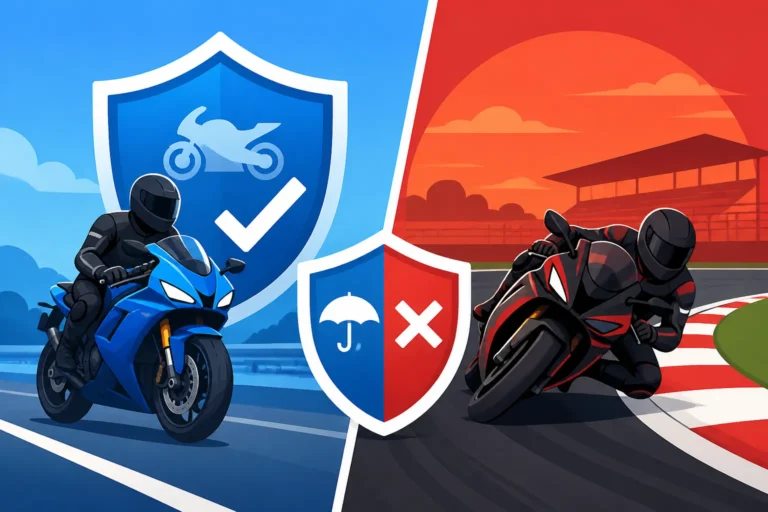
Do You Need Collision on a Financed Motorcycle?
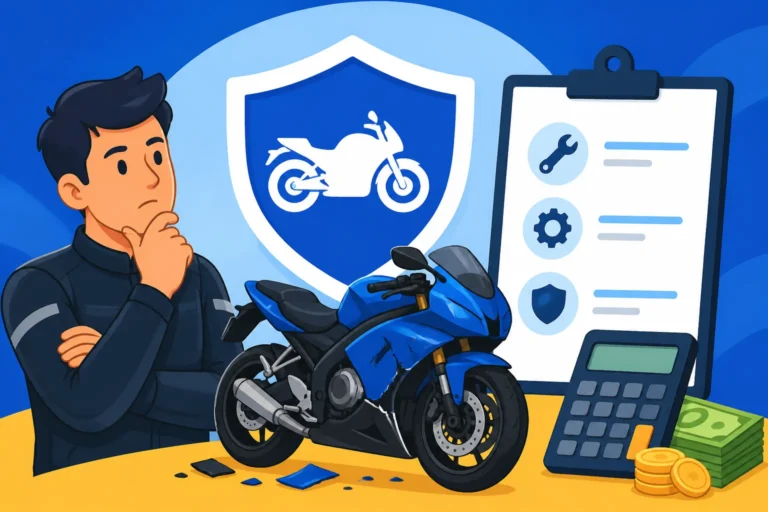
It's a common dilemma when you're excitedly looking at that new ride, calculator in hand, trying to figure out if you can swing the payments. You've got the financing lined up, but then the insurance question rears its head: do you really need collision coverage on a financed motorcycle? It feels like an extra cost, and sometimes, you just want to minimize your monthly outlay. But trust me, as someone who's seen plenty of riders navigate these waters, understanding this particular coverage isn't just about what's legally required; it's about protecting your financial future and your beloved bike. This guide will walk you through why collision coverage is almost always a non-negotiable for financed motorcycles, what it entails, and what happens if you try to skirt it.
The Unspoken Partnership: Your Lender's Stake in Your Ride
When you finance a motorcycle, you're not just buying a bike; you're entering into a loan agreement. And in that agreement, the lender has a significant stake. They're essentially the co-owner of your motorcycle until you pay off every last cent. This arrangement fundamentally changes the insurance landscape compared to owning a bike outright.
Lender's Financial Investment and Risk
Think about it from their perspective: the bank, credit union, or dealership has shelled out a substantial amount of money to get you on that beautiful machine. They want to ensure that investment is protected. If your motorcycle is damaged or totaled in an accident, their asset (your bike) loses value, or worse, becomes completely worthless. Without proper insurance, they'd be left holding the bag, trying to recoup their losses from you, even if you no longer have a functioning motorcycle. This isn't just a hypothetical scenario; it's a very real risk that lenders mitigate through their loan terms.
Contractual Obligations and Your Loan Agreement
Almost every financing agreement for a vehicle, including motorcycles, will contain a clause detailing specific insurance requirements. These aren't suggestions; they are legally binding conditions of your loan. Typically, these requirements include maintaining "full coverage," which, at a minimum, means you'll need both collision and comprehensive insurance. If you sign that loan agreement and then fail to maintain the stipulated coverage, you're in breach of contract. This can lead to serious consequences, from the lender forcing you to buy expensive "force-placed" insurance to potentially repossessing your motorcycle. It's not a scare tactic; it's simply how the financing world operates to protect their interests. Many riders often gloss over these details when signing paperwork, only to find themselves in a bind later.
Diving Deep into Collision Coverage for Financed Motorcycles
Collision coverage is often misunderstood, but it's incredibly straightforward: it pays for damage to your own motorcycle resulting from an accident, regardless of who was at fault. For a financed bike, this coverage becomes an absolute lifeline.
What Collision Insurance Pays For
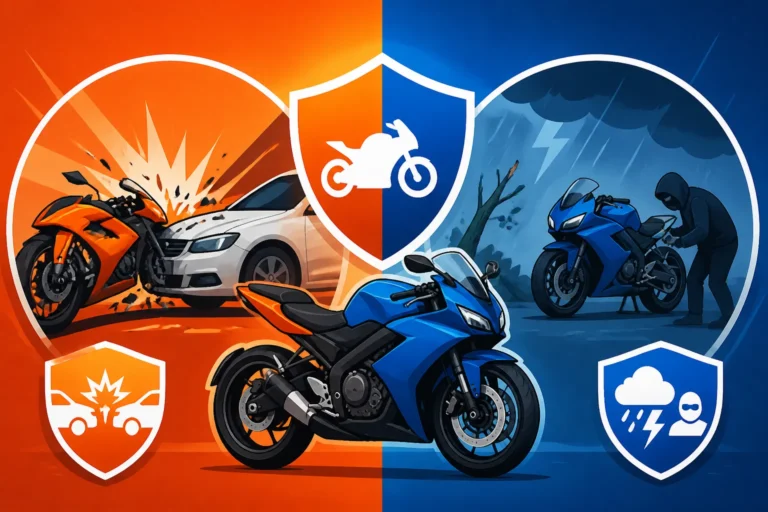
Imagine you're cruising down the highway, enjoying the open road, and suddenly, another car swerves, causing you to lay your bike down. Or maybe you misjudged a turn and hit a guardrail. In these scenarios, your motorcycle is damaged. Without collision coverage, you'd be solely responsible for the repair costs. If your bike is totaled, you'd still owe the remaining balance on your loan, even though you have no bike to ride.
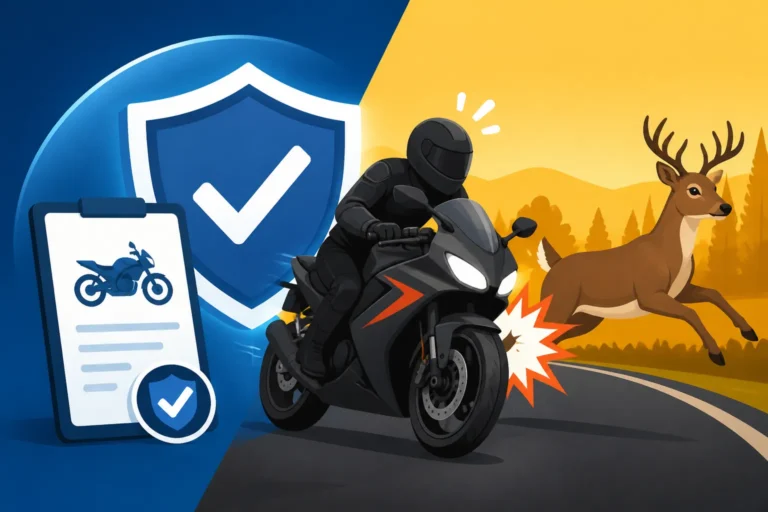
Collision insurance steps in here. It covers the costs to repair your bike up to its actual cash value (ACV), minus your deductible, after an accident with another vehicle or object. So, if your financed Harley-Davidson Road Glide needs a new fairing, forks, and controls after an unfortunate encounter with a deer (that would actually be comprehensive, but if it hit a guardrail instead, it's collision!), your collision policy would kick in. The peace of mind knowing that you won't be on the hook for thousands in repairs, or worse, still paying for a bike that's a pile of scrap, is invaluable. To learn more about how this type of protection works, check out our guide on Collision vs Comprehensive Motorcycle Coverage.
The Lender's Requirement: Protecting Their Asset
The primary reason your lender demands collision coverage is to protect their financial interest in the motorcycle. Let's say you financed a new Kawasaki Ninja 400 for $6,000, and six months later, it's totaled in a collision. If you only had liability insurance, your lender would be out $5,000 (assuming you've paid $1,000). They don't want to take that loss. With collision coverage, the insurance company will pay the actual cash value of the bike to the lender (or to you, for repairs, with the lender as a co-payee), ensuring that their loan is satisfied, or the bike is repaired. This is why when you're getting an insurance quote, especially through online aggregators like The Zebra, they'll ask if your bike is financed, as it directly impacts the required coverage.
The Real Risks of Skipping Collision Coverage
It's tempting to think you're a safe rider, that accidents won't happen to you. We all do it. But the road is unpredictable, and the consequences of not carrying collision coverage on a financed motorcycle can be financially devastating.
Financial Ruin and Being Upside Down
Let's imagine you decide to save a few bucks and forgo collision coverage. You're riding your financed Indian Scout Bobber, feeling great, and then, bam! Someone cuts you off, you swerve, and you hit a pole. The bike is a write-off. Your loan balance is $10,000, but the bike is now worth nothing. Without collision, you are still obligated to pay that $10,000 loan, even though you no longer have a motorcycle. This is what's known as being "upside down" or "underwater" on your loan – you owe more than the bike is worth, and you have no bike. This can lead to serious credit issues, collection agencies, and a massive hit to your financial stability. It's a heavy burden to carry, especially when you're also dealing with the physical and emotional toll of an accident. This is why many savvy riders also invest in Do You Need Gap Insurance on a Motorcycle?, which specifically covers the difference between what you owe and what your standard policy pays out if your bike is totaled.
Breaching Loan Terms and Consequences
As mentioned, skipping required collision coverage is a breach of your loan contract. Lenders often have systems in place to verify coverage. If they find you're not carrying the required policy, they can take action.
- Force-placed Insurance: The lender might purchase an insurance policy on your behalf, often called "force-placed" or "collateral protection insurance." This insurance only protects their interest in the motorcycle, not yours. It's usually significantly more expensive than a policy you'd buy yourself, and you're stuck paying for it.
- Loan Default: If you fail to pay for the force-placed insurance, or if the breach is severe enough, the lender could declare your loan in default. This can lead to immediate repossession of your motorcycle. Even if they repossess it, you'll still be on the hook for any remaining loan balance after they sell the bike, plus repossession fees and legal costs.
- Credit Score Damage: A defaulted loan and repossession will severely damage your credit score, making it difficult to get future loans for cars, homes, or even other motorcycles.
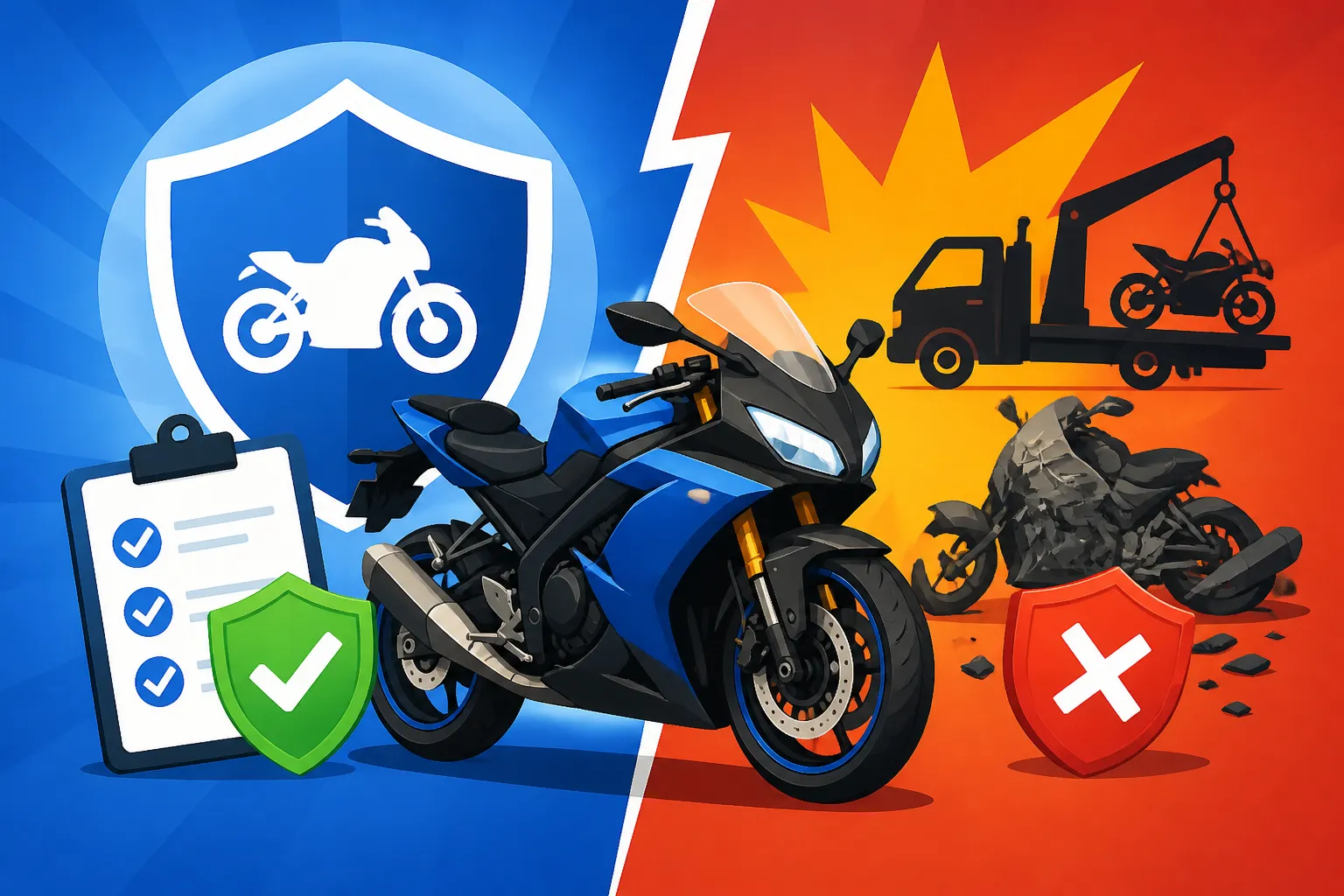
This table illustrates the stark reality of financial responsibility with and without collision coverage on a financed bike:
| Scenario | Collision Coverage | Cost of Damages ($) | Lender Payout | Your Out-of-Pocket | Credit Impact |
|---|---|---|---|---|---|
| Bike Totaled (Financed $10,000) | Yes | $10,000 | ACV ($9,500) | $500 (Deductible) | None |
| Bike Totaled (Financed $10,000) | No | $10,000 | $0 | $10,000 (Loan Balance) | Severe negative |
| Repairs ($3,000) to Financed Bike | Yes | $3,000 | Repairs ($2,500) | $500 (Deductible) | None |
| Repairs ($3,000) to Financed Bike | No | $3,000 | $0 | $3,000 | Negative (if unpaid) |
It really puts into perspective how much collision coverage acts as a safety net, not just for your bike, but for your entire financial well-being.
Beyond Collision: Other Essential Coverages for Financed Motorcycles
While collision coverage is the focus when discussing financed motorcycles, it's rarely the only thing you'll need or want. Lenders typically require a "full coverage" policy, which often includes comprehensive coverage, and it's always wise to consider additional protections. Understanding Types of Motorcycle Insurance Coverage Explained can really help you piece together the full picture.
Comprehensive Coverage: Beyond the Crash
Often bundled with collision for "full coverage," comprehensive insurance protects your motorcycle from damages that aren't collision-related. Think about theft, vandalism, fire, natural disasters (like floods or hail), or hitting an animal. If you wake up to find your garage broken into and your prized Ducati Panigale gone, comprehensive coverage is what would pay out. Just like collision, your lender wants this because these events can also lead to a total loss of their collateral. It's not just about accidents; it's about all the other unfortunate things that can happen when you're not even riding.
Gap Insurance: Bridging the Loan-Value Gap
This is a frequently overlooked, but critically important, coverage for financed vehicles, especially motorcycles. New motorcycles, much like cars, depreciate rapidly the moment they're ridden off the lot. If your financed bike is totaled early in your loan term, its actual cash value (what your collision/comprehensive policy pays out) might be significantly less than the amount you still owe on your loan. Gap insurance covers this "gap." For example, if you owe $15,000 on your Yamaha MT-07, but the insurance company says its ACV after the accident is $12,000, gap insurance would cover that $3,000 difference, preventing you from being upside down on a bike you no longer own. This is a game-changer for many riders and can save you from a major financial headache.
Liability: The Non-Negotiable Minimum
Regardless of whether your bike is financed, paid off, or a gift, liability insurance is almost always a legal requirement to ride on public roads. This coverage protects other people and their property if you're at fault in an accident. It won't pay for your own bike's damage, which is where collision comes in, but it's essential for preventing devastating out-of-pocket costs if you injure someone or damage their vehicle. Your lender expects you to carry this coverage, as does your state, because it mitigates a huge amount of risk for everyone involved. To understand the baseline, you might want to look into What Does Motorcycle Liability Insurance Cover?.
Finding Affordable Coverage for Your Financed Motorcycle
Okay, so you understand that collision coverage (and likely comprehensive) is essential for your financed motorcycle. But that doesn't mean you have to break the bank. There are smart ways to find coverage that meets your lender's requirements without emptying your wallet.
Shopping Around and Comparing Quotes
This is, hands down, the most effective way to find affordable motorcycle insurance. Don't just settle for the first quote you get, or even the quote from your current auto insurer. Different insurance companies have different pricing models, risk assessments, and discounts. What might be expensive with one insurer could be surprisingly affordable with another. Take the time to gather quotes from several reputable providers.
Websites like The Zebra can be incredibly helpful for this, allowing you to input your information once and receive multiple quotes from various carriers like Progressive, Geico, and Dairyland. This streamlines the comparison process and helps you see a wider range of options, ensuring you don't miss out on a better deal. Comparing these quotes side-by-side lets you directly see where you can get the required coverage at the best price. Need help figuring out how to do this? Our post on How to Compare Motorcycle Insurance Quotes has some great tips.
Leveraging Discounts and Adjusting Deductibles
Many insurers offer a variety of discounts that can significantly reduce your premium. Don't be shy about asking your agent or checking online for every discount you might qualify for. Common motorcycle insurance discounts include:
- Multi-policy discount: Bundling your motorcycle insurance with your auto or home insurance.
- Motorcycle safety course discount: Completing an approved safety course, which is a great idea anyway!
- Good rider discount: For riders with a clean driving record.
- Anti-theft device discount: If your bike has an alarm or GPS tracker.
- Paid-in-full discount: Paying your annual premium upfront instead of monthly installments.
Another way to influence your premium is by adjusting your deductible. Your deductible is the amount you pay out of pocket before your insurance coverage kicks in. A higher deductible typically means a lower monthly premium, and vice versa. While a higher deductible can save you money upfront, make sure it's an amount you can comfortably afford in the event of a claim. You don't want to save $50 a year on your premium only to find yourself unable to cover a $1,000 deductible after an accident. For more ways to save, check out How to Get Cheap Motorcycle Insurance.
Final Thoughts on Financed Motorcycle Coverage
So, do you need collision coverage on a financed motorcycle? The answer is a resounding yes, almost without exception. It's not just a recommendation; it's a contractual obligation with your lender, and more importantly, it's a critical financial safeguard for you. Ignoring this essential coverage leaves you exposed to significant financial risk, potentially owing thousands of dollars for a bike you no longer possess.
Take the time to understand your policy, compare quotes from different providers (and consider tools like The Zebra to make it easier), and make sure you're adequately protected. Ride safe, ride smart, and ride insured!
Disclaimer
Please note that this article is intended for informational purposes only and does not constitute financial or legal advice. Insurance requirements and coverages can vary significantly based on your state, lender, and individual circumstances. Always consult with a qualified insurance professional and review your specific loan agreement to understand your obligations and the best coverage options for your situation.