What Happens if My Motorcycle Insurance Lapses?
It’s a scenario many of us have faced, whether it was an oversight, a forgotten bill, or simply trying to stretch a tight budget: you realize your motorcycle insurance has lapsed. That pit-in-your-stomach feeling is totally valid because letting your coverage expire, even for a short time, can open up a whole can of worms you really don't want to deal with as a rider. This guide will walk you through exactly what happens when your motorcycle insurance lapses, from immediate legal troubles to long-term financial headaches, and how to get back on track.
What Exactly Is a Motorcycle Insurance Lapse?
When we talk about a "motorcycle insurance lapse," we're not just referring to the moment your payment is technically late. It’s a specific period where your policy is no longer active, and you're officially riding (or even just owning) without valid coverage. This can happen for a few reasons, but the consequences are generally the same: you're exposed.
The Grace Period vs. Actual Lapse
Most insurance companies understand that life happens. Bills get lost, credit cards expire, or you might just forget the exact due date. That's why many policies come with a "grace period." This is typically a short window, often 10 to 30 days, after your premium due date during which you can still make your payment without your coverage officially lapsing. During this grace period, your policy is usually still considered active, meaning you'd still be covered if you got into an accident.
However, once that grace period ends and your payment still hasn't been received, that’s when your policy officially lapses. At that point, your coverage is terminated, and you are considered uninsured. It’s a critical distinction because riding even one day past your grace period without making arrangements could put you in a very difficult spot. It's not just about getting caught; it's about the very real risk of an incident occurring when you have no safety net. Many riders mistakenly believe they’re still covered because they haven’t received a final cancellation notice, but relying on that can be a costly gamble.
How Insurers Track Lapses
You might wonder how states and insurance companies keep tabs on who’s insured and who isn’t. Well, it's pretty sophisticated these days. Most states maintain electronic databases that insurance companies report to. When your policy is canceled or lapses, that information is usually transmitted to the state's Department of Motor Vehicles (DMV) or equivalent agency. This is how they know if you're riding without proper coverage.
Beyond state databases, insurance companies also utilize internal records and industry-wide reporting systems, like the Comprehensive Loss Underwriting Exchange (CLUE) report. The CLUE report tracks your insurance claim history and policy details, including any lapses, typically for up to seven years. This report is a big deal because it’s what future insurance providers will pull when you're seeking new quotes. A lapse on your CLUE report instantly flags you as a higher risk, influencing your rates for years to come. So, even if you manage to avoid a ticket, that lapse still leaves a digital footprint that impacts your future.
Immediate Consequences of a Lapsed Policy
Thinking a lapsed policy is just a minor oversight? Think again. The moment your motorcycle insurance lapses, you're exposing yourself to a whirlwind of immediate, and often severe, consequences, both legal and financial.
Legal Repercussions: Riding Uninsured
First and foremost, riding your motorcycle without active insurance is illegal in almost every state. Some states, like New Hampshire, offer exceptions under specific financial responsibility laws, but for the vast majority of us, coverage is mandatory. If you're pulled over or involved in an accident while uninsured, the penalties can be steep and immediate.
Consider a scenario: you're cruising down I-10 in Arizona, enjoying the open road, but you completely forgot about that insurance payment a few weeks ago. A state trooper pulls you over for a minor infraction, and when you can't produce valid proof of insurance, you're looking at a world of hurt. Fines for riding uninsured can range from a few hundred dollars to several thousand, depending on the state and whether it’s your first offense. In California, for example, the penalty for no motorcycle insurance in California can include fines upwards of $1,000, and that doesn’t even count court fees. Many states will also suspend your driver's license, your motorcycle registration, or both. Imagine not being able to ride your bike, legally, for months or even a year because of an insurance lapse! This can be a huge disruption to your life, especially if your motorcycle is your primary mode of transportation. For more details, you can read about the specific Penalties for Riding Without Insurance.
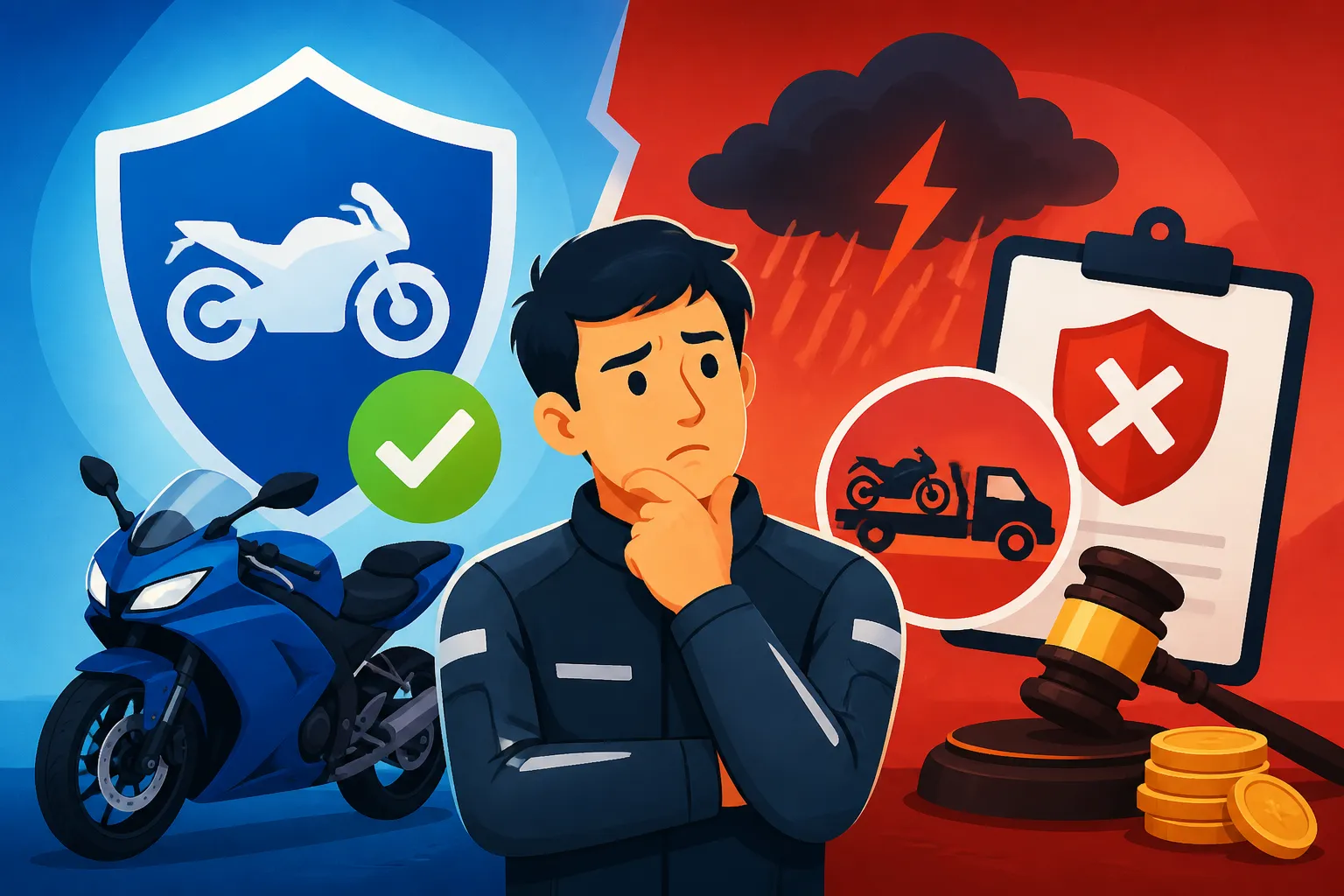
Moreover, some states might even impound your motorcycle. That’s not only a massive inconvenience but also means you’ll be on the hook for towing and storage fees, which can quickly add up, easily costing hundreds of dollars on top of everything else. It’s a harsh reality, but it underscores why maintaining continuous coverage is so crucial. If you're wondering, "what happens if you ride without insurance?", the answer isn't pretty.
Financial Risk: Covering Damages Yourself
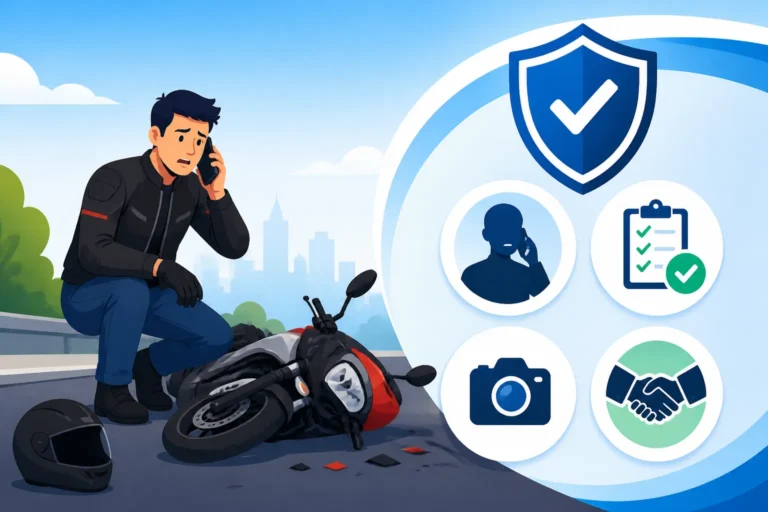
Beyond the legal penalties, the most terrifying immediate consequence of a lapsed policy is the financial exposure. If you get into an accident and your insurance has lapsed, you are personally responsible for all damages and injuries. Every single penny.
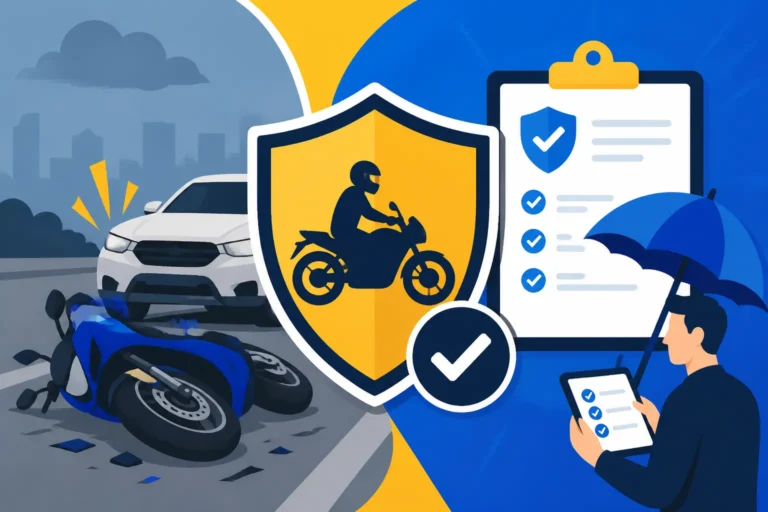
Let's paint a picture: you’re on your morning commute, and a car unexpectedly merges into your lane, causing you to swerve and lay your bike down. Your beloved Harley-Davidson Fat Bob is now scratched, bent, and potentially totaled, and you’ve got a broken arm and some gnarly road rash. If your insurance was active, your collision coverage would kick in to help repair or replace your bike (after your deductible), and your medical payments coverage or personal injury protection (PIP) would help with your medical bills. Your liability coverage would protect you if you were at fault for any damages or injuries to the other party.
But with a lapsed policy? None of that happens. You're facing thousands of dollars in motorcycle repair costs, potentially tens of thousands in medical bills, and if the other driver sues you, you could be on the hook for their vehicle damage, medical expenses, lost wages, and pain and suffering. Without liability insurance, your personal assets – your savings, your home, your future earnings – are all on the line. It’s a devastating thought, and it’s precisely why states mandate Motorcycle Insurance Requirements by State (2026 Guide) in the first place. You simply cannot afford to take this kind of financial risk.
Long-Term Impacts on Your Rider Profile and Wallet
The repercussions of a lapsed motorcycle insurance policy don't just disappear once you've sorted out the immediate issues. They can stick with you, affecting your ability to get affordable coverage and even influencing your overall financial standing for years down the road.
Higher Future Premiums
This is often one of the most frustrating long-term consequences: when you finally go to reinstate your policy or shop for new coverage, you'll likely find your premiums have skyrocketed. Insurance companies view a lapse as a significant red flag. It indicates instability, a higher risk profile, and a potential for future lapses or uninsured driving.
Let’s say you had a perfectly clean record with Progressive for years, paying a reasonable rate for your sportbike. Then, due to a personal crisis, your policy lapses for a month. When you try to get back on track, Progressive, or any other insurer you approach, will see that lapse. They’ll likely quote you a much higher premium than you were paying before, sometimes by 10%, 20%, or even more. Why? Because they perceive you as a greater risk. They might see it as an indicator that you're more likely to let your policy lapse again or that you prioritize other expenses over necessary coverage.
This isn't just about one company; it's an industry-wide practice. A lapse will appear on your CLUE report, which is accessible to virtually all insurers. This means that even if you switch to a different company, like Dairyland or Markel, they'll factor that lapse into your new rate. It's a penalty you pay over and over again until enough time passes without further incidents to rebuild your trustworthy profile. For more insights on this, you might find our article on Why Is My Motorcycle Insurance So Expensive? helpful.
Difficulty Finding New Coverage
Beyond just higher prices, a lapse can make it genuinely hard to find any insurance coverage at all. Some standard insurance companies might refuse to offer you a policy for a certain period after a significant lapse, especially if it resulted in legal penalties or an accident while uninsured. They might view you as too high-risk.
In such cases, you might be relegated to what’s known as the "non-standard" or "high-risk" insurance market. These policies are specifically designed for individuals who have trouble securing coverage from traditional carriers due to factors like past lapses, DUIs, or multiple accidents. While these policies offer coverage, they typically come with significantly higher premiums and sometimes less comprehensive coverage options.
If your lapse led to a conviction for driving uninsured, you might even be required to obtain an SR-22 (or FR-44 in Florida and Virginia). An SR-22 isn't insurance itself, but a certificate of financial responsibility that your insurance company files with the state DMV, proving you have the required minimum liability coverage. Many insurers are hesitant to offer SR-22 filings, and those that do will charge higher rates. Understanding SR-22 for Motorcycles: When It's Required is critical if you find yourself in this situation, as it's a common requirement after a severe lapse or violation.
Impact on Your Driving Record and Credit
While a lapse doesn't directly ding your credit score like a missed loan payment, the associated penalties certainly can. If you receive fines or court costs that you struggle to pay, and they go to collections, then yes, your credit score will take a hit. Furthermore, any license suspensions or convictions for riding uninsured become part of your official driving record, which insurers will always check. A spotty driving record, especially one showing legal violations related to insurance, is a major factor in driving up your rates.
In essence, a motorcycle insurance lapse creates a negative cascade: it leads to immediate legal and financial headaches, then translates into higher costs and fewer options for your future insurance needs.
How to Handle a Lapsed Motorcycle Insurance Policy
Okay, so your policy lapsed. Panicking won't help, but swift and decisive action will. The good news is that while a lapse is serious, it's usually not a permanent black mark. There are steps you can take to minimize the damage and get back on the road legally and safely.
Reinstating Your Old Policy (If Possible)
The very first thing you should do is contact your insurance provider immediately. Don't wait. Explain the situation. Sometimes, especially if the lapse was very recent and within what might be considered an extended grace period, they might allow you to reinstate your policy with a back-dated payment. This would effectively erase the lapse from your record, or at least minimize its impact.
For instance, if your payment was due on the 1st, and you call your insurer on the 15th, they might let you pay the overdue amount, plus a small reinstatement fee, and continue your coverage as if it never lapsed. However, if the lapse has been for an extended period – say, a month or more beyond any grace period – reinstatement might not be an option. Your insurer might treat it as a new policy application, meaning you’ll have to go through the underwriting process again, and your rates will likely be higher. Some companies, like Progressive, are generally quite good about communicating policy status, but it's always on you to be proactive. If you're looking for more guidance on this specific situation, our article on What Happens if You Let Coverage Lapse Then Restart? offers deeper insights.
Be prepared to pay any outstanding balances, potential late fees, and possibly a reinstatement fee. The goal here is to get continuous coverage again as quickly as possible to prevent further issues. Crucially, do NOT ride your motorcycle until you have confirmed your policy is active again.
Shopping for New Coverage After a Lapse
If your old policy can't be reinstated or the quoted rates are simply too high, your next step is to start shopping for new coverage. This is where a lapse can truly make things challenging, but it's not impossible to find a suitable policy.
You might find that some insurers are more forgiving of a recent lapse than others. It's often beneficial to get quotes from several different companies. Don't just settle for the first quote you receive, no matter how daunting the process seems. Comparison websites can be incredibly helpful here. Platforms like The Zebra allow you to input your information once and receive multiple quotes from various carriers, streamlining the comparison process.
When you're shopping, be honest about the lapse. Trying to hide it will only lead to problems down the road if the new insurer discovers it. They will pull your CLUE report, so it's impossible to conceal. Instead, be prepared to explain why it happened and what steps you've taken to ensure it won't happen again. Highlight any positive aspects of your riding record, like completing a motorcycle safety course or having no prior claims. These factors can sometimes help mitigate the impact of the lapse. Our guide on How to Compare Motorcycle Insurance Quotes offers practical tips for this process.
Proving Financial Responsibility (Post-Lapse)
If your lapse resulted in a ticket, a court appearance, or a license/registration suspension, you'll likely need to prove financial responsibility to the state before you can legally ride again. This usually means obtaining an SR-22 (or FR-44 if you're in Virginia or Florida).
An SR-22 is a form that your insurance company files with the state DMV, essentially certifying that you have purchased and maintained the minimum required liability insurance. It acts as proof that you are financially responsible for potential accidents. Not all insurance companies offer SR-22 filings, and those that do will usually charge an additional fee for this service, on top of your already increased premiums due to the lapse itself. You will typically be required to maintain SR-22 filing for a certain period, often three years, during which continuous coverage is absolutely essential. Any further lapses during this SR-22 period can lead to even more severe penalties, restarting the clock or imposing harsher restrictions. Understanding Financial Responsibility Laws for Riders is key to navigating these requirements.
It’s a tough situation, but following these steps diligently will help you regain your legal standing and protect yourself on the road.
Consequences of a Lapsed Motorcycle Insurance Policy: A Quick Look
To help summarize the potential impacts, here's a table outlining the common short-term and long-term consequences of letting your motorcycle insurance lapse.
| Consequence Type | Short-Term Impacts (Immediate) | Long-Term Impacts (Future) |
|---|---|---|
| Legal | Fines for uninsured riding, license/registration suspension, vehicle impoundment, court appearances. | Requirement for SR-22/FR-44 filing, extended suspension periods, difficulty getting license reinstated. |
| Financial | Out-of-pocket costs for accidents, theft, or damage; towing/storage fees; legal fees from lawsuits. | Significantly higher insurance premiums for years, limited choice of insurers, potential need for high-risk policies. |
| Coverage Status | No coverage for any incident; fully exposed to all liabilities. | Difficulty purchasing new policies, mandatory gap in coverage history, impacts on future claims and discounts. |
| Record Impact | Negative marks on driving record, potential criminal record for repeat offenses. | Negative entry on CLUE report (up to 7 years), potential impact on credit score if fines go unpaid. |
| Riding Freedom | Illegal to ride, risk of being pulled over and impounded. | Restricted riding ability due to suspended license/registration, increased stress about costs. |
Remember, this isn't just a list of "what ifs." These are real, tangible consequences that many riders face when they let their guard down. Maintaining continuous motorcycle insurance isn't just a legal obligation; it's a fundamental part of responsible riding. If you find yourself in a bind and can't afford your regular payments, contact your insurer immediately to discuss options like a temporary reduction in coverage or a payment plan rather than letting your policy lapse entirely. Even considering Do You Need Insurance to Store a Motorcycle? might be a better option than a full lapse if you plan to keep your bike off the road for a while.
Disclaimer
Please remember that this article provides general information about motorcycle insurance lapses. Insurance laws and regulations, as well as specific policy terms, can vary significantly by state and insurance provider. For personalized advice and accurate information regarding your specific situation, it is always best to consult directly with your insurance agent or a qualified legal professional.