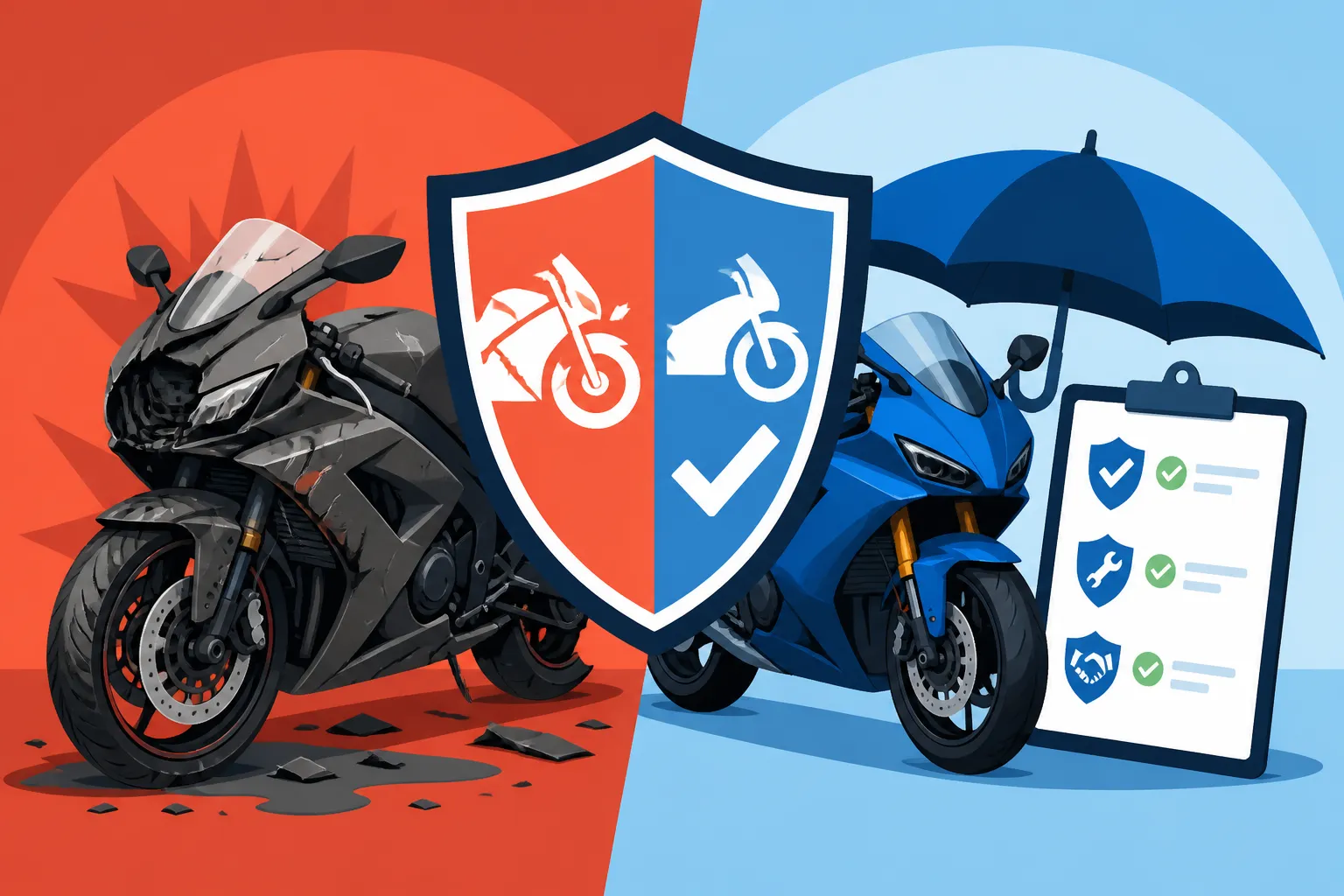
What Is the Motorcycle Total Loss Threshold?
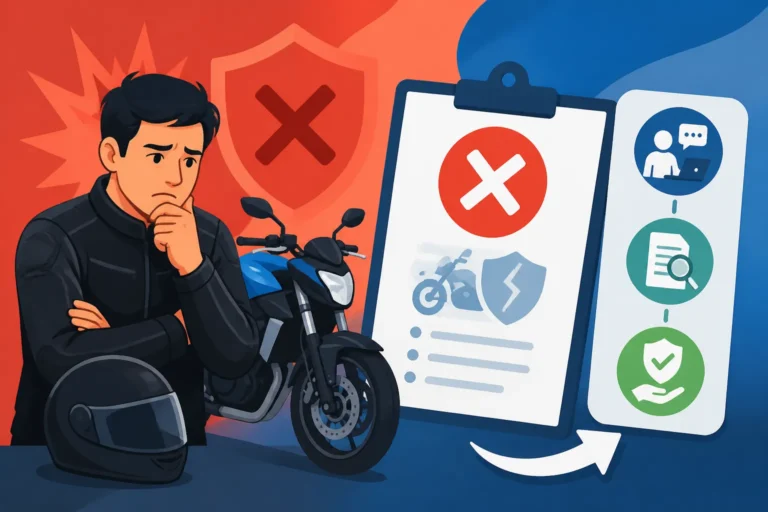
Finding out your beloved motorcycle might be "totaled" after an accident or incident is one of the most heartbreaking moments a rider can experience. It's not just about the damage; it's about the loss of your freedom machine, the countless memories, and the daunting process of dealing with insurance companies to understand what comes next. This guide aims to demystify the motorcycle total loss threshold, explaining how insurers make this tough call, what factors weigh into their decision, and what you can expect when your bike is deemed a total loss.
What Exactly Constitutes a Motorcycle Total Loss?
When your insurance company declares your motorcycle a "total loss," it means they believe the cost to repair the damage, combined with other associated expenses, exceeds a certain percentage of the bike's actual cash value (ACV) right before the incident occurred. It’s not simply that the bike looks irreparable; sometimes, a seemingly minor cosmetic issue can hide deeper structural damage that makes repairs financially illogical. It's a calculation, not just a visual assessment, that dictates this decision.
Beyond Just Physical Damage: Economic Factors
Often, riders look at their damaged bike and think, "It's just a bent fork and some scratched fairings, I can fix that!" But insurance companies consider more than just the visible repairs. They factor in things like hidden damage that might be discovered during disassembly, the cost of genuine OEM parts versus aftermarket options, labor rates at qualified repair shops, and even the "diminished value" of the bike after extensive repairs. If a repair shop quotes $8,000 to fix a bike that was only worth $10,000 before the crash, the insurer might decide it's not economically sound to proceed. They're looking at the big picture of cost versus value, and often, that picture doesn't favor repair for older or less valuable models.
Different Scenarios: Accident, Theft, Natural Disaster
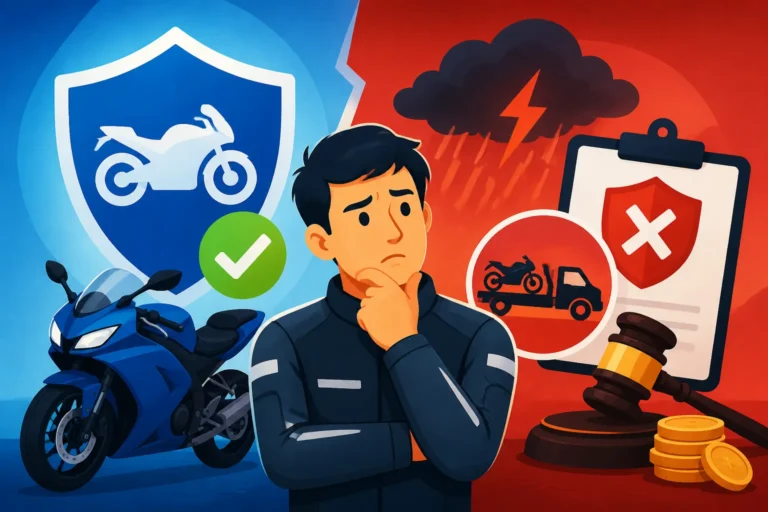
A total loss isn't solely the result of a spectacular crash. While accidents are a common culprit, other events can also lead to your motorcycle being totaled. For instance, if your bike is stolen and never recovered, or if it's recovered with such extensive damage or missing components that the cost to restore it outweighs its value, it's considered a total loss. Similarly, natural disasters like floods, fires, or even widespread hail storms can inflict damage so severe or costly to repair that your insurer deems the bike totaled. Imagine a motorcycle submerged in saltwater during a hurricane – the hidden electrical and engine damage alone could quickly push it past the total loss threshold, even if it looks superficially intact.
How Insurers Determine a Motorcycle Total Loss
The process insurance companies use to decide if your motorcycle is a total loss involves a specific set of calculations and considerations. It's not arbitrary; it's a systematic approach designed to manage costs and ensure fair (from their perspective) payouts. Understanding this mechanism can help you better navigate the claims process.
The Damage-to-Value Ratio
At the heart of the total loss determination is the damage-to-value ratio, often referred to as the Total Loss Ratio (TLR). This ratio compares the estimated cost of repairs plus the salvage value (what the damaged bike is worth) to the actual cash value (ACV) of the motorcycle just before the incident. For example, if your bike's ACV was $12,000 and the estimated repair costs are $9,000, plus the salvage value is $1,500, the total cost to the insurer (repair + salvage) would be $10,500. If their internal or state-mandated threshold is, say, 75%, then $10,500 is roughly 87.5% of $12,000, well above the 75% threshold, making it a total loss. Each insurer and state can have a slightly different internal percentage they use, usually ranging from 50% to 100% of the ACV.
State-Specific Total Loss Formulas
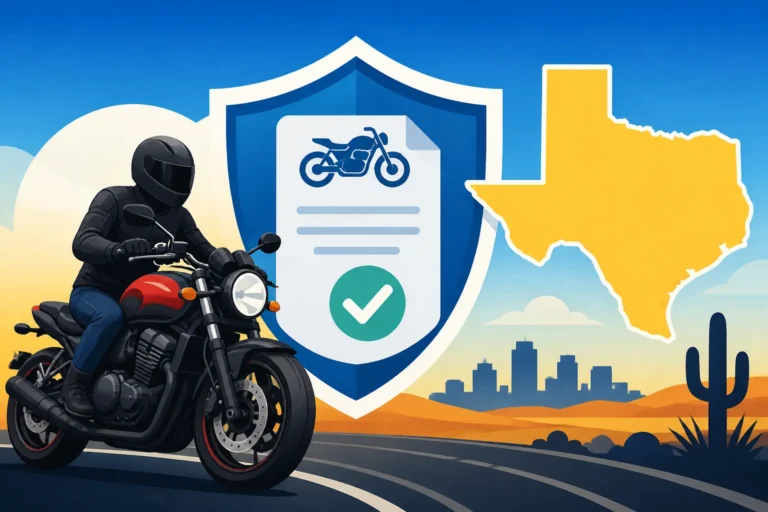
It's not a one-size-fits-all approach across the country. Some states mandate specific total loss thresholds by law. For example, in states like Texas, they often use a "total loss formula" where the cost of repairs and the salvage value combined must exceed the actual cash value. Other states might use a simpler "total loss threshold" percentage, where if repairs reach, say, 70% or 75% of the ACV, it's totaled. This means that an identical accident could result in a total loss in one state but not in another, simply due to differing regulations. This is why knowing the Motorcycle Insurance Requirements by State (2026 Guide) is so crucial, as it often details these nuanced regulations.
Here's a simplified look at how some states approach total loss, which can vary widely:
| State Approach | Description | Example Calculation (ACV = $10,000) |
|---|---|---|
| Total Loss Threshold | If repair costs exceed a certain percentage of the Actual Cash Value (ACV), the vehicle is totaled. This percentage varies by state and insurer (e.g., 70%, 75%, 80%). | If threshold is 75%, and repairs are $7,600, then $7,600 / $10,000 = 76%. Since 76% > 75%, it's a total loss. |
| Total Loss Formula | (Cost of Repairs + Salvage Value) > Actual Cash Value. This method is common in states where repair cost alone isn't the sole determinant. | If repairs are $7,000, salvage value is $3,500, then $7,000 + $3,500 = $10,500. Since $10,500 > $10,000 (ACV), it's a total loss. |
| Economic Total Loss | The insurer determines it's not economically sensible to repair, even if not strictly meeting a percentage threshold. This offers more discretion. | Repairs are $6,500 on a $10,000 ACV bike (65%). An insurer might still total it if residual value after repairs is very low, future reliability is compromised, or parts are extremely difficult to find. |
| Owner Retains Salvage | Allows the owner to keep the damaged vehicle, with the payout reduced by the salvage value. The state then issues a salvage title. | Payout is ACV – Deductible – Salvage Value. For a $10,000 ACV, $500 deductible, $3,500 salvage: $10,000 – $500 – $3,500 = $6,000 payout. |
Salvage Value and Repair Costs
When assessing a total loss, the insurance company estimates the "salvage value" of your damaged motorcycle. This is essentially what the wrecked bike is worth in its current condition, typically to a salvage yard or parts reseller. This salvage value is then factored into the equation. For instance, if repairs are estimated at $7,000 and the salvage value is $2,000, on a bike with an ACV of $10,000, the insurer might consider the total "cost" to them (repair + salvage) as $9,000. If this combined figure exceeds their internal threshold or state-mandated formula percentage of the ACV, then your motorcycle will be declared a total loss. The whole idea is to minimize their financial outlay, whether that means paying for repairs or paying out the ACV.
Factors Influencing the Total Loss Threshold
It's not just the dent in your tank or the scrape on your exhaust that determines a total loss. A myriad of other factors, often invisible to the casual observer, play a significant role in how an insurer assesses the damage and ultimately decides whether to total your bike. These elements collectively paint a picture of the true cost-effectiveness of repairing versus replacing.
Age and Mileage of the Bike
Older motorcycles, especially those with high mileage, are far more likely to be declared a total loss even with relatively minor damage. Why? Because their actual cash value (ACV) is inherently lower due to depreciation. A $500 scratch on a brand new Harley-Davidson Street Glide might be a cosmetic repair, but that same damage on a 15-year-old Kawasaki Ninja 250R, which might only be worth $2,500, could easily push it over the threshold when factoring in labor, paint, and potential hidden damage. Insurers, including major players like Progressive, look at the market value of comparable bikes to determine ACV, and age and mileage are huge drivers of that value.
Type of Motorcycle and Market Demand
The make, model, and even the popularity of your motorcycle can significantly influence the total loss decision. High-performance sport bikes, for example, often have expensive, specialized parts and complex repair processes, making them more prone to being totaled even with moderate damage. Conversely, a popular cruiser with readily available aftermarket parts might be repaired for a higher percentage of its value simply because parts are cheaper and more accessible. Furthermore, market demand plays a role; if a particular model is rare or highly sought after, its ACV might hold up better, potentially pushing it away from a total loss designation. This is one of the reasons why the Motorcycle Insurance Cost by Bike Type can vary so wildly.
Cost of Parts and Labor
This is a huge one. The price of replacement parts – especially for specific or rare models – and the hourly rate of qualified motorcycle mechanics can quickly inflate repair estimates. If your bike needs a new frame, engine casing, or specialized electronics, those costs can skyrocket. For custom bikes, finding original parts might be impossible, forcing custom fabrication, which is even more expensive. Labor rates vary by region too; a repair shop in a major metropolitan area like Los Angeles or New York City will likely charge more per hour than one in a rural town, directly impacting the total repair estimate and, subsequently, the total loss calculation.
What Happens After Your Motorcycle Is Declared a Total Loss?
The moment you get that call, that email, or that letter stating your motorcycle is a total loss, it feels like a gut punch. Beyond the emotional impact, there's a whole process that kicks into gear, and understanding it is key to moving forward. This is where your insurance coverage truly comes into play.
Payout Process and Timeline
Once your motorcycle is declared a total loss, your insurance company will send you a settlement offer. This offer is typically based on the Actual Cash Value (ACV) of your bike, minus your deductible, and any salvage value if you choose to keep the bike. ACV factors in depreciation, so it's not the "new" price but what a comparable bike would sell for on the open market right before the incident. For instance, if your bike's ACV was determined to be $10,000 and your deductible is $500, you'd receive a check for $9,500. The timeline for this payout can vary, but generally, once you agree to the settlement, payment can be issued within a few business days to a couple of weeks. If your bike was financed, the check will often go directly to your lender, and you'll receive any remaining balance. For a deeper dive into this, you might find our guide on What Happens When Your Motorcycle Is Totaled? incredibly helpful.
Keeping the Totaled Bike: Salvage Title Implications
You actually have the option in most states to keep your motorcycle even after it's been declared a total loss. However, if you do, your insurance payout will be reduced by the bike's estimated salvage value. More importantly, the vehicle will be issued a "salvage title." This means the bike cannot be legally ridden on public roads until it's been repaired and inspected by the state, demonstrating it's roadworthy. Obtaining a "rebuilt" title can be a complex and often costly process, involving strict inspections and paperwork. Furthermore, once a motorcycle has a salvage or rebuilt title, its market value is significantly diminished, and it can be much harder (and more expensive) to insure in the future. Understanding What Is a Salvage Title After a Total Loss? is crucial before making this decision.
Replacing Your Motorcycle
After a total loss, the next step is often replacing your ride. If your policy only had Actual Cash Value (ACV) coverage, you’ll be receiving a payout that reflects the depreciated value of your old bike. This might not be enough to buy a brand-new equivalent, especially if your bike was relatively new. This is where having "new bike replacement coverage" (if available and you opted for it) can be a godsend, as it typically pays for a brand-new model of the same make and model, or a comparable one. If you had gap insurance and your bike was financed, that coverage would kick in to pay off any remaining loan balance that exceeds the ACV payout, preventing you from being underwater on a bike you no longer have.
Negotiating with Your Insurer After a Total Loss
Receiving a lowball offer for your totaled motorcycle can be incredibly frustrating. Many riders feel powerless against the large insurance companies, but you do have room to negotiate. It requires preparation, evidence, and persistence. The Zebra, an insurance comparison platform, often highlights the importance of being well-informed during these negotiations.
Gathering Your Own Evidence of Value
Don't just accept the first offer. Do your homework. Research the fair market value of motorcycles identical to yours (same make, model, year, mileage, and condition) that were for sale in your local area just before the incident. Look at private sales listings, dealership prices, and online valuation tools like Kelly Blue Book or NADAguides. Gather screenshots, printouts, and advertisements. Did you have any recent maintenance records or upgrades that would add value? Include those. If you had unique custom parts or accessories, make sure you have photos and receipts to prove their value. This evidence is your strongest tool when you’re looking to How to Negotiate a Motorcycle Total Loss Settlement.
Understanding Depreciation
Insurance companies base their payout on your motorcycle's Actual Cash Value (ACV), which means they account for depreciation. While this is standard, the way they calculate that depreciation can sometimes be challenged. For example, if your bike was meticulously maintained, had very low mileage for its age, or received recent professional upgrades, its depreciation rate might be lower than what a generic formula suggests. Presenting evidence of your bike's exceptional condition or unique features can help argue for a higher ACV than their initial assessment. Emphasize why your bike commanded a higher value than the average comparable model.
When to Seek Professional Help
If your negotiations with the insurance company hit a wall, or if you feel you're being unfairly treated, it might be time to consider professional help. A public adjuster, who works for you (not the insurance company), can review your claim, assess the damage, and negotiate on your behalf for a fee. For more serious disputes, especially if there's significant value at stake or complex legal issues, consulting with a lawyer specializing in insurance claims might be necessary. While this is an added expense, it can sometimes lead to a substantially better settlement, especially when dealing with larger insurers like Progressive, who have extensive legal teams.
Understanding Your Coverage and Total Loss
The type of motorcycle insurance coverage you carry is the ultimate determinant of how you’re compensated when your bike is deemed a total loss. Not all policies are created equal, and what you paid for upfront will profoundly impact your experience after the fact.
Agreed Value vs. Actual Cash Value
This is perhaps the most critical distinction when it comes to total loss payouts. Most standard motorcycle insurance policies pay out based on Actual Cash Value (ACV). As discussed, this means depreciation is factored in, and you receive what the bike was worth immediately before the loss, not what you paid for it or what it would cost to replace it new. However, for certain bikes, especially vintage, custom, or classic motorcycles, an Agreed Value policy is a game-changer. With agreed value, you and the insurer agree on a specific value for your motorcycle before the policy begins. If it's totaled, that's the amount you'll receive (minus your deductible), regardless of its depreciated value. This prevents nasty surprises and is usually a must-have for unique bikes. Our guide on Agreed Value vs Stated Value vs Actual Cash Value dives deep into these options.
Gap Insurance and Financed Bikes
If you financed your motorcycle, you absolutely need to understand gap insurance. It’s incredibly common for bikes, especially new ones, to depreciate faster than you pay down the loan. This means you could owe more on your loan than your bike is worth. If your financed motorcycle is totaled and your standard ACV policy pays out $10,000, but you still owe $12,000 to the bank, you're on the hook for that $2,000 difference. That's where Gap Insurance steps in; it covers that "gap" between what your primary insurance pays and what you still owe on the loan. Without it, you could be making payments on a motorcycle you no longer possess. Learn more about its importance in Do You Need Gap Insurance on a Motorcycle?.
Accessories and Custom Parts Coverage
Many riders invest heavily in customizing their motorcycles with aftermarket exhaust systems, specialized seats, upgraded suspension, custom paint jobs, or even extended saddlebags. Standard motorcycle insurance policies often have very limited, if any, coverage for these extras. If your bike is totaled, those expensive custom additions could be overlooked in the ACV calculation unless you specifically added Accessories & Custom Parts Coverage to your policy. This add-on protects your investment in modifications, ensuring their value is factored into a total loss payout. Always make sure to document all your aftermarket parts with receipts and photos and inform your insurer about them, even if you’re just getting a quote from a service like The Zebra. Without this specific coverage, you might only get paid for a stock motorcycle, leaving you significantly shortchanged.
Frequently Asked Questions About Total Loss
It’s natural to have a ton of questions when facing a total loss scenario. Here are some common ones that come up time and time again from fellow riders.
Can I Refuse a Total Loss Decision?
Generally, no, you cannot refuse an insurer's total loss decision if it's based on their calculations and state laws. If the cost of repair truly exceeds the threshold, the insurance company has the right to declare it a total loss. However, what you can do is dispute the valuation they place on your motorcycle. If you believe their Actual Cash Value (ACV) assessment is too low, you have the right to present your own evidence (comparable sales, records of upgrades, expert appraisals) to negotiate a higher settlement. You're not refusing the "total loss" status, but rather arguing for a fairer financial compensation.
How Does a Total Loss Affect My Future Insurance Rates?
Unfortunately, being involved in an accident that leads to a total loss, especially if you were found at fault, can definitely impact your future motorcycle insurance premiums. Your rates may increase at renewal, as insurers view you as a higher risk. However, the exact increase depends on several factors: whether you were at fault, your driving history, the severity of the claim, and even your state's regulations. If the accident was not your fault, your rates might not be affected as severely, or potentially not at all, particularly if your insurer can subrogate (recover costs) from the at-fault party's insurance. Some companies, like Progressive, offer "accident forgiveness" programs that might prevent a rate hike after your first at-fault accident, depending on your policy terms.
What If My Motorcycle Has a Loan?
If your motorcycle is financed and declared a total loss, the insurance payout will typically go directly to your lender first. The amount paid will be the Actual Cash Value (ACV) of the bike, minus your deductible. If the ACV payout is less than what you still owe on your loan, you'll be responsible for paying the remaining balance out of pocket. This is precisely why Do You Need Gap Insurance on a Motorcycle? is so critical; gap insurance covers this difference, so you don't end up paying for a bike you no longer own. If the ACV payout is more than what you owe, you'll receive the leftover funds after the lender is paid off.
Moving Forward After a Total Loss
Losing your motorcycle, especially to a total loss, is never easy. It's a deeply personal experience, often tied to freedom and passion. While no amount of money can truly replace the feeling of your specific ride, understanding the total loss threshold and how insurance companies operate gives you power. It helps you advocate for yourself, negotiate effectively, and ultimately, get the best possible outcome from a bad situation. Knowledge about your policy, the market value of your bike, and your rights as a policyholder are your strongest assets. Take the time to do your research, organize your documentation, and don't be afraid to push back if you feel the initial offer isn't fair. This empowers you to move past the loss and, hopefully, get back on two wheels with a new machine soon.
Disclaimer
Please remember that this article provides general information and guidance regarding motorcycle total loss thresholds and related insurance processes. Insurance laws, policy terms, and specific procedures can vary significantly by state and individual insurance provider. It is always recommended to consult directly with your insurance agent or company, and potentially a legal professional, to understand the specifics of your policy and how it applies to your unique situation. This content is not intended as legal, financial, or insurance advice.