What Is a Salvage Title After a Total Loss?
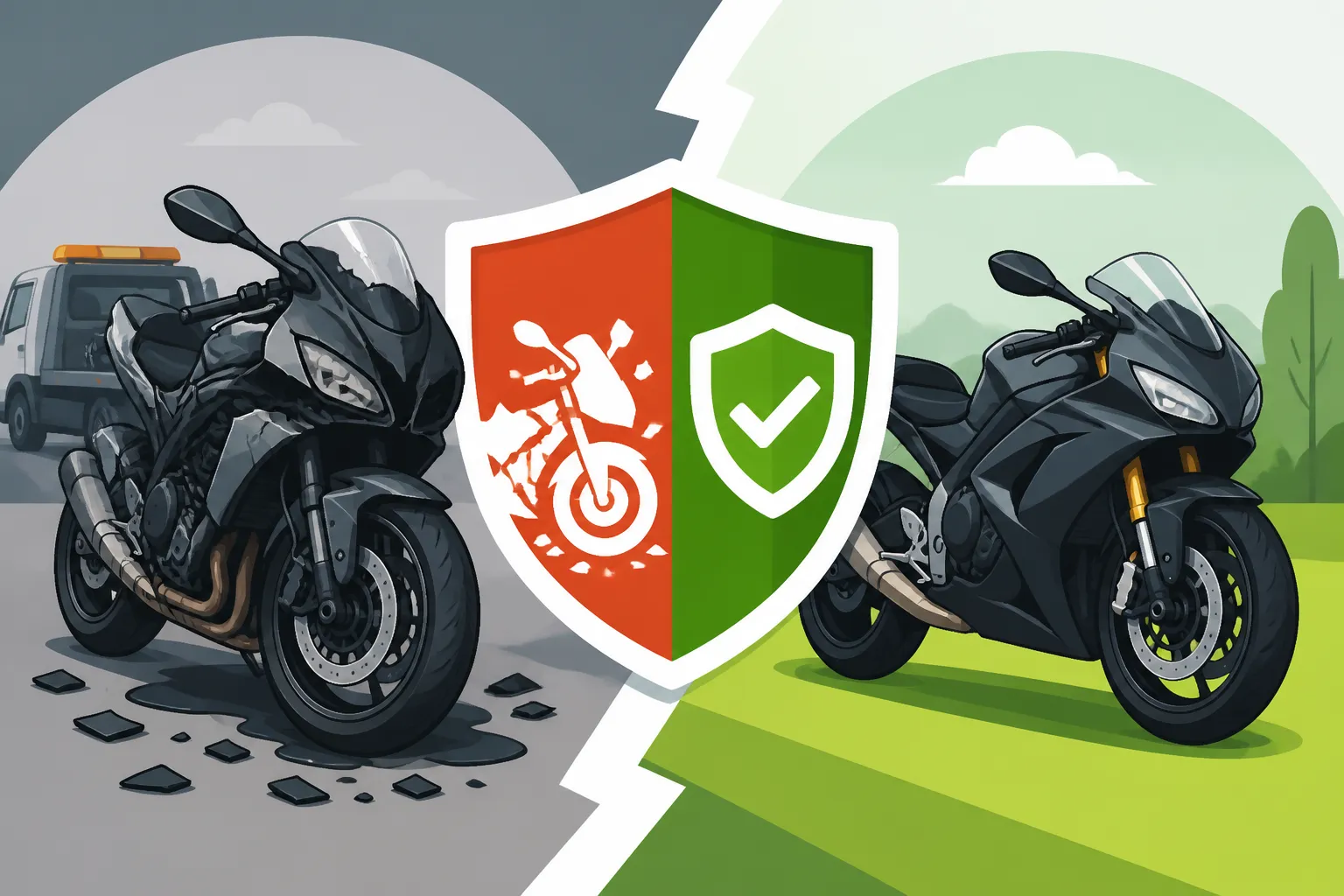
Few things are as disheartening for a motorcycle owner as getting the news that your beloved bike has been declared a "total loss" by your insurance company. This usually means significant damage, and it often leads to a confusing new term: a salvage title. Understanding what a salvage title is, how it comes about, and what it means for your motorcycle's future is crucial for any rider facing this tough situation or considering buying a bike with such a history.
Understanding Total Loss and Salvage Titles
When an accident or other damage renders your motorcycle uneconomical to repair, your insurance company will declare it a total loss. This decision isn't always about whether the bike can be fixed, but whether the cost of repairs exceeds a certain percentage of its actual cash value (ACV) before the damage occurred. It’s a purely financial calculation, and it's the first step in the journey toward a salvage title.
What "Total Loss" Really Means for Your Motorcycle
The term "total loss" can sound devastating, implying your bike is completely destroyed and beyond hope. In reality, it means the insurer has determined that repairing the motorcycle would cost more than its pre-damage market value, or more than a set percentage of that value, depending on state laws. For instance, if your motorcycle was worth $10,000 before an accident, and the repair estimates come in at $8,000, your insurer might declare it a total loss if your state's threshold is 75% (meaning repairs exceeding $7,500).
This doesn't necessarily mean the motorcycle can't be ridden again. Often, the damage is cosmetic or involves expensive components like the frame or engine casing that are costly to replace. The insurance company pays you the actual cash value of the motorcycle (minus your deductible), and then they take ownership of the damaged bike. What happens next with that damaged bike is where the salvage title comes into play. For more on what happens to your bike, check out our guide on What Happens When Your Motorcycle Is Totaled?.
The Birth of a Salvage Title: When It Happens
Once your insurance company takes ownership of your damaged motorcycle after a total loss declaration, they will typically apply for a salvage title from your state’s Department of Motor Vehicles (DMV) or equivalent agency. This process removes the standard "clean" title and replaces it with one that explicitly states the bike has been declared a total loss.
A salvage title is a red flag, a permanent mark on the vehicle's history that indicates it has sustained significant damage. It's not just from accidents, either. Motorcycles can receive a salvage title due to severe damage from floods, fires, vandalism, or even theft where the recovery costs or damage sustained while stolen exceeded the total loss threshold. The goal is to alert future owners that this vehicle has a past that required a substantial insurance payout. It's a consumer protection measure, ensuring transparency about a vehicle's history.
Total Loss Thresholds and State Regulations
Each state has its own specific rules and thresholds for determining when a vehicle is considered a total loss and issued a salvage title. There are two main approaches states use:
- Total Loss Formula (TLF): Many states use a Total Loss Formula, where the cost of repairs plus the salvage value (what the damaged bike could be sold for) exceeds the actual cash value (ACV) of the vehicle. So, if your bike's ACV is $10,000, and the repairs cost $7,000, but the salvage value is $4,000, then $7,000 + $4,000 = $11,000, which is greater than $10,000. It's a total loss.
- Total Loss Threshold (TLT): Other states use a straightforward percentage. If the estimated cost of repairs reaches or exceeds a certain percentage of the vehicle's ACV, it's declared a total loss. This percentage can vary significantly from state to state, typically ranging from 70% to 100%. For example, in Texas, the total loss threshold is 100%, meaning repairs must literally cost as much as or more than the bike's value. In contrast, Florida has a 80% total loss threshold. This means if a motorcycle is worth $10,000, and repair costs are $8,000 or more, it’s a total loss. It's a stark difference that can impact whether your bike gets totaled out. Understanding these specifics is vital, as they directly influence whether your insurer will total your bike. You can find more specific details on this in our guide on What Is the Motorcycle Total Loss Threshold?.
This table provides a generalized overview of how different states approach total loss thresholds, though specific percentages can vary and are subject to change. Always verify current regulations with your state's DMV or insurance regulator.
| State Type | Total Loss Determination Method | Typical Threshold | Implications |
|---|---|---|---|
| Total Loss Formula (TLF) States | (Cost of Repairs + Salvage Value) > Actual Cash Value (ACV) | Varies by calculation | More complex, often leads to total loss even if repairs are below ACV percentage. |
| Total Loss Threshold (TLT) States | Repair Costs Exceed a Fixed Percentage of ACV | 70-80% | Straightforward: if repairs hit the percentage, it's totaled. |
| Hybrid States | A combination of TLF and TLT, or insurer discretion allowed | Varies | Can be less predictable, may depend on insurer guidelines and state oversight. |
Some states like New York employ a total loss threshold of 75%, while others might be closer to 100%. These regional differences mean that a motorcycle damaged in one state might be salvaged, while the same damage in another state might just be repaired.
The Ramifications of a Salvage Title
A salvage title isn't just a label; it carries significant consequences that affect almost every aspect of owning and riding a motorcycle. From its financial value to the ability to insure it, a salvage title creates immediate challenges that any prospective owner or current owner considering keeping a totaled bike needs to understand.
The Financial Hit: Depreciation and Resale Value
The most immediate and obvious impact of a salvage title is the drastic reduction in the motorcycle's financial value. Once a bike has a salvage title, its market value plummets, often by 50% or more, even if it has been perfectly repaired. This steep depreciation happens for several reasons. First, the salvage designation instantly signals to potential buyers that the bike has a history of severe damage. There's an inherent distrust; buyers worry about hidden damage, structural integrity, and long-term reliability.
Secondly, many financial institutions are reluctant to offer loans for vehicles with salvage titles, further limiting the pool of potential buyers to those who can pay cash. Even if you meticulously repair the bike and get it a "rebuilt" title (which we'll discuss next), it will never command the same price as an identical bike with a clean title. It's a permanent stigma that dramatically impacts resale value, meaning your investment takes a significant hit.
Insuring a Salvage Title Motorcycle: A Uphill Battle
This is where things get particularly tricky. Getting insurance for a motorcycle with a salvage title is notoriously difficult, and often more expensive than for a bike with a clean title. Many insurance providers are hesitant to offer full coverage (collision and comprehensive) on a salvage titled motorcycle due to the inherent risks. How can they accurately assess its pre-damage value if it's already been totaled once? There’s a higher likelihood of future claims, and accurately valuing the bike for a payout becomes a nightmare.
If you manage to find an insurer willing to cover it, you'll likely be limited to liability-only coverage, which pays for damages you cause to others, but not for damages to your own bike. For example, getting comprehensive coverage from a major provider like Progressive for a rebuilt title might require extensive documentation of repairs and a thorough inspection. Even then, your premiums will probably be higher, and the payout in case of a future claim might be based on a depreciated "salvage value," not its market value. Some specialty insurers might be more flexible, but generally, expect a struggle. This is why many riders question Do You Need Full Coverage on a Paid-Off Motorcycle? or a salvage one, given the difficulty.
Challenges with Financing and Registration
Beyond insurance, a salvage title can throw a wrench into financing and registration processes. As mentioned, most traditional lenders, banks, and credit unions simply won't finance a motorcycle with a salvage title. They view it as too high-risk, as the collateral's value is significantly diminished and hard to appraise. This means if you want to buy a salvage titled bike, you almost certainly need to pay cash.
Registering a motorcycle with a salvage title also has its own set of hurdles. You can't just slap a plate on a salvage bike and ride off. Most states require the vehicle to undergo a rigorous inspection process once it's been repaired to ensure it's safe for the road. This inspection is critical to get the title rebranded from "salvage" to "rebuilt." Without this inspection and the subsequent rebuilt title, you generally cannot legally register or operate the motorcycle on public roads. This applies even if you consider a Motorcycle Registration Without Insurance: Possible? for a clean-titled bike, let alone a salvaged one. The hoops you'll jump through for a rebuilt title are often more demanding than standard registration.
The Path from Salvage to Rebuilt Title
Just because a motorcycle has a salvage title doesn't mean it's destined for the scrap heap. Many riders see opportunity in these bikes, especially those with mechanical skills or an eye for a project. The process of taking a salvage titled motorcycle and making it roadworthy again typically leads to a "rebuilt" title, a crucial step if you ever plan to ride it legally.
The Repair Process: What It Entails
Repairing a salvage motorcycle is more than just fixing the visible damage. It requires a meticulous, often comprehensive, approach to ensure not only cosmetic appeal but also structural integrity and mechanical soundness. This means addressing all the damage that led to the total loss declaration, and sometimes even discovering underlying issues that weren't immediately apparent. For instance, if a crash bent the frame, it might need to be professionally straightened or replaced. Flood-damaged bikes often require extensive electrical system overhauls and engine component replacements due to corrosion.
Every repair must be documented, often with receipts for new parts and a detailed log of the work performed. This documentation is crucial for the subsequent state inspection. Riders often find themselves poring over service manuals, sourcing parts, and spending countless hours in the garage. While it can be a rewarding project for the right person, it's a significant commitment of time and money, and skimping on repairs can lead to safety issues and problems with inspection.
State Inspections and Certification for Rebuilt Status
Once all repairs are complete, the motorcycle must undergo a stringent inspection by the state to prove it is safe and roadworthy. This isn't your average annual safety inspection; it's far more in-depth. Inspectors will check all major components: brakes, tires, suspension, frame integrity, lights, steering, and engine. They'll also verify that the vehicle identification number (VIN) matches the title and that no stolen parts were used in the repairs.
In many states, this inspection specifically aims to detect if the motorcycle was rebuilt using stolen components, which is a common issue with salvage vehicles. Passing this inspection is the only way to get the title officially re-branded from "salvage" to "rebuilt" or "reconstructed." Without this certification, the motorcycle cannot be legally registered or ridden on public roads. The requirements for this inspection can be quite rigorous, and it's essential to understand your specific state's demands beforehand.
Differences Between Salvage, Rebuilt, and Clear Titles
Understanding the nuances between these title types is essential for anyone dealing with a damaged motorcycle or considering buying one.
- Clear Title (Clean Title): This is the gold standard. A clear title means the vehicle has never been declared a total loss by an insurance company. It signifies a clean history, at least as far as major damage is concerned. These vehicles typically command the highest market value.
- Salvage Title: This title indicates that the vehicle has been declared a total loss by an insurance company due to significant damage (accident, flood, fire, theft, etc.) or exceeding a state's total loss threshold. A salvage titled motorcycle is generally not legal to drive on public roads until it undergoes repairs and passes a state inspection.
- Rebuilt Title (Reconstructed Title): This title is issued after a salvage titled motorcycle has been fully repaired, passed a rigorous state inspection, and deemed safe for the road. While it allows the motorcycle to be registered and ridden legally, the "rebuilt" designation remains a permanent part of its history. It indicates that, while repaired, the bike was once a total loss. This history will always impact its resale value and insurance options, even if it looks and performs perfectly.
This table provides a clear distinction to help you differentiate these crucial title statuses:
| Feature | Clear Title | Salvage Title | Rebuilt/Reconstructed Title |
|---|---|---|---|
| History | No major damage/total loss declaration. | Declared total loss by insurer (damage, theft, etc.). | Was a salvage, now repaired and inspected. |
| Legality to Drive | Fully legal to register and operate. | Generally not legal to drive on public roads. | Fully legal to register and operate. |
| Insurance | Easy to obtain all coverage types. | Very difficult to insure (often liability only if at all). | Possible to get full coverage, but harder and more expensive. |
| Resale Value | Highest market value. | Extremely low (often only parts value). | Significantly lower than clear title, even after repairs. |
| Financing | Easily financed by banks/lenders. | Virtually impossible to finance. | Very difficult to finance. |
| Inspection Needed | Standard safety/emissions (state-dependent). | Required to move to rebuilt status. | Passed post-repair inspection to get this title. |
| Stigma | None. | High stigma, indicates severe damage. | Stigma remains, indicates past total loss. |
The transition from salvage to rebuilt is a formal process, and one that adds a layer of reassurance for future buyers, but it never fully erases the bike's history.
Should You Buy a Salvage Title Motorcycle?
The prospect of owning a motorcycle at a significantly reduced price can be very tempting, and salvage title bikes often fall into this category. However, what looks like a bargain on the surface can quickly turn into a money pit or a safety hazard if you're not careful. Deciding whether to take on a salvage title motorcycle requires a thorough understanding of both the potential benefits and the considerable risks involved.
The Appeal: Lower Purchase Price
There's no denying the primary draw of a salvage title motorcycle: the price tag. These bikes are typically sold for a fraction of what an equivalent model with a clean title would cost. For riders on a tight budget, or those looking for a project bike, this can seem like an incredible deal. You might be able to get a relatively new model, or a high-performance bike, for less than half its market value.
This lower entry cost can free up funds for custom modifications, upgrades, or simply provide an affordable way to get into riding. For experienced mechanics, or those with access to cheap parts and labor, the opportunity to restore a damaged bike and save thousands of dollars is a real incentive. Sites like Copart or other salvage auctions are filled with these opportunities, and savvy buyers can find genuine steals, especially if the damage is primarily cosmetic or easily repairable by someone with the right skills.
The Risks: Hidden Damage and Safety Concerns
While the price is attractive, the risks associated with buying a salvage title motorcycle are substantial and should not be underestimated. The biggest concern is hidden damage. What appears to be minor cosmetic damage might conceal a bent frame, cracked engine casing, or compromised suspension components that are difficult and expensive to fix. Water-damaged bikes, particularly those from floods, can have persistent electrical issues and unseen corrosion that lead to ongoing reliability problems and safety hazards.
Even after seemingly thorough repairs, there's always a lingering question about the bike's long-term safety and structural integrity. A poorly repaired frame, for instance, could fail under stress, putting the rider at serious risk. Without a comprehensive pre-purchase inspection by an independent, trusted mechanic who specializes in motorcycles and understands salvage vehicles, you could be buying someone else's headache, or worse, a dangerous ride. Remember, the reason it was totaled was because the cost of repairs exceeded its value, not necessarily because it was beyond repair.
Expert Advice for Evaluating a Salvage Bike
If you're seriously considering a salvage title motorcycle, proceed with extreme caution and follow these steps:
- Get the Full History: Demand detailed information about the cause of the salvage title. Was it from an accident, flood, fire, or theft? Each type of damage carries its own unique set of repair challenges and potential lingering issues. Ask for photos of the original damage and repair receipts.
- Independent Pre-Purchase Inspection: This is non-negotiable. Hire a reputable, independent motorcycle mechanic, preferably one experienced with salvage vehicles, to thoroughly inspect the bike before you buy it. They can identify hidden structural damage, electrical problems, and other red flags that might escape an untrained eye. Don't rely on the seller's assurances or pictures.
- Check VIN: Use the VIN to run a comprehensive vehicle history report from services like Carfax or AutoCheck. This will confirm the salvage status, the date it was issued, and often details about the incident that led to it.
- Understand Your State's Rebuilt Requirements: Before purchasing, know exactly what your state requires to get a salvage title re-branded to a rebuilt title. What inspections are needed? What documentation? This will help you estimate the true cost and effort involved.
- Factor in Hidden Costs: Beyond the purchase price and visible repairs, budget for potential hidden damage, the cost of state inspections, and potentially higher insurance premiums. The actual cost of getting a salvage bike safely and legally on the road can easily exceed your initial estimates.
Companies like The Zebra often advise buyers to be extremely cautious with salvage vehicles, emphasizing the difficulty in insuring them and the reduced value. It’s a niche market, and only those with significant mechanical expertise, a realistic budget, and a high tolerance for risk should consider it.
Insurance Options for Rebuilt Title Motorcycles
So, you've taken the plunge, meticulously repaired a salvage bike, and successfully navigated the state inspection to get a rebuilt title. Congratulations! Now comes the next hurdle: getting it properly insured. While easier than insuring a bike that still holds a pure "salvage" title, it's still not as straightforward as insuring a clean-title motorcycle.
Finding Coverage: What Insurers Offer
Once your motorcycle has a rebuilt title, it's considered roadworthy by the state, which makes it eligible for a wider range of insurance options compared to a raw salvage title. However, not all insurance companies are eager to jump on board. Major providers like Progressive, GEICO, Dairyland, and Markel do offer coverage for rebuilt title motorcycles, but their terms and conditions might differ significantly from standard policies.
You'll generally be able to obtain liability insurance without much issue, as this covers damage you cause to others, not your own bike. However, if you're looking for collision and comprehensive coverage – which protect your investment against accidents, theft, fire, and other non-collision damage – you might face more scrutiny. Insurers will want to see proof of the repairs, the inspection certificate, and potentially photos of the bike both before and after the rebuild. They are essentially re-evaluating the risk, knowing the bike has a history of extensive damage. For more specific details, you might want to look into Types of Motorcycle Insurance Coverage Explained.
Limitations and Higher Premiums
Even when you secure full coverage for a rebuilt title motorcycle, expect some limitations and higher premiums compared to a clean-title bike. Here's why:
- Valuation Issues: The biggest challenge for insurers is determining the "actual cash value" (ACV) of a rebuilt motorcycle in the event of another total loss. Since it was already totaled once, its market value is permanently depressed. Many policies for rebuilt bikes will state that the maximum payout will be based on a percentage of its rebuilt value, not its equivalent clean-title value. This means if your beautifully rebuilt bike is totaled again, you might receive significantly less than what you put into it or what a similar clean-title bike would fetch.
- Increased Risk Perception: Insurers often perceive rebuilt bikes as having a higher risk of future mechanical issues or structural failures, even after passing inspection. This perception translates into higher premiums.
- Specific Exclusions: Some policies might have specific exclusions related to the original damage. For instance, if the bike had flood damage, the insurer might limit coverage related to future electrical problems or rust.
It's crucial to read your policy documents carefully and ask your agent explicit questions about how a total loss claim would be handled for your rebuilt title motorcycle. Don't assume anything.
Maximizing Your Chances for Affordable Coverage
While it might be tougher, there are ways to improve your chances of getting reasonable coverage for a rebuilt title motorcycle:
- Maintain Meticulous Records: Keep every receipt for parts, labor, and documentation from the state inspection. Detailed before-and-after photos can also be invaluable. The more transparent you can be about the quality of the rebuild, the better.
- Shop Around Extensively: Don't just get one quote. Contact multiple insurance providers, including specialty insurers that focus on non-standard vehicles. While major players like Progressive and Geico offer options, smaller companies like Dairyland or Markel might be more flexible or offer better rates for rebuilt bikes. Comparison tools from sites like The Zebra can help you gather quotes efficiently.
- Consider a Motorcycle Safety Course: Completing an approved motorcycle safety course can often lead to discounts, regardless of your bike's title status. This demonstrates a commitment to safe riding, which insurers appreciate. Our guide on Does a Motorcycle Safety Course Lower Insurance? provides more details.
- Increase Deductibles: Opting for a higher deductible can lower your premium, though it means you'll pay more out-of-pocket if you need to file a claim. This is a common strategy for saving on How Much Is Full Coverage Motorcycle Insurance? for any bike.
- Bundle Your Policies: If you have auto or home insurance with a particular provider, ask if they offer discounts for bundling your rebuilt motorcycle policy. This can sometimes unlock better rates. Find out more about Bundling Motorcycle and Auto Insurance: Worth It?.
Getting insurance for a rebuilt title motorcycle is an exercise in persistence and transparency. With the right documentation and diligent shopping, you can find coverage that meets your needs, albeit with a clear understanding of its limitations.
Practical Steps After Your Motorcycle is Declared a Total Loss
When your motorcycle is declared a total loss, it’s a moment of mixed emotions – grief for your bike, frustration with the situation, and then the stark reality of navigating the aftermath. Knowing your options and the steps involved can help you make the best decisions for your financial and riding future.
Understanding Your Payout Options
Once your insurer declares your motorcycle a total loss, they will offer you a settlement based on its actual cash value (ACV) at the time of the loss, minus your deductible. This ACV is not what you paid for the bike, but what a similar bike would sell for on the open market, considering age, mileage, and condition.
You generally have two main choices with this payout:
- Take the Full Settlement, Relinquish the Bike: This is the most common option. The insurance company pays you the agreed-upon ACV (minus your deductible), and in return, you sign over the title of the damaged motorcycle to them. They then take possession of the bike, which they will typically sell to a salvage yard or auction. This is the simplest path if you don't want to deal with repairs or a salvage title.
- Take a Reduced Settlement, Keep the Bike (Owner Retention): Many states allow you to keep your totaled motorcycle. If you choose this, the insurer will pay you the ACV minus your deductible AND minus the bike's salvage value. For example, if your bike's ACV was $10,000, your deductible $500, and its salvage value $2,000, you would receive $7,500 ($10,000 – $500 – $2,000). The catch is that you keep the damaged bike, and your state will then issue you a salvage title. This option is primarily for those who intend to repair the bike themselves, or use it for parts. It's important to understand the complexities of How to Negotiate a Motorcycle Total Loss Settlement to ensure you get a fair offer.
Deciding Whether to Keep the Salvage
The decision to keep a totaled motorcycle is significant and shouldn't be taken lightly. It's often romanticized as a way to save money or bring a beloved bike back to life, but it comes with considerable challenges.
Reasons to Keep the Salvage:
- Sentimental Value: If the bike has deep personal significance, you might want to repair it regardless of the financial logic.
- Mechanical Skill & Resources: If you are an experienced mechanic, have access to a well-equipped garage, and can source parts cheaply, rebuilding it yourself might be feasible and cost-effective.
- Parts Bike: You might keep it simply for its valuable components to use on another project or to sell for profit.
Reasons to Not Keep the Salvage:
- High Repair Costs: Unless you have free labor and access to extremely cheap parts, the cost of repairs often exceeds the value of the bike.
- Hidden Damage: As discussed, unforeseen issues can quickly turn a project into a financial black hole.
- Resale and Insurance Difficulties: Even after repairs, the "rebuilt" title will drastically reduce its value and complicate future insurance and resale efforts.
- Time Commitment: Rebuilding a severely damaged bike can take hundreds of hours, demanding significant personal time and effort.
Before deciding, get independent repair estimates. Compare these estimates to the potential payout if you surrender the bike. Also, be honest about your skills, time, and budget. For a more detailed look, consider our post Can I Keep My Motorcycle After It's Totaled?.
Navigating the Title Change Process
If you decide to keep the salvage, the title change process is an unavoidable and crucial step.
- Receive Salvage Title: Once you accept the reduced settlement, your state's DMV will issue you a salvage title for your motorcycle. You cannot legally operate the bike on public roads at this stage.
- Repair the Motorcycle: This is where all your hard work comes in. Document every repair, collect all receipts for new and used parts, and take photos of the process.
- Schedule Inspection: Once repairs are complete, contact your state's DMV or designated inspection agency to schedule a salvage inspection. This inspection is stringent and will verify all safety components, ensure no stolen parts were used, and confirm the VIN.
- Receive Rebuilt Title: If your motorcycle passes the inspection, the state will issue you a "rebuilt" or "reconstructed" title. This title legally permits you to register and operate the motorcycle on public roads.
- Obtain Insurance: With the rebuilt title in hand, you can now seek insurance. Remember to shop around and be transparent about the bike's history to get the best possible coverage.
Navigating a total loss and subsequent salvage title can be a complex journey, but with careful planning and an understanding of the process, you can make informed decisions that best suit your situation.
Disclaimer
This article is for general informational purposes only and does not constitute professional advice. Laws, prices and regulations vary by location and change over time. Consult a qualified professional for guidance on your specific situation.