How Much Is Motorcycle Insurance in Arkansas?
Trying to figure out how much motorcycle insurance will really cost you in Arkansas can feel like a guessing game, especially when you see wildly different numbers online. It’s frustrating because you just want a straightforward answer, but the truth is, your premium isn't a one-size-fits-all number. This guide is here to cut through the confusion and give you a realistic breakdown of what influences motorcycle insurance costs in the Natural State and how you can manage them effectively.
Understanding the Factors That Influence Your Motorcycle Insurance Costs in Arkansas
When you're trying to pin down an estimate for motorcycle insurance in Arkansas, it's easy to feel overwhelmed by all the variables. It's not just about the bike; it's about you, your riding habits, and even the specific corner of Arkansas you call home. Each of these elements plays a significant role in how an insurance company calculates your risk and, ultimately, your premium. Let's delve into the key factors that insurers consider.
Your Rider Profile and Experience
Believe it or not, you are often the biggest factor in your insurance rate. Insurance companies are all about assessing risk, and your personal history as a rider gives them a lot to work with.
Age and Riding Experience
One of the first things an insurer looks at is your age and how long you've been riding. Younger riders, particularly those under 25, generally face higher premiums. This isn't because they're necessarily bad riders, but statistically, younger, less experienced riders are involved in more accidents. An 18-year-old just starting out on a sport bike in Fayetteville will almost certainly pay more than a 45-year-old with decades of experience on a cruiser in Bentonville. The insurance companies see a greater potential for claims, and they adjust the price accordingly. It's a tough pill to swallow for new riders, but it’s a reality based on actuarial data. As you gain more years and more experience on two wheels, you’ll typically see your rates begin to drop, provided you maintain a clean record. This is why many experienced riders find their premiums more manageable over time.
Driving Record
Your driving record, both for cars and motorcycles, is incredibly important. Any past traffic violations – speeding tickets, reckless driving citations, or, heaven forbid, a DUI – will significantly impact your motorcycle insurance cost. An insurance company views these as indicators of risky behavior. For instance, if you've got a couple of speeding tickets from tearing down I-30 outside Little Rock, expect to pay more. Major infractions, like a DUI, could even lead to being classified as a high-risk driver, potentially requiring an SR-22 filing and dramatically increasing your rates. Conversely, a spotless driving record, free of accidents or violations, is your golden ticket to lower premiums. It signals to insurers that you're a responsible operator who is less likely to file a claim. You can explore more about how specific issues affect your rates in our guide on Motorcycle Insurance Cost With a DUI.
Motorcycle Endorsement and Safety Courses
Having a valid motorcycle endorsement on your Arkansas driver's license is non-negotiable for riding legally, and most insurers will require it to even offer you a policy. Beyond that, completing a certified motorcycle safety course, like those offered through the Arkansas State Police or local riding academies, can often earn you a discount. These courses, such as the Motorcycle Safety Foundation (MSF) Basic RiderCourse, teach valuable defensive riding techniques and demonstrate to insurers that you're proactive about safety. Many insurance providers offer a direct discount for this, recognizing that trained riders are statistically less likely to be involved in accidents. It’s a win-win: you become a better, safer rider, and you save some money on your premium.
Your Motorcycle Type and Its Characteristics
The machine you choose to ride is just as important as the person riding it when it comes to setting insurance rates. Different bikes present different levels of risk to insurers.
Type of Bike
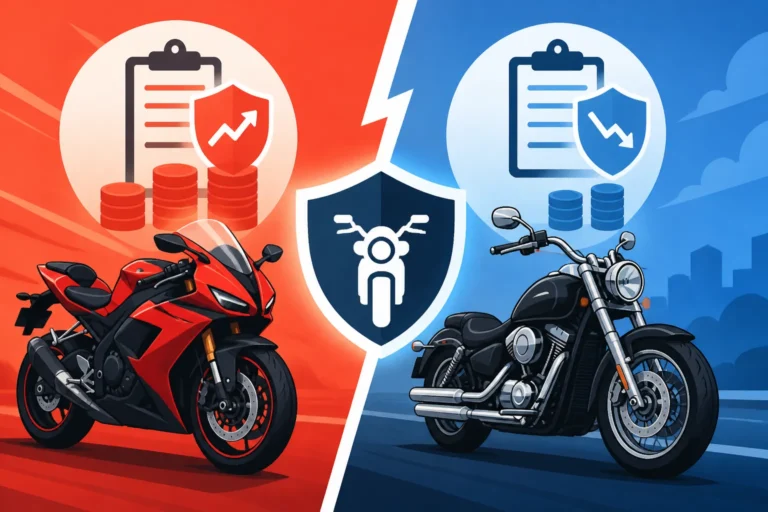
Generally, the more powerful, faster, and more expensive your motorcycle, the higher your insurance premium will be. Sport bikes, with their high-performance engines and lightweight frames, often come with the highest insurance costs. Companies like Kawasaki, Suzuki, and Honda produce models that, while exhilarating to ride, are statistically involved in more accidents and theft claims, and repairs can be costly. On the other end of the spectrum, cruisers and touring bikes (think Harley-Davidson, Indian, or large Honda Gold Wings) typically have lower rates. They are often ridden by older, more experienced riders and are perceived as less prone to high-speed incidents. Dual-sport bikes and standard motorcycles usually fall somewhere in the middle. The difference can be substantial; insuring a new Ducati Panigale in Fort Smith could cost significantly more than a classic Honda Rebel.
Engine Size
Engine displacement, measured in cubic centimeters (CCs), also plays a role. While not always a direct correlation, larger, more powerful engines often lead to higher premiums. A 1000cc sport bike will generally cost more to insure than a 300cc beginner bike, even within the same manufacturer. The increased power translates to higher speeds and, potentially, more severe accidents. However, this isn't a hard and fast rule; a very heavy, expensive touring bike with a large engine might still be cheaper to insure than a smaller, high-revving sport bike if the latter is perceived as higher risk due to rider demographics or accident statistics.
Value and Modifications
The value of your motorcycle directly impacts the cost of comprehensive and collision coverage. A brand new Harley-Davidson Street Glide will cost more to cover than a 15-year-old used Yamaha V-Star, simply because the replacement cost is much higher. Furthermore, if you’ve invested in custom parts or modifications – a new exhaust, aftermarket wheels, custom paint, or performance upgrades – you’ll need to ensure these are covered. Standard policies often have limited coverage for accessories and custom parts, so you might need to purchase additional coverage. This naturally increases your premium, but it’s essential if you want your investment protected. Without it, in the event of an accident or theft, your insurance payout might not cover the true value of your customized ride.
Where You Live in Arkansas Matters
It’s not just about what you ride or how you ride it; where you keep and ride your motorcycle within Arkansas can also affect your insurance rates.
Urban vs. Rural
Living in a densely populated urban area, like Little Rock, Fayetteville, or Fort Smith, typically results in higher insurance premiums compared to rural towns. Why? More traffic means a higher likelihood of accidents. Urban areas also tend to have higher rates of motorcycle theft and vandalism, which directly impacts comprehensive coverage costs. An insurer will factor in the local crime statistics and traffic density of your specific zip code when calculating your rate. Someone living in a quiet town like Mena or Mountain Home will likely see lower rates than someone in the heart of downtown Little Rock.
Theft Rates in Specific Zip Codes
Beyond general population density, specific crime rates for your area are a huge factor. If your zip code has a higher incidence of motorcycle theft, your comprehensive coverage — which protects against theft, vandalism, and damage not involving a collision — will be more expensive. Insurers use data to pinpoint these high-risk areas. If you reside in a neighborhood that has unfortunately become a hotspot for vehicle theft, you might find yourself paying a bit more to protect your bike, even if you keep it garaged. It's an uncomfortable truth, but insurance is all about spread risk.
Coverage Choices and Deductibles
Finally, and perhaps most directly, your decisions about what types and how much coverage you opt for will dictate your premium. This is where you have the most direct control over your immediate cost.
Liability vs. Full Coverage
Arkansas requires all motorcycle riders to carry minimum liability insurance. This covers damages and injuries you might cause to other people or their property in an at-fault accident. The state minimums are 25/50/25, meaning $25,000 for bodily injury per person, $50,000 for bodily injury per accident, and $25,000 for property damage. If you opt for only this minimum liability, your premium will be the lowest. However, it won't cover damage to your own motorcycle or your medical bills.
Full coverage, which typically includes liability, collision (covers damage to your bike in an accident, regardless of fault), and comprehensive (covers theft, vandalism, fire, natural disasters, hitting an animal), will be significantly more expensive but offers far greater protection. For many riders, especially those with newer or financed bikes, full coverage is a necessity, not just a luxury. You can learn more about this crucial distinction in our article What Does Full Coverage Motorcycle Insurance Mean?.
Higher Deductibles for Lower Premiums
A deductible is the amount you agree to pay out-of-pocket before your insurance kicks in for a claim. For example, if you have a $500 deductible and your bike sustains $2,000 in damage, you pay the first $500, and your insurer pays the remaining $1,500. Choosing a higher deductible (e.g., $1,000 instead of $250) will lower your monthly or annual premium. This is because you're taking on more of the financial risk yourself. It's a great way to save money on premiums, but you need to be sure you have enough in your emergency fund to cover that higher deductible if an incident occurs.
Average Motorcycle Insurance Costs in Arkansas
So, you're probably wondering, "What's the actual number?" While it's impossible to give you an exact figure without knowing your specific situation, we can talk about averages and what you can generally expect to pay in Arkansas. Keep in mind that these are just averages, and your individual quote could be higher or lower depending on all those factors we just discussed.
Typical Annual Premiums You Might See
Based on market data, the average annual motorcycle insurance premium in Arkansas typically ranges from around $500 to $900 for liability-only coverage, and anywhere from $1,200 to over $2,000 for full coverage. These figures can fluctuate significantly based on where you are in the state, the type of bike, and your personal riding history. For instance, a basic liability policy for an older cruiser owned by an experienced rider in a lower-risk rural area might hover around the lower end of that range. Conversely, a brand-new sport bike with full coverage for a younger rider in Little Rock could easily exceed the higher end.
It’s worth noting that Arkansas generally falls somewhere in the middle when compared to national motorcycle insurance averages. States with higher population densities, more severe weather, or higher theft rates often see higher average premiums. The relatively moderate cost of living and less congested traffic in many parts of Arkansas contribute to rates that are often more favorable than those in, say, California or Florida.
The Impact of Different Coverage Levels
The choice between minimum liability and full coverage is probably the single biggest determinant of your premium.
How Liability-Only Changes the Cost
If you decide to stick to the state's minimum liability requirements (25/50/25), your costs will be at their lowest. For many riders, especially those with older bikes that have depreciated significantly, or those who simply can't afford comprehensive coverage, this is the most economical choice. You might pay, on average, around $600-$750 per year for this basic protection.
However, it's critical to understand the limitations. If you crash your bike, even if it's a minor fender bender, your liability policy won't pay for any repairs to your motorcycle. It also won't cover your medical bills if you're injured. If you're hit by an uninsured or underinsured motorist – a unfortunately common scenario – you could be left with substantial expenses unless you've added specific Uninsured & Underinsured Motorist Coverage (UM/UIM) to your policy. While cheap, liability-only coverage leaves you financially exposed to many common risks.
How Full Coverage Impacts the Premium Significantly
Stepping up to full coverage adds a much-needed layer of financial security, but it also increases your premium considerably. For a typical rider in Arkansas, opting for full coverage could mean an annual premium anywhere from $1,200 to $2,000+. This includes collision coverage for accidents and comprehensive coverage for non-collision incidents like theft, fire, or hitting a deer on those scenic Ozark roads.
While the price jump can be steep, the peace of mind is often worth it, especially if you have a newer, valuable, or financed motorcycle. For example, if you finance a new Harley-Davidson at Pig Trail Harley-Davidson in Rogers, your lender will almost certainly require you to carry full coverage until the loan is paid off. This protects their investment in the event of a total loss. Even if your bike is paid off, if you couldn’t afford to replace it out-of-pocket after an accident or theft, full coverage is usually the smarter choice.
Exploring Cost Differences by Bike Type
As discussed earlier, the type of motorcycle you ride has a huge bearing on your insurance costs. Let's look at some common examples.
Sport Bikes
If you're riding a sport bike, like a new Yamaha R7 or a Kawasaki Ninja 650, expect to be on the higher end of the premium scale. These bikes are designed for performance, are often ridden by younger demographics, and statistically have higher accident and theft rates. Insurance for a sport bike in Arkansas could easily range from $1,500 to $3,000+ annually for full coverage, especially for younger riders. This isn't unique to Arkansas; sport bike insurance is typically more expensive nationwide.
Cruisers and Touring Bikes
Cruisers, such as a Harley-Davidson Fat Boy or an Indian Chief, and touring motorcycles like a Honda Gold Wing, generally have much lower insurance rates. They are often ridden by more mature, experienced riders, and their design emphasizes comfort and stability over raw speed. Full coverage for a cruiser or touring bike in Arkansas might fall in the $900 to $1,800 range annually. Many riders find the cost of Harley-Davidson Insurance Cost to be quite reasonable, especially compared to their sportier counterparts.
Standard and Dual-Sport Motorcycles
Bikes like a Honda CB500F or a Kawasaki KLR650 fall into a middle category. They offer a good balance of performance and practicality, and their insurance costs usually reflect that. You might expect to pay somewhere between $800 and $1,500 annually for full coverage on a standard or dual-sport motorcycle in Arkansas.
Here's a simplified table illustrating estimated annual full coverage costs for different rider/bike profiles in Arkansas:
| Rider Profile | Motorcycle Type | Estimated Annual Full Coverage Premium in Arkansas |
|---|---|---|
| Young Rider (Under 25), New License | Sport Bike (e.g., Yamaha R6) | $2,500 – $4,000+ |
| Experienced Rider (Over 30), Clean Record | Cruiser (e.g., Harley-Davidson Street Glide) | $900 – $1,800 |
| Intermediate Rider (25-30), Some Experience | Standard/Naked (e.g., Kawasaki Z650) | $1,200 – $2,200 |
| Older Rider (Over 50), Extensive Experience | Touring (e.g., Honda Gold Wing) | $800 – $1,600 |
| Any Rider, Older Bike, Liability Only | Any Type, Low Value | $500 – $900 |
Note: These are estimates only. Actual rates will vary based on numerous individual factors.
Strategies to Lower Your Motorcycle Insurance Rates in Arkansas
Nobody wants to pay more than they have to, especially for necessities like insurance. The good news is, there are definitely proactive steps you can take to chip away at those premiums and make your motorcycle insurance in Arkansas more affordable. It’s all about smart choices and being a savvy consumer.
Leveraging Discounts for Savvy Riders
Insurance companies offer a surprising number of discounts, and it's your job to find out which ones you qualify for. Don't be shy about asking your agent or checking online.
Safety Course Discounts
As we touched on earlier, completing a Motorcycle Safety Foundation (MSF) course or a similar certified rider training program is one of the best ways to earn a discount. Most major insurers, including national providers like Progressive and Dairyland, recognize these courses as proof of improved riding skills and reduced risk. In Arkansas, you can find these courses in various cities like Little Rock, Conway, and Springdale. Simply provide proof of completion to your insurer, and watch those rates drop. This discount alone can sometimes offset a significant portion of the course fee over time, making you a safer rider and saving you money. If you're a new rider, taking a course is almost always a smart move. Our guide on How Much Can You Save With Motorcycle Discounts? goes into more detail.
Multi-Policy and Multi-Bike Discounts
One of the easiest ways to save is by bundling your insurance policies. If you already have car insurance, home insurance, or even RV insurance with a particular provider, ask about a multi-policy discount for adding your motorcycle. Many companies offer significant savings for keeping all your business under one roof. Similarly, if you're fortunate enough to own more than one motorcycle, ask about a multi-bike discount. Insuring two bikes on a single policy is almost always cheaper than having separate policies for each. For example, if you have an adventure bike for exploring the Ozarks and a cruiser for weekend rides, bundling them could lead to noticeable savings.
Good Rider and Driver Discounts
A clean driving record is your best friend when it comes to insurance. Many companies reward riders who maintain a pristine record free of accidents and moving violations for a certain number of years (often three to five). This isn't just about avoiding penalties for bad driving; it's about actively being rewarded for good driving. Beyond that, some insurers offer discounts for riders who belong to certain motorcycle clubs or associations, or who have specific anti-theft devices installed on their bikes. For example, an alarm system or GPS tracker on your motorcycle in a higher-theft area like Little Rock could net you a discount on your comprehensive coverage.
Smart Coverage Choices and Policy Management
Beyond discounts, how you structure your policy and how often you review it can also lead to significant savings.
Increasing Deductibles Carefully
We talked about deductibles earlier, but it bears repeating: choosing a higher deductible is a straightforward way to lower your premium. If you increase your collision and comprehensive deductibles from, say, $250 to $1,000, your annual premium could decrease substantially. However, before you make this change, ensure you have enough money in savings to comfortably cover that higher deductible if you need to file a claim. You don't want to save $200 a year on premiums only to be stuck with a $1,000 out-of-pocket expense you can't afford after an accident. This strategy works best for riders who are financially prepared for a potential claim.
Periodically Shopping Around
Insurance rates are not static; they change constantly due to market conditions, your personal profile updates, and competitive pricing among insurers. It's a huge mistake to simply let your policy auto-renew year after year without checking other options. I recommend getting quotes from multiple providers every year or two, especially if you've had a life change like buying a new bike, getting married, or hitting a milestone birthday (like turning 25 or 50, when rates often drop). Use online comparison tools, or call different agents. Tools like The Zebra can be incredibly helpful here, allowing you to compare quotes from several different insurance companies in Arkansas quickly and efficiently, often revealing significant savings you might not have known were available. You might be surprised at how much difference there is between providers for the exact same coverage. This is especially true if you are looking for the Cheapest Motorcycle Insurance Companies for your specific needs.
Considering Seasonal Coverage
For many riders in Arkansas, especially those in the northern parts of the state where winters can be quite cold and icy, riding year-round isn't feasible or desirable. If you garage your bike for several months out of the year, you might be able to save money by adjusting your coverage. Some insurers offer "lay-up" or "storage" insurance, where you temporarily suspend your collision and liability coverage, but keep comprehensive coverage active. This protects your bike from theft, fire, or vandalism while it's stored, without you paying for coverage you won't use on the road. Just remember to reactivate your full coverage before you hit the roads again in spring! Understanding Do You Need Insurance to Store a Motorcycle? can help you decide if this is right for you.
Maintaining a Clean Riding Record
This might sound obvious, but a good riding record is the single most impactful way to keep your insurance costs down over the long term.
The Long-Term Savings of Avoiding Tickets and Accidents
Every speeding ticket, every at-fault accident, and especially every DUI or major violation, will stick with you for years and significantly increase your insurance premiums. Insurers view these incidents as direct indicators of higher risk. By riding responsibly, obeying traffic laws, and continuously honing your defensive riding skills, you're not just staying safe; you're actively investing in lower insurance costs for years to come. A clean record means you won't face surcharges, won't need an SR-22, and will be eligible for the best rates and discounts available from all insurance providers in Arkansas. It truly is the gift that keeps on giving for your wallet.
Disclaimer
Please remember that this information is intended for general guidance only and does not constitute professional financial or legal advice. Motorcycle insurance rates and requirements are subject to change and depend heavily on individual circumstances. Always consult with a licensed insurance professional to discuss your specific needs and obtain personalized quotes.